Intestinal Parasites: Symptoms, Causes, and Effective Treatments

Updated: 2 days ago
Medically reviewed by Dr. Baraa Alnahhal, MD · Last reviewed: October 2026
Quick Answer
Intestinal parasites are organisms such as pinworms, roundworms, tapeworms and Giardia that infect the gut, spreading when people swallow microscopic eggs from contaminated water, food or soil. Symptoms include diarrhea, abdominal pain, bloating and anal itching. About 25% of the world's population is infected. Treatment uses prescription antiparasitic medicines or antibiotics, with fluids for dehydration. [1]
What the research says
Intestinal parasites are linked to anemia in pregnancy. A meta-analysis of 114 studies (98,342 pregnant women in 35 countries) found that intestinal parasitic infections were associated with a higher risk of anemia (odds ratio 2.65). The most prevalent were hookworm (19%), Ascaris (17%) and Trichuris (11%) among helminths, and Blastocystis (21%), Entamoeba histolytica/dispar (9%) and Giardia (8%) among protozoa. (Taghipour et al., Trans R Soc Trop Med Hyg, 2021)
Infections cluster where people live in close quarters. A meta-analysis of 59 articles (35,716 people) found that about 34.0% of people in institutions such as refugee settings and prisons had an intestinal parasitic infection. Blastocystis was the most common protozoan (18.6%) and Ascaris the most common helminth (5.0%), and the authors suggest that untrimmed fingernails may contribute to transmission. (Abaka-Yawson et al., BMC Infect Dis, 2025)
What are intestinal parasites?

A parasite is an organism that lives off another organism, called the host. Intestinal parasites use your body for nourishment and shelter, and they rely on you to spread to the next host, where they can keep multiplying. In return they provide no benefit, and they can cause unpleasant symptoms and sometimes serious health risks. [1]
They fall into two main groups. Helminths (parasitic worms) can grow quite large, and most cannot reproduce inside your body. Instead they lay eggs that leave your body in stool. Protozoa are single-celled organisms that spread through contaminated water or food and, unlike most helminths, can reproduce inside a human host. [1]
What are the types of intestinal parasites?
Helminths (parasitic worms)
Pinworms: Thread-like worms that spread when you touch a surface contaminated with eggs and then your mouth. At night, females lay eggs around the anus, which causes itching. [1]
Ascaris (roundworms): Look like tiny earthworms under a microscope and spread through eggs in contaminated soil. [1]
Whipworms: Whip-shaped worms that spread through eggs from contaminated soil. [1]
Hookworms: Attach to the intestinal wall with hook-like heads and spread through contaminated soil. The larvae can enter your body through the skin if you walk barefoot on that soil. [1]
Tapeworms: Ribbon-like segmented worms that spread through eggs or larvae in undercooked pork, beef or fish, or from touching contaminated surfaces. [1]
Others: Strongyloides (which can reproduce inside a host), Trichinella (from raw or undercooked meat, usually pork) and intestinal flukes (from contaminated water or infected aquatic plants or fish). [1]
Protozoa (single-celled organisms)
Giardia: Causes giardiasis and is the most common intestinal parasite infection in the U.S. [1]
Entamoeba histolytica: Causes amebiasis, which can lead to severe diarrhea and dysentery. [1]
Cryptosporidium, Cyclospora and Blastocystis: Other common protozoa that spread through contaminated water, fruits and vegetables. [1]
How do intestinal parasites spread?

Transmission routes vary by parasite, but most people get intestinal parasites by swallowing eggs passed in stool. The eggs are microscopic, so there is no way to know you are swallowing them. [1] Common routes include:
Contaminated water: Public and private drinking water sources, pools, rivers and lakes. [1]
Contaminated food: Produce washed in contaminated water or grown in contaminated soil, and raw or undercooked meat that carries the parasite. [1]
Touching your mouth: Some eggs survive on surfaces such as bed linens, pet fur or even skin for a long time, so touching a contaminated surface and then your mouth can infect you. [1]
Barefoot contact with contaminated soil: The larvae of some intestinal worms can enter through your skin. [1]
What are the symptoms of intestinal parasites?
Some infections cause no symptoms, so you may not know you have a parasite. When symptoms occur, they vary by infection and usually involve the digestive system. [1]
Symptom | Description |
|---|---|
Diarrhea | Frequent, loose or watery stools |
Abdominal pain | Cramping or general discomfort in the stomach area |
Gas and bloating | Excess air in the digestive tract and a feeling of fullness |
Nausea and vomiting | Feeling sick to your stomach or being unable to keep food down |
Anal itching | Especially common with pinworms, usually worse at night |
Visible signs | Most eggs and worms are invisible, but tapeworm segments may look like small grains of white rice in stool |
Who is at risk?
Your risk depends on where you live and common practices. You are more likely to get an infection in warm, humid climates (especially tropical and subtropical areas), in places with limited access to clean water or inadequate public sanitation, where many people live close together, and where people live in close contact with livestock. Practices that raise your risk include walking barefoot in a high-risk area and using human feces as fertilizer. A weakened immune system or pregnancy raises the risk of more severe symptoms and can make infections harder to clear. [1]
How are intestinal parasites diagnosed and treated?
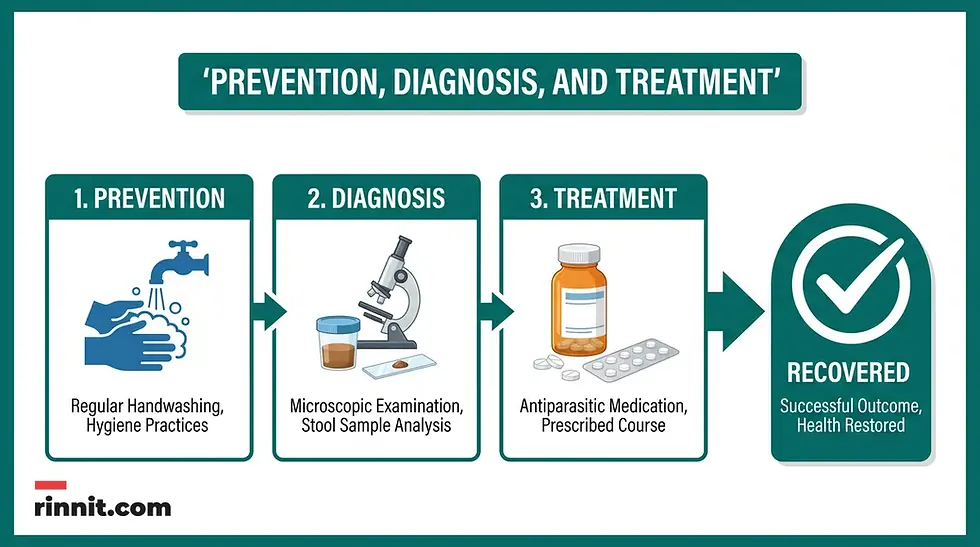
Your provider will ask about your symptoms, perform a physical exam and order stool tests to look for parasite eggs. Often that is the only test you need. Other tests include the Scotch tape test for pinworms, blood tests (which can show anemia or a high eosinophil count), imaging to identify adult worms, and sometimes a colonoscopy. [1]
Treatment
Some infections clear on their own, but most people need prescription antiparasitic drugs, which work by paralyzing parasites, stopping their growth, or killing the parasite or its eggs. The medicine depends on the parasite. Examples include pyrantel pamoate for pinworms, mebendazole or albendazole for soil-transmitted worms, and metronidazole, tinidazole or trimethoprim/sulfamethoxazole for protozoa. Depending on the medicine, you may need one dose, or daily doses for three days up to three weeks. While you recover, stay hydrated and eat small portions of uncontaminated food. [1]
Prevention
Access to clean water and waste facilities is the best way to prevent most infections. You can also reduce your risk by drinking clean water (and using bottled water if unsure), washing your hands regularly with clean water and soap, eating carefully prepared produce in high-risk areas, wearing shoes and gloves, and cooking whole cuts of meat to 145°F (62.8°C) and ground meat to 160°F (about 71°C). [1]
Go to the emergency room if you have signs of dehydration, such as several episodes of severe watery diarrhea, dizziness, sudden confusion, headache, decreased or dark urine, or fatigue. [1]
Take action. Wash your hands after using the bathroom and before handling food, cook meat to safe temperatures and avoid untreated water. For more evidence-based health guides, visit Rinnit.com.
Frequently Asked Questions
Can I see intestinal worms in my poop?
Usually it is the eggs, not the worms, that show up in stool, and they are too small to see without a microscope. Tapeworms are the exception: segments can break off into stool and look like small grains of white rice.
How common are parasites in the United States?
In the U.S., the most common intestinal infections are from protozoa, especially Giardia, and pinworms are the most common intestinal worm.
Can my pet give me intestinal parasites?
It is possible. Parasite eggs can survive on surfaces, including pet fur, so touching a contaminated surface and then your mouth can spread them. Wash your hands after handling pets or cleaning up after them.
What is the best way to wash parasite eggs off my hands?
Cleveland Clinic recommends washing your hands regularly with clean water and soap, especially after using the bathroom, before handling food or eating, and after cleaning up after children or pets.
Can intestinal parasites cause problems like malnutrition?
Depending on the parasite, untreated infections can lead to complications such as dehydration from severe diarrhea, malnutrition and iron-deficiency anemia, and a heavy parasite load raises the risk of severe symptoms.
Are intestinal parasites contagious?
Intestinal parasites can spread from person to person when eggs from stool are swallowed, for example by touching a contaminated surface and then your mouth. That is why handwashing matters.
What is the most common intestinal parasite in the world?
Ascariasis, an infection with Ascaris roundworms, is the most common intestinal parasite infection globally and affects about 1 billion people.
Can I get a parasite from a swimming pool?
Contaminated water can spread parasites, and that includes pools, rivers and lakes. Avoid swallowing water in places that may be contaminated.
Do I need a special diet or cleanse to get rid of parasites?
Most people need prescription antiparasitic drugs, and the specific medicine depends on the parasite. See a healthcare provider for diagnosis and treatment.
How long does treatment take?
Depending on the medicine, you may need a single dose, or one or more doses daily for anywhere from three days up to three weeks. Some pinworm treatments require waiting a while before taking a second dose.
Can parasites live outside the body?
Some parasite eggs can survive on surfaces such as bed linens, pet fur and even human skin for a long time, and some worm larvae live in contaminated soil.
Is anal itching always a sign of parasites?
Not always, but it is a classic symptom of pinworm infection, which is the most common intestinal worm infection in the U.S., and it tends to be worse at night.
Can undercooked fish give me parasites?
Yes. You can get tapeworms from undercooked pork, beef or fish, and flukes from contaminated water or infected aquatic plants or fish.
What happens if a parasite infection is left untreated?
Depending on the parasite, complications can include dehydration, malnutrition, iron-deficiency anemia and bowel obstruction, and in some cases organ damage if a tapeworm travels to the brain, eyes, heart, lungs or liver.
How can I prevent intestinal parasites?
Access to clean water and sanitation is the best protection. You can also drink clean water, wash your hands regularly, wear shoes in high-risk areas, eat carefully prepared produce in high-risk areas and cook meat to safe temperatures.
Related Reading
Stool Test: Types, How to Collect a Sample and What Results Mean explains the stool tests used to find infections, bleeding and other gut problems.
References
Cleveland Clinic. Intestinal Parasites. Cleveland Clinic. Last updated February 23, 2024. https://my.clevelandclinic.org/health/diseases/intestinal-parasites
Taghipour A, et al. Global prevalence of intestinal parasitic infections and associated risk factors in pregnant women: a systematic review and meta-analysis. Trans R Soc Trop Med Hyg. 2021;115(5):457-470. PMID 33007067. https://doi.org/10.1093/trstmh/traa101
Abaka-Yawson A, et al. Global prevalence and associated factors of intestinal parasitic infections among institutionalized populations: a systematic review and meta-analysis. BMC Infect Dis. 2025;25(1):1806. PMID 41286726. https://doi.org/10.1186/s12879-025-12228-z
Medical disclaimer
This article is for general educational purposes only and is not a substitute for professional medical advice, diagnosis, or treatment. Always seek the advice of your physician or other qualified health provider with any questions you may have regarding a medical condition.



Comments