Hypochloremia: Understanding Low Chloride Levels

Updated: 2 days ago
Medically reviewed by Dr. Baraa Alnahhal, MD · Last reviewed: October 2026
Quick Answer: What Is Hypochloremia?
Hypochloremia is a condition in which chloride in the blood falls below the normal adult range of 96 to 106 mmol/L. [1] Chloride is an electrolyte that helps balance fluids, maintain pH and send nerve signals. [1] Low chloride rarely causes symptoms itself but can point to kidney, heart or fluid problems, and untreated cases may cause kidney damage or irregular heartbeat. [1]

What the research says
Low chloride is linked to a higher risk of death in heart failure. A meta-analysis of 15 studies (25,848 patients) found that hypochloremia was associated with higher all-cause mortality (hazard ratio 1.56; 95% CI 1.38 to 1.75), and each 1 mmol/L lower chloride was linked to a 6% higher risk (hazard ratio 1.06). Hypochloremia prevalence in the included studies ranged from 8.6% to 31.5% (Stankowski et al., Journal of Cardiovascular Medicine, 2024) [2].
About 1 in 7 people with heart failure has low chloride. A meta-analysis of 18 studies (29,807 patients) estimated a pooled prevalence of 14.0% (95% CI 11.9% to 16.2%), though results varied widely between studies (Chen et al., Nursing Open, 2025) [3].
Low chloride that persists is a worse sign than a single low reading. Among 348 patients hospitalized for heart failure at least twice (26 on dialysis were excluded), the 16 with hypochloremia (below 98 mmol/L) at discharge both times had the highest mortality, with an adjusted hazard ratio of 3.49 for all-cause death and 3.92 for cardiac death (Nozaki et al., Journal of Clinical Medicine, 2023) [4].
Key Takeaways
Feature | Details |
Primary Definition | Blood chloride below the normal range (below 96 mmol/L in adults) [1] |
Common Causes | Kidney disease, dehydration (vomiting, diarrhea, heavy sweating), diuretics [1] |
Symptoms | Usually none; symptoms of the underlying cause such as dehydration, muscle weakness or trouble breathing [1] |
Diagnosis | Chloride blood test; sometimes a urine chloride test [1] |
Standard Treatment | Treating the cause, IV saline, diet or medicine changes, sometimes supplements [1] |
Prevention | Staying hydrated and managing kidney, heart and liver conditions |
The Role of Chloride in the Body
Chloride is a type of electrolyte, a mineral that carries an electric charge when dissolved in body fluids such as blood. [1] It is most common in table salt (sodium chloride). [1] It helps balance body fluids, keeps the body's acid and base level (pH) steady and helps nerves send signals. [1] Healthy kidneys filter out extra chloride, which leaves the body in urine. [1]
When chloride falls, the body has a harder time regulating its internal environment. Low chloride often goes hand in hand with metabolic alkalosis, a state in which the blood becomes too alkaline.
Recognizing the Signs and Symptoms
Low chloride usually does not cause symptoms. [1] Instead, people tend to notice the symptoms of whatever caused it. For example, if severe dehydration is the cause, you will feel the effects of dehydration rather than the low chloride itself.
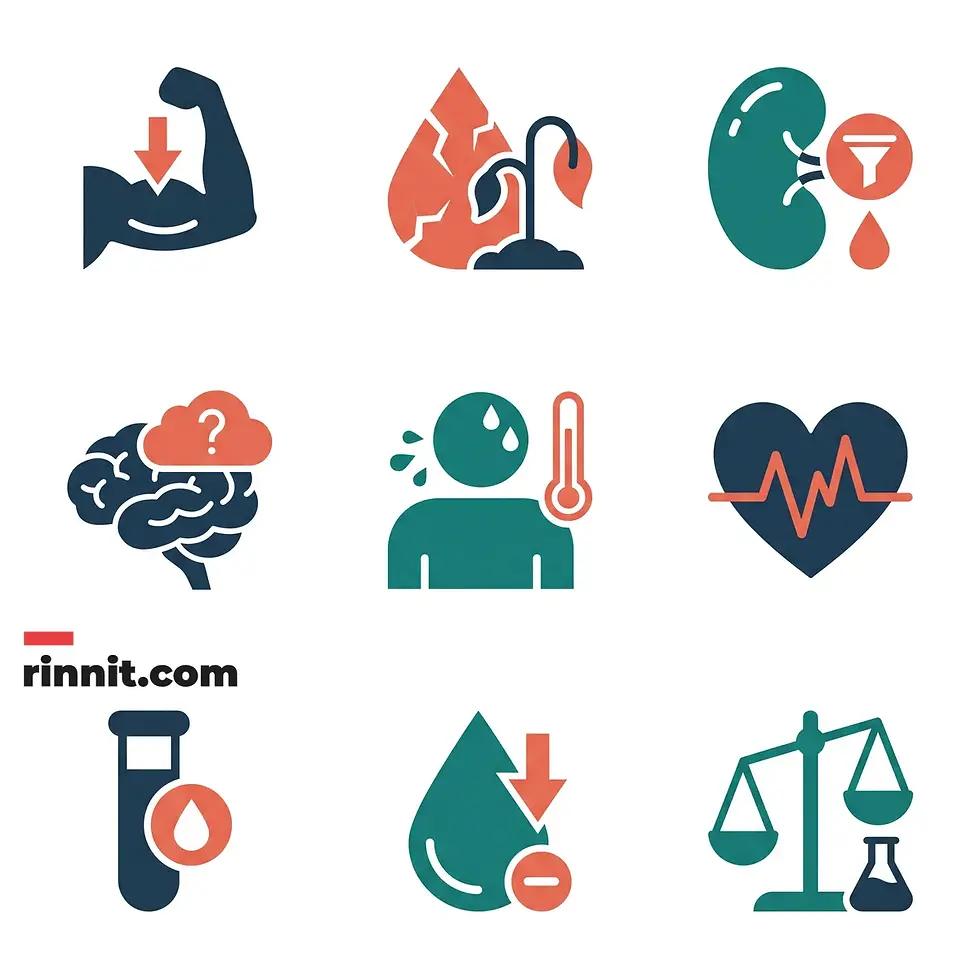
Possible Signs Linked to Low Chloride
Without treatment, hypochloremia may cause kidney damage, an irregular heartbeat (arrhythmia) and a blood pH imbalance. [1]
Common Causes of Hypochloremia
Conditions that affect how well the kidneys work are some of the more common causes, including acute kidney injury (AKI) and chronic kidney disease (CKD). [1] Losing a lot of body fluid through sweating, vomiting or diarrhea can also lower chloride. [1]
Category | Specific Causes |
Kidney Conditions | Acute kidney injury, chronic kidney disease [1] |
Other Medical Conditions | Congestive heart failure, liver disease, long-term lung disease such as emphysema, SIADH [1] |
Fluid Loss | Heavy sweating, long-term vomiting, long-term diarrhea [1] |
Medications | Diuretics, laxatives, corticosteroids, bicarbonate antacids [1] |
Acid-Base Problems | Long-term respiratory acidosis, metabolic alkalosis [1] |
Heart failure deserves a closer look. Reviews describe low chloride in heart failure as linked to hormonal (neurohumoral) activation, resistance to diuretics and a worse prognosis (Arora, Kidney Medicine, 2023) [5], and researchers have proposed a “chloride theory” in which chloride helps control how body fluid is distributed (Kataoka, Cardiology and Therapy, 2021) [6]. Low chloride does not mean you have heart failure.
Diagnosis and Clinical Testing
Healthcare providers diagnose hypochloremia with a chloride blood test, which is part of routine blood work. [1] The test measures the amount of chloride in the liquid part of your blood.
Preparation: you do not need to fast before a chloride blood test. [1]
Urine test: a urine chloride test is sometimes added to see how much chloride you lose in your urine. [1]
Results: you should get your results within a few days. [1]
Typical ranges: adults 96 to 106 mmol/L; children 90 to 110 mmol/L; newborns 96 to 106 mmol/L; premature babies 95 to 110 mmol/L. [1] Hypochloremia is diagnosed when levels fall below these ranges.
Treatment and Management Strategies
Treatment depends on the cause. The goal is to treat the root problem and restore the body's electrolyte balance.
Standard Treatment Options
Intravenous (IV) saline: salt water given through a vein to replace fluid and chloride. [1]
Medication changes: your provider may stop, adjust or switch medicines that lower chloride. [1]
Dietary changes: eating more chloride can help raise levels. [1]
Chloride supplements: may be used under a provider's guidance. [1]
Specialist care: a kidney specialist (nephrologist) for kidney conditions, or a hormone specialist (endocrinologist) for SIADH. [1]
If dehydration is the cause, recovery is often quick, usually within one to three days depending on severity. [1] If you have chronic kidney disease or another kidney condition, you may need regular appointments to protect your kidney function. [1]
Chloride-Rich Foods
Table salt is the most common source of chloride. [1] Foods that naturally contain more chloride include celery, lettuce, rye, tomatoes, olives and seaweed. [1] Talk to a healthcare provider or dietitian before changing your eating patterns, because too much salt can be bad for you. [1]

Long-Term Outlook and Prevention
With proper treatment, the outlook for mild hypochloremia is good. [1] If a more serious condition such as heart or kidney disease is the cause, you may need regular follow-up blood tests to keep chloride in a healthy range. [1]
Prevention Tips
Stay hydrated: drink enough water each day. [1]
Limit dehydrating drinks: avoiding alcohol and caffeine can help you stay hydrated. [1]
Take medicines as prescribed: and report any side effects to your provider.
Treat vomiting and diarrhea early: these are common causes of dehydration.
Keep your providers informed: share any history of heart, liver or kidney problems. [1]
Conclusion
Hypochloremia is an important clue to the body's internal balance. It may not cause obvious symptoms, but finding it helps uncover problems such as dehydration, kidney disease or heart failure before they cause complications. By staying hydrated and working with healthcare professionals to manage long-term conditions, most people can keep their electrolytes in a healthy range.
Frequently Asked Questions
What is the most common cause of hypochloremia?
Kidney problems, such as acute kidney injury and chronic kidney disease, are among the more common causes. [1] Fluid loss from long-term vomiting, diarrhea or heavy sweating is another frequent cause.
Can low chloride be dangerous?
Without treatment, low chloride may lead to kidney damage, an irregular heartbeat (arrhythmia) and a blood pH imbalance. [1] Mild cases with a clear cause usually have a good outlook.
Do I need to fast before a chloride blood test?
No. You do not need to stop eating or drinking before a chloride blood test. [1]
How long does it take to recover from low chloride caused by dehydration?
Depending on how severe it is, dehydration should resolve within one to three days once fluids are replaced. [1] Recovery from other causes depends on the underlying condition.
Does low chloride cause symptoms?
Usually not. If you have symptoms, they most often come from the underlying cause, such as dehydration, vomiting, diarrhea, muscle weakness or trouble breathing.
What foods are high in chloride?
Celery, lettuce, rye, tomatoes, olives and seaweed contain chloride, and table salt (sodium chloride) is the most common source. [1] Talk to a healthcare provider or dietitian before changing your diet, because too much salt can be harmful.
Does low chloride mean I have heart failure?
No. Low chloride does not mean you have heart failure, although newer research suggests chloride may play a larger role in heart failure than once thought.
What is the normal range for chloride in adults?
The typical range for adults is 96 to 106 mmol/L. [1] Hypochloremia is diagnosed when chloride falls below the normal range.
Can medications cause low chloride?
Yes. Diuretics, laxatives, corticosteroids and bicarbonate-containing antacids can lower chloride. [1] Do not stop a prescribed medicine without talking to your provider.
Who treats hypochloremia?
Primary care providers often manage it. Depending on the cause, you may also see a kidney specialist (nephrologist), or a hormone specialist (endocrinologist) if SIADH is the cause.
What is chloride and what does it do?
Chloride is an electrolyte, a mineral that carries an electric charge in body fluids. It helps balance fluid levels, keeps acid and base levels (pH) steady and helps nerves send signals. [1]
What are the normal chloride ranges for children and babies?
Typical ranges are 90 to 110 mmol/L for children, 96 to 106 mmol/L for newborns and 95 to 110 mmol/L for premature babies. [1] Ranges can differ slightly between laboratories.
Can vomiting cause low chloride?
Yes. Long-term vomiting causes loss of fluid and stomach acid, which contains chloride, and it can lead to dehydration.
Can diarrhea cause low chloride?
Yes. Long-term diarrhea causes loss of fluid and electrolytes, including chloride, and can lead to dehydration.
Can heavy sweating cause low chloride?
Yes. Sweat contains salt, so sweating a lot without replacing fluids and electrolytes can lower chloride and cause dehydration.
Do diuretics (water pills) cause low chloride?
They can. Diuretics make the kidneys remove more salt and water, which can lower chloride. Your provider may adjust the dose or switch medicines if this happens.
Can laxatives, antacids or corticosteroids lower chloride?
Yes. Laxatives, bicarbonate-containing antacids and corticosteroids are all listed among medicines that can lower chloride levels. [1]
Is hypochloremia the same as hyponatremia?
No. Hyponatremia is low sodium, and hypochloremia is low chloride. They can occur together because sodium and chloride are both lost in body fluids, but each is measured separately.
What is metabolic alkalosis and how is it linked to low chloride?
Metabolic alkalosis is a state in which the blood becomes too alkaline. It is listed among the conditions that can lower chloride [1], and the two often occur together.
How common is low chloride in people with heart failure?
A meta-analysis of 18 studies with 29,807 heart failure patients found that about 14% had hypochloremia, although results varied widely between studies (Chen et al., Nursing Open, 2025) [3].
Does low chloride affect outcomes in heart failure?
In a meta-analysis of 15 studies with 25,848 patients, hypochloremia was associated with a higher risk of death from any cause (hazard ratio 1.56) (Stankowski et al., Journal of Cardiovascular Medicine, 2024) [2]. This shows a link, not that low chloride is the cause.
Why do researchers study chloride in heart failure?
Reviews describe low chloride in heart failure as linked to hormonal (neurohumoral) activation, resistance to diuretics and a worse prognosis, and researchers have proposed that chloride helps control how body fluid is distributed (Arora, 2023; Kataoka, 2021) [5] [6].
Can kidney disease cause low chloride?
Yes. Healthy kidneys filter out extra chloride, so acute kidney injury and chronic kidney disease can upset chloride levels. [1]
Can liver disease cause low chloride?
Yes. Liver disease is one of the medical conditions that can lower chloride levels. [1]
Can lung disease cause low chloride?
Long-term lung diseases such as emphysema, and long-term respiratory acidosis (too much carbon dioxide in the blood), are listed among the conditions that can lower chloride. [1]
What is SIADH?
SIADH stands for syndrome of inappropriate antidiuretic hormone secretion. The body holds on to extra water, which dilutes electrolytes in the blood, and it can lower chloride. A hormone specialist (endocrinologist) helps treat it.
How is hypochloremia diagnosed?
With a chloride blood test, which is part of routine blood work. [1] Low chloride is diagnosed when the level falls below the normal range.
Is a urine chloride test needed?
Sometimes. A urine chloride test measures how much chloride you pass in urine and can help show whether chloride is being lost through the kidneys or through another route.
How long do test results take?
You should usually get the results of your tests within a few days. [1]
How is hypochloremia treated?
Treatment depends on the cause. Options include IV saline, eating more chloride, stopping or adjusting medicines, chloride supplements, and treating a kidney condition or SIADH with a specialist.
Can I take chloride supplements?
Chloride supplements are one possible treatment, but only take them under the guidance of a healthcare provider, because the right dose depends on the cause and on your kidney and heart health.
Should I eat more salt if my chloride is low?
Not on your own. Eating more chloride can help in some cases, but too much salt can be harmful, especially with high blood pressure, heart or kidney disease. Ask your provider or a dietitian first.
Can oral rehydration solutions help?
For mild dehydration from vomiting or diarrhea, oral rehydration solutions replace fluid and salts, including chloride. Ask your provider first, especially for infants, older adults and people with kidney or heart disease.
What does IV saline do?
IV saline is salt water given through a vein. It replaces fluid and chloride quickly and is used for more serious cases or when someone cannot drink enough.
What happens if low chloride is not treated?
It may cause kidney damage, an irregular heartbeat or a blood pH imbalance, and the underlying cause, such as dehydration or kidney disease, can get worse.
Can hypochloremia be prevented?
It depends on the cause, but staying hydrated, treating vomiting and diarrhea early, taking medicines exactly as prescribed and managing heart, liver and kidney conditions all help.
Can drinking too much water cause low chloride?
Drinking very large amounts of water in a short time can dilute the electrolytes in your blood, including chloride and sodium. This is uncommon in healthy people.
Who is at higher risk of hypochloremia?
People with kidney, heart or liver disease, chronic lung disease or SIADH, people taking diuretics, laxatives or corticosteroids, and anyone with long-term vomiting, diarrhea or heavy sweating.
Can children and babies get hypochloremia?
Yes. Children and babies have their own normal ranges, and the same causes, such as dehydration, kidney problems and some medicines, can lower chloride.
Does low chloride cause muscle weakness?
Muscle weakness can occur as a symptom of the underlying cause of low chloride, such as dehydration or other electrolyte problems.
Does low chloride cause trouble breathing?
Trouble breathing is listed among the symptoms linked to the conditions that cause low chloride. If you have trouble breathing, get medical help promptly.
What is the difference between chloride and salt?
Chloride is one part of salt. Table salt is sodium chloride, made of sodium and chloride, and it is the most common dietary source of chloride.
Is low chloride the same as low stomach acid?
No. Low stomach acid (hypochlorhydria) is a digestive condition, while hypochloremia means a low chloride level in the blood.
Is a low chloride result an emergency?
Usually not by itself. Get urgent care if you also have severe vomiting or diarrhea, cannot keep fluids down, or have confusion, severe weakness, a fast or irregular heartbeat or trouble breathing.
How often should chloride be rechecked?
Your provider will decide. After a diagnosis, regular follow-up blood tests are recommended to make sure levels return to and stay in a healthy range.
When should I see a healthcare provider?
See a provider if you have symptoms of a condition that can cause low chloride, such as ongoing vomiting, diarrhea or signs of dehydration. If you are diagnosed with hypochloremia, schedule regular follow-up visits for blood tests.
Do alcohol and caffeine affect chloride?
They do not lower chloride directly, but both can contribute to dehydration, so limiting them helps you stay hydrated.
Does low chloride mean my kidneys are damaged?
Not necessarily. Kidney problems are a common cause, so your provider will usually check kidney function, but dehydration and other causes are also common.
Is a chloride test part of a routine blood panel?
Yes. Chloride is measured as part of routine blood tests that check electrolytes, so low levels are often found by chance.
Can low chloride cause an irregular heartbeat?
Without treatment it may. Chloride works with other electrolytes that keep the heart's electrical system steady, so see your provider about any palpitations or irregular heartbeat.
Related Reading
Chloride Blood Test: Normal Range and What High or Low Levels Mean explains the electrolyte test behind high and low chloride results.
References
Cleveland Clinic. Hypochloremia (Low Chloride Levels): Causes & Symptoms. Cleveland Clinic. Last updated April 1, 2026. https://my.clevelandclinic.org/health/diseases/low-chloride-levels
Stankowski K, Villaschi A, Tartaglia F, et al. Prognostic value of hypochloremia on mortality in patients with heart failure: a systematic review and meta-analysis. J Cardiovasc Med (Hagerstown). 2024;25(7):499-510. PMID 38809244. https://doi.org/10.2459/JCM.0000000000001644
Chen X, Yin R, Lu M, et al. Prevalence of hypochloremia in patients with heart failure: a systematic review and meta-analysis. Nurs Open. 2025;12(3):e70178. PMID 40045504. https://doi.org/10.1002/nop2.70178
Nozaki Y, Yoshihisa A, Sato Y, et al. Persistent hypochloremia is associated with adverse prognosis in patients repeatedly hospitalized for heart failure. J Clin Med. 2023;12(4):1257. PMID 36835793. https://doi.org/10.3390/jcm12041257
Arora N. Serum chloride and heart failure. Kidney Med. 2023;5(4):100614. PMID 36911181. https://doi.org/10.1016/j.xkme.2023.100614
Kataoka H. Chloride in heart failure syndrome: its pathophysiologic role and therapeutic implication. Cardiol Ther. 2021;10(2):407-428. PMID 34398440. https://doi.org/10.1007/s40119-021-00238-2
Disclaimer
This article is for informational purposes only and does not constitute medical advice. If you have a low chloride result or symptoms of dehydration, kidney or heart problems, talk to a healthcare professional promptly.



Comments