Homocystinuria: Understanding the Genetic Buildup of Homocysteine

Updated: 3 days ago
Medically reviewed by Dr. Baraa Alnahhal, MD · Last reviewed: October 2026
Quick Answer: What is homocystinuria?
Homocystinuria is an inherited condition in which the body lacks an enzyme needed to break down homocysteine properly. [1] Classical homocystinuria, the most common type, is caused by changes in the CBS gene. [1] Features include dislocated eye lenses, severe nearsightedness, learning problems and a higher risk of blood clots. [1] Treatment includes vitamin B6, betaine, a low-methionine diet and folate or B12. [1] [2]

What the research says
Long-term treatment sharply cuts vascular events in classical homocystinuria. A review of 158 patients with 2,822 patient-years of treatment found 17 vascular events during treatment, against a predicted 112 if left untreated (relative risk 0.09, 95% CI 0.036 to 0.228). The author notes that in untreated patients, half will have a vascular event before age 30, and that recognized treatments include pyridoxine (with folic acid and vitamin B12), a methionine-restricted, cystine-supplemented diet, and betaine (Yap, Journal of Inherited Metabolic Disease, 2003) [2].
Early diagnosis changes the course of the disease, but newborn screening can miss cases. A review prompted by three cases found through expanded newborn screening in Emilia-Romagna, Italy, reports that early diagnosis and treatment affect the natural history of CBS deficiency, with therapy aiming to keep homocysteine below 100 µmol/L. It also notes that the risk of false-negative screening results is not negligible. The region's incidence was 1 in 118,000 live births (Candela et al., Children, 2023) [3].
Evidence on treating the rarer remethylation defects is thinner. A review of inherited homocystinurias notes that the natural history of CBS deficiency is relatively well described, while few data are available on treatment, especially for remethylation defects such as the CblC defect and MTHFR deficiency (Schiff & Blom, Neuropediatrics, 2012) [4].
Key Takeaways
Category | Details |
What it is | A rare inherited disorder in which the body cannot properly process the amino acid homocysteine [1] |
Main types | Classical (CBS deficiency, the most common) and cobalamin (cbl) cofactor defects; other genes such as MTHFR, MTR, MTRR, and MMADHC can also cause it [1] |
Inheritance | |
Body systems affected | Eyes, skeleton, central nervous system, and blood vessels [1] |
How common | The most common type affects about 1 in 200,000 to 335,000 people worldwide [1] |
Diagnosis | Newborn screening, homocysteine test, and a vitamin B6 challenge for classical disease [1] |
Treatment | |
Outlook | With early diagnosis and lifelong treatment, most children can expect to live normal, healthy lives [1] |
What Is Homocystinuria?
Homocystinuria (HCU) is a rare genetic disorder that affects your body's ability to process the amino acid homocysteine, which leads to a harmful buildup of homocysteine in your blood and urine. [1] The buildup can cause severe complications involving your eyes, skeletal system, central nervous system, and vascular system. [1]
Amino acids are the building blocks of protein. Your body gets another amino acid, methionine, from the food you eat, particularly high-protein foods, and normally breaks it down into homocysteine. [1] With homocystinuria, your body lacks an enzyme it needs to process homocysteine properly and keep it in a normal range. [1] Researchers do not yet know why excess homocysteine causes the symptoms associated with homocystinuria. [1]
Homocystinuria vs. Marfan Syndrome
Marfan syndrome is a rare genetic disorder of the connective tissue that shares many symptoms with homocystinuria, including long limbs, long and slender fingers, lens dislocation, and nearsightedness. Marfan syndrome is caused by a mutation in the FBN1 gene, and people with Marfan syndrome have normal levels of homocysteine and methionine. [1]
How Common Is It?
The most common type of homocystinuria affects about 1 in 200,000 to 335,000 people worldwide. [1] Because it is genetic, it can affect anyone, but some studies show it appears more often in countries such as Ireland, Norway, Germany, and Qatar. [1] One review reports an incidence ranging from 1 in 344,000 worldwide to 1 in 65,000 in Ireland. [2]
Types of Homocystinuria
Researchers classify homocystinuria by its underlying genetic cause. Knowing the type matters because it shapes treatment. [1]
Type | What is involved |
Classical (CBS deficiency) | The most common type. The CBS gene makes little or no cystathionine beta-synthase enzyme, or an enzyme that does not work properly. The enzyme needs vitamin B6 (pyridoxine) to function. [1] |
Cobalamin (cbl) cofactor defect | Your body must convert vitamin B12 into the form it needs to turn homocysteine back into methionine. In this type, the body cannot complete those steps, or makes defective enzymes. [1] |
Other remethylation defects |
Classical homocystinuria is further classified by how well you respond to vitamin B6 supplements [1]:
Vitamin B6-responsive: Your body makes enough CBS enzyme, so vitamin B6 may help the enzyme do its job. [1]
Partially vitamin B6-responsive: Your body makes some CBS enzyme, so vitamin B6 may partially help. [1]
Vitamin B6-non-responsive: Your body does not make enough CBS enzyme, so vitamin B6 probably will not help. [1]
Symptoms and Systemic Effects
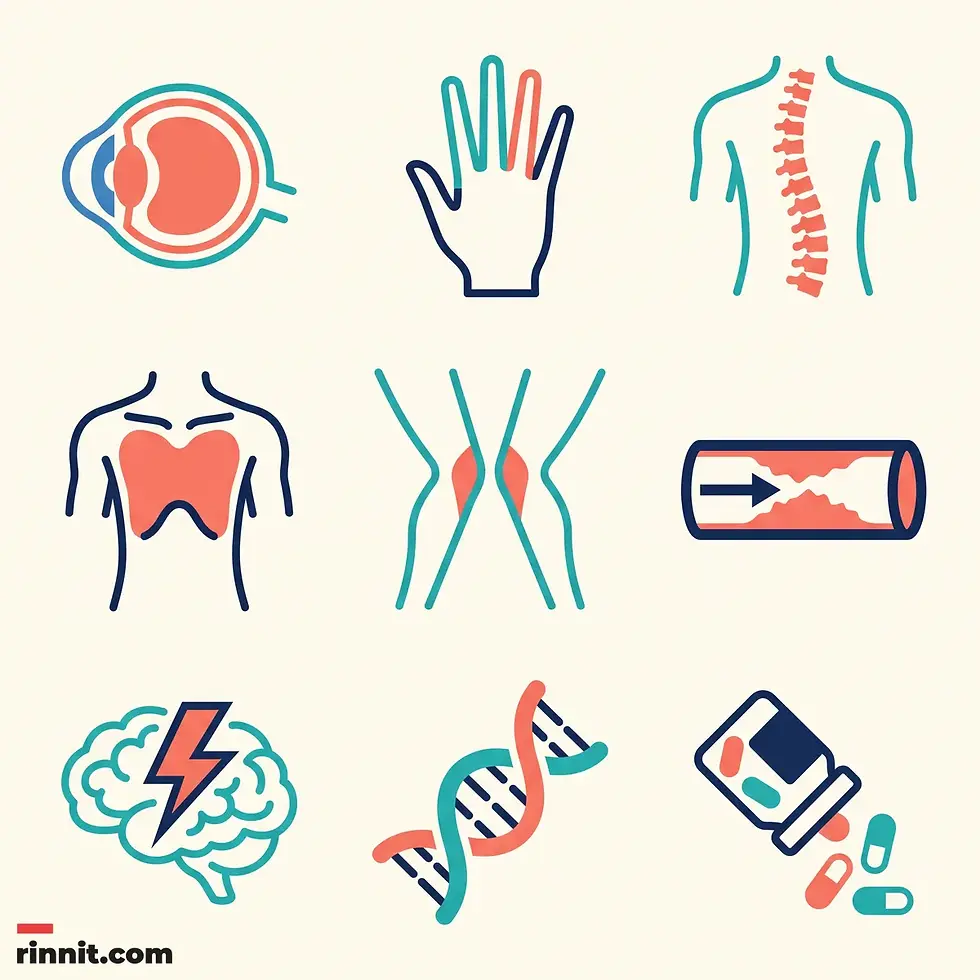
Symptoms vary by type. They typically develop during the first few years of life, but some people do not develop any symptoms until adulthood. [1] The most common type usually involves the eyes, skeletal system, central nervous system, and vascular system. [1]
Eyes
Dislocation of the lenses of the eyes (ectopia lentis)
Severe nearsightedness (myopia)
Skeletal System
Excessive growth
Long arms, legs, fingers, and toes
Knees bent inward that touch when the legs are straight (knock knees)
Sunken or protruding chest
Curvature of the spine (scoliosis)
Risk of early osteoporosis
Central Nervous System
Developmental delays
Learning problems
Vascular System
People with homocystinuria have an increased risk of blood clots, which can lead to stroke or pulmonary embolism. [1] In untreated patients, vascular events remain the major cause of illness and death, and half will have an event before age 30. [2]
Causes and Inheritance
Genetic changes (mutations) in many different genes cause most types of homocystinuria. A mutation in the CBS gene causes the most common type. The CBS gene tells your body how to make the enzyme cystathionine beta-synthase. [1] Mutations in the MTHFR, MTR, MTRR, and MMADHC genes can also cause homocystinuria. [1]
Homocystinuria is inherited in an autosomal recessive pattern. Both of your biological parents, who usually have no symptoms, must pass on a copy of the affected gene for you to inherit it. [1] As a general rule for recessive conditions, when both parents carry one copy of the gene, each pregnancy has a 25% chance of producing an affected child.
Homocystinuria can also occur for non-genetic reasons: a severe lack of vitamin B6, vitamin B9 (folate), or vitamin B12 may cause the condition. [1]
Diagnosis and Testing
Newborn screening: In the United States, the newborn screening test checks for metabolic conditions, including homocystinuria. A homocysteine test measures homocysteine and methionine levels in your baby's blood, and a positive result leads to additional tests to confirm it. [1]
Homocysteine test: If symptoms develop later, your provider will order a homocysteine test to confirm the condition. [1]
Vitamin B6 challenge: If you have classical homocystinuria, this test shows how you respond to vitamin B6 supplements and which subtype you have, so your provider can build the right treatment plan. [1]
Genetic testing: It can look for mutations in the genes that cause homocystinuria, but providers do not typically use it, because the condition can usually be diagnosed with the homocysteine test alone. [1]
Screening is not perfect. Newborn screening tests are not always 100% accurate and sometimes do not detect certain conditions, so some people are diagnosed only after symptoms appear. [1] A review likewise notes that the risk of false-negative newborn screening results is not negligible. [3]
Management and Treatment Strategies
Treatment manages symptoms by controlling the homocysteine level in your blood. [1] For CBS deficiency, a review describes the treatment aim as lowering homocysteine promptly and keeping it below 100 µmol/L. [3]

Vitamin B6-Responsive Classical Homocystinuria
Treatment usually includes a vitamin B6 supplement. If you have vitamin B6-responsive classical homocystinuria, B6 supplements alone may be enough to reduce and control your homocysteine levels. [1]
Non-Responsive or Partially Responsive Types
If you have vitamin B6-non-responsive or partially responsive classical homocystinuria, B6 alone is not enough. Additional options include [1]:
Betaine (Cystadane): A medication that can help lower homocysteine levels in your blood.
A special diet: A diet that restricts your protein and methionine intake.
Additional supplements: If you have another type of homocystinuria, you may need folate (vitamin B9) or cobalamin (vitamin B12) supplements.
Staying on treatment matters. In a review of 158 patients, vascular events during treatment were far fewer than would have been predicted without it. [2]
Outlook and Prevention
With early diagnosis and lifelong treatment, most children with homocystinuria can expect to live normal, healthy lives. [1]
You cannot prevent homocystinuria because it is a genetic condition. If you are pregnant or planning to become pregnant, consider talking to a genetic counselor, who can help you understand your risk of having a child with homocystinuria. [1]
Conclusion
Homocystinuria is a serious but manageable genetic condition. Early diagnosis, often through newborn screening, followed by lifelong treatment to control homocysteine levels can help protect the eyes, skeleton, nervous system, and blood vessels. If you or your child has been diagnosed, work with an expert in metabolic conditions and consider genetic counseling to understand your family's risk.
Frequently Asked Questions
What is the main cause of homocystinuria?
Genetic changes (mutations) cause most types of homocystinuria. A mutation in the CBS gene causes the most common type. [1]
Is homocystinuria the same as Marfan syndrome?
No. The two share symptoms such as long limbs, long and slender fingers, lens dislocation, and nearsightedness. Marfan syndrome is caused by a mutation in the FBN1 gene, and people with Marfan syndrome have normal levels of homocysteine and methionine. [1]
Can homocystinuria be cured?
It is managed rather than cured. Treatment controls homocysteine levels in your blood, and with early diagnosis and lifelong treatment most children with homocystinuria can expect to live normal, healthy lives. [1]
How is homocystinuria diagnosed in babies?
In the United States, the newborn screening test checks for metabolic conditions, including homocystinuria. It measures levels of homocysteine and methionine in your baby's blood, and a positive result leads to more tests to confirm it. [1]
What happens if homocystinuria is left untreated?
It can cause severe complications involving the eyes, skeleton, central nervous system, and vascular system. [1] In untreated patients, vascular events remain the major cause of illness and death. [2]
What is the most common treatment?
Treatment usually includes a vitamin B6 supplement. For B6-responsive classical homocystinuria, B6 alone may be enough to reduce and control homocysteine levels. [1]
Do I need a special diet?
If you have B6-non-responsive or partially B6-responsive classical homocystinuria, you may need a diet that restricts your protein and methionine intake, along with other treatments. [1]
Is homocystinuria contagious?
No. It is a genetic condition inherited from your parents. [1]
What are the eye symptoms?
The most common eye symptoms are dislocation of the lenses (ectopia lentis) and severe nearsightedness (myopia). [1]
Can adults be diagnosed with homocystinuria?
Yes. Symptoms typically begin in the first few years of life, but some people do not develop symptoms until adulthood. [1]
What is betaine?
Betaine (Cystadane) is a medication that can help lower homocysteine levels in your blood. It is used when vitamin B6 alone is not enough. [1]
What are the skeletal symptoms?
They include excessive growth, long arms, legs, fingers, and toes, knock knees, a sunken or protruding chest, and curvature of the spine (scoliosis). People with homocystinuria are also at risk of early osteoporosis. [1]
How common is homocystinuria?
It is rare. The most common type affects about 1 in 200,000 to 335,000 people worldwide. [1] A review reports incidence ranging from 1 in 344,000 worldwide to 1 in 65,000 in Ireland. [2]
Can homocystinuria cause strokes?
It increases the risk of blood clots, which can lead to stroke or pulmonary embolism. [1]
Does it affect intelligence?
It can cause developmental delays and learning problems. [1] A review lists intellectual impairment among the effects seen in untreated classical homocystinuria. [2]
Can genetic counseling help families?
Yes. Genetic counseling can help you understand your risk of having a child with homocystinuria, which is useful if you are pregnant or planning a pregnancy. [1]
What is methionine?
Methionine is an amino acid. Your body gets it from the food you eat, particularly high-protein foods, and normally breaks it down into homocysteine. [1]
Why are vitamins important in homocystinuria?
The CBS enzyme needs vitamin B6 (pyridoxine) to work properly, and vitamin B12 (cobalamin) is involved in converting homocysteine back into methionine. Some types need folate (vitamin B9) or B12 supplements. [1]
What is the life expectancy?
With early diagnosis and lifelong treatment, most children with homocystinuria can expect to live normal, healthy lives. [1]
What is ectopia lentis?
It is the dislocation of the lens of the eye, one of the main eye symptoms of homocystinuria. [1]
Does it affect males and females?
Homocystinuria is inherited in an autosomal recessive pattern, which means it can affect anyone. [1]
Can a lack of vitamins cause homocystinuria?
A severe lack of vitamin B6, vitamin B9 (folate), or vitamin B12 may cause the condition for non-genetic reasons. [1] True homocystinuria is genetic.
What is the vitamin B6 challenge?
It is a test used when classical homocystinuria is confirmed. It shows how you respond to vitamin B6 supplements, so your provider can develop the right treatment plan. [1]
What types of homocystinuria are there?
The two main types are classical homocystinuria (CBS deficiency) and cobalamin (cbl) cofactor metabolism defects. Mutations in the MTHFR, MTR, MTRR, and MMADHC genes can also cause it. [1]
What is the inheritance pattern?
Autosomal recessive. Both biological parents, who usually have no symptoms, must pass on a copy of the affected gene for a child to inherit the condition. [1]
Does it increase the risk of osteoporosis?
Yes. People with homocystinuria are at risk of developing early osteoporosis. [1]
What is nearsightedness?
Nearsightedness (myopia) means distant objects look blurry. Severe nearsightedness is one of the main eye symptoms of homocystinuria. [1]
Can homocystinuria be prevented?
No, because it is a genetic condition. If you are pregnant or planning to become pregnant, a genetic counselor can help you understand your risk. [1]
Is homocystinuria more common in some countries?
Some studies suggest it appears more often in Ireland, Norway, Germany, and Qatar. [1] A review reports an incidence as high as 1 in 65,000 in Ireland. [2]
Is homocystinuria life-threatening?
It can be serious. Blood clots can lead to stroke or pulmonary embolism [1], and vascular events are the major cause of illness and death in untreated patients [2]. Treatment greatly reduces this risk (see the research box above).
Does treatment reduce the risk of blood clots?
Yes. In a review of 158 patients with 2,822 patient-years of treatment, 17 vascular events occurred, compared with 112 predicted without treatment. [2]
What is pyridoxine?
Pyridoxine is another name for vitamin B6. [1]
What is cobalamin?
Cobalamin is another name for vitamin B12. [1]
What is folate?
Folate is vitamin B9. [1]
Is genetic testing needed?
Genetic testing can look for mutations in the genes that cause homocystinuria, but providers do not typically use it because the condition can usually be diagnosed with the homocysteine test alone. [1]
What is the CBS gene?
The CBS gene tells your body how to make the enzyme cystathionine beta-synthase. [1]
Why is protein restricted in some treatment plans?
Methionine comes from protein, so limiting protein and methionine intake lowers the supply the body has to convert into homocysteine.
Who should I see for treatment?
Cleveland Clinic suggests finding a provider who understands the condition completely, and working with an expert in metabolic conditions may help. [1] Genetic counseling is also available. [1]
Is newborn screening always accurate?
No. Newborn screening tests are not always 100% accurate, so some people are not diagnosed until symptoms appear. [1] A review also notes that the risk of false-negative screening results is not negligible. [3]
What is the aim of treatment?
For CBS deficiency, a review describes the aim as lowering and then maintaining homocysteine concentrations below 100 µmol/L, using pyridoxine and/or betaine with a methionine-restricted diet depending on the patient. [3] Your care team will set your own targets.
What are knock knees?
Knock knees means the knees angle inward and touch when the legs are straight. It is one of the skeletal signs of homocystinuria.
Related Reading
Homocysteine Test: Normal Levels, Causes of High Homocysteine and What It Means for Your Heart explains the blood test linked to B vitamins and heart and stroke risk.
References
Cleveland Clinic. Homocystinuria (HCU): Symptoms, Causes & Treatment. Cleveland Clinic. Last updated July 26, 2023. https://my.clevelandclinic.org/health/diseases/25160-homocystinuria
Yap S. Classical homocystinuria: vascular risk and its prevention. Journal of Inherited Metabolic Disease. 2003;26(2-3):259-265. PMID 12889665. https://doi.org/10.1023/a:1024497419821
Candela E, Zagariello M, Di Natale V, et al. Cystathionine beta-synthase deficiency: three consecutive cases detected in 40 days by newborn screening in Emilia Romagna (Italy) and a comprehensive review of the literature. Children (Basel). 2023;10(2):396. PMID 36832525. https://doi.org/10.3390/children10020396
Schiff M, Blom HJ. Treatment of inherited homocystinurias. Neuropediatrics. 2012;43(6):295-304. PMID 23124942. https://doi.org/10.1055/s-0032-1329883
Disclaimer
This article is for informational purposes only and does not constitute medical advice. Always seek the advice of your physician or other qualified health provider with any questions you may have regarding a medical condition.



Comments