Holiday Heart Syndrome: Understanding Alcohol-Induced Atrial Fibrillation

Updated: 3 days ago
Medically reviewed by Dr. Baraa Alnahhal, MD · Last reviewed: October 2026
Quick Answer
Holiday heart syndrome is atrial fibrillation triggered by binge drinking, usually defined as five or more drinks for men or four or more for women within two hours. Its common symptom is heart palpitations. It usually goes away within 24 hours. The main dangers are blood clots that can lead to stroke and life-threatening heart rhythms. [1]
What the research says
Binge drinking measurably changes how the heart behaves. In a study of 50 patients who drank an average of 8.4 standard drinks, average heart rate rose from 72 to 80 beats per minute during drinking, left atrial emptying fraction fell from 57.9% to 53.5% after the binge, and three patients developed AF 11, 29 and 34 hours afterward. (Voskoboinik et al., Int J Cardiol, 2021)
Alcohol is increasingly viewed as a modifiable risk factor for AF. A review of the evidence concluded that hypertension, structural heart disease, neurohumoral stress and cardiometabolic disorders all favor alcohol-triggered AF, and proposed classifying alcohol as a modifiable risk factor for AF and heart disease. It also noted that studies of moderate drinking have produced inconsistent results. (Hatley et al., Am J Med, 2024)
What is Holiday Heart Syndrome?

Holiday Heart Syndrome describes a short-term abnormal heart rhythm, or arrhythmia, that typically follows a period of excessive alcohol consumption. The name originated when medical researchers noticed a significant spike in atrial fibrillation (AFib) cases during the months of December and January, coinciding with holiday celebrations. [1]
Alcohol impacts the heart in two primary ways. First, it can directly damage the heart muscle, interfering with its ability to pump efficiently. Second, alcohol acts as a diuretic, causing the body to lose essential electrolytes like potassium and sodium through increased urination. The heart requires a precise balance of these electrolytes to maintain a steady electrical rhythm. [1]
Recognizing the symptoms
The symptoms of Holiday Heart Syndrome can be alarming and often appear a day or two after drinking. Many people describe a sensation of their heart "skipping a beat" or pounding rapidly against their chest.
Common signs to watch for
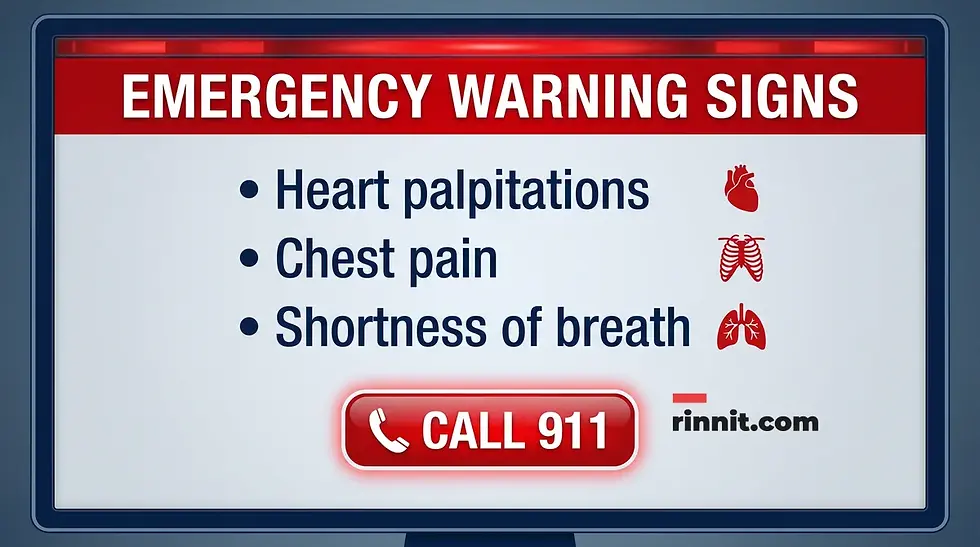
Heart palpitations: A racing or fluttering heart sensation.
Fatigue and weakness: An unusual lack of energy or physical strength.
Shortness of breath: Difficulty catching your breath, even at rest.
Chest pain: Discomfort or pressure in the chest area.
If you experience these symptoms, it is critical to seek medical evaluation. While the arrhythmia may be temporary, it requires professional monitoring to prevent complications.
Causes and contributing factors
While binge drinking (usually defined as five or more drinks for men or four or more for women within about two hours) is the primary cause, the holidays bring other factors that put extra demand on the cardiovascular system. [1]
The "holiday trio" of triggers
Excessive alcohol: The most direct cause of rhythm disruption.
High-salt foods: Salty holiday snacks cause the body to retain fluid, making the heart work harder.
Holiday stress: The pressure of seasonal activities increases adrenaline, which can trigger AFib.
Even young, healthy individuals without a history of heart disease can develop Holiday Heart Syndrome if these factors converge.
Diagnosis and medical management
When you arrive at an emergency room with suspected Holiday Heart, healthcare providers will focus on stabilizing your rhythm and preventing clots.
Common diagnostic tests
Electrocardiogram (EKG): To map the heart's electrical activity.
Blood tests: To check oxygen and electrolyte levels.
Echocardiogram: An ultrasound to view the heart's structure.
Treatment options
Treatment often involves IV hydration to restore electrolytes and vitamins. In some cases, doctors may prescribe beta-blockers to manage heart rate or anticoagulants to reduce the risk of stroke. If the heart does not return to a normal rhythm on its own, a procedure called cardioversion may be used to reset it. [1]
Conclusion
Holiday Heart Syndrome is a stark reminder of how lifestyle choices during celebrations can impact long-term health. While most people recover quickly, the condition serves as a warning sign for potential future cardiovascular issues. By moderating alcohol intake, managing stress, and staying active, you can enjoy the holidays without compromising your heart's health.
Prioritize your heart health. Learn more about managing arrhythmias and heart recovery at Rinnit.com.
Frequently Asked Questions
Do I have to stop drinking alcohol completely after an episode?
Not necessarily, but you should discuss your individual risk with a doctor. Avoiding alcohol is the most effective way to prevent a recurrence.
Can one drink cause Holiday Heart?
Binge drinking is usually defined as five or more drinks for men or four or more for women within about two hours, but sensitivity to alcohol varies. For some, even a smaller amount can trigger symptoms.
Is Holiday Heart the same as a heart attack?
No. A heart attack is caused by a blockage of blood flow, while Holiday Heart is an electrical rhythm problem. However, both can cause chest pain.
How long does the recovery take?
Most people feel better within 24 hours, though you may be advised to avoid strenuous activity for a few days.
Why does salt matter for Holiday Heart?
Salt causes fluid retention, which increases blood volume and puts more pressure on the heart muscle.
Can stress alone cause Holiday Heart?
Stress is a significant contributing factor, but it usually acts as a trigger alongside alcohol or high-salt intake.
What is the most dangerous complication of Holiday Heart?
Stroke is the most serious risk, as the irregular rhythm can allow blood to pool and form clots.
Does Holiday Heart happen only in December?
No. It can happen anytime someone engages in binge drinking, but it is most common during holiday seasons.
Are men at higher risk than women?
Statistics suggest that males are more likely to be diagnosed with Holiday Heart, though it affects all genders.
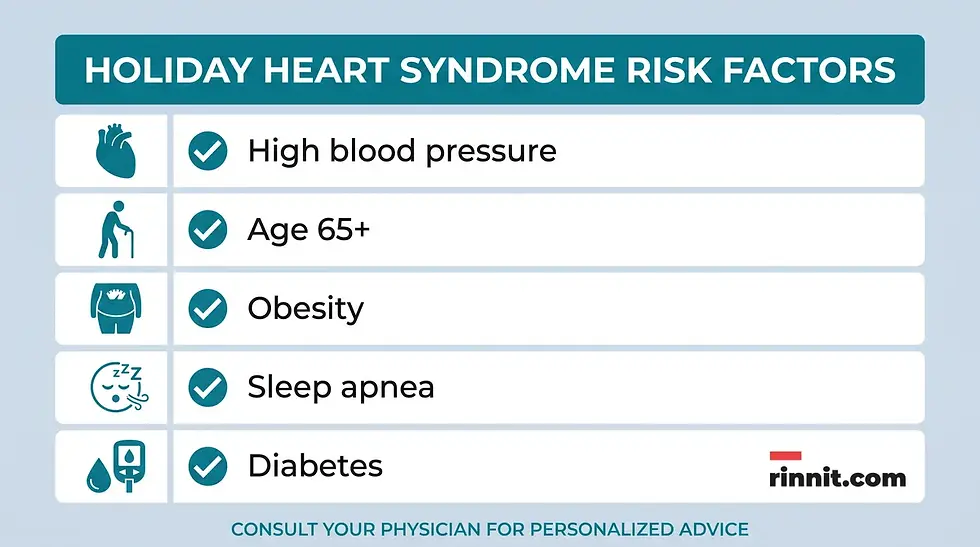
Can sleep apnea make Holiday Heart worse?
Yes. Sleep apnea puts chronic stress on the heart, making it more sensitive to the effects of alcohol.
What should I do if my heart starts pounding after a party?
Call 911 or your local emergency number, especially if you have chest pain, fainting or severe shortness of breath. Do not drive yourself.
Will Holiday Heart go away on its own?
In many cases, yes, but medical monitoring is necessary to ensure no dangerous complications arise.
Does age affect the risk?
Yes, individuals over age 65 are at a higher risk due to natural changes in heart structure and function.
What is cardioversion?
Cardioversion is a medical procedure that uses electricity or medication to reset the heart's rhythm to normal.
Can exercise prevent Holiday Heart?
Regular physical activity improves overall heart health, which can reduce your baseline risk, but it won't prevent an episode caused by binge drinking.
Related Reading
Blood Alcohol Content (BAC): What It Measures, BAC Levels and Effects, and What Results Mean explains BAC levels and how alcohol affects your body as your blood alcohol rises.
References
Cleveland Clinic. Holiday Heart. Cleveland Clinic. Last updated November 10, 2025. https://my.clevelandclinic.org/health/diseases/holiday-heart-syndrome
Hatley M, et al. Alcohol and Atrial Fibrillation: An Update and New Perspectives. Am J Med. 2024;137(11):1042-1048. PMID 38971529. https://doi.org/10.1016/j.amjmed.2024.06.038
Jain A, et al. Holiday Heart Syndrome. StatPearls [Internet], NCBI Bookshelf. Last updated January 16, 2024. https://www.ncbi.nlm.nih.gov/books/NBK537185/
Voskoboinik A, et al. Acute electrical, autonomic and structural effects of binge drinking: Insights into the 'holiday heart syndrome'. Int J Cardiol. 2021;331:100-105. PMID 33548379. https://doi.org/10.1016/j.ijcard.2021.01.071
Yan J, et al. Holiday Heart Syndrome, Atrial Fibrillation, and RyR2 Antagonist. J Cardiovasc Pharmacol. 2022;80(5):636-638. PMID 35976144. https://doi.org/10.1097/FJC.0000000000001352
Medical disclaimer
This article is for general educational purposes only and is not a substitute for professional medical advice, diagnosis, or treatment. Always seek the advice of your physician or other qualified health provider with any questions you may have regarding a medical condition.



Comments