Histrionic Personality Disorder: Signs, Causes, and Recovery

Updated: 2 days ago
Medically reviewed by Dr. Baraa Alnahhal, MD · Last reviewed: October 17, 2026
Quick Answer
Histrionic personality disorder is a Cluster B personality disorder defined by excessive emotionality and persistent attention-seeking behavior. Common signs include discomfort when not the center of attention, dramatic speech and behavior and shifting, shallow emotions. Proposed causes include genetics, childhood trauma and inconsistent parenting. The main treatment is psychotherapy, including group therapy and CBT. [1]
What the research says
HPD is under-researched, but psychotherapy outcomes are linked to the therapy relationship. In a non-controlled study of 159 patients with HPD (cited lifetime prevalence 1.8%) who received clarification-oriented psychotherapy, improvements in the patient-therapist relationship were systematically related to better outcomes. (Babl et al., Clin Psychol Psychother, 2023)
Personality disorders overall are common and carry higher mortality. A meta-regression of 60 studies across 28 countries (139,373 people in the prevalence analyses) found pooled prevalence of any personality disorder of 4.1% (95% UI 2.8-6.0) in low- and middle-income countries and 5.2% (3.7-7.3) in high-income countries, with a pooled standardised mortality ratio of 2.2 (1.8-2.9). (Shadid et al., Lancet Psychiatry, 2025)
What Is Histrionic Personality Disorder?
Histrionic personality disorder (HPD) is a mental health condition marked by intense, unstable emotions and a distorted self-image. The word "histrionic" means "dramatic or theatrical." For people with HPD, self-esteem depends on the approval of others instead of coming from a true feeling of self-worth, and they have an overwhelming desire to be noticed. [1]
HPD is one of the "Cluster B" personality disorders, which involve dramatic and erratic behavior. It is relatively rare, with researchers estimating that about 1% of people have it, but it can disrupt relationships and cause significant distress. [1]

Recognizing the Signs and Symptoms
The main feature of HPD is displaying excessive, superficial emotionality and sexuality to draw attention. People with HPD often have a "larger than life" presence that can seem charming at first but may become exhausting for those around them. Their emotions shift quickly and can seem shallow, so interactions may come across as fake or performative. [1]
Diagnostic Criteria
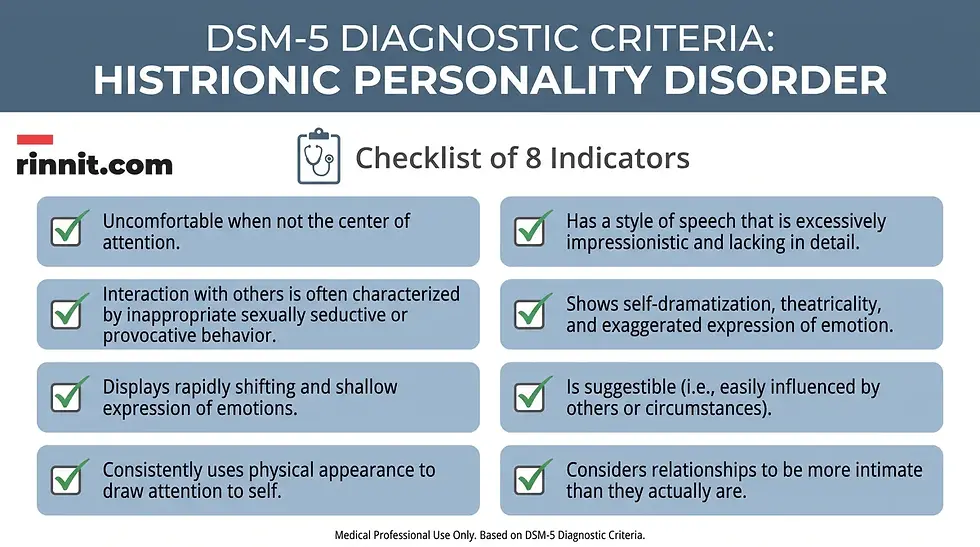
Providers base a diagnosis on the American Psychiatric Association's Diagnostic and Statistical Manual of Mental Disorders, which requires five or more of the following persistent behaviors: [1]
Criterion | Behavior Description |
Center of attention | Feels uncomfortable or underappreciated when not the focus of attention |
Seductive behavior | Inappropriately seductive or provocative behavior with others |
Shallow emotions | Rapidly shifting and shallow expression of emotions |
Physical appearance | Consistently uses appearance to draw attention to self |
Impressionistic speech | Speech that is dramatic but vague and lacking in detail |
Theatricality | Self-dramatization and exaggerated expression of emotion |
Suggestibility | Easily influenced by others or by circumstances |
Intimacy perception | Considers relationships to be more intimate than they are |
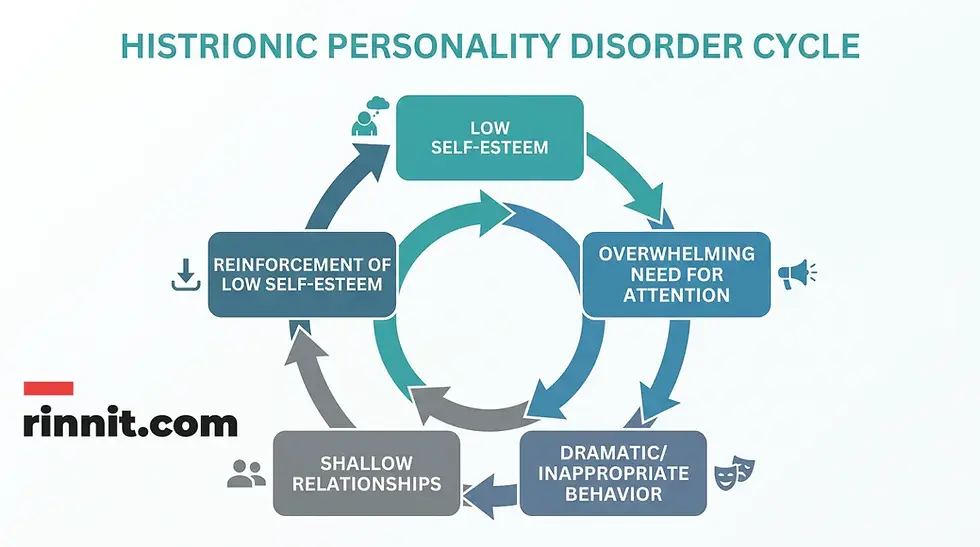
These behaviors can feed one another. Low self-esteem creates an intense need for attention, dramatic or inappropriate behavior is used to get it, and the resulting shallow relationships can reinforce the low self-esteem. [1]
Understanding the Causes
Personality disorders, including HPD, are among the least understood mental health conditions. Studies point to several factors that may contribute: [1]
Genetics: HPD tends to run in families, so scientists think there may be an inherited link. [1]
Childhood trauma: Coping with trauma, such as child abuse or the death of a family member, may later become part of a personality disorder in adulthood. [1]
Parenting styles: Parenting that lacks boundaries, is over-indulgent or is inconsistent may raise the risk, as may parents who display dramatic, erratic or volatile behavior. [1]
Complications and When to Get Urgent Help
People with HPD are at a higher risk of depression and substance use disorders, and are also more likely to have somatic symptom disorder, panic attacks and conversion disorder. Extreme attention-seeking behavior may involve frequent suicidal threats and gestures, and these should always be taken seriously. If you or someone you know may be at risk of self-harm, contact local emergency services or a crisis line right away. [1]
Treatment and Path to Recovery
Most people with HPD do not believe their behavior is a problem, and they tend to exaggerate their feelings and dislike routine, which can make following a treatment plan difficult. They often seek help only when depression, anxiety or a loss such as a failed relationship causes distress. Psychotherapy (talk therapy) is generally the treatment of choice. Its goal is to help the person uncover the motivations and fears behind their thoughts and behavior and learn to relate to others more positively. [1]
Types of Psychotherapy That May Help
Group therapy: Seeing their own behavior reflected back by others in a supervised group can be eye-opening, particularly in a group with other people who have HPD. [1]
Cognitive behavioral therapy (CBT): A structured, goal-oriented approach that helps people identify negative thought patterns and replace them with healthier habits. [1]
Psychodynamic psychotherapy: Focuses on the psychological roots of emotional distress and on problematic relationship patterns. [1]
Supportive psychotherapy: Aims to improve symptoms and to maintain or improve self-esteem and coping skills. [1]
No medication currently treats personality disorders, but medicines for depression or anxiety can help when those conditions are also present. [1]
Conclusion
HPD is a complex condition rooted in a deep need for outside validation, but it is treatable. There is no cure, yet many people with HPD live productive lives, and those who take part in talk therapy tend to do better as they gain insight and function better socially. With the right therapeutic support, people can build genuine self-esteem and steadier, more meaningful relationships. [1]
Prioritize your mental well-being. Find resources and support for personality disorders at Rinnit.com.
Frequently Asked Questions
Is histrionic personality disorder more common in women?
It is more commonly diagnosed in females, but researchers think males may be underdiagnosed. [1]
Can histrionic personality disorder be cured?
There is no cure, but many people with HPD have productive lives. People who take part in talk therapy tend to have better outcomes as they gain insight into their condition and function better socially. [1]
What is the difference between HPD and narcissistic personality disorder?
Both are Cluster B conditions that involve attention-seeking. In general, people with HPD are willing to appear fragile or dependent to get attention, while people with narcissistic personality disorder seek attention to be admired as superior. A mental health professional makes this distinction.
At what age is HPD usually diagnosed?
HPD usually begins in the late teens or early 20s, but providers do not typically diagnose it until after age 18 because personality is still evolving during childhood and adolescence. [1]
Are there medications for HPD?
No medication currently treats personality disorders, but there are medications for depression and anxiety, which people with HPD may also have. Treating those conditions can make it easier to treat HPD. [1]
Can someone with HPD have a long-term relationship?
It can be challenging, because people with HPD often think their relationships are closer than they are and may seem shallow in interactions. Many people with HPD still have meaningful relationships, and therapy can help them relate to others more positively. [1]
What are Cluster B personality disorders?
Cluster B is a group of personality disorders that involve dramatic, overly emotional or unpredictable thinking and behavior. HPD is one of them. [1]
Does HPD cause physical symptoms?
HPD does not cause physical illness, but people with HPD are more likely to have somatic symptom disorder, in which a person feels excessively distressed about a physical symptom. [1]
How does HPD affect work life?
People with severe HPD may experience frequent problems at work, for example with colleagues, and in social and romantic relationships. [1]
Is HPD a form of bipolar disorder?
No. HPD is a personality disorder, meaning a long-standing pattern of thinking and behavior, while bipolar disorder is a mood disorder involving distinct episodes of mood change.
Can stress make HPD symptoms worse?
It may. Losing attention or approval can lead to more dramatic or distressing attention-seeking behavior, and people with HPD often seek help only when depression or anxiety follows a loss or a failed relationship. [1]
What is impressionistic speech?
It is a way of speaking that is dramatic and opinionated but has few facts or details to support the opinions expressed. [1]
How can I support a family member with HPD?
Encourage professional therapy and set clear personal boundaries. Family members of people with HPD often experience stress, depression, grief and isolation, so look after your own mental health and seek help if you need it. [1]
Is HPD rare?
Yes, it is relatively rare. Researchers estimate that about 1% of people have the condition; one study of psychotherapy patients cited a lifetime prevalence of 1.8%. [1][2]
What happens if HPD is left untreated?
Untreated HPD can lead to ongoing problems in relationships and at work. People with HPD are also at a higher risk of depression and substance use disorders, so seeking help early can reduce disruption to your life. [1]
Related Reading
Cluster B Personality Disorders: What They Are, Why They Happen, and How They're Treated explains the personality disorder group that includes histrionic personality disorder.
Personality Disorders: Types, Symptoms & Treatment Guide gives an overview of all personality disorder types and treatments.
Borderline Personality Disorder: Symptoms, Causes, and Treatment covers a related Cluster B condition with intense, shifting emotions.
Psychotherapy (Talk Therapy): Types, Uses and What to Expect explains the talk therapy approaches used to treat personality disorders.
References
Cleveland Clinic. Histrionic Personality Disorder. Cleveland Clinic. Last updated April 29, 2022. https://my.clevelandclinic.org/health/diseases/9743-histrionic-personality-disorder
Babl A, Gómez Penedo JM, Berger T, et al. Change processes in psychotherapy for patients presenting with histrionic personality disorder. Clin Psychol Psychother. 2023;30(1):64-72. PMID 35776063. https://doi.org/10.1002/cpp.2769
Shadid J, Ferrari AJ, Bach B, et al. The global epidemiology of personality disorder: a systematic review and meta-regression. Lancet Psychiatry. 2025;12(12):932-946. PMID 41197646. https://doi.org/10.1016/S2215-0366(25)00299-8
This article is for general educational purposes only and is not a substitute for professional medical advice, diagnosis, or treatment. Always seek the advice of your physician or other qualified healthcare provider with any questions you may have about a medical condition. Never disregard professional medical advice or delay seeking care because of something you have read here. If you think you may have a medical emergency, call your doctor or emergency services immediately.



Comments