Hemophilia A: Understanding Factor VIII Deficiency and Treatment

Updated: 3 days ago
Medically reviewed by Dr. Baraa Alnahhal, MD · Last reviewed: October 2026
Quick Answer
Hemophilia A is a bleeding disorder caused by a deficiency in clotting factor VIII. It is an X-linked disorder, so it primarily affects biological males. More than half of those diagnosed have the severe form, which can cause spontaneous bleeding, often into the joints. Beyond traditional plasma therapy, newer treatments include gene therapy and monoclonal antibodies. [1]
What the research says
A weekly antibody injection sharply cut bleeding in people with inhibitors. In the HAVEN 1 trial of 109 males aged 12 or older with hemophilia A and factor VIII inhibitors, the annualized bleeding rate was 2.9 with emicizumab prophylaxis versus 23.3 with no prophylaxis (87% lower), and 63% of treated participants had zero bleeds. (Oldenburg et al., N Engl J Med, 2017)
A single gene therapy infusion raised factor VIII and cut treatment needs in adults with severe hemophilia A. In the phase 3 GENEr8-1 study of 134 men, mean factor VIII activity in the 132 HIV-negative participants rose by 41.9 IU/dL at weeks 49 to 52. Among 112 participants from a prior observational study, factor VIII concentrate use fell by 98.6% and treated bleeding by 83.8%. Liver enzyme (ALT) elevations occurred in 85.8% and were managed with immune suppressants. (Ozelo et al., N Engl J Med, 2022)
Hemophilia A is more common than older estimates suggested. A meta-analysis of registry data from six high-income countries estimated 24.6 cases per 100,000 male births (9.5 per 100,000 for severe disease) and a 30% life expectancy disadvantage in high-income countries. (Iorio et al., Ann Intern Med, 2019)
What is hemophilia A?
Hemophilia A is the most common form of hemophilia, a rare group of bleeding disorders. [1] In a healthy body, a series of proteins called "clotting factors" work together to form a solid plug that stops bleeding after an injury. In people with Hemophilia A, the body does not produce enough of clotting factor VIII (F8). Without enough of this protein, the blood cannot form stable clots, making it difficult to control bleeding even from minor cuts or everyday activities.
Medical professionals often refer to this condition as factor VIII deficiency. The severity of the disease is determined by how much functional factor VIII is present in the blood.
Severity Level | Factor VIII Level | Common Symptoms |
Mild | 5% to 40% of normal | Bleeding only after major surgery or severe injury. |
Moderate | 1% to 5% of normal | Occasional spontaneous bleeding; bleeding after minor injuries. |
Severe | Less than 1% of normal | Frequent spontaneous bleeding into joints and muscles. |
The causes and genetic inheritance of hemophilia A
Hemophilia A is primarily a genetic condition. In approximately 70% of cases, the disorder is inherited from a biological parent through a specific genetic change in the F8 gene. [1]
X-linked inheritance
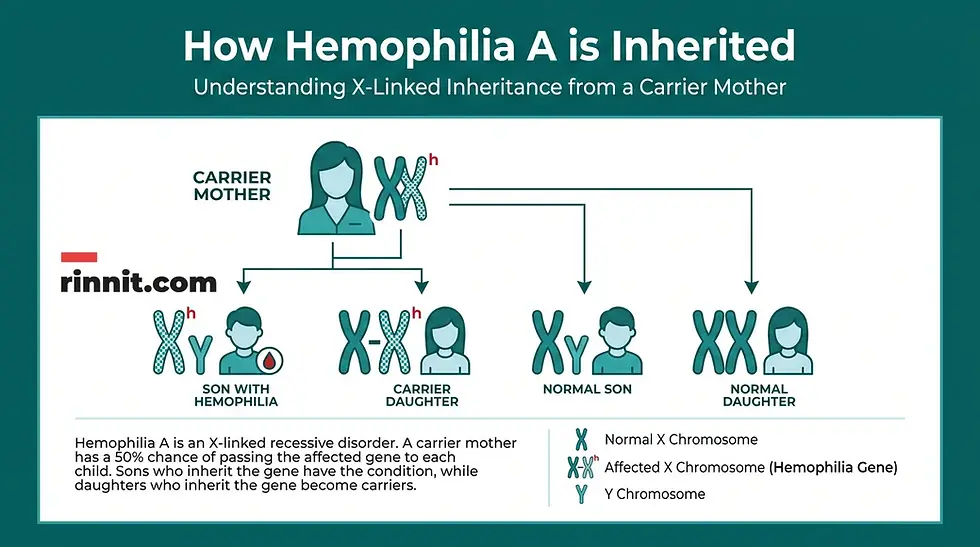
The F8 gene is located on the X chromosome. Because biological males have only one X chromosome (inherited from their mother), inheriting a single changed gene will result in hemophilia. Biological females have two X chromosomes; if they inherit one changed gene, they are considered "carriers." While carriers typically do not have the full disorder, some may experience mild symptoms, such as unusually heavy menstrual periods. [1]
Acquired hemophilia
In rare instances, a person can develop acquired hemophilia. This is not an inherited condition but rather an autoimmune response where the body's immune system mistakenly produces antibodies that attack and destroy the clotting factor VIII protein. [1]
Recognizing the symptoms and complications

The symptoms of Hemophilia A vary significantly based on the severity of the factor deficiency. For those with severe forms, symptoms often appear early in life.
Primary symptoms
Excessive bleeding: This includes nosebleeds that are difficult to stop and prolonged bleeding after dental work, surgery, or minor injuries.
Spontaneous bruising: Large, painful bruises may appear from minor bumps or for no apparent reason.
Joint pain and swelling: Internal bleeding into the joints (known as hemarthrosis) is common. This can cause the joints to feel warm, swollen, and painful to move.
Life-threatening complications
The most serious complication of Hemophilia A is a brain bleed. This is a medical emergency that requires immediate intervention. Warning signs include a severe, persistent headache, double vision, or sudden confusion. Chronic joint bleeding can also lead to permanent joint damage and chronic pain over time. [1]
How is hemophilia A diagnosed?
Diagnosing Hemophilia A involves a series of specialized blood tests to evaluate how well the blood clots and to identify which specific clotting factor is missing. [1]
Complete blood count (CBC): This test measures the overall health of the blood, including the number of red blood cells and platelets.
Clotting time tests: Tests like activated partial thromboplastin time (aPTT) measure the time it takes for a blood sample to form a clot.
Factor activity test: This is the definitive test used to measure the exact percentage of factor VIII activity in the blood.
Genetic testing: This can confirm a mutation in the F8 gene and help identify carriers within a family.
Modern treatment and management strategies
While there is no permanent cure for Hemophilia A, the landscape of treatment has shifted dramatically in recent years, moving toward preventing bleeding rather than just treating it after it occurs. [1]
Replacement and antibody therapies

The traditional treatment is replacement therapy, where lab-made clotting factors are infused into the bloodstream to boost factor VIII levels. Newer monoclonal antibody therapies (such as Hemlibra®) work by mimicking the function of factor VIII or blocking proteins that prevent clotting, providing more stable protection against bleeding. [1]
Breakthrough gene therapy
For adults with severe Hemophilia A who do not have pre-existing antibodies to the virus used as the delivery vehicle, gene therapy (valoctocogene roxaparvovec, Roctavian®) offers a new approach. This treatment uses a modified virus to deliver a functional F8 gene directly to the liver cells, enabling the body to produce its own clotting factor VIII. [5]
Lifestyle and support
Managing Hemophilia A also involves proactive lifestyle choices:
Joint protection: Maintaining a healthy weight reduces the physical stress on joints already prone to bleeding.
Physical activity: Staying active helps strengthen muscles that support the joints, though high-impact contact sports should be avoided.
Mental health: Chronic illness can lead to anxiety and depression; counseling and support groups are often recommended.
Conclusion
Hemophilia A is a lifelong journey, but with early diagnosis and the integration of modern therapies, the outlook for those affected is brighter than ever. By working closely with a specialized hematology team, individuals can manage their symptoms, prevent long-term joint damage, and lead full, active lives.
For more resources on managing bleeding disorders and joint health, visit Rinnit.com.
Frequently Asked Questions
Is Hemophilia A the same as Hemophilia B?
No. While the symptoms are similar, they are caused by different factor deficiencies. Hemophilia A is a lack of Factor VIII, while Hemophilia B is a lack of Factor IX.
Can women have Hemophilia A?
Yes, though it is very rare. A female would need to inherit two changed X chromosomes or have a specific genetic circumstance to have the full disorder. Many females are carriers and may have mild symptoms.
Can you outgrow Hemophilia A?
No. Hemophilia A is a lifelong genetic condition. However, symptoms can be effectively managed with ongoing treatment.
What should I do if I have a severe headache?
If you have Hemophilia A and experience a severe, persistent headache or double vision, go to the emergency room immediately, as these can be signs of a brain bleed.
Are there foods I should avoid?
There are no specific dietary restrictions, but maintaining a healthy weight is highly recommended to reduce pressure on your joints.
Can people with Hemophilia A have surgery?
Yes. With proper planning and the use of replacement therapy to boost clotting factors, people with Hemophilia A can safely undergo surgical and dental procedures.
Is gene therapy a cure?
Gene therapy can significantly increase factor levels for many years, but it is not currently considered a definitive "cure" for everyone, as the effects may vary over time.
How often do treatments need to be taken?
Treatment frequency depends on the type of therapy. Some replacement therapies are taken several times a week, while newer antibody treatments might be taken once a week or even once a month.
Can I play contact sports?
Most doctors recommend avoiding high-impact contact sports like football or hockey due to the high risk of internal bleeding. Swimming and walking are excellent alternatives.
What is "spontaneous" bleeding?
Spontaneous bleeding refers to bleeding that happens without an obvious injury or cause, common in the severe form of the disease.
Is Hemophilia A contagious?
No. It is a genetic condition that is inherited or acquired through an autoimmune response.
How does factor VIII work?
Factor VIII acts as a "spark" in the blood clotting process, helping other proteins come together to form a stable clot.
What is a "carrier"?
A carrier is someone (usually a female) who has one changed gene but does not typically show full symptoms of the disorder, though they can pass the gene to their children.
Why do joints bleed so often?
Joints are under constant stress from movement. In severe hemophilia, even the tiny stresses of walking can cause small blood vessels in the joint lining to leak.
Can I travel with Hemophilia A?
Yes. Most patients travel with their medication and a medical alert ID, and they plan ahead by identifying hemophilia treatment centers at their destination.
Related Reading
Fibrinogen Test: Normal Range and What High or Low Fibrinogen Means explains the blood test for a key clotting protein.
References
Cleveland Clinic. Hemophilia A. Cleveland Clinic. Last updated October 1, 2025. https://my.clevelandclinic.org/health/diseases/23197-hemophilia-a
Oldenburg J, et al. Emicizumab Prophylaxis in Hemophilia A with Inhibitors. N Engl J Med. 2017;377(9):809-818. PMID 28691557. https://doi.org/10.1056/NEJMoa1703068
Ozelo MC, et al. Valoctocogene Roxaparvovec Gene Therapy for Hemophilia A. N Engl J Med. 2022;386(11):1013-1025. PMID 35294811. https://doi.org/10.1056/NEJMoa2113708
Iorio A, et al. Establishing the Prevalence and Prevalence at Birth of Hemophilia in Males: A Meta-analytic Approach Using National Registries. Ann Intern Med. 2019;171(8):540-546. PMID 31499529. https://doi.org/10.7326/M19-1208
U.S. Food and Drug Administration. FDA Approves First Gene Therapy for Adults with Severe Hemophilia A. U.S. Food and Drug Administration. June 29, 2023. https://www.fda.gov/news-events/press-announcements/fda-approves-first-gene-therapy-adults-severe-hemophilia
Medical disclaimer
This article is for general educational purposes only and is not a substitute for professional medical advice, diagnosis, or treatment. Always seek the advice of your physician or other qualified healthcare provider with any questions you may have about a medical condition. Never disregard professional medical advice or delay seeking care because of something you have read here. If you think you may have a medical emergency, call your doctor or emergency services immediately.



Comments