Hemobilia: Causes, Symptoms, and Advanced Treatment Options

Updated: 2 days ago
Medically reviewed by Dr. Baraa Alnahhal, MD · Last reviewed: October 2026
Quick Answer: What is Hemobilia?
Hemobilia is a rare medical condition in which blood enters the biliary tract, usually when an abnormal connection forms between a blood vessel and a bile duct, letting blood flow with bile into the digestive tract. Common causes include complications of liver or gallbladder surgery, trauma and tumors. Untreated, it can cause bile duct blockages or significant blood loss.
What the research says
The classic triad is often missing, so diagnosis depends on suspicion after a procedure. A radiology review explains that most cases follow iatrogenic injury, that the triad of upper GI bleeding, biliary colic, and jaundice is present in only a minority of cases, that bleeding can start long after the initial injury, and that CT is the first-line test with angiography and endoscopy as complementary tools (Parvinian et al., Radiographics, 2021) [2].
Pseudoaneurysms after gallbladder surgery are a documented cause, and embolization usually works. A literature review of 134 patients with symptomatic pseudoaneurysm after laparoscopic cholecystectomy found that about 81% became symptomatic within the first 8 weeks, with gastrointestinal bleeding in 74% and abdominal pain in 61%; trans-arterial embolization was the first-line treatment with a success rate of 83%, and mortality was 7% over a median follow-up of 9 months (Lampropoulos et al., Journal of Minimal Access Surgery, 2021) [5].
Treatment aims to stop the bleeding and keep bile flowing. A narrative review notes that options include endoscopic techniques, angiography with transcatheter arterial embolization, and surgery in severe cases, and that procedures such as radiofrequency ablation and TIPS placement call for post-procedure vigilance (Campos Carmona et al., Cureus, 2024) [1].
Understanding the Basics of Hemobilia
Hemobilia represents a complex clinical scenario where the integrity of the biliary system is compromised by internal bleeding [1]. The biliary tract, which includes the liver, gallbladder, and bile ducts, is responsible for transporting bile to the small intestine to aid in digestion. When blood enters this system, it can interfere with normal digestive processes and lead to significant systemic issues.
The Mechanism of Bleeding
The condition typically arises from an abnormal communication between a hepatic or biliary blood vessel and a bile duct. This connection allows blood to leak directly into the channels meant only for bile. Once blood enters these ducts, it can form clots that obstruct the flow of bile, leading to increased pressure and irritation within the digestive system [2].
Identifying Symptoms and Causes
The presentation of hemobilia can be deceptive, as its symptoms often mimic more common gastrointestinal disorders like stomach ulcers. However, the presence of specific clinical markers, known as Quincke’s triad, is highly suggestive of the condition.
Quincke's Triad and Other Signs
While many patients may only exhibit one or two signs, the classic triad includes upper gastrointestinal bleeding, upper right abdominal pain, and jaundice [1]. The full triad is present in only a minority of cases [2][4]. The pain often occurs in waves as blood clots attempt to move through the narrow bile ducts.
Symptom Category | Clinical Presentation |
Gastrointestinal | Black, tarry stools (melena) or vomiting blood (hematemesis). |
Abdominal | Recurrent pain in the upper right quadrant of the abdomen. |
Systemic | Yellowing of the skin and eyes (jaundice), weakness, and dizziness. |
Respiratory | Shortness of breath, particularly if significant blood loss has occurred. |
Common Causes and Risk Factors
The majority of hemobilia cases are iatrogenic, meaning they occur as a complication of medical care. Procedures involving the liver, such as biopsies or gallbladder surgeries, are the most frequent triggers [2].
Medical Procedures: Liver biopsies, gallbladder removals, and bile duct drain placements.
Traumatic Injury: Blunt force trauma to the upper abdomen from accidents or falls.
Pathological Factors: Liver tumors, cancer, or blood vessel abnormalities like aneurysms.
Inflammatory Conditions: Severe irritation from gallstones or liver abscesses.

Diagnostic Pathways
Because hemobilia is rare, healthcare providers must use advanced imaging to differentiate it from other causes of internal bleeding. Early and accurate diagnosis is essential for preventing life-threatening blood loss and complications [2].
Essential Diagnostic Tests
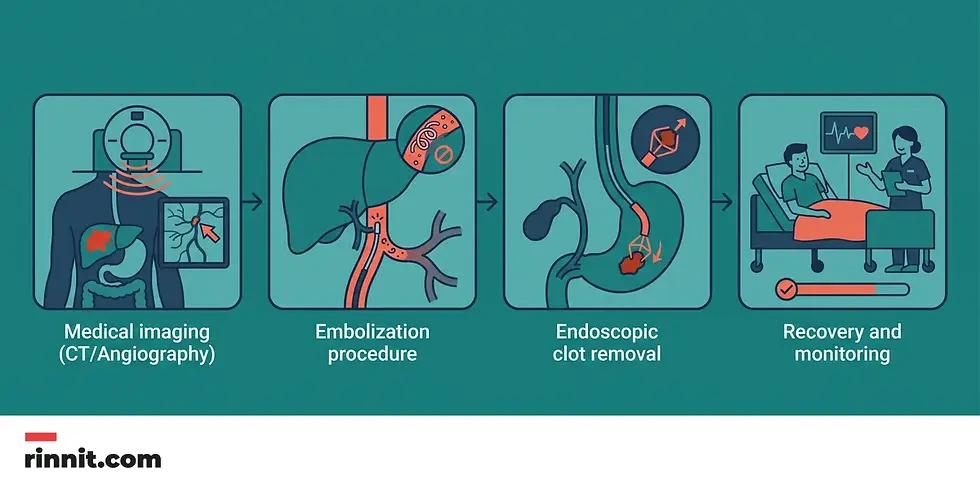
A CT scan is typically the first line of defense, as it can visualize active bleeding and the presence of clots within the biliary tract. More specialized tests may follow to pinpoint the exact location of the vascular leak.
Angiography: Locates the specific blood vessel responsible for the leak and can guide treatment in the same procedure [2].
Ultrasound: Quick and widely available; may show echogenic material in the bile ducts and a dilated gallbladder, though CT is usually the first-line test [3].
ERCP: An endoscopic procedure that allows doctors to see the bile ducts directly and remove any obstructing clots.
MRI/MRCP: Provides detailed images of the biliary tree to assess the extent of the injury.
Management and Recovery Strategies
The primary goals of treating hemobilia are to stop the active bleeding and ensure that bile can once again flow freely into the digestive tract. Treatment plans are tailored to the severity of the bleeding and the underlying cause [1].
Primary Treatment Options
Most modern treatments are minimally invasive, focusing on blocking the damaged blood vessel without the need for major open surgery.
Embolization: Performed during angiography, this involves placing materials to block the bleeding vessel.
Endoscopic Stenting: Placing small tubes (stents) in the bile ducts to keep them open and clear of clots.
Medical Support: Providing intravenous fluids, blood transfusions, or antibiotics to manage complications.
Surgical Intervention: Reserved for cases involving large tumors or when less invasive methods fail [4].
The Path to Recovery
Recovery time varies based on the individual's overall health and the cause of the bleeding. While some patients show improvement within days of the procedure, others may require extended hospital stays to manage anemia or infections. Follow-up imaging is often necessary to confirm that the biliary system remains clear and that no further bleeding occurs [1].
Conclusion
Hemobilia is a rare but critical condition that demands immediate medical attention. By understanding the link between recent medical procedures or abdominal trauma and the onset of jaundice or GI bleeding, patients and providers can achieve faster diagnostic results. With modern interventional techniques like embolization and endoscopic care, the outlook for many patients is good when the condition is recognized and treated promptly, although it can be life-threatening if missed.
Frequently Asked Questions (FAQ)
What is the most common cause of hemobilia?
The most common cause is a complication following a medical procedure involving the liver, gallbladder, or bile ducts, such as a biopsy or surgery.
What is Quincke's triad?
Quincke's triad consists of the three classic symptoms of hemobilia: upper gastrointestinal bleeding, upper right abdominal pain, and jaundice.
Is hemobilia life-threatening?
Yes, if left untreated, it can lead to severe blood loss, anemia, and life-threatening infections or bile duct blockages.
How is hemobilia diagnosed?
It is primarily diagnosed through imaging tests such as CT scans, angiography, ultrasound, and ERCP.
What is embolization in the context of hemobilia?
Embolization is a procedure where a doctor uses angiography to find a bleeding blood vessel and blocks it with specialized materials to stop the leak.
Can gallstones cause hemobilia?
Yes, severe inflammation or irritation caused by gallstones can sometimes lead to bleeding in the biliary tract.
What does "iatrogenic" mean in relation to this condition?
It means the condition was caused by medical examination or treatment, which is the most frequent cause of hemobilia.
How long does it take to recover from hemobilia?
Many patients improve within a few days once the bleeding is stopped, though complications may extend the recovery period.
What are the signs of gastrointestinal bleeding?
Signs include vomiting blood or having black, tarry stools.
Can liver cancer cause hemobilia?
Yes, tumors in the liver or biliary system can erode blood vessels and bile ducts, leading to hemobilia.
What is an ERCP?
ERCP (Endoscopic Retrograde Cholangiopancreatography) is a procedure that combines endoscopy and X-rays to treat problems of the bile and pancreatic ducts.
Why does hemobilia cause jaundice?
Jaundice occurs when blood clots block the bile ducts, causing bile (and bilirubin) to build up in the body instead of flowing into the intestine.
Are there non-surgical treatments for hemobilia?
Yes, most cases are treated with minimally invasive procedures like angiography with embolization or endoscopic clot removal.
Does hemobilia cause permanent liver damage?
If diagnosed and treated early, most people recover fully without permanent damage, but delayed treatment can lead to ongoing liver injury.
Can blunt trauma cause hemobilia?
Yes, significant injuries to the upper abdomen from falls or accidents can damage liver vessels and bile ducts.
What is the biliary system?
It is the group of organs and ducts—including the liver, gallbladder, and bile ducts—that produce, store, and transport bile.
How does blood get into the digestive tract in this condition?
Blood leaks into the bile ducts, mixes with bile, and follows the normal path of bile into the small intestine.
What should I do if I have abdominal pain and jaundice after a liver biopsy?
You should seek immediate medical attention, as these are classic signs of hemobilia following a procedure.
Can blood thinners increase the risk of hemobilia?
Yes, medications that prevent clotting can make it easier for a small vascular leak to develop into significant hemobilia.
What is a hepatic artery aneurysm?
It is a weakened, bulging area in the liver's main artery which, if it ruptures into a bile duct, causes hemobilia.
Is hemobilia common?
No, it is considered a rare condition, though it is a well-known potential complication of liver-related medical care.
Can an infection cause bleeding in the bile ducts?
Yes, liver abscesses or severe infections can damage the structures of the biliary tract and cause bleeding.
What is melena?
Melena is the medical term for dark, tarry stools that indicate bleeding in the upper gastrointestinal tract.
What is hematemesis?
Hematemesis is the medical term for vomiting blood.
How do doctors clear a blocked bile duct?
They often use an endoscope (ERCP) to remove clots or place a stent to keep the duct open.
Can hemobilia happen weeks after a surgery?
Yes, symptoms can sometimes appear days or even weeks after the initial injury or medical procedure.
What is the role of a CT scan in diagnosis?
A CT scan helps doctors see blood clots, active bleeding, and any injuries to the liver or surrounding vessels.
Does everyone with hemobilia have all three symptoms of the triad?
No, many patients only exhibit one or two of the classic symptoms.
Can hemobilia cause anemia?
Yes, significant or chronic bleeding into the biliary tract can lead to a low red blood cell count (anemia).
What is a stent?
A stent is a tiny tube placed inside a duct or vessel to keep it open and ensure fluid can flow through it.
Is surgery always required for liver tumors causing hemobilia?
Surgery is often the preferred treatment for tumors, but embolization may be used first to stabilize the patient by stopping the bleeding.
Can a gallbladder infection lead to hemobilia?
Severe cholecystitis (gallbladder inflammation) can occasionally lead to bleeding if it irritates nearby blood vessels.
What is an angiogram?
An angiogram is a specialized X-ray that uses dye to visualize the inside of blood vessels.
Can hemobilia be prevented?
While not always preventable, following post-procedure instructions and reporting bleeding risks to your doctor can help reduce the chance of complications.
Does hemobilia cause fever?
It can, especially if the blood clots lead to a secondary infection in the bile ducts (cholangitis).
What is the difference between hemobilia and a stomach ulcer?
While both cause GI bleeding, hemobilia involves the biliary tract and often presents with jaundice and right-sided pain, whereas ulcers involve the stomach lining.
What is a liver abscess?
A liver abscess is a pus-filled mass in the liver that can be caused by injury or infection and may lead to vascular damage.
Can children get hemobilia?
Yes, children can develop the condition, usually following abdominal trauma or as a complication of medical procedures.
Is there a specific diet for hemobilia recovery?
Doctors may recommend a specific diet depending on the underlying cause (like gallstones), but the primary focus is on medical stabilization.
Can hemobilia return after treatment?
It is possible if the underlying cause is not fully resolved, which is why follow-up testing is important.
What is the hepatic artery?
It is the main blood vessel that supplies oxygen-rich blood to the liver.
How does a doctor perform embolization?
A catheter is threaded through the blood vessels to the site of the leak, where small coils or glue-like substances are released to block the vessel.
What is MRCP?
MRCP (Magnetic Resonance Cholangiopancreatography) is a type of MRI that focuses specifically on the bile and pancreatic ducts.
Can hemobilia cause dizziness?
Yes, dizziness is a common symptom of significant blood loss and low blood pressure.
What is the first thing a doctor does for suspected hemobilia?
They typically stabilize the patient with fluids if needed and order urgent imaging like a CT scan.
Can a fall from a ladder cause hemobilia?
Yes, any significant blunt force to the upper right abdomen can cause liver trauma leading to hemobilia.
What is the biliary tree?
The "biliary tree" is a term used to describe the branching system of ducts that drain bile from the liver.
Can a liver biopsy be done safely despite the risk?
Yes, liver biopsies are standard procedures; hemobilia is a known but rare risk that doctors are trained to manage.
When should I call a doctor after gallbladder surgery?
Call immediately if you notice yellowing of the eyes, severe right-sided pain, or dark, tarry stools.
Related Reading
Gastrointestinal Bleeding: Where It Comes From, and How Doctors Find and Stop It explains causes, warning signs and care for bleeding in the digestive tract.
Embolization Procedure: How It Works, Types, Risks, and Recovery describes how doctors block a bleeding blood vessel from inside.
Liver Biopsy: Procedure, Types, Risks, and Benefits walks through liver biopsy types, risks and recovery.
ERCP (Endoscopic Retrograde Cholangiopancreatography): Why It's Done, What Happens and Risks explains how ERCP examines and treats problems in the bile ducts.
References
Campos Carmona T, Teran Hooper C, Abbagoni V, et al. Hemobilia: a narrative review of current diagnostic techniques and emerging management strategies. Cureus. 2024;16(11):e73009. PMID: 39634971. https://doi.org/10.7759/cureus.73009
Parvinian A, Fletcher JG, Storm AC, et al. Challenges in diagnosis and management of hemobilia. Radiographics. 2021;41(3):802-813. PMID: 33939540. https://doi.org/10.1148/rg.2021200192
Radiopaedia. Haemobilia. Radiopaedia. Accessed October 15, 2026. https://radiopaedia.org/articles/haemobilia
Zhornitskiy A, Berry R, Han JY, et al. Hemobilia: historical overview, clinical update, and current practices. Liver International. 2019;39(8):1378-1388. PMID: 30932305. https://doi.org/10.1111/liv.14111
Lampropoulos C, Markopoulos G, Tsochatzis S, et al. Symptomatic pseudoaneurysms following laparoscopic cholecystectomy: focus on an unusual and dangerous complication. Journal of Minimal Access Surgery. 2021;17(4):450-457. PMID: 34558424. https://doi.org/10.4103/jmas.JMAS_164_20
Disclaimer
The information provided in this article is for educational purposes only and should not be used as a substitute for professional medical advice, diagnosis, or treatment. Always seek the advice of your physician or other qualified health provider with any questions you may have regarding a medical condition.



Comments