Heminephrectomy (Partial Kidney Removal)

Updated: 2 days ago
Medically reviewed by Dr. Baraa Alnahhal, MD · Last reviewed: October 2026
A heminephrectomy is a surgery that removes part of a kidney that isn't working properly. It most commonly treats a duplex kidney [1]. The main benefit is removing the problematic, nonfunctional part while keeping the healthy part of the organ [1]. It can be done through small laparoscopic or robotic incisions or through one larger flank incision, and recovery takes roughly four to 12 weeks depending on the approach [1].
Quick Answer: What is a heminephrectomy?
A heminephrectomy is the surgical removal of part of a kidney, typically for people with a duplex kidney who have complications such as reflux or a ureterocele. It is done under general anesthesia, laparoscopically, robotically or as open surgery. Most people resume typical activities four to six weeks after minimally invasive surgery. Complications are not common. [1]
What the research says
Minimally invasive surgery matched open surgery on safety in children. A meta-analysis of 10 studies covering 304 children with duplex collecting systems (159 had minimally invasive surgery and 145 had open surgery) found equivalent complication rates (odds ratio 0.80, 95% CI 0.33–1.94). Minimally invasive surgery meant less blood loss, fewer postoperative narcotics, and shorter hospital stays, although operations took longer. The authors note that high-quality prospective studies are still needed (Calvillo-Ramirez et al., Journal of Pediatric Urology, 2025 [2]).
A robot-assisted series highlights a specific risk. In 47 children who had robot-assisted surgery for duplex kidney anomalies, 19 had a robot-assisted heminephrectomy. Four children (25%) in that group developed new vesicoureteral reflux afterward; it resolved in two, and two needed further surgery (Herz et al., Journal of Pediatric Urology, 2015 [3]).
Adults can have it too, with good results in a small series. In 7 adults with duplex kidneys who had robot-assisted upper-pole heminephrectomy through a retroperitoneal approach, none needed conversion to open surgery, there were no major complications, and symptoms resolved in all patients at a mean follow-up of 24 months. Mean operating time was 175 minutes (Qin et al., Therapeutics and Clinical Risk Management, 2019 [4]).
What Does a Heminephrectomy Treat?
People who need a heminephrectomy often have issues with a duplex kidney. A duplex kidney is a congenital condition (present at birth) in which one kidney has two tubes (ureters) that connect to the bladder [1]. Having a duplex kidney isn't always a problem — some people never know they have one. But it can cause the following issues [1]:
Vesicoureteral reflux (VUR): urine flows backward from the bladder to the kidney. Over time, this can damage the kidney.
Ectopic ureter: a ureter drains urine into a nearby organ instead of the bladder, which can damage that organ.
Ureterocele: the bottom of the ureter balloons (bulges) as it enters the bladder, which can block urine flow.
Nonfunctional tissue: part of the kidney stops working because of backflow pressure or blockage.
Most people with a duplex kidney and any of these issues need monitoring for other problems rather than surgery, and if they do need surgery, it may not even be a heminephrectomy. Healthcare providers may recommend a heminephrectomy, or another procedure, if part of your kidney stops working because of backflow pressure (VUR) or blockage (ureterocele) and you develop recurring problems, usually infections [1].
How to Prepare for a Heminephrectomy
Before the surgery, your surgeon will explain the procedure and ask for your consent. They'll perform a physical exam to make sure you're healthy enough for surgery, and ask about [1]:
your health history,
any prescription or over-the-counter medicines you take, including herbal supplements (certain medicines, such as blood thinners, can increase your risk of bleeding), and
any allergies you have.
In the days before surgery, a healthcare provider will tell you when to stop taking certain medicines, if necessary, and when to stop eating and drinking (fast) before the procedure [1].
The Surgical Procedure
A heminephrectomy is performed by a team that typically includes a urologist, an anesthesiologist, and nurses. The anesthesiologist gives general anesthesia so you won't be awake or feel any pain during the procedure, and a Foley catheter is then inserted to drain urine from your bladder [1].
Minimally invasive approaches
Urologists may perform this procedure through a minimally invasive approach [1]:
Laparoscopic surgery: the urologist makes several small incisions in your abdomen. A thin, telescopic rod with a light and a video camera (a laparoscope) goes into one incision to view your kidney, and other surgical instruments go into the other incisions to remove the nonfunctional part of the kidney.
Robotic surgery: a similar procedure, but instead of using their hands directly, the urologist uses a surgical robot to control the instruments.
These methods generally mean less time to heal than open surgery [1].
Open surgery
In some cases, a urologist may need to perform an open heminephrectomy. This involves one longer incision, up to 12 inches (30 centimeters), in your flank — the side of your body between your hips and ribs. An open heminephrectomy gives the urologist a better look at your kidney and allows them to use their hands to remove or repair the affected ureter [1].
A heminephrectomy can take up to two to three hours, though it could take longer depending on your anatomy [1].
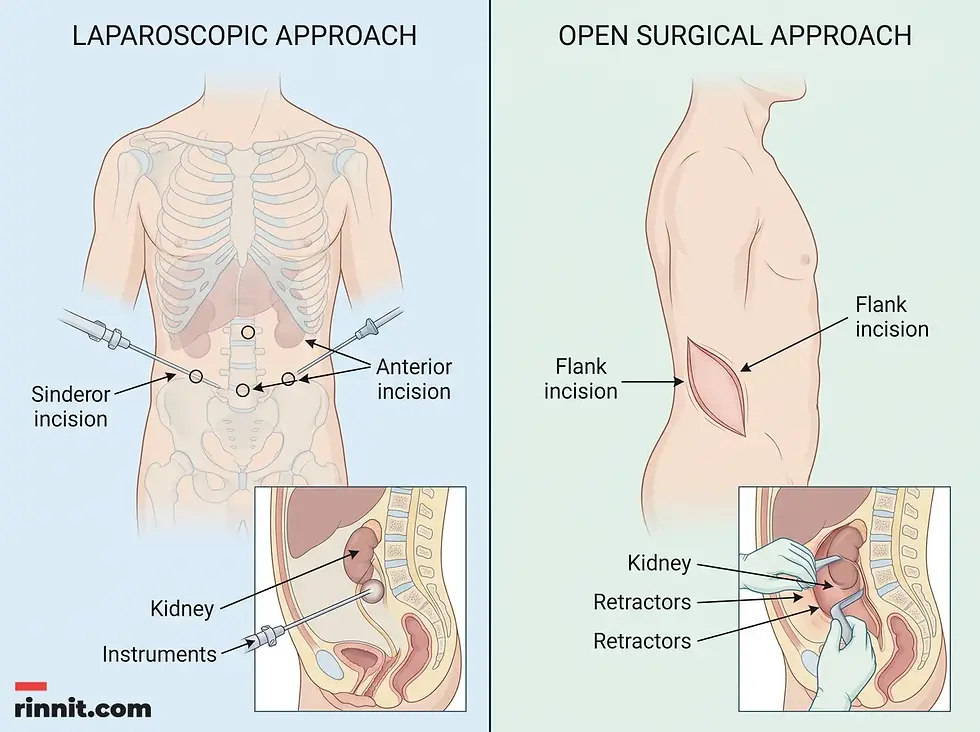
Laparoscopic (small abdominal incisions) versus open (one flank incision) approaches to partial kidney removal.
What Happens After the Procedure
After the surgery, a healthcare provider will stitch your incisions and cover them with bandages, surgical glue, or both. Once you wake up from anesthesia, you'll likely feel very groggy. Nurses will move you to a recovery room, monitor your health, and manage your pain [1].
Once providers decide you're healthy enough, they'll let you go home. That may be the same day, or you may need to stay up to a few days. A family member or friend must drive you home. You may also need to follow a special eating plan and avoid certain activities for a few weeks to give your body time to heal [1].
Recovery and Outlook
Recovery depends on the surgical approach, your health history, and any other conditions you have. Shortly after surgery, healthcare providers will encourage you to get out of bed and walk. Walking helps your body recover, limits your risk of developing blood clots, and prevents pneumonia [1].
Minimally invasive surgery: most people resume their typical activities four to six weeks afterward.
Open surgery: it may take eight to 12 weeks to recover.
Work or school: you should be able to go back three to four weeks after surgery; a more physically demanding job may need more time off.
Lifting: avoid lifting anything heavier than a gallon of water (10 pounds, or 4.5 kilograms).

Key recovery steps and restrictions after a heminephrectomy.
What to eat and drink after a heminephrectomy
A healthcare provider may recommend drinking lots of water (about six to eight glasses each day) and eating well-balanced or soft meals for the first four weeks after a heminephrectomy [1]. These may include:
Bread and butter
Canned applesauce, peaches, or pears
Fish
Mashed potatoes
Meats without skin casing
Well-cooked vegetables
You should avoid the following until you're able to poop as normal (normal bowel function) [1]:
Meat and meat substitutes: including meat with casings (like hot dogs and sausage) and luncheon meats.
Fruits: raw fruits (except bananas), dried fruits (like raisins and prunes), berries, canned fruit cocktail, and pineapple.
Raw vegetables.
Dairy.
Grains: including bran cereals, cereals with nuts, and coarse whole grains.
Clinical Benefits and Risks
The main benefit of a heminephrectomy is that it removes a problematic and nonfunctional part of a duplex kidney [1].
Complications are rare, but as with any surgery, they may occur. Risks include [1]:
Blood clots
Bacterial infection
Damage to nearby organs, including the intestines (bowels), liver, or spleen

Benefits versus clinical risks of heminephrectomy. Individual outcomes vary.
When to Call a Healthcare Provider
Your urologist will schedule follow-up appointments to check on your incisions and stitches as you heal. This is usually seven to 10 days after the procedure, but it may be longer depending on your situation [1]. Contact a healthcare provider immediately if you have any abnormal symptoms, including [1]:
Difficulty breathing
Heavy bleeding around your stitches
Skin pulling away at your stitches
Signs of infection: discoloration (red, purple, brown, or black), fever, pus or drainage, or a bad odor around your incisions
Increased pain
Pain in your legs
Blood in your pee
Bottom Line
A heminephrectomy is a surgery for removing a part of a kidney that isn't working properly — most often in a duplex kidney — while keeping the healthy part. Whether it's done through minimally invasive techniques or open surgery, the main benefit is removing the problematic, nonfunctional tissue. Complications are rare, and recovery follows a clear timeline: about four to six weeks after minimally invasive surgery and eight to 12 weeks after open surgery, with early walking, a soft well-balanced diet, plenty of water, and a lifting limit along the way.
It's natural to feel nervous about surgery on a kidney. Learning as much as you can about the procedure helps, and your healthcare team is there to answer your questions and discuss your concerns.
Your next step: if you or your child has a duplex kidney with recurring infections or reflux, ask your urologist whether monitoring or a procedure such as a heminephrectomy is right for your situation.
Frequently Asked Questions
What is a duplex kidney?
A duplex kidney is a congenital condition where one kidney has two separate ureters connecting to the bladder instead of one.
How long does the surgery take?
A heminephrectomy can take up to two to three hours, though it can take longer depending on your anatomy.
Will I have a catheter after surgery?
A Foley catheter is typically inserted after anesthesia to drain urine from your bladder during the procedure. Your care team will let you know when it can come out.
When can I return to work or school?
Most people can return to work or school three to four weeks after a heminephrectomy, although those with physically demanding jobs may need more time.
Is walking important after surgery?
Yes. Healthcare providers encourage you to get out of bed and walk shortly after the procedure. Walking helps your body recover, limits your risk of blood clots, and helps prevent pneumonia.
What are the main risks of the procedure?
Complications are rare, but risks include blood clots, bacterial infection, and damage to nearby organs such as the intestines, liver, or spleen.
Can I lift heavy objects during recovery?
Avoid lifting anything heavier than a gallon of water (about 10 pounds, or 4.5 kilograms) during recovery. Your urologist will tell you how long the limit applies to you.
How much water should I drink?
A healthcare provider may recommend drinking about six to eight glasses of water each day, and eating well-balanced or soft meals, for the first four weeks.
What happens if I don't have the surgery?
Many people with a duplex kidney never need surgery and are simply monitored. If part of the kidney stops working because of backflow pressure (vesicoureteral reflux) or blockage and you keep having problems — usually infections — your care team may recommend a heminephrectomy. Ongoing reflux can damage the kidney over time.
How soon will I have a follow-up appointment?
Follow-up appointments are usually scheduled about seven to 10 days after the procedure to check your incisions and stitches, though it may be longer depending on your situation.
How do I prepare for a heminephrectomy?
Your surgeon explains the procedure, asks for your consent and does a physical exam to make sure you're healthy enough for surgery. [1] Tell them about your health history, allergies and every medicine you take, including herbal supplements, because some, like blood thinners, can raise your risk of bleeding. [1] In the days before surgery, your provider tells you when to stop certain medicines, if needed, and when to stop eating and drinking. [1]
Does a heminephrectomy hurt, and what anesthesia is used?
You receive general anesthesia, so you won't be awake or feel any pain during the procedure. [1] You'll likely feel very groggy when you wake up, and nurses in the recovery room monitor you and manage your pain. [1]
When should I call my doctor after a heminephrectomy?
Contact a healthcare provider right away if you have difficulty breathing, heavy bleeding around your stitches, skin pulling away at your stitches, increased pain, pain in your legs or blood in your pee. [1] Also call for signs of infection, such as discoloration, fever, pus or drainage, or a bad odor around your incisions. [1]
Related Reading
References
Cleveland Clinic. Heminephrectomy. Cleveland Clinic. December 12, 2024. https://my.clevelandclinic.org/health/procedures/16201-heminephrectomy
Calvillo-Ramirez A, Chew L, Del Rio-Martinez CJ, et al. Minimally invasive partial nephrectomy versus open surgery in pediatric patients with duplex collecting system: a systematic review and meta-analysis. Journal of Pediatric Urology. 2025;21(4):942-949. PMID 40246633. https://doi.org/10.1016/j.jpurol.2025.04.001
Herz D, Smith J, McLeod D, et al. Robot-assisted laparoscopic management of duplex renal anomaly: comparison of surgical outcomes to traditional pure laparoscopic and open surgery. Journal of Pediatric Urology. 2015;12(1):44.e1-7. PMID 26443241. https://doi.org/10.1016/j.jpurol.2015.04.046
Qin J, Wang P, Jing T, et al. Retroperitoneal robot-assisted laparoscopic upper pole heminephrectomy in adult patients with duplex kidneys. Therapeutics and Clinical Risk Management. 2019;15:727-731. PMID 31354280. https://doi.org/10.2147/TCRM.S202454
Medical disclaimer
This article is for informational purposes only and is not a substitute for professional medical advice, diagnosis, or treatment. The clinical information in this guide reflects source material last reviewed in December 2024.



Comments