Heart Inflammation: Understanding the Three Types of Carditis

Updated: 2 days ago
Medically reviewed by Dr. Baraa Alnahhal, MD · Last reviewed: October 2026
Quick Answer
Heart inflammation (carditis) happens when an injury or infection causes swelling in the heart's tissues [1]. It affects one of three areas: the heart muscle (myocarditis), the outer protective sac (pericarditis), or the inner lining of the chambers and valves (endocarditis) [1]. Most cases are triggered by viral or bacterial infections, though autoimmune diseases and environmental toxins can also be responsible [1].

What the research says
Colchicine lowers the risk of pericarditis coming back. In a pairwise and network meta-analysis of six randomized trials in recurrent pericarditis, colchicine reduced the risk of recurrence (risk ratio 0.46, 95% CI 0.37–0.58) and of treatment failure (risk ratio 0.42, 95% CI 0.31–0.57) compared with placebo or standard therapy, with no significant increase in adverse events (risk ratio 1.06, 95% CI 0.31–3.62) (Ehsan et al., Journal of the American Heart Association, 2025) [2].
How often myocarditis is found depends on the COVID-19 phase and the test used. A meta-analysis of 54 studies (32,500 patients) found pooled myocarditis prevalence of 1.2% in acute COVID-19, 7.4% in the post-COVID phase, and 39.8% in multisystem inflammatory syndrome in children (MIS-C), and diagnosis by cardiac MRI gave a higher prevalence than clinical criteria (8.1% versus 0.9%) (Cotet et al., Journal of Clinical Medicine, 2025) [3].
Serious rhythm problems can return after severe myocarditis. In eight observational studies (355 patients) of acute myocarditis complicated by sustained ventricular arrhythmia, a major arrhythmic event (documented sustained arrhythmia, appropriate defibrillator therapy, or sudden cardiac death) occurred in 46.4% of patients (95% CI 38.1–54.9) over a mean pooled follow-up of 3.8 years (M'Rabet et al., Heart Rhythm, 2026) [4].
Key Takeaways
Feature | Description |
Primary Types | Endocarditis, Myocarditis, and Pericarditis [1]. |
Common Triggers | Viruses (COVID-19, HIV), bacteria (Lyme), and autoimmune issues [1]. |
Key Symptoms | Chest pain, shortness of breath, and fever [1]. |
High-Risk Groups | Males, individuals with diabetes, and those with heart devices [1]. |
Main Diagnostics | Blood tests, EKG, Echocardiography, and Heart MRI [1]. |
Treatment Options | Corticosteroids, antibiotics, anti-inflammatories, and surgery [1]. |
Understanding the Three Types of Carditis
Carditis is classified by the specific part of the heart that becomes inflamed. Although all three types are considered rare [1], they each present unique challenges to cardiac function.
Endocarditis
This type involves an infection of the endocardium—the inner lining of the heart's chambers and valves. Bacteria often enter the bloodstream and infect the lining of the heart's chambers and valves [1]. If left untreated, it can spread to other organs and cause systemic infection [1].
Myocarditis
Myocarditis affects the myocardium, the thick muscle layer responsible for pumping blood throughout the body. Inflammation in this area weakens the heart, making it significantly harder for the organ to maintain effective circulation [1].
Pericarditis
Pericarditis targets the pericardium, the thin, two-layered sac that surrounds and protects the heart. When these layers become inflamed and thickened, they can rub against each other and the heart muscle, causing sharp discomfort [1].
Symptoms and Warning Signs
While many symptoms overlap, certain signs are characteristic of the specific tissue involved.
Shared Symptoms
Type-Specific Indicators
Endocarditis: Patients may experience abdominal pain, blood in the urine, and intense night sweats [1].
Myocarditis: Common signs include swelling in the legs or feet (edema), heart palpitations, and extreme, unexplained fatigue [1].
Pericarditis: Often characterized by a rapid heartbeat and chest pain that improves when the patient sits up and leans forward [1].

Causes and Risk Factors
Most cases of heart inflammation are rooted in infections [1], though other triggers are well-documented.
Common Triggers
Infections: Viruses such as COVID-19, HIV, and herpes are frequent causes [1]. Bacterial infections, including Lyme disease and rheumatic fever, are also significant triggers [1].
Autoimmune Conditions: Diseases like rheumatoid arthritis and lupus can cause the immune system to mistakenly attack heart tissue [1].
Trauma and Toxins: Physical chest injuries or exposure to environmental hazards like lead can lead to inflammation [1].
Medications: Certain drugs used for cancer, seizures, or depression may have carditis as a rare side effect [1].
Who is at Risk?
While carditis can affect anyone, it is statistically more common in males [1]. Other high-risk factors include:
Diagnosis and Testing
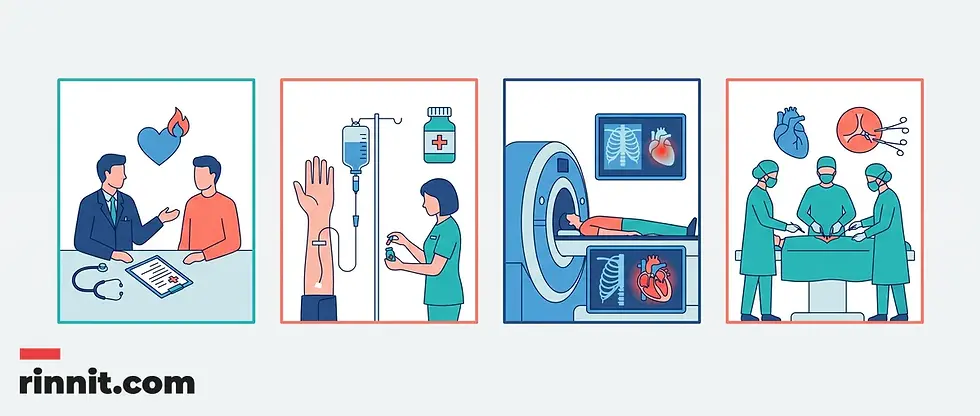
Providers use a combination of physical exams and advanced imaging to confirm a diagnosis and rule out other conditions like a heart attack [1].
Test | Purpose |
Blood Tests | Identify the source of infection and rule out a heart attack [1]. |
EKG (Electrocardiogram) | Monitor the heart's electrical activity for abnormal rhythms. |
Echocardiography | Use sound waves to visualize heart function and fluid buildup. |
Heart MRI / CT | Provide detailed images of tissue inflammation and thickening. |
Management and Treatment
Treatment strategies are highly personalized, focusing on fighting the infection and supporting heart function.
Medication
Procedures and Surgery
In more advanced cases, medical intervention may include:
Outlook and Prevention
The prognosis for carditis is generally positive when the condition is caught and treated early [1]. However, recovery can be a long process, sometimes taking weeks or even years [1].
Potential Complications
Untreated heart inflammation can lead to:
Prevention Strategies
While not all cases are preventable, individuals can lower their risk by:
Conclusion
Heart inflammation is a complex but manageable condition. By understanding the distinctions between endocarditis, myocarditis, and pericarditis, individuals can better recognize early warning signs and seek the necessary medical care. Early intervention remains the most critical factor in ensuring a full recovery and maintaining long-term heart health.
Frequently Asked Questions (FAQ)
What is carditis?
It is the medical term for inflammation of the heart tissues.
Is heart inflammation rare?
Yes, all three primary types are considered rare.
What are the three types of heart inflammation?
Endocarditis, myocarditis, and pericarditis.
What part of the heart does endocarditis affect?
The inner lining of the chambers and valves.
What part does myocarditis affect?
The heart muscle responsible for pumping.
What part does pericarditis affect?
The protective sac surrounding the heart.
What is the most common symptom?
Chest pain is frequently reported across all types.
Can a virus cause heart inflammation?
Yes, viruses like COVID-19 and HIV are common triggers.
Can bacteria cause it?
Yes, bacteria from Lyme disease or dental issues can lead to carditis.
Are autoimmune diseases a factor?
Yes, lupus and rheumatoid arthritis can cause inflammation.
Who is more likely to get carditis?
It is statistically more common in males.
Can children get heart inflammation?
Yes, it can affect people in any age group.
Is chest pain the only sign?
No, shortness of breath and fever are also common.
What are night sweats a sign of?
They are often associated with endocarditis.
What is edema?
Swelling in the legs or feet, a common sign of myocarditis.
Why does pericarditis pain change when leaning forward?
Leaning forward reduces the friction between the inflamed sac layers.
Can a chest injury cause carditis?
Yes, physical trauma can trigger inflammation.
Are heart devices a risk factor?
Yes, pacemakers and valves can sometimes become sites of infection.
How is carditis diagnosed?
Through physical exams, blood tests, and imaging like MRIs.
What does an EKG show?
It checks for abnormal heart rhythms caused by inflammation.
Can carditis be mistaken for a heart attack?
Yes, which is why diagnostic tests are crucial.
Do all cases need treatment?
Mild cases of pericarditis or myocarditis may resolve on their own.
What medications are used?
Corticosteroids, antibiotics, and anti-inflammatories are common.
Are blood thinners used?
Sometimes, if there is a specific clot risk such as an abnormal heart rhythm; they are not routine for every type, and your doctor decides.
When is surgery needed?
When there is fluid buildup or severe valve damage.
What is a heart transplant?
A rare but necessary option for severe, unresponsive myocarditis.
How long does recovery take?
It can range from several weeks to years.
Can carditis come back?
Yes, follow-up visits are important as it can recur.
What is the prognosis?
Generally good with quick and appropriate treatment.
Can heart inflammation cause heart failure?
Yes, if left untreated or in severe cases.
Are blood clots a complication?
Yes, they are a serious risk of untreated inflammation.
Can infection spread from the heart?
Yes, especially in cases of endocarditis.
Does dental hygiene matter?
Yes, it helps prevent bacteria from entering the blood.
Should I avoid alcohol?
Limiting alcohol is a recommended prevention strategy.
Are IV drugs a risk?
Yes, they significantly increase the risk of endocarditis.
Can diabetes increase risk?
Yes, it is a recognized medical risk factor.
What is uremia?
A medical problem that can lead to heart inflammation.
Can lead exposure cause carditis?
Yes, it is an environmental toxin that affects the heart.
Is a PET scan used for diagnosis?
Yes, it is one of the advanced imaging tools available.
What are corticosteroids for?
They help reduce severe inflammation in the heart.
Can radiation therapy cause it?
Yes, it is a potential side effect of cancer treatment.
What is an ICD?
An implantable cardioverter-defibrillator sometimes needed for rhythm issues.
What is an LVAD?
A left ventricular assist device used to help a weakened heart pump.
Is heart inflammation contagious?
No, but the viruses that cause it can be.
Does fever always mean carditis?
No, but it is a common symptom when paired with chest pain.
Can heart palpitations be a sign?
Yes, they are common in myocarditis.
Is pericarditis life-limiting?
It can be if it leads to severe complications like heart failure.
Should I call 911 for chest pain?
Yes. Call 911 (or your local emergency number) if you have chest pain, because carditis and a heart attack can feel alike.
What should I ask my doctor?
Ask about the type, cause, and best treatment for your case.
Can carditis affect the lungs?
Yes, lung problems are a potential complication of myocarditis.
Related Reading
What Is Myocarditis? A Plain-Language Guide to the Heart Muscle Inflammation That Often Hides explains inflammation of the heart muscle in more detail.
Pericarditis Chest Pain: Symptoms, Causes & Treatment of This Heart Problem covers inflammation of the sac around the heart and its chest pain.
Endocarditis: Symptoms, Causes, Types, Diagnosis, Treatment and When to Seek Emergency Care — What You Need to Know explains infection of the heart's inner lining and valves.
Understanding Rheumatic Heart Disease: Causes, Symptoms, and Management describes lasting valve damage that can follow rheumatic fever.
References
Cleveland Clinic. Heart Inflammation (Carditis). Cleveland Clinic. Last updated September 12, 2025. https://my.clevelandclinic.org/health/diseases/23052-heart-inflammation
Ehsan M, Syed AB, Mustafa B, et al. Comparative efficacy and safety of colchicine and anti-interleukin-1 agents in recurrent pericarditis: a pairwise and network meta-analysis of randomized controlled trials. Journal of the American Heart Association. 2025;14(13):e041007. PMID 40551317. https://doi.org/10.1161/JAHA.125.041007
Cotet IG, Mateescu DM, Ilie AC, et al. Systematic review and meta-analysis of myocarditis prevalence and diagnostics in COVID-19: acute, post-COVID, and MIS-C (2020-2025). Journal of Clinical Medicine. 2025;14(19):7008. PMID 41096088. https://doi.org/10.3390/jcm14197008
M'Rabet S, Kaboré EG, Rav-Acha M, et al. Incidence and predictors of major arrhythmic events after acute myocarditis complicated by ventricular arrhythmias: a systematic review and meta-analysis. Heart Rhythm. 2026;23(9):e2141-e2150. PMID 41985646. https://doi.org/10.1016/j.hrthm.2026.03.1952
Disclaimer
The information provided in this article is for educational purposes only and should not be considered medical advice. Always consult with a qualified healthcare professional for diagnosis and treatment of any health condition.



Comments