Gingivostomatitis: What It Is, Why It Happens, and How It's Treated

Updated: 3 days ago
Medically reviewed by Dr. Baraa Alnahhal, MD · Last reviewed: October 2026
Quick Answer
Gingivostomatitis is a painful, contagious infection of the mouth and gums that causes blisters and canker sores [4]. It spreads through saliva, kissing and shared utensils [4] [5]. Symptoms include mouth sores, swollen gums, fever and swollen neck glands [4]. Treatment includes antiviral or antibiotic medications, pain relievers and salt water rinses [4]. About 40% of children have recurring flare-ups [4].
What the research says
Most primary herpes infections are mild, and evidence for specific treatments is limited. According to PubMed, a systematic review of 5 studies and 364 patients (average age 7.6 years) reported that 13-30% of primary HSV-1 infections lead to herpetic gingivostomatitis, which is often self-limiting. Only one study gave weak evidence that acyclovir improves healing and shortens symptoms, and diagnostic delay of about 72 hours reduces how well antivirals work (Coppola et al., Clinical Oral Investigations, 2023 [1]).
Starting acyclovir early speeds recovery in hospitalized children. In 100 febrile children with HSV (median age 2.1 years), most with herpetic gingivostomatitis as the main diagnosis, those treated with acyclovir within 24 hours of admission had a significantly shorter time to fever resolution and shorter hospital stay than those treated later. All 100 children recovered (Wang and Li, Frontiers in Pediatrics, 2026 [2]).
Adding light-based therapy to a topical antiviral reduced pain more. In a randomized trial of 45 adolescents with herpetic gingivostomatitis, topical antiviral therapy plus antimicrobial photodynamic therapy lowered pain scores and inflammatory markers significantly more than either treatment alone (Vellappally et al., Photodiagnosis and Photodynamic Therapy, 2022 [3]).
Study details are from PubMed abstracts.

What Is Gingivostomatitis?
Gingivostomatitis is an infection that leads to the development of painful sores on the lips and inside the oral cavity [4]. While it is frequently diagnosed in young children, it can affect individuals of any age [4]. It is important to note that gingivostomatitis is distinct from gingivitis, which is the earliest stage of chronic gum disease [4]. Instead, this condition is an acute infection caused by specific viruses or bacteria.
The infection is highly contagious and can easily pass from one person to another through shared eating utensils, kissing, or other forms of close contact [4]. Because the viruses that cause it can remain in the body, approximately 40% of children who have had the infection will experience recurring mouth sores throughout their lives [4].
Term | Plain-Language Meaning |
Gingivostomatitis | A painful infection causing sores on the lips and inside the mouth. |
Halitosis | The medical term for persistent bad breath. |
Xerostomia | A condition commonly known as dry mouth. |
HSV-1 | The virus most commonly responsible for oral herpes and gingivostomatitis. |
What Are the Symptoms of Gingivostomatitis?
The symptoms of gingivostomatitis can range from mild discomfort to severe pain that makes eating and speaking difficult. Most people notice a combination of physical sores and systemic symptoms like fever or headaches. These symptoms typically last for about two to three weeks [4], and a person remains contagious for about seven days after the sores first appear [4].
Symptom | What You May Experience |
Mouth Sores | Painful blisters or ulcers on the tongue, gums, or inner cheeks. |
Swollen Gums | Gums that appear bright red, tender, or puffy. |
Systemic Signs | Fever, headaches, and a general loss of appetite due to pain. |
Neck Changes | Swollen or tender lymph nodes in the neck area. |
Breath Changes | Persistent bad breath and a feeling of dry mouth. |

What Causes Gingivostomatitis?
Gingivostomatitis is triggered by an invasion of viruses or bacteria into the oral tissues. Anyone can catch these germs, most often from close contact with someone who is shedding the virus; poor oral hygiene is also listed as a risk factor [4].
Viral and Bacterial Triggers
Herpes Simplex Virus (HSV-1): This is the most common cause [4]. When triggered by this virus, the condition is called herpetic gingivostomatitis.
Coxsackieviruses: These viruses are also responsible for hand, foot, and mouth disease and often spread through contaminated surfaces [4].
Streptococcus: The same bacteria that cause strep throat can also lead to oral infections [4].
Actinomyces: These bacteria live naturally in the mouth but can cause infection if they enter the bloodstream following dental trauma or surgery [4].
Flare-up Triggers
For those with the herpetic form of the condition, certain factors can cause the virus to reactivate, leading to a new flare-up. These include high stress, fever, physical trauma to the mouth, or even excessive exposure to UV light (sunlight) [4].
How Is Gingivostomatitis Diagnosed?
A healthcare provider can usually diagnose gingivostomatitis through a simple physical examination of the mouth and a review of your symptoms [4]. In some cases, they may use a swab to collect a sample from one of the sores or perform a small biopsy [4]. This sample is sent to a laboratory to confirm exactly which virus or bacteria is causing the infection, which helps in choosing the most effective treatment.
How Is Gingivostomatitis Treated?
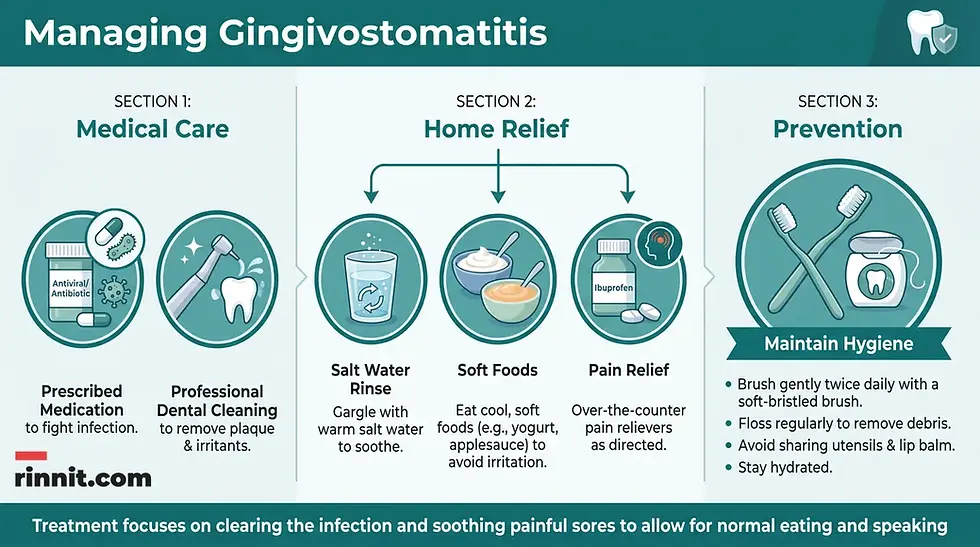
The goal of treatment is to eliminate the underlying infection and provide relief from the painful symptoms. Depending on the cause identified during diagnosis, a provider will prescribe either antiviral or antibiotic medications [4].
Professional and Home Care
Medications: Antivirals are used for HSV-1, while antibiotics target bacterial infections [4]. Over-the-counter pain relievers like acetaminophen or ibuprofen can help manage fever and mouth pain.
Oral Rinses: Using an antibacterial mouthwash twice a day or gently swishing with warm salt water can soothe the sores and keep the mouth clean [4].
Dietary Adjustments: To avoid further irritation, it is best to stay away from hot, spicy, or very salty foods until the sores have healed [4].
Hygiene Maintenance: Continue to brush twice daily and floss once a day [4], even if the gums are tender, to prevent the infection from worsening.
Recovery and Prevention
Most mouth sores caused by gingivostomatitis will heal completely within two to three weeks [4]. To prevent spreading the infection, you should remain fever-free for at least 24 hours before having close contact with others [4].
Preventing future infections relies heavily on maintaining a clean oral environment. This includes regular brushing and flossing, as well as routinely cleaning any oral appliances like dentures or retainers [4]. Visiting a dentist for professional cleanings twice a year is also a critical step in reducing your risk.
Prevention Strategy | How It Helps |
Good Oral Hygiene | Reduces the bacterial load and keeps tissues healthy. |
Appliance Care | Prevents germs from building up on dentures or retainers. |
Dental Checkups | Allows for early detection and professional removal of irritants. |
Avoiding Sharing | Stops the spread of contagious viruses and bacteria. |
Conclusion: Managing a Painful Infection
While gingivostomatitis can be an embarrassing and painful experience, it is a very treatable condition. By acting quickly when symptoms appear, you can significantly reduce the duration of the infection and manage the discomfort effectively. If you or your child develops mouth sores accompanied by a fever, seeking medical advice is the best way to ensure a fast and full recovery.
Comfort & Reassurance: Most cases of gingivostomatitis are straightforward to treat. With the right medication and a few days of rest, the pain will subside, and your mouth will return to its healthy state.
When to Seek Medical Advice
Get medical care promptly if a child refuses to drink or shows signs of dehydration (very little urine, no tears, unusual sleepiness), if sores spread near the eyes, or if the person has a weak immune system. Schedule an appointment if you develop mouth sores along with a fever [4]. You should also contact your provider if your symptoms worsen or do not improve after three weeks of treatment [4], as this may require a change in your care plan.
Get Clear Answers and Trusted Health Guidance
For more plain-language health guides written to help you make confident decisions, visit Rinnit.com.
Frequently Asked Questions
Is gingivostomatitis an STI?
No. While it can be caused by the Herpes Simplex Virus (HSV-1), which is related to genital herpes, gingivostomatitis itself is not considered a sexually transmitted infection.
Can I go to work or school with gingivostomatitis?
You should wait until you have been fever-free for at least 24 hours. Because it is contagious, you should also avoid close contact and sharing items for about a week.
How long does the pain last?
The most intense pain usually subsides within the first week of treatment, but the sores may take up to three weeks to heal completely.
Is it the same as "pink eye" for the mouth?
While not called that, it is similar in that it is a common, contagious infection that requires good hygiene to prevent spreading.
Why does my child keep getting mouth sores?
Approximately 40% of children experience recurrences. This is often because the virus stays in the body and reactivates during times of stress or illness.
Can poor brushing cause gingivostomatitis?
Not usually. Most cases are caught from close contact with someone carrying the virus, although poor oral hygiene is listed as a risk factor.
What is the best thing to eat when I have mouth sores?
Soft, cool foods like yogurt, applesauce, or lukewarm soup are best. Avoid anything crunchy, spicy, or acidic.
Can I get gingivostomatitis from a pet?
No. The viruses and bacteria that cause this condition are specific to humans and spread through human-to-human contact.
Are the sores the same as canker sores?
Gingivostomatitis can cause sores that look like canker sores, but it often involves more widespread inflammation of the gums and lips as well.
Do I need a prescription to treat it?
Yes, in most cases. A doctor needs to determine if the cause is viral or bacterial to prescribe the correct antiviral or antibiotic medication.
Can stress really cause a flare-up?
Yes. Stress can weaken the immune system, allowing the dormant virus (like HSV-1) to reactivate and cause new sores.
Should I stop flossing while my gums are sore?
No. You should be very gentle, but maintaining hygiene is important to help the infection clear up faster.
Is there a vaccine for gingivostomatitis?
Currently, there is no vaccine for the viruses that most commonly cause this condition.
Can dentures cause this infection?
Yes, if they are not cleaned properly, dentures can harbor the bacteria or viruses that lead to gingivostomatitis.
What is herpetic gingivostomatitis?
Herpetic gingivostomatitis is the specific name used when the infection is caused by the Herpes Simplex Virus.
Related Reading
References
Coppola N, et al. Supportive care and antiviral treatments in primary herpetic gingivostomatitis: a systematic review. Clin Oral Investig. 2023;27(11):6333-6344. PMID 37733027. https://doi.org/10.1007/s00784-023-05250-5
Wang P, et al. Clinical features and outcomes of herpes simplex viral infections with co-infection in 100 children. Front Pediatr. 2026;14:1774544. PMID 42063434. https://doi.org/10.3389/fped.2026.1774544
Vellappally S, et al. Efficacy of antimicrobial photodynamic therapy versus antiviral therapy in the treatment of herpetic gingivostomatitis among children: Aa randomized controlled clinical trial. Photodiagnosis Photodyn Ther. 2022;39:102895. PMID 35504550. https://doi.org/10.1016/j.pdpdt.2022.102895
Cleveland Clinic. Gingivostomatitis: Types, Symptoms & Treatment. Cleveland Clinic. Last updated August 23, 2024. https://my.clevelandclinic.org/health/diseases/21771-gingivostomatitis
Lauren C, Reynolds S. Cold Sores in Children: About the Herpes Simplex Virus. HealthyChildren.org, American Academy of Pediatrics. Last updated June 4, 2025. https://www.healthychildren.org/English/health-issues/conditions/skin/Pages/Herpes-Simplex-Virus-Cold-Sores.aspx
Anjaneyan G, et al. Primary Herpetic Gingivostomatitis. Indian Dermatol Online J. 2023;14(1):148-149. PMID 36776188. https://doi.org/10.4103/idoj.idoj_359_21
Medical Disclaimer
This article is for general educational purposes only and is not a substitute for professional medical advice, diagnosis, or treatment. Always seek the advice of your physician or other qualified healthcare provider with any questions you may have about a medical condition. Never disregard professional medical advice or delay seeking care because of something you have read here. If you think you may have a medical emergency, call your doctor or emergency services immediately.



Comments