Gestational Hypertension: Managing High Blood Pressure During Pregnancy

Updated: 3 days ago
Medically reviewed by Dr. Baraa Alnahhal, MD · Last reviewed: October 17, 2026
Quick Answer
What is gestational hypertension? It is high blood pressure that starts in the second half of pregnancy (after 20 weeks) in a person who previously had normal blood pressure [1]. Unlike chronic hypertension, it is temporary and usually ends shortly after the baby is born [1]. However, it can increase the risk of serious complications like preeclampsia if not managed properly [1].

What the research says
Looser blood pressure control led to more severe-range readings. In a randomized trial of 987 women with non-proteinuric preexisting (74.6%) or gestational hypertension, severe hypertension (160/110 mmHg or higher) developed in 40.6% of women assigned to less-tight control versus 27.5% assigned to tight control (P<0.001), while pregnancy loss or high-level neonatal care was similar (31.4% vs 30.7%) (Magee et al., The New England Journal of Medicine, 2015).
The risk does not always end at delivery. In a cohort of 146,748 women, those with a hypertensive disorder of pregnancy (a group that includes gestational hypertension and preeclampsia) had a hazard ratio of 2.2 (95% CI 1.7 to 2.7) for later cardiovascular disease and 5.6 (95% CI 5.1 to 6.3) for later hypertension (Grandi et al., Paediatric and Perinatal Epidemiology, 2017).
Preeclampsia, the serious form, carries long-term risks too. A meta-analysis of 3,488,160 women found that after pre-eclampsia the relative risk was 3.70 (95% CI 2.70 to 5.05) for hypertension, 2.16 (1.86 to 2.52) for ischaemic heart disease, and 1.81 (1.45 to 2.27) for stroke over roughly 10 to 14 years of follow-up (Bellamy et al., BMJ, 2007).
Key Takeaways
Feature | Details |
Medical Definition | Blood pressure ≥ 140/90 mmHg starting after 20 weeks of gestation [1]. |
Prevalence | Occurs in 6% to 8% of all pregnancies [1]. |
Risk Factors | Age (<20 or >40), gestational hypertension or preeclampsia in a past pregnancy, diabetes, kidney disease, or multiple babies [1]. |
Potential Complications | Preeclampsia, stroke, seizures, low birth weight, and premature birth [1]. |
Primary Management | Frequent prenatal checkups, home monitoring, and sometimes medication [1]. |
Post-Pregnancy Outlook | Typically resolves shortly after delivery [1]. |
The Nature of Pregnancy-Induced Hypertension
During pregnancy, the heart must work significantly harder to pump a larger volume of blood throughout the body, placing extra stress on the cardiovascular system [1]. Gestational hypertension, also known as pregnancy-induced hypertension, is a specific form of high blood pressure that emerges during this period of increased demand [1]. It is distinguished from chronic hypertension by its timing; it begins in the latter half of pregnancy and is expected to resolve once the baby is delivered [1].
Types of Hypertension in Pregnancy
Healthcare providers distinguish between several forms of high blood pressure during pregnancy based on when the condition begins and the specific symptoms it produces [1].
Type | Timing and Characteristics |
Chronic Hypertension | High blood pressure present before pregnancy or appearing before the 20th week [1]. |
Gestational Hypertension | High blood pressure starting after the 20th week without protein in the urine [1]. |
Preeclampsia | A serious condition typically occurring after 20 weeks, involving high blood pressure and signs of organ damage, such as protein in the urine [1]. |
Superimposed Preeclampsia | When a person with pre-existing chronic hypertension develops preeclampsia during pregnancy [1]. |
Recognizing Signs and Risks
Gestational hypertension is often called a "silent" condition because many people do not experience noticeable symptoms [1]. This makes consistent prenatal care essential, as blood pressure readings at each appointment are the most reliable way to detect the condition early [1].
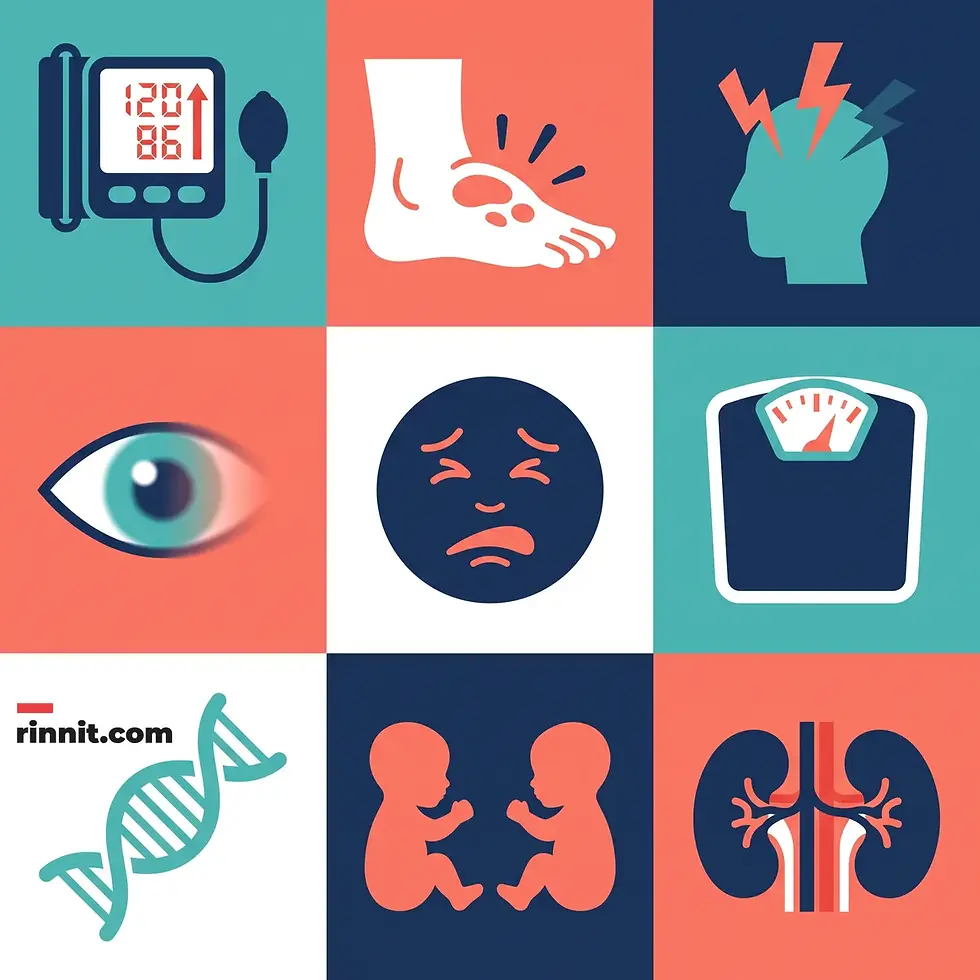
While many individuals remain asymptomatic, some may notice physical signs that indicate elevated blood pressure. These can include significant swelling (edema) in the hands and face, persistent headaches, sudden weight gain not related to diet, and changes in vision such as blurring or seeing spots [1]. In more severe cases, abdominal pain or a decrease in urine output may occur [1]. Certain factors, such as being under age 20 or over age 40, having a history of kidney disease or diabetes, or carrying multiples, can increase the likelihood of developing the condition [1].
Impact on Parent and Fetus
If left unmanaged, gestational hypertension can lead to significant health risks for both the parent and the developing fetus. The increased pressure can affect how the placenta develops and functions, potentially restricting the flow of oxygen and nutrients to the baby [1].
Maternal Risks: These include an increased danger of seizures (eclampsia), stroke, temporary kidney failure, and liver complications [1]. There is also a higher likelihood of requiring a C-section delivery [1].
Fetal Risks: Complications for the baby may include intrauterine growth restriction (IUGR), resulting in low birth weight (less than 5 pounds, 8 ounces), and an increased risk of premature birth before 37 weeks [1]. In severe, unmanaged cases, the risk of stillbirth also increases [1].
Diagnosis and Clinical Monitoring
Diagnosis relies primarily on consistent blood pressure measurements during prenatal visits. A reading of 140/90 mmHg or higher on two separate occasions is typically the threshold for a diagnosis [1]. Because blood pressure can fluctuate, providers may re-check the reading after a period of rest [1].
To rule out preeclampsia and assess overall health, providers may perform additional diagnostic steps. These include urine tests to check for the presence of protein, blood tests to evaluate liver and kidney function, and monitoring for physical signs of swelling [1]. Early diagnosis is the most effective way to prevent the progression of the condition into more dangerous forms like eclampsia [1].
Management and Treatment Goals
The primary objective of managing gestational hypertension is to lower blood pressure and prevent complications while allowing the pregnancy to continue as close to full-term as possible [1].

Care Strategies
Treatment is highly individualized and depends on the severity of the hypertension and the gestational age of the fetus [1].
Close Monitoring: This often involves more frequent prenatal visits and the use of a home blood pressure monitor to track daily readings [1].
Medication: If blood pressure is above 140/90 mmHg, providers may prescribe medication to bring it down. Readings of 160/110 mmHg or higher can cause stroke or seizures and may require treatment in a hospital. Get emergency care right away for a severe headache, vision changes, pain in the upper belly, trouble breathing or a seizure, including in the weeks after delivery [1].
Hospitalization: In severe cases, a hospital stay may be necessary for continuous monitoring of both the parent and the baby [1].
Fetal Surveillance: Providers use ultrasounds and non-stress tests to ensure the baby is growing at a normal rate and receiving adequate blood flow through the placenta [1].
Related Reading on Rinnit
Learn more in our guide to Nonstress Test (NST): Why It's Done, What to Expect and Reactive vs Nonreactive Results.
Conclusion
Gestational hypertension is a serious but manageable condition that requires diligent attention from both the patient and their healthcare team. By attending all prenatal appointments and following recommended monitoring protocols, most individuals with high blood pressure during pregnancy go on to deliver healthy babies. Understanding the risks and staying vigilant for symptoms are the best ways to ensure a safe journey through the second half of pregnancy.
Frequently Asked Questions
What is gestational hypertension?
High blood pressure that starts after 20 weeks of pregnancy in someone with previously normal readings [1].
Is it the same as preeclampsia?
No, but it can lead to preeclampsia if it affects the kidneys or other organs [1].
What blood pressure reading is considered high?
A reading of 140/90 mmHg or higher [1].
When does gestational hypertension usually start?
Typically in the second half of pregnancy, after 20 weeks [1].
Does it go away after birth?
Yes, it usually resolves shortly after delivery [1].
What causes high blood pressure during pregnancy?
The exact cause is unknown. During pregnancy the heart works harder to pump much more blood, which puts extra stress on the body [1].
Who is at higher risk?
People under 20 or over 40, those who had gestational hypertension or preeclampsia in a past pregnancy, or those carrying multiples [1].
Can it affect the baby's growth?
Yes, it can cause intrauterine growth restriction (IUGR) and low birth weight [1].
Is swelling a sign of high blood pressure?
Yes, significant swelling (edema) in the hands and face can be a symptom [1].
Can I have high blood pressure without symptoms?
Yes, it is often called a "silent" condition because symptoms may not be noticeable [1].
How is it diagnosed?
Through regular blood pressure checks at prenatal appointments [1].
What is chronic hypertension?
High blood pressure that was present before pregnancy or before 20 weeks [1].
Can gestational hypertension cause seizures?
If it progresses to eclampsia, it can cause seizures [1].
Is a C-section more likely?
Yes, people with hypertension have a higher risk of needing a C-section [1].
What is the first number in a blood pressure reading?
The systolic pressure, measuring the heart's contraction [1].
What is the second number?
The diastolic pressure, measuring the heart at rest [1].
Can I monitor my blood pressure at home?
Yes, many providers recommend home monitoring for closer tracking [1].
Are there medications for this?
Yes, providers may prescribe medication to control blood pressure, and severe readings may require hospital treatment [1].
What is preeclampsia?
A serious condition involving high blood pressure and organ damage (like protein in urine) [1].
Can it cause premature birth?
Yes, it increases the risk of the baby being born before 37 weeks [1].
Does it affect the placenta?
Yes, it can restrict blood and nutrient flow through the placenta [1].
What are vision changes a sign of?
Blurred vision or seeing spots can indicate severe hypertension or preeclampsia [1].
Is sudden weight gain a symptom?
Yes, rapid weight gain not related to diet can be a sign of fluid retention [1].
Can it cause a stroke?
Very high blood pressure (160/110 mmHg or higher) increases the risk of stroke [1].
How often should I see my doctor?
You may need more frequent prenatal visits for monitoring [1].
What is protein in urine a sign of?
It is a key diagnostic sign for preeclampsia [1].
Can I prevent gestational hypertension?
While not entirely preventable, regular prenatal care helps manage it early [1].
Does it run in families?
A family history of gestational hypertension can increase your risk [1].
Is it more common in first pregnancies?
It can occur in any pregnancy, but risk factors vary [1].
What is IUGR?
Intrauterine growth restriction, where the baby does not grow at a normal rate [1].
Can I still have a natural birth?
Many people do, but the risk for induction or C-section is higher [1].
What happens if blood pressure is 160/110?
This is considered severe and may require immediate hospital treatment [1].
Does it affect kidney function?
Yes, severe cases can lead to temporary kidney failure [1].
Can it cause headaches?
Persistent, severe headaches can be a symptom [1].
What is eclampsia?
The onset of seizures in a person with preeclampsia [1].
Is it common?
It occurs in about 6% to 8% of pregnancies [1].
Can diabetes increase the risk?
Yes, both pre-existing and gestational diabetes are risk factors [1].
Are multiple babies a risk factor?
Yes, carrying twins or triplets increases the likelihood [1].
Does race play a role?
Statistics show that Black individuals are at a higher risk [1].
What is systolic pressure?
The pressure when the heart beats [1].
What is diastolic pressure?
The pressure when the heart rests between beats [1].
Can it cause liver problems?
Yes, severe hypertension can impact liver function [1].
Is nausea a symptom?
Yes, it can be a sign of worsening condition [1].
What is a non-stress test?
A test used to check the baby's heart rate and well-being [1].
Can it cause stillbirth?
In severe, unmanaged cases, the risk of stillbirth increases [1].
What is "low birth weight"?
A baby born weighing less than 5 pounds, 8 ounces [1].
Does it affect blood clotting?
Severe cases can lead to blood clotting problems [1].
Is hospitalization always required?
No, only in severe or unstable cases [1].
Can I exercise with this condition?
You should consult your provider for specific activity recommendations [1].
What is the goal of treatment?
To reduce blood pressure and prevent complications for parent and baby [1].
References
Cleveland Clinic. High Blood Pressure (Hypertension) During Pregnancy. Cleveland Clinic. Last updated November 14, 2022. https://my.clevelandclinic.org/health/diseases/4497-gestational-hypertension
Magee LA, von Dadelszen P, Rey E, et al. Less-tight versus tight control of hypertension in pregnancy. The New England Journal of Medicine. 2015;372(5):407-417. PMID 25629739. https://doi.org/10.1056/NEJMoa1404595
Grandi SM, Vallée-Pouliot K, Reynier P, et al. Hypertensive Disorders in Pregnancy and the Risk of Subsequent Cardiovascular Disease. Paediatric and Perinatal Epidemiology. 2017;31(5):412-421. PMID 28816365. https://doi.org/10.1111/ppe.12388
Bellamy L, Casas JP, Hingorani AD, et al. Pre-eclampsia and risk of cardiovascular disease and cancer in later life: systematic review and meta-analysis. BMJ. 2007;335(7627):974. PMID 17975258. https://doi.org/10.1136/bmj.39335.385301.BE
Disclaimer
The information provided in this article is for educational purposes only and should not be considered medical advice. Always consult with a qualified healthcare professional for diagnosis and treatment of any health condition.



Comments