Flu While Pregnant: Risks, Symptoms, and Safe Treatment

Updated: 3 days ago
Medically reviewed by Dr. Baraa Alnahhal, MD · Last reviewed: October 2026
Source currency note: This guide reflects medical information reviewed in July 2026. Always confirm current guidance with your healthcare professional.
Quick Answer
Flu while pregnant is more serious because pregnancy suppresses the immune system and strains the lungs, making hospitalization more likely. Complications include pneumonia, dehydration and preterm labor. A provider should start an antiviral such as oseltamivir as soon as flu is suspected, ideally within 48 hours, and acetaminophen eases fever. An annual flu shot is the best prevention. [4]
What the research says
Flu in pregnancy raises the risk of serious illness, and early treatment and vaccination reduce it. A 2024 clinical review reports that flu in pregnancy is linked to higher rates of hospitalization, ICU admission, and death, and to increased odds of congenital anomalies and stillbirth, but not preterm birth, so the evidence on preterm birth is mixed. Oseltamivir given within 48 hours of symptom onset decreases illness and death, and the risks are lowered by early treatment and maternal vaccination (Dotters-Katz, Clinical Obstetrics and Gynecology, 2024).
Don't wait for a test result to start treatment. ACOG states that pregnant and postpartum people are at significantly higher risk of serious flu complications, that antiviral treatment should not be delayed while awaiting test results, and that vaccination status should not change the decision to treat. The flu vaccine lowers the risk of severe disease but won't prevent every infection (ACOG Committee Statement No. 7, Obstetrics and Gynecology, 2024).
The seasonal flu shot was not linked to harm to the pregnancy. A systematic review of 63 studies (29 on seasonal vaccine versus no vaccine) found no significant association between seasonal flu vaccination in pregnancy and preterm birth, spontaneous abortion, or small-for-gestational-age birth, and no increased risk of stillbirth, congenital anomalies, or serious maternal adverse events in the studies that reported them. The evidence was of very low certainty, so better-designed studies are still needed (Wolfe et al., BMJ Open, 2023).

Why the Flu Is More Serious During Pregnancy
Influenza is a common viral infection, but for pregnant people the stakes are higher. Pregnancy brings natural changes in the body, including a suppressed immune system and a changed workload for the lungs and heart. These changes make it harder to fight off infections and raise the chance of severe illness.
One study found that you are most likely to get the flu in your first trimester, and your risk increases the longer your pregnancy overlaps with peak flu season, usually November to February.
Factor | Impact during pregnancy |
Immune system | Naturally suppressed during pregnancy, which lowers the body's ability to fight infection |
Lung function | Pregnancy changes how hard the lungs work, which makes respiratory infections harder to manage and breathing harder |
Hospitalization | Pregnant women are more likely than nonpregnant women to need hospital care for the flu |
Heart strain | The heart works harder during pregnancy, which adds strain during a systemic infection, and flu can worsen existing heart disease |
Identifying Symptoms: Flu vs. Pregnancy
Telling ordinary pregnancy discomforts from the flu matters, because early treatment works best. Some symptoms overlap, while others point to a viral infection.
Overlapping and distinct symptoms
Typical flu symptoms: a sudden fever, chills, severe body aches, and headache.
Respiratory symptoms: dry cough, sore throat, and a runny or stuffy nose.
Overlap with pregnancy: severe tiredness, loss of appetite, and vomiting.
To work out what you are experiencing, consider whether you have been around sick people, how suddenly your symptoms started, and whether you have a fever, chills, or body aches, which are more typical of the flu than of pregnancy. The flu is contagious starting one day before symptoms begin, and you can stay contagious for five to seven days after you start feeling sick.
Impact on amniotic fluid
The flu does not directly cause low amniotic fluid, but it can affect the amount. Fever and dehydration may temporarily reduce amniotic fluid volume. A severe infection can also reduce blood flow to the fetus or cause inflammation of the placenta, which may lead the fetus to make less urine, and urine is a main component of amniotic fluid.
Maternal and Fetal Complications
The flu can cause complications for both the pregnant person and the baby. Early treatment is the best way to lower these risks.
Maternal risks
Pneumonia: a serious lung infection that is a common reason for flu-related hospital care.
Dehydration: severe fluid loss that may need IV fluids.
Worsening of existing conditions: conditions such as asthma or heart disease can get worse.
Fetal and obstetric risks
Studies have linked flu during pregnancy to several adverse outcomes:
A higher risk of miscarriage.
Preterm labor and preterm birth.
Low birth weight.
A possible risk of neural tube defects if a high fever occurs early in pregnancy.

Diagnosis and Pregnancy-Safe Treatment
If you think you have the flu, contact your healthcare provider right away. Early treatment gives the best results.
Diagnostic testing
Providers use a flu test, a swab of the inside of your nose or the back of your throat, to confirm the virus. Rapid tests can give results in under 30 minutes, while tests sent to a lab can take several days. Because treatment works best when started early, antiviral treatment should not be delayed while you wait for test results.
Safe treatment options
Treatment aims to stop the illness from getting worse and to manage symptoms. Talk to your provider about which medicines are safe for you.
Antivirals: antivirals don't cure the flu, but they can stop symptoms from getting worse. Many providers prefer the oral antiviral oseltamivir (Tamiflu) for pregnant women, and it works best when started early. You should feel it working within a day or two.
Fever management: acetaminophen (Tylenol) can reduce fever and body aches.
Cough relief: dextromethorphan (Robitussin-DM, Delsym), guaifenesin (Mucinex), or cough drops may be used with your provider's guidance.
Home care: rest and drink plenty of fluids to avoid dehydration.
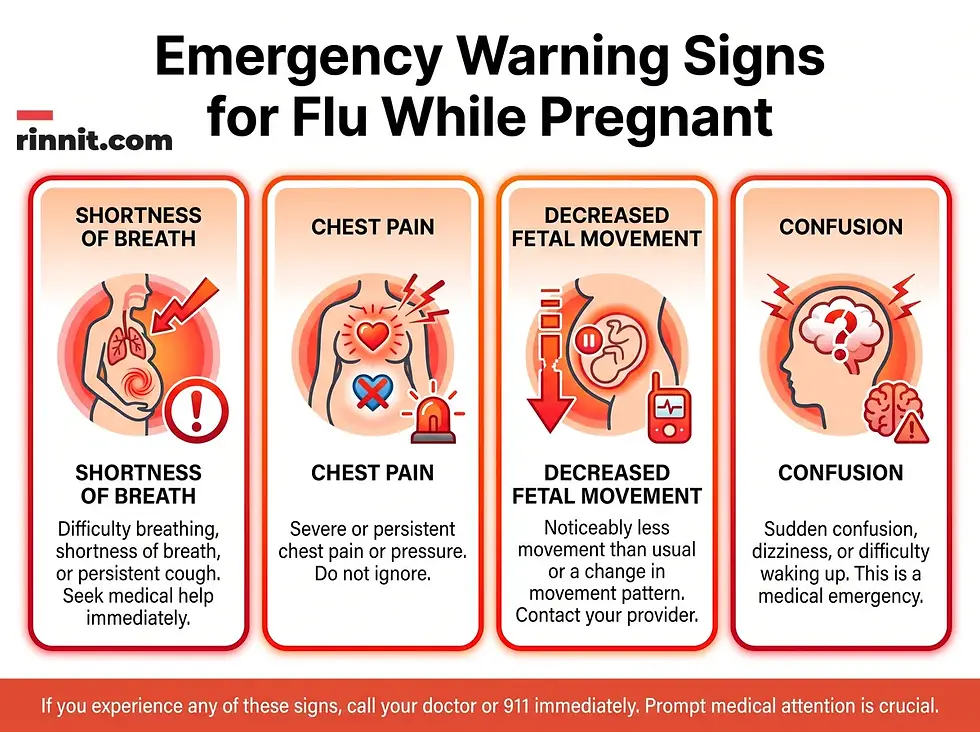
Emergency Warning Signs
Go to the nearest emergency room if you have any of these severe symptoms:
Symptom category | Emergency warning signs |
Respiratory | Trouble breathing or shortness of breath |
Pain or pressure | Ongoing pain or pressure in the chest or abdomen |
Neurological | Dizziness, confusion, inability to wake up, or seizures |
Fetal health | Not feeling the fetus move |
Systemic | Extreme weakness, a high fever that doesn't change after acetaminophen, or not peeing for an extended period |
Prevention: The Flu Shot
The best way to prevent the flu during pregnancy is to get a flu shot. Pregnant people should get the shot, not the nasal spray flu vaccine, which is a live vaccine that is not recommended during pregnancy. The best time is before flu season starts, but you can get it at any time. It helps protect both you and your baby.
Key prevention steps
Get vaccinated. Ideally before flu season begins, though it helps at any time.
Practice hygiene. Wash your hands often, avoid touching your eyes or nose, and clean surfaces at home and work with disinfectant.
Avoid exposure. Stay away from people who are sick.
Report early. Call your provider at the first sign of flu-like symptoms.
Conclusion
Flu in pregnancy is serious but treatable. With early diagnosis and treatment you can recover without problems, though you have a higher chance of serious complications than people who are not pregnant. Getting a flu shot during pregnancy is the best way to protect yourself and your baby.
Next step: If you are pregnant and develop flu-like symptoms, contact your healthcare provider right away, and go to the emergency room if you have any of the warning signs above.
Frequently Asked Questions
Is the flu shot safe during pregnancy?
Yes. The flu shot is recommended for pregnant people at any stage of pregnancy. It protects you from severe illness, and a systematic review found no link between the seasonal flu vaccine and adverse birth outcomes, although the evidence was of very low certainty.
Can the flu cause a miscarriage?
Studies have shown that flu during pregnancy increases the risk of miscarriage, preterm birth, and low birth weight, which is why vaccination and prompt treatment are so important.
What is the best antiviral for pregnant women?
Many providers prefer the oral antiviral oseltamivir (Tamiflu) for pregnant women. Antivirals don't cure the flu, but they can stop symptoms from getting worse, and they work best when started early.
How can I tell if I have the flu or just pregnancy fatigue?
Flu symptoms usually start suddenly and include a fever, chills, and body aches. Ordinary pregnancy tiredness doesn't usually come with a fever or respiratory symptoms.
Can I take ibuprofen for flu symptoms while pregnant?
Acetaminophen (Tylenol) is generally preferred over NSAIDs such as ibuprofen during pregnancy. Always check with your healthcare provider before taking any new medicine.
Does the flu affect the baby's development?
A high fever early in pregnancy has been linked to a possible risk of neural tube defects, so managing a fever promptly with acetaminophen, with your provider's guidance, matters.
How long does the flu last when you are pregnant?
You should notice improvement within five to seven days, and symptoms can last a week or more. If you don't start feeling better after a week, call your provider.
Why am I more likely to get the flu while pregnant?
Pregnancy naturally suppresses your immune system, and it changes how hard your lungs have to work. Together, these changes raise your risk of infections like the flu.
Can the flu affect my amniotic fluid?
The flu is not a direct cause, but fever and dehydration from the flu may temporarily lower amniotic fluid volume, and severe infections can affect blood flow through the placenta.
When should I go to the ER for the flu?
Go to the emergency room for trouble breathing, ongoing chest or abdominal pain or pressure, dizziness, confusion, extreme weakness, seizures, a high fever that doesn't respond to acetaminophen, not peeing for an extended period, or not feeling the fetus move.
Related Reading
Flu Test (Influenza Test): Types, Accuracy and What Results Mean explains how rapid and PCR flu tests work and what results mean.
References
Dotters-Katz SK. Influenza in pregnancy: maternal, obstetric, and fetal implications, diagnosis, and management. Clinical Obstetrics and Gynecology. 2024;67(3):557-564. PMID 39061125. https://doi.org/10.1097/GRF.0000000000000880
American College of Obstetricians and Gynecologists. Influenza in pregnancy: prevention and treatment: ACOG Committee Statement No. 7. Obstetrics and Gynecology. 2024;143(2):e24-e30. PMID 38016152. https://doi.org/10.1097/AOG.0000000000005479
Wolfe DM, Fell D, Garritty C, et al. Safety of influenza vaccination during pregnancy: a systematic review. BMJ Open. 2023;13(9):e066182. PMID 37673449. https://doi.org/10.1136/bmjopen-2022-066182
Cleveland Clinic. Flu while pregnant. Cleveland Clinic. July 8, 2026. https://my.clevelandclinic.org/health/diseases/23104-flu-while-pregnant
Medical disclaimer
This article was prepared for general information only and is not a substitute for professional medical advice.



Comments