Elevated Blood Pressure: Symptoms, Causes, and Treatment

Updated: 2 days ago
Medically reviewed by Dr. Baraa Alnahhal, MD · Last reviewed: October 2026

Quick answer
Elevated blood pressure is a category in which the top (systolic) number is 120 to 129 and the bottom (diastolic) number is below 80, above ideal but below hypertension. It never causes noticeable symptoms, so only regular checks detect it. Lifestyle changes are the main treatment, and medicines are usually reserved for people with diabetes, kidney disease or heart disease. [1]
What the research says
According to PubMed:
Prehypertension is linked to cognitive decline. In the ELSA-Brasil cohort of 7,063 participants (mean age 58.9 years), hypertension and prehypertension at baseline were both associated with decline in global cognitive score, with prehypertension also linked to reduced verbal fluency. (de Menezes et al., DOI).
The DASH diet lowers blood pressure. A meta-analysis of 30 randomized trials (5,545 participants) found the DASH diet reduced systolic pressure by 3.2 mm Hg (95% CI 2.3 to 4.2) and diastolic pressure by 2.5 mm Hg (95% CI 1.5 to 3.5) versus a control diet, with similar effects in people with and without hypertension. (Filippou et al., DOI).
Exercise helps most when pressure is already above normal. An umbrella review of 17 meta-analyses and one systematic review (594,129 adults) found strong evidence that physical activity reduces blood pressure in adults with normal pressure, prehypertension, and hypertension, with greater benefits among adults with prehypertension than those with normal pressure. (Pescatello et al., DOI).
Study details are from PubMed abstracts.
What is elevated blood pressure?
Elevated blood pressure is blood pressure that is slightly higher than what is considered ideal. It is measured in millimeters of mercury, written as mm Hg. [1]
Blood pressure readings have two numbers. The top number, called systolic, measures the pressure when the heart muscle squeezes and pumps blood. The bottom number, called diastolic, measures the pressure in the arteries between heartbeats. [1]
Elevated blood pressure used to be called prehypertension. It now sits between normal blood pressure and stage 1 hypertension in the standard categories.
The four blood pressure categories
The standard system divides blood pressure into four general categories. [1]
Category | Top number (systolic) | Bottom number (diastolic) |
Normal | Below 120 | Below 80 |
Elevated | 120 to 129 | Below (not above) 80 |
Stage 1 hypertension | 130 to 139 | 80 to 89 |
Stage 2 hypertension | 140 or higher | 90 or higher |
A top number of 120 to 129 with a bottom number below 80 places you in the elevated category. Both parts of the reading matter for the classification.
Is elevated blood pressure a disease?
No. Elevated blood pressure is considered a category, not an actual health condition like high blood pressure (hypertension).
That does not make it harmless. Elevated blood pressure tends to get worse over time unless it is properly managed. This is why regular checks and control matter. Healthy lifestyle habits, such as regular exercise and a healthy diet, can help prevent and control high blood pressure. [2]
Why elevated blood pressure matters
Uncontrolled, elevated blood pressure and hypertension increase the risks of heart attacks and strokes. [2]
Some research also links long-term elevated blood pressure to changes in memory, language, thinking, or judgment. This is called cognitive decline.
Symptoms: the silent category
Elevated blood pressure doesn't cause symptoms. There are no warning signs to watch for.
The only way to detect it is to have regular blood pressure checks. You can have your blood pressure measured when you visit your health care provider. You can also check it at home with a home blood pressure monitoring device.
This is why the category is sometimes described as silent. Your numbers can climb without you feeling a thing.
When to see a doctor
Children should have their blood pressure checked during routine well-check appointments starting at age 3. If a child has high blood pressure, a measurement should be taken at every follow-up appointment.
Adults age 18 and older should have a blood pressure check at least every two years. You or your child might need more frequent checks if you have elevated blood pressure or other risk factors for heart disease.
Causes
Anything that increases pressure on the artery walls can lead to elevated blood pressure.

A buildup of fats, cholesterol, and other substances in and on the artery walls is called atherosclerosis, and it can cause elevated blood pressure. The opposite is also true: high blood pressure can cause atherosclerosis.
Sometimes the cause of the elevated or high blood pressure isn't identified at all.
Conditions and medicines that can raise blood pressure
Cause type | Examples |
Hormone and organ conditions | Adrenal gland disorders, kidney disease, thyroid disease |
Heart conditions present at birth | Congenital heart defect affecting blood vessels |
Breathing conditions | Obstructive sleep apnea |
Substances | Illegal drugs such as cocaine and amphetamines |
Medicines | Birth control pills, cold and sinus medicines, over-the-counter pain relievers containing caffeine, some prescription drugs |
Talk to your health care provider about all the medicines you take, including those bought without a prescription.
Risk factors
Anyone can have elevated blood pressure, even children.
Risk factor | Why it matters |
Obesity or being overweight | Raises the chance of high blood pressure, a risk factor for heart disease and strokes |
Family history | Having a parent or sibling with high blood pressure raises your odds |
Not being physically active | Inactivity can cause weight gain, and increased weight raises risk |
Diet high in salt or low in potassium | Both nutrients help the body control blood pressure |
Tobacco use | Smoking, chewing tobacco, and secondhand smoke all increase blood pressure |
Too much alcohol | Alcohol use is linked with elevated blood pressure, particularly in men [3] |
Certain chronic conditions | Kidney disease, diabetes, and sleep apnea increase the risk |
Age | Simply getting older raises the risk |
Race | Elevated blood pressure is particularly common among Black people and usually develops at an earlier age |
Although elevated and high blood pressure are most common in adults, children can get them too. For some children, kidney or heart problems can cause high blood pressure. Poor lifestyle habits, such as an unhealthy diet, obesity, and lack of exercise, also contribute in kids.
Complications
Elevated blood pressure can worsen and develop into long-term high blood pressure as a health condition, known as hypertension.
Hypertension can damage body organs. It increases the risk of heart attacks, heart failure, strokes, aneurysms, and kidney failure. [2]
How elevated blood pressure is diagnosed
A blood pressure test is used to diagnose elevated blood pressure. The test may be part of a routine health checkup or a screening for high blood pressure.
A diagnosis is based on the average of two or more blood pressure readings. The measurements should be taken on separate occasions, always in the same way. [1]
The first time your blood pressure is checked, it should be measured in both arms. That determines whether the two arms differ. After that, the arm with the higher reading should be used.
Ambulatory and home monitoring
A longer blood pressure monitoring test can check blood pressure at regular times over six or 24 hours. This is called ambulatory blood pressure monitoring. The devices used for the test are not available in all medical centers, so check with your insurer about coverage.
Your provider might also suggest checking your blood pressure at home. Home monitors are available at stores and pharmacies, and some devices store the measurements in their memory.
Tests your provider may order
If you have elevated or high blood pressure, your provider may run blood and urine tests to look for conditions that can cause it.
Test | What it checks |
Complete blood count | General blood health |
Cholesterol test (lipid profile) | Fats in the blood |
Blood sugar (glucose) test | Diabetes risk |
Kidney function tests | Kidney health |
Thyroid function tests | Thyroid disease |
You might also have an electrocardiogram (ECG/EKG) to check how the heart is beating. An ECG is quick and painless. Sensors called electrodes attach to your chest and sometimes your arms or legs, and wires connect them to a machine that prints or displays the results.
Treatment
Healthy lifestyle changes are recommended for anyone with elevated or high blood pressure. They are the foundation of treatment.
If you have elevated blood pressure and diabetes, kidney disease, or heart disease, your provider might also recommend blood pressure medication.
If you have elevated blood pressure but no heart disease risk factors, the benefits of medication are less clear.
Treatment for stage 1 or stage 2 hypertension usually includes both blood pressure medications and healthy lifestyle changes.
Self-care: seven habits that lower blood pressure
As blood pressure increases, so does the risk of heart disease. That is why controlling elevated blood pressure matters so much. The key is a commitment to healthy lifestyle changes.
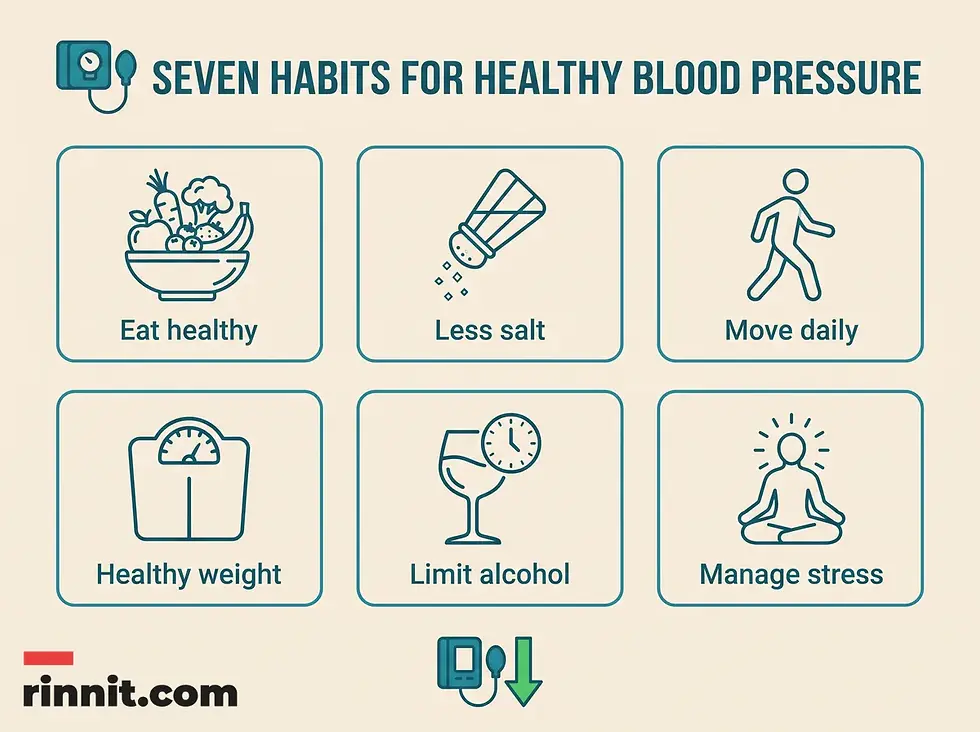
Eat healthy foods
Eat a healthy diet, such as the Dietary Approaches to Stop Hypertension (DASH) diet. Choose fruits, vegetables, whole grains, poultry, fish, and low-fat dairy foods.
Get plenty of potassium from natural sources, which can help lower blood pressure. Eat less saturated fat and trans fat.
Use less salt
Hidden sources of salt include processed meats, canned foods, commercial soups, frozen dinners, and certain breads. Check food labels for the sodium content.
Aim to limit sodium by at least 1,000 milligrams a day. A lower intake of 1,500 mg a day or less is ideal for most adults.
Manage your weight
Losing weight if you are overweight or have obesity can help control blood pressure and lower the risk of complications. Ask your provider what weight is best for you.
In general, blood pressure drops by about 1 mm Hg for each kilogram (about 2.2 pounds) of weight lost. In people with high blood pressure, the drop per kilogram may be even greater.
Increase physical activity
Regular exercise keeps the body healthy. It can lower blood pressure, ease stress, manage weight, and reduce the risk of chronic health conditions.
Aim for at least 150 minutes a week of moderate aerobic activity or 75 minutes a week of vigorous aerobic activity, or a combination of the two.
Limit alcohol
If you choose to drink, do so in moderation. For healthy adults, that means up to one drink a day for women and up to two drinks a day for men. The NIAAA Rethinking Drinking site offers tools for cutting back.
Don't smoke
Tobacco injures blood vessel walls and speeds up the hardening of the arteries. If you smoke, ask your care provider for strategies to help you quit.
Manage stress
Find ways to help reduce emotional stress. Getting more exercise, practicing mindfulness, and connecting with others in support groups are some ways to reduce stress.
Prevention
The same healthy lifestyle changes used to treat elevated blood pressure also help prevent it. Eat healthy foods, use less salt, don't smoke, exercise regularly, maintain a healthy weight, avoid or limit alcohol, and manage stress.
Preparing for your appointment
If you think you may have elevated or high blood pressure, make an appointment with your family care provider to have your blood pressure checked. No special preparations are necessary.
To get an accurate reading, avoid caffeine, exercise, and tobacco for at least 30 minutes before the test. Because some medications can raise blood pressure, bring a list of all medications, vitamins, and supplements you take with their doses. Do not stop taking any prescription medications without your provider's advice.
Before your visit, make a list of your symptoms and when they began, even if they seem unrelated. Note important personal information, including any family history of high blood pressure, high cholesterol, heart disease, stroke, or diabetes, plus any major stresses or recent life changes. Write down questions to ask your provider.
Useful questions include: What tests do I need? Do I need to take medication? What foods should I eat or avoid? What is an appropriate level of physical activity? How often do I need to have my blood pressure checked? Should I check my blood pressure at home? How can I best manage my other health conditions together?
Your provider is likely to ask about your diet and exercise habits, whether you drink alcohol and how many drinks you have a week, whether you smoke, and when your blood pressure was last checked and what the result was.
Conclusion
Elevated blood pressure gives you a window of time to act. It is not yet a disease, but it warns that your numbers are drifting in the wrong direction. Because it never causes symptoms, the only defense is regular checks and daily habits.
Eating well, moving more, keeping a healthy weight, and avoiding tobacco give you real control over where your blood pressure goes next. Small, steady changes can keep elevated blood pressure from becoming hypertension.
Next steps: get your blood pressure checked if it has been more than two years, and start with one change from the habits above, such as cutting back on salt or adding a daily walk.
Frequently asked questions
Does elevated blood pressure cause symptoms?
No. Elevated blood pressure never causes symptoms. The only way to detect it is through regular blood pressure checks at your provider's office or with a home monitoring device.
What numbers count as elevated blood pressure?
Elevated blood pressure means the top (systolic) number is 120 to 129 and the bottom (diastolic) number is below, not above, 80. It sits between normal blood pressure (below 120/80) and stage 1 hypertension (130 to 139 or 80 to 89). [1]
Is elevated blood pressure the same as hypertension?
No. Elevated blood pressure is a category, not an actual health condition like hypertension. However, it tends to worsen over time unless properly managed, and uncontrolled it raises the risk of heart attacks and strokes.
Can elevated blood pressure be treated without medication?
Yes. Healthy lifestyle changes are recommended for everyone with elevated blood pressure, and they are the main treatment. Blood pressure medication may be added if you also have diabetes, kidney disease, or heart disease. If you have no heart disease risk factors, the benefits of medication are less clear.
How often should adults get their blood pressure checked?
Adults age 18 and older should have a blood pressure check at least every two years. More frequent checks are advised if you have elevated blood pressure or other risk factors for heart disease. Children should be checked at routine well visits starting at age 3.
This article is for general education and is not a substitute for professional medical advice, diagnosis, or treatment. Always consult a qualified healthcare professional about your individual situation.
Related Reading
Blood Pressure Measurement: How to Take an Accurate Reading and What It Means explains how to take an accurate blood pressure reading at home or in the clinic.
References
American Heart Association. Understanding Blood Pressure Readings. American Heart Association. Last Reviewed August 14, 2025. https://www.heart.org/en/health-topics/high-blood-pressure/understanding-blood-pressure-readings
American Heart Association. What is High Blood Pressure? American Heart Association. Last Reviewed August 14, 2025. https://www.heart.org/en/health-topics/high-blood-pressure/the-facts-about-high-blood-pressure/what-is-high-blood-pressure
National Institute on Alcohol Abuse and Alcoholism. Rethinking Drinking. NIAAA. Accessed October 14, 2026. https://www.rethinkingdrinking.niaaa.nih.gov/
de Menezes ST, Giatti L, Brant LCC, et al. Hypertension, Prehypertension, and Hypertension Control: Association With Decline in Cognitive Performance in the ELSA-Brasil Cohort. Hypertension. 2021;77(2):672-681. PMID 33307849. https://doi.org/10.1161/HYPERTENSIONAHA.120.16080
Filippou CD, Tsioufis CP, Thomopoulos CG, et al. Dietary Approaches to Stop Hypertension (DASH) Diet and Blood Pressure Reduction in Adults with and without Hypertension: A Systematic Review and Meta-Analysis of Randomized Controlled Trials. Adv Nutr. 2020;11(5):1150-1160. PMID 32330233. https://doi.org/10.1093/advances/nmaa041
Pescatello LS, Buchner DM, Jakicic JM, et al. Physical Activity to Prevent and Treat Hypertension: A Systematic Review. Med Sci Sports Exerc. 2019;51(6):1314-1323. PMID 31095088. https://doi.org/10.1249/MSS.0000000000001943



Comments