Bladder Reconstruction Surgery: Restoring Function and Quality of Life

Updated: 2 days ago
Medically reviewed by Dr. Baraa Alnahhal, MD · Last reviewed: October 2026
Quick Answer
Bladder reconstruction surgery, specifically neobladder reconstruction, replaces a bladder lost to cancer, trauma or severe dysfunction. [1] During the two-to-six-hour operation, a urologist removes the bladder and builds a new reservoir from a segment of small intestine, attached to the ureters and urethra for natural urination. [1] In a 2016 study, more than 90% of patients achieved daytime continence within 18 months. [1] [2]
What the research says
Most men regained daytime urinary control, while night-time control took longer. In a prospective questionnaire study of 188 men with an orthotopic neobladder, daytime continence rose from 59% at under 3 months to 92% at 12 to 18 months, and night-time continence rose from 28% to 51% by 18 to 36 months (PubMed: Clifford et al., J Urol, 2016) [2].
Quality of life was better with a neobladder than with an ileal conduit in a small retrospective comparison. Among 102 patients after cystectomy (69 with a neobladder, 33 with an ileal conduit), 92.8% of neobladder patients did not feel handicapped versus 51.5% with an ileal conduit, and 97% versus 36% would recommend their type of diversion to a friend. The study is older and relied on retrospective questionnaires (PubMed: Hobisch et al., World J Urol, 2000) [3].
What is Bladder Reconstruction Surgery?
Neobladder reconstruction surgery, also known as orthotopic neobladder reconstruction, is a sophisticated form of urinary diversion designed to replace a bladder that is no longer functional or has been removed due to disease. [1] The term "orthotopic" refers to the fact that the new bladder is placed in the same anatomical position as the original organ. [1]
This procedure is typically performed immediately following a cystectomy, which is the surgical removal of the bladder. [1] By using a piece of the patient's own small intestine to create a new storage reservoir, surgeons can restore the body's natural path for urine elimination. [1]
Why is Reconstruction Necessary?
Bladder reconstruction becomes necessary when certain medical conditions require the bladder to be removed and rebuilt. The most common reason is invasive bladder cancer, but other conditions can also lead to bladder failure.
Condition | Description |
|---|---|
Bladder Cancer | Malignant tumors that require the removal of the organ to prevent spread. |
Neurogenic Bladder | Dysfunction caused by brain or spinal cord injuries that prevent proper contraction. [1] |
Bladder Exstrophy | A congenital abnormality where the bladder develops outside the body. [1] |
Interstitial Cystitis | A chronic, severe inflammatory condition causing debilitating pain. |
Trauma | Severe physical injury to the pelvic region that destroys bladder integrity. |

Figure 1: Key medical indications for bladder reconstruction surgery.
What happens during bladder reconstruction surgery?
Bladder reconstruction is a major operation that requires a specialized surgical team, including urologists, anesthesiologists, and oncology nurses.
Preparation
Before surgery, patients undergo a comprehensive evaluation including physical exams, urinalysis, and imaging tests to ensure the rest of the urinary system is healthy. [1] Patients must disclose all medications, particularly blood thinners and anti-inflammatory drugs, as these can affect surgical outcomes. [1]
During Surgery
The procedure typically lasts between two and six hours. [1] Under general anesthesia, the surgeon performs the following steps:
Cystectomy: The original bladder is removed through either a traditional open incision or a robotic-assisted approach. [1]
Intestinal Isolation: A section of the small intestine is carefully isolated while maintaining its blood supply.
Neobladder Creation: The intestinal segment is reshaped into a spherical reservoir. [1]
Attachment: The ureters (which carry urine from the kidneys) and the urethra are attached to the new neobladder. [1]
Catheterization: A temporary urinary catheter is inserted to allow the new reservoir to heal while draining urine. [1]
What is recovery like after bladder reconstruction surgery?
Recovery from neobladder reconstruction involves a hospital stay of several days, during which the medical team monitors the healing process and manages postoperative pain. [1]

Figure 2: The neobladder recovery path, from hospital stay to pelvic floor training and functional success.
Training the New Bladder
Because the neobladder is made of intestinal tissue rather than bladder muscle, it does not "feel" full in the same way. Patients must learn new techniques to manage their urinary function:
Kegel Exercises: Strengthening the pelvic floor muscles is essential for maintaining continence. [1]
Timed Voiding: Learning to empty the bladder on a schedule rather than waiting for a sensation of fullness.
Self-Catheterization: Approximately 10% to 15% of patients may need to learn clean intermittent catheterization to ensure the neobladder empties completely. [1]
Success Rates
Clinical data indicates high levels of satisfaction and functional success following the procedure.
What are the risks and complications of bladder reconstruction surgery?
Bladder reconstruction surgery carries potential risks, as any major surgery does, including some specific urinary complications. These include standard surgical risks like bleeding and infection, as well as specific urinary complications: [1]
Urinary Retention: The inability to fully empty the neobladder. [1]
Strictures: Blockages where the ureters or urethra are attached.
Mucus Production: Since the reservoir is made of intestine, it may continue to produce mucus that can appear in the urine. [1]
Kidney Stones or UTIs: Increased risk of stones or infections due to changes in urinary flow. [1]
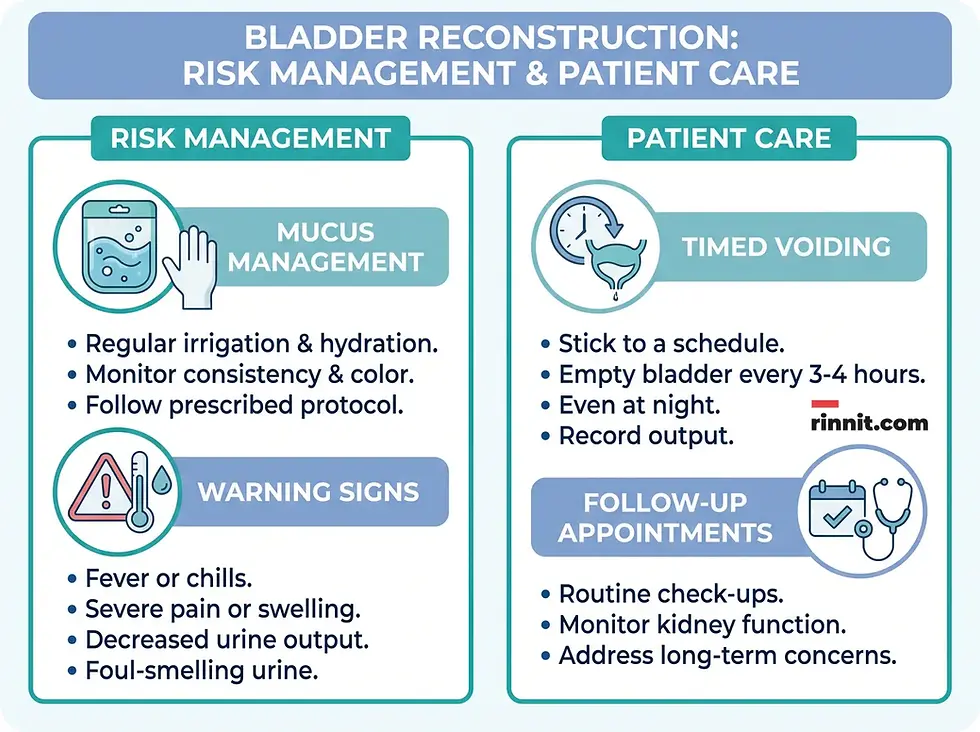
Figure 3: Risk management and patient care after bladder reconstruction.
Conclusion
Neobladder reconstruction surgery is a life-changing procedure that offers a return to near-normal urinary function for those facing bladder loss. While the surgery is complex and requires a dedicated recovery period, the ability to maintain a positive self-image and avoid external collection devices makes it a preferred choice for many candidates. [1] [3] With proper training and follow-up care, the vast majority of patients achieve excellent functional results. [2]
Frequently Asked Questions
1. What is the main advantage of a neobladder over other diversions?
The primary advantage is that it allows you to continue peeing through your urethra without the need for an external urostomy bag. This often leads to a better self-image and a higher quality of life.
2. Who is a good candidate for this surgery?
Not everyone is a candidate. Your surgical team considers factors such as how healthy your liver and kidneys are and whether you have urethral cancer, and will perform a detailed assessment to ensure your body can handle the reconstruction.
3. How long will I need to stay in the hospital?
Most patients stay in the hospital for at least a few days. The exact duration depends on whether the surgery was performed robotically or through a traditional open incision, with open surgery generally requiring a longer stay.
4. Will I be able to control when I pee?
In one study, more than 90% of patients achieved daytime control within 12 to 18 months. Nighttime control takes longer to develop and was achieved by just over half of patients within 18 to 36 months.
5. What are Kegel exercises, and why are they needed?
Kegel exercises strengthen the pelvic floor muscles. Since the new bladder doesn't have the same muscles as the original, these pelvic muscles become the primary way you control the release of urine.
6. Is the surgery painful?
The surgery is performed under general anesthesia, so you will not feel anything during the procedure. Afterward, your medical team will provide a pain management plan involving medications and relaxation techniques.
7. What is self-catheterization?
Self-catheterization is a technique where you insert a small tube into the urethra to help drain the bladder. About 10% to 15% of patients need to do this if their neobladder doesn't empty completely on its own.
8. Can bladder reconstruction be used for children?
Bladder exstrophy, a congenital condition in which the bladder develops outside the body, is one of the conditions for which bladder reconstruction may be recommended. A pediatric urologist can explain which options are suitable for a child.
9. Does the new bladder produce mucus?
Yes, because the neobladder is made from a piece of the small intestine, it naturally produces mucus. This is normal, and your doctor will teach you how to manage it.
10. What happens if I have bladder cancer?
If you have bladder cancer, the surgeon will first perform a cystectomy to remove the cancerous organ before proceeding with the neobladder reconstruction as part of the same surgical session.
11. How do I prepare for bladder reconstruction surgery?
Your provider reviews the urinary diversion options and your medical history, performs a physical exam, and orders a urinalysis to rule out a urinary tract infection plus noninvasive imaging of the urinary system [1]. Some drugs raise bleeding risk during surgery, including NSAIDs, aspirin, blood thinners and certain herbal supplements, so check with your provider before stopping any medication, and disclose allergies to medications, skin cleaners such as chlorhexidine, iodine and isopropyl alcohol, latex and foods [1]. Do not eat or drink anything after midnight the night before surgery, taking needed medications with only a small sip of water; the operation is done under general anesthesia by a urologist, anesthesiologist and nurses [1].
12. When should I call my doctor after bladder reconstruction surgery?
Contact your provider right away for signs of infection, including fever, chills or cloudy urine, difficulty performing self-catheterization, blood in your urine, or pain in your belly or flank, the area between your ribs and hips [1].
Related Reading
References
Cleveland Clinic. Bladder Reconstruction Surgery (Neobladder): Procedure. Cleveland Clinic. Apr. 24, 2024. https://my.clevelandclinic.org/health/procedures/bladder-reconstruction-surgery
Clifford TG, Shah SH, Bazargani ST, et al. Prospective evaluation of continence following radical cystectomy and orthotopic urinary diversion using a validated questionnaire. J Urol. 2016;196(6):1685-1691. PMID 27256205. https://doi.org/10.1016/j.juro.2016.05.093
Hobisch A, Tosun K, Kinzl J, et al. Quality of life after cystectomy and orthotopic neobladder versus ileal conduit urinary diversion. World J Urol. 2000;18(5):338-344. PMID 11131311. https://doi.org/10.1007/s003450000147
Medical Disclaimer
This article is for informational purposes only and does not constitute medical advice. Always seek the advice of your physician or other qualified health provider with any questions you may have regarding a medical condition. Never disregard professional medical advice or delay in seeking it because of something you have read here.



Comments