Bee Stings: Symptoms, Causes, and Treatment

Updated: 2 days ago
Medically reviewed by Dr. Baraa Alnahhal, MD · Last reviewed: October 2026
Quick Answer
A bee sting is an injury caused when a bee injects venom through a barbed stinger, causing pain and swelling. Most stings cause a mild reaction that fades within hours and need only first aid: scrape out the stinger, wash the area and apply a cold compress. Call 911 for signs of anaphylaxis, such as trouble breathing.
What the research says
Venom immunotherapy sharply cuts the chance of another serious sting reaction. A Cochrane review of 6 randomised trials and 1 quasi-randomised trial (392 participants) found that 3 of 113 people (2.7%) treated with venom immunotherapy had a systemic allergic reaction to a later sting, compared with 37 of 93 untreated people (39.8%) (risk ratio 0.10; 95% CI 0.03 to 0.28). The treatment itself carried a small but significant risk of systemic reactions (14 of 150 treated people, 9.3%, versus 1 of 135 controls, 0.7%) (Boyle et al., Cochrane Database Syst Rev, 2012) [3].
A larger meta-analysis points the same way. Across 17 studies, venom immunotherapy substantially reduced the risk of later severe systemic sting reactions (OR 0.08; 95% CI 0.03 to 0.26) and improved disease-specific quality of life (risk difference 1.41; 95% CI 1.04 to 1.79). Most adverse effects were mild and no fatalities were reported, although the evidence was limited in volume and quality (Dhami et al., Allergy, 2017) [4].
Serious allergic reactions to stings are uncommon but real, and prevention is possible. An evidence-based European guideline reports systemic allergic sting reactions in up to 7.5% of adults and up to 3.4% of children, states that venom immunotherapy is the only treatment that prevents further systemic sting reactions, and advises people at risk to carry an adrenaline autoinjector (Sturm et al., Allergy, 2018) [5].
What is a bee sting?
A bee sting is one of the most common outdoor injuries there is, and most of the time it is nothing more than a sharp sting, a raised welt, and a few hours of discomfort. But for a small percentage of people, a sting can trigger a life-threatening allergic reaction called anaphylaxis, and knowing the difference between the two can save your life.
This guide covers what bee sting symptoms look like, why stings cause pain and swelling, which reactions need emergency care, and the first-aid steps and treatments that actually help — from scraping out a stinger to allergy shots that can stop the reaction before it starts.
A bee sting is an injury caused by bee venom. To sting, a bee jabs a barbed stinger into the skin, and the stinger releases venom. The venom contains proteins that cause pain and swelling around the sting area.
It is a common outdoor nuisance rather than a serious injury for most people. With basic first aid, the pain of a mild or moderate reaction can be eased at home, while a severe reaction needs emergency medical help.

What are the symptoms of a bee sting?
Bee sting symptoms can range from pain and swelling to a life-threatening allergic reaction. Having one type of reaction does not mean you will always have the same reaction every time you are stung, and it does not mean the next reaction will be more severe.
Mild reaction. Most of the time, symptoms are minor. They include instant, sharp burning pain, a welt, and swelling. In most people, the swelling and pain go away within a few hours.
Moderate reaction. Some people have a stronger reaction, with burning pain, a welt, itching, flushing, and swelling that gets worse over the next day or two. These symptoms can last up to seven days.
Severe reaction. A severe reaction, called anaphylaxis, is potentially life-threatening and requires emergency treatment. A small percentage of people who are stung develop anaphylaxis. It usually happens 15 minutes to an hour after the sting. Symptoms include rash, itching, trouble breathing, swollen tongue, trouble swallowing, and tightness in the chest.
Multiple bee stings. If you get stung more than a dozen times, you can have a bad reaction that makes you feel quite sick. Symptoms include those of a moderate reaction as well as nausea, vomiting, diarrhea, fever, and lightheadedness.
Reaction type | Symptoms | How long it lasts |
Mild | Instant sharp burning pain, welt, swelling | Usually fades within a few hours |
Moderate | Burning pain, welt, itching, flushing, swelling that worsens over a day or two | Can last up to seven days |
Severe (anaphylaxis) | Rash, itching, trouble breathing, swollen tongue, trouble swallowing, chest tightness | Usually starts 15 minutes to an hour after the sting; medical emergency |
Multiple stings (more than a dozen) | Moderate symptoms plus nausea, vomiting, diarrhea, fever, lightheadedness | Needs medical attention |
When should you seek medical help?
Call 911 or seek immediate care if you have a severe reaction suggesting anaphylaxis, even if it is just one or two symptoms. If you were prescribed emergency epinephrine that you inject yourself, use it right away as your health care professional directed. Inject the epinephrine first, then call 911.
Also seek immediate care for multiple stings in children, older adults, and people who have heart or breathing problems.
Make an appointment to see a health care professional if bee sting symptoms do not go away within three days, or if you have had other symptoms of an allergic response to a bee sting.
Situation | What to do |
Signs of anaphylaxis (even one or two symptoms) | Call 911; use prescribed epinephrine autoinjector first, then call |
Multiple stings in a child, older adult, or someone with heart or breathing problems | Seek immediate care |
Symptoms that last more than three days | Make an appointment |
Any past allergic response to a bee sting | Make an appointment to discuss allergy evaluation |
What causes a bee sting reaction?
A bee sting is an injury caused by bee venom. To sting, a bee jabs a barbed stinger into the skin. The stinger releases venom, and the venom has proteins in it that cause pain and swelling around the sting area.
Generally, bees and wasps are not aggressive and only sting in self-defense. In most cases this results in one or perhaps a few stings. Some types of bees tend to swarm, stinging in a group — an example is Africanized bees.
What raises your risk of being stung?
Your risk of being stung comes down mostly to where you spend your time. Risk factors for a bee sting include living in an area where bees are active, being near beehives, and spending a lot of time outdoors.
None of these factors change the reaction your body has to the venom itself. Only a previous severe allergic response affects the risk of anaphylaxis the next time.
How can you prevent bee stings?
Simple habits reduce your odds of being stung considerably.
Take care when drinking sweet beverages outside. Use wide, open cups so you can see if a bee is in them, and inspect cans and straws before drinking. Tightly cover food containers and trash cans, since their odors can attract insects. Clear away garbage, fallen fruit, and animal feces, as flies can attract wasps.
Wear closed-toe shoes when walking outside, and avoid walking through flowers. Skip perfumes and scented hair and body products, which attract insects, and avoid bright colors or floral prints, which attract bees. Be careful when mowing the lawn or trimming vegetation, since such activities might disturb insects in a beehive or wasp nest. Avoid being near bees, yellow jackets, and hornets, and remove hives and nests near your home if you can do so safely.
It also helps to know what to do when stinging insects are nearby. If a few bees are flying around you, stay calm and slowly walk away — swatting at an insect may cause it to sting. If a bee or wasp stings you, or many insects start to fly around, cover your mouth and nose and quickly leave the area. When a bee stings, it releases a chemical that attracts other bees. If you can, get into a building or a closed vehicle.

How is a bee sting allergy diagnosed?
To diagnose an allergy to venom from a bee sting, your health care professional may suggest one or both of two tests.
A skin test injects a small amount of bee venom into the skin of the arm or upper back. If you are allergic to bee stings, you will get a raised bump on your skin at the test site. A blood test measures how your immune system reacts to bee venom.
Your health care professional may also want to test you for allergies to yellow jackets, hornets, and wasps, since stings from these insects can cause allergic reactions similar to those of bee stings.
Diagnostic test | How it works |
Skin test | A small amount of bee venom is injected into the skin of the arm or upper back; an allergic person gets a raised bump at the test site |
Blood test | Measures how your immune system reacts to bee venom |
Additional testing | May include allergy tests for yellow jackets, hornets, and wasps, which can cause similar allergic reactions |
How are bee stings treated?
For most bee stings, home treatment is enough. Multiple stings or an allergic reaction may be a medical emergency that needs treatment right away.
Emergency treatment for allergic reactions
During an anaphylactic attack, an emergency medical team may perform CPR if you stop breathing or your heart stops beating. You may be given medicines including epinephrine to reduce your body's allergic response, oxygen to help you breathe, antihistamines and glucocorticoids such as prednisone to reduce inflammation of your air passages and improve breathing, and a beta agonist such as albuterol to ease breathing symptoms.
The epinephrine autoinjector
If you are allergic to bee stings, your health care professional is likely to prescribe emergency epinephrine that you inject yourself. You will need to have it with you at all times. An autoinjector is a combined syringe and concealed needle that injects a single dose of medicine when pressed against the thigh. Always replace an autoinjector by its expiration date.
Be sure you know how to use the autoinjector, and make sure the people closest to you know how to give you the medicine — if they are with you in an anaphylactic emergency, they could save your life. If you use an epinephrine autoinjector, go to the emergency department afterward.
Wear an alert bracelet that identifies your allergy to bee or other insect stings, and carry chewable antihistamines with you. Use the antihistamines if you are stung, begin to have symptoms of an allergic reaction, and are able to swallow. You may use both an autoinjector and the oral antihistamine.
Allergy shots
Bee and other insect stings are a common cause of anaphylaxis. If you have had a severe reaction to a bee sting or multiple stings, your health care professional may refer you to an allergist for allergy testing. The allergist may suggest immunotherapy, sometimes called allergy shots. These shots are generally given regularly for a few years and can reduce or stop your allergic response to bee venom.
People who have a severe reaction to a bee sting have on average a 50% chance of anaphylaxis the next time they are stung. Talk to a health care professional about prevention measures such as allergy shots to avoid a similar reaction if you get stung again.
What first aid should you use at home?
For a minor or moderate bee sting, follow these first-aid steps.
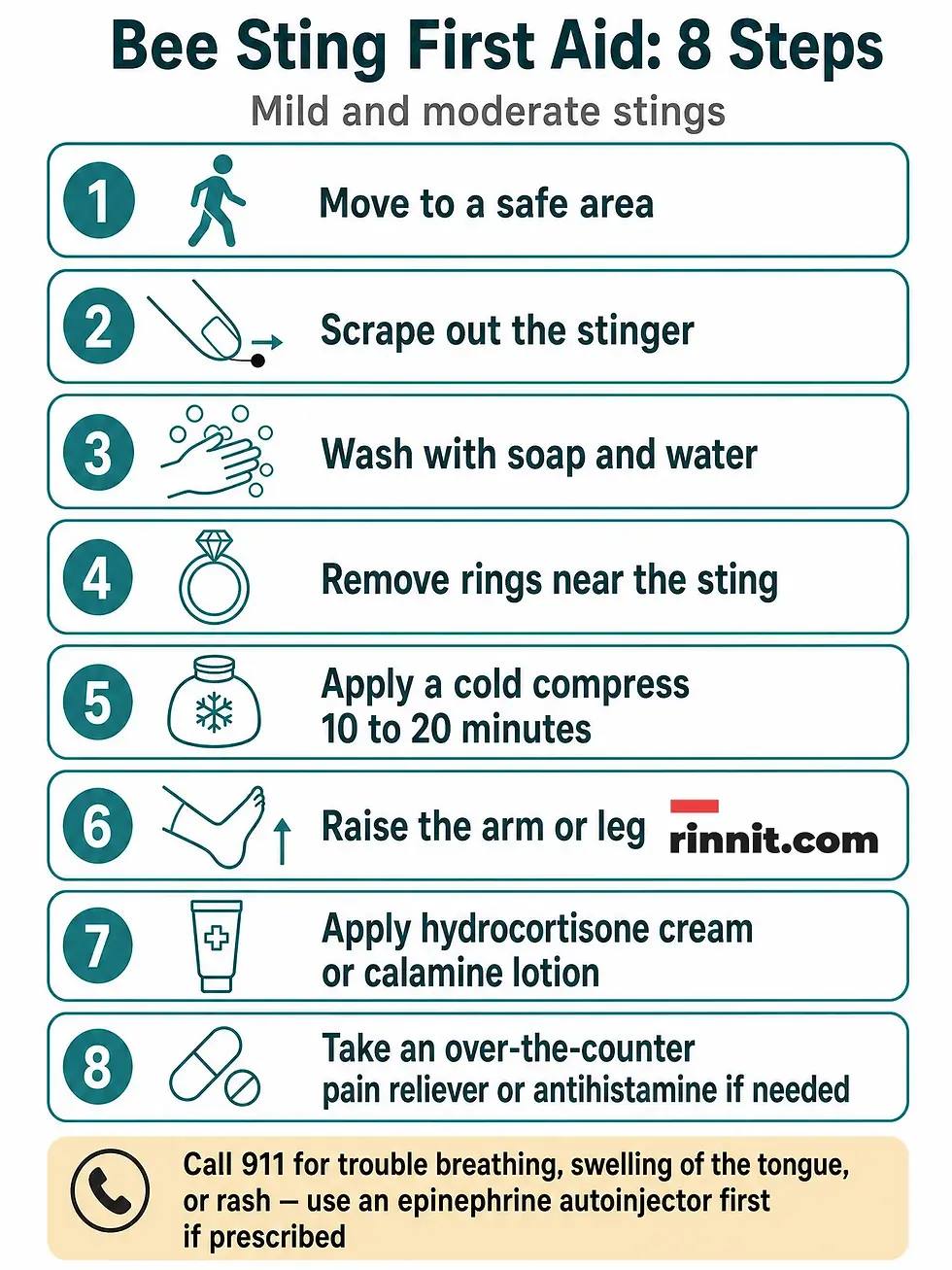
Move to a safe area to avoid more stings. If you see a stinger sticking out of the wound — it looks like a black dot — remove it as soon as possible. Try scraping it off with a fingernail or the blunt edge of a knife. A stinger may not be present, since only bees leave a stinger; other stinging insects, such as wasps, do not.
Wash the sting area with soap and water. Remove any rings in the sting area right away, before swelling gets worse. Apply a cloth dampened with cold water or filled with ice, and keep it on the sting for 10 to 20 minutes, repeating as needed.
If the sting is on an arm or leg, raise it. Swelling may increase over the next two days but usually goes away with time and elevation.
Apply hydrocortisone cream or calamine lotion to ease itching and swelling, up to four times a day until your symptoms go away. If needed, take an over-the-counter pain reliever such as ibuprofen or acetaminophen. If the sting area itches, take an oral antihistamine such as diphenhydramine, chlorpheniramine, loratadine, cetirizine, or fexofenadine. Some of these products can make you drowsy.
First-aid step | Detail |
Move to safety | Avoid further stings before treating the area |
Remove the stinger | Scrape it off with a fingernail or blunt knife edge as soon as possible; only bees leave a stinger |
Wash the area | Soap and water |
Remove rings | Before swelling gets worse, if the sting is on a hand or finger |
Cold compress | Cloth with cold water or ice for 10 to 20 minutes, repeat as needed |
Elevate | Raise the arm or leg; swelling may increase for two days but fades with time and elevation |
Ease itching | Hydrocortisone cream or calamine lotion up to four times a day |
Ease pain | Over-the-counter ibuprofen or acetaminophen; oral antihistamine for itching (some cause drowsiness) |
What should you avoid after a sting?
Scratching is the most common mistake. Don't scratch the sting area, since scratching can lead to infection. Don't rub the sting with mud, as mud contains many germs. Don't try to remove a stinger below the skin surface — it will come out over time as the skin sheds. And don't apply heat.
How do you prepare for your appointment?
Bee and other insect stings are a common cause of anaphylaxis. If you have had a severe reaction to a bee sting but did not seek emergency treatment, contact a health care professional. You may be referred to an allergy specialist, who can find out whether you are allergic to bee or other insect venom.
List questions you want to ask, such as: What do I do if I get stung again? If I have an allergic reaction, do I need to use emergency medicine such as an epinephrine autoinjector? How can I prevent this reaction from happening again?
Your health care professional is likely to do a physical exam and ask questions such as: When and where were you stung? What symptoms did you have after getting stung? Have you had an allergic reaction to an insect sting in the past? Do you have other allergies, such as hay fever? What medicines do you take, including herbal remedies? Do you have other health conditions?
Bottom line
Most bee stings are a brief, manageable nuisance: sharp pain, a welt, and swelling that settle within hours. Simple first aid handles them well — get to safety, scrape out the stinger, wash the area, remove rings, apply cold for 10 to 20 minutes, and reach for hydrocortisone cream or an over-the-counter pain reliever if needed. Scratching, mud, heat, and digging for a stinger below the skin all make things worse, not better.
The real danger is anaphylaxis, and it announces itself unmistakably: rash, itching, trouble breathing, a swollen tongue, trouble swallowing, or chest tightness, usually 15 minutes to an hour after the sting. That is a 911 call, and if you carry an epinephrine autoinjector, inject first, then call. More than a dozen stings at once also counts as an emergency for children, older adults, and people with heart or breathing problems.
Prevention is mostly habit: cover your food and drinks, skip perfume and bright floral prints, wear closed-toe shoes, keep the yard clean, and walk away slowly instead of swatting. And if you have ever had a severe reaction, do not brush it off — on average you have a 50% chance of anaphylaxis the next time. Allergy testing and allergy shots can reduce or even stop that response, so the best next step after a bad reaction is to see a health care professional and ask about it.
Next steps: Know your emergency plan before you need it. If you have had any allergic response to a sting, book an appointment to discuss testing, an epinephrine autoinjector, and allergy shots. Otherwise, keep this first-aid checklist handy before your next time outdoors.
FAQ
How long does a bee sting hurt?
For most people, the sharp burning pain, welt, and swelling of a mild reaction fade within a few hours. A moderate reaction can bring swelling and itching that worsen over a day or two and last up to seven days.
When is a bee sting an emergency?
Call 911 for any signs of anaphylaxis — rash, trouble breathing, swollen tongue, trouble swallowing, or chest tightness — which usually begin 15 minutes to an hour after the sting. Also seek immediate care for more than a dozen stings in children, older adults, or people with heart or breathing problems.
Should I pull a bee stinger out?
Remove it as soon as possible, but scrape it off with a fingernail or the blunt edge of a knife rather than squeezing or digging for it. Do not try to remove a stinger below the skin surface; it will come out on its own as the skin sheds.
Why do I keep getting badly stung outside?
Bees usually sting only in self-defense, so risk depends on exposure: living where bees are active, spending lots of time outdoors, being near beehives, wearing bright colors or perfume, and drinking from open cans. Cover food and drinks, wear closed-toe shoes, and walk away calmly instead of swatting.
What happens if I was seriously allergic to one sting?
People who have had a severe reaction have on average a 50% chance of anaphylaxis the next time they are stung. A health care professional can order skin or blood tests, prescribe an epinephrine autoinjector, and refer you to an allergist for allergy shots that can reduce or stop the reaction.
Disclaimer: This article is for general informational purposes only and does not constitute medical advice. Always consult a qualified health care provider for individual questions.
What is the best home treatment for a bee sting?
Remove the stinger, wash the area with soap and water, and apply a cold pack to ease swelling and pain. An over-the-counter pain reliever, antihistamine or hydrocortisone cream can help with pain and itching.
What are the signs of an allergic reaction to a bee sting?
Signs of a serious reaction include hives or itching away from the sting, swelling of the face, lips or throat, trouble breathing, dizziness, and nausea or vomiting. Call 911 right away if any of these happen.
Is it normal for a bee sting to swell a lot?
Some people have a large local reaction, with redness and swelling that spreads over a day or two and can take about a week to go away. This is usually not dangerous, but see a provider if the swelling is severe or keeps growing.
How do you use an epinephrine autoinjector for a bee sting?
Follow the instructions on the device, which usually means pressing it firmly against the outer thigh and holding it in place for the time on the label. Then call 911, even if symptoms improve, because symptoms can return.
Are many bee stings at once dangerous?
Yes. Many stings at once can cause a toxic reaction even in people who are not allergic, with symptoms such as vomiting, dizziness, fever or fainting. Get emergency care after many stings, especially for children, older adults and people with heart or breathing problems.
Related Reading
Anaphylaxis: Symptoms, Triggers, and Why Epinephrine Is the Only Emergency Treatment explains severe allergic reactions and why epinephrine comes first.
Allergy Shots (Immunotherapy): Long-Term Relief for Chronic Allergies describes allergy shots, including venom immunotherapy for sting allergy.
Hives and Angioedema: Symptoms, Causes, Treatment & Complete Guide explains hives and swelling that can follow an insect sting.
Allergy Testing: Types, How to Prepare and What Results Mean describes skin and blood tests used to confirm allergies.
References
Mayo Clinic Staff. Bee sting - Symptoms and causes. Mayo Clinic. October 24, 2024. https://www.mayoclinic.org/diseases-conditions/bee-stings/symptoms-causes/syc-20353869
Mayo Clinic Staff. Bee sting - Diagnosis and treatment. Mayo Clinic. October 24, 2024. https://www.mayoclinic.org/diseases-conditions/bee-stings/diagnosis-treatment/drc-20353874
Boyle RJ, et al. Venom immunotherapy for preventing allergic reactions to insect stings. Cochrane Database Syst Rev. 2012;10(10):CD008838. PMID 23076950. https://doi.org/10.1002/14651858.CD008838.pub2
Dhami S, et al. Allergen immunotherapy for insect venom allergy: a systematic review and meta-analysis. Allergy. 2017;72(3):342-365. PMID 28120424. https://doi.org/10.1111/all.13077
Sturm GJ, et al. EAACI guidelines on allergen immunotherapy: Hymenoptera venom allergy. Allergy. 2018;73(4):744-764. PMID 28748641. https://doi.org/10.1111/all.13262



Comments