Back Acne: The "Bacne" Condition That Develops When Sweat, Friction, and Oil Team Up on Your Back, and How to Clear It

Updated: 2 days ago
Medically reviewed by Dr. Baraa Alnahhal, MD. Last reviewed October 13, 2026. This content is for educational purposes and is not medical advice.
Quick Answer
Back acne is acne that develops on the back and shoulders when pores get clogged with sweat, oil, dead skin cells and bacteria, often from sweat trapped under clothing [1]. It is more common in teenagers and young men [1]. Treatment includes keeping skin clean and using benzoyl peroxide or retinoid products [1] [2]. See a provider if it is severe or recurring.
What the research says
Back acne is often overlooked, but it can scar and affect self-esteem. A review of 76 articles found that acne on the trunk is frequently missed in dermatology practice even though it can leave scars and affect self-esteem and body image; it is thought to work like facial acne, but its treatment response seems to differ, and there is still no dedicated severity scale or treatment algorithm for it (Poli et al., J Eur Acad Dermatol Venereol, 2020) [6].
The skin on your back is not the same as the skin on your face. Another review notes that although the way acne forms on the trunk and the face is considered similar, the skin itself differs, that trunk acne can scar large areas of the body and lower quality of life, and that only a few studies have looked at it so far (Woo and Kim, J Clin Med, 2022) [7].
What Is Back Acne?
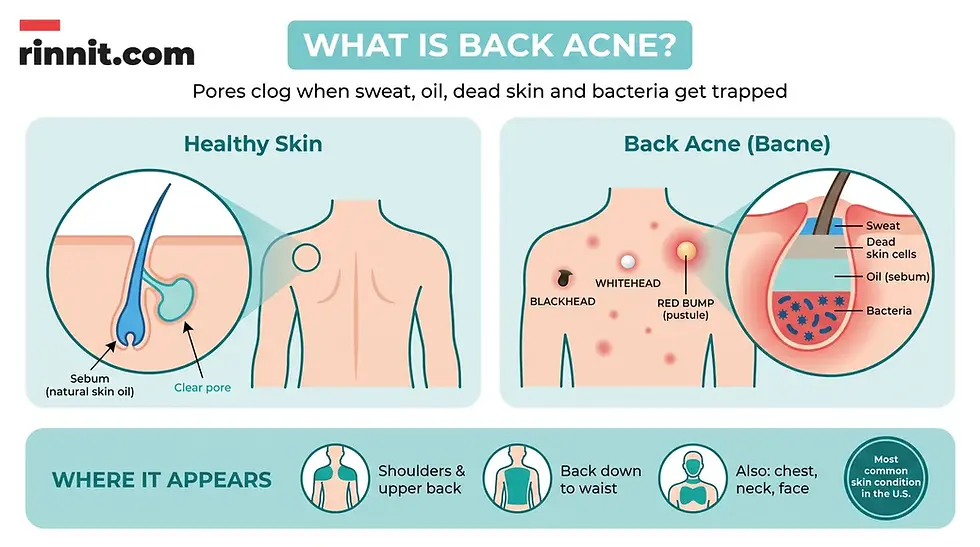
Back acne, sometimes called "bacne," is acne that develops on your back and shoulders [1]. It causes pimples that appear as red bumps, whiteheads, or blackheads [1], and these zits can be unsightly, annoying, and painful.
Acne happens when oil, dirt, dead skin cells, and bacteria clog your skin's pores [1] [4]. Your body makes an oil called sebum to keep your skin and hair from getting too dry, but too much sebum or improperly cleaned skin can clog pores and lead to breakouts [1].
Back acne usually results when sweat gets trapped under a shirt or athletic gear during exercise or strenuous activity [1]. Clothing rubs against your sweaty skin, which leads to zits or makes existing ones worse [1].
Several over-the-counter and prescription treatments can clear up back acne [1]. But it may take a few months for skin to clear [1] [2].
Where Does Back Acne Usually Appear?
You may have pimples only along your shoulders and upper back. Or they may develop all over your back and torso down to your waist [1]. These zits can be painful and may develop in clusters [1].
Acne can develop anywhere on your body. Most often, it appears on your face [4]. But it's also common on your back, shoulders, chest, neck, and bottom [1].
Who Might Get Back Acne?
Anyone can get back acne. It can appear at any age and in people of all sexes. But it's more common in teenagers and young men [1].
What Are the Symptoms of Back Acne?
Back acne symptoms are zits on your back and shoulders that may be painful and can leave scars if deeper bumps are picked [1] [5]. You might have one type of pimple or a combination of these:
Symptom | What It Looks Like |
Blackheads | Open pores clogged with oil and dead skin that look dark on the surface |
Whiteheads | Clogged pores covered by a thin layer of skin, appearing as small white bumps |
Red bumps | Pimples that don't have a "head" |
Cysts | Bumps deep below your skin's surface, caused by a type of acne called cystic acne |
Nodules | Hard lumps under your skin, caused by a severe type of acne called nodular acne |
These zits can be painful and may develop in clusters. The deeper the bump, the more likely it is to hurt and to leave a scar if picked at [5].

What Causes Back Acne?
Back acne develops like other types of zits. Your skin's pores get clogged with dirt, dead skin cells, sweat, and the oil called sebum [1] [4]. If your body makes too much sebum or you don't clean your skin properly, you can get clogged pores [1].
The table below covers the most common causes and contributing factors:
Cause or Factor | How It Contributes to Back Acne |
Trapped sweat | Sweat gets trapped between your skin and clothing, clogging pores; people with excessive sweating (hyperhidrosis) have a higher chance of developing back acne |
Friction | Shirts, backpacks, sporting equipment, and other clothing that rub against sweaty skin can cause or worsen back acne |
Family history | You're more likely to develop pimples if you have a family history of acne |
Hormones | Pregnancy and puberty bring hormone changes that make breakouts more likely |
Poor hygiene | Oils from unclean hair rubbing against your back, plus dirty sheets, towels, or clothing |
Skin care products | Certain lotions and creams can clog pores and lead to acne |
Stress and anxiety | Stress raises the hormone cortisol, which signals your body to produce more sebum |
Medications | Some drugs, including corticosteroids, can cause back acne or make it worse |
Why Does Sweat Cause Back Acne?
Sweat itself doesn't create acne, but it gets trapped between your skin and your clothing. When it does, your pores can get clogged [1]. People who have excessive sweating (hyperhidrosis) have a higher chance of developing back acne [1].
Why Does Friction Make It Worse?
Clothing, backpacks, and sports equipment rub against sweaty skin. That friction irritates the skin and helps clog pores, which leads to zits or makes them worse [1] [2]. Athletes who wear heavy padding on their backs are at particular risk.
How Is Back Acne Diagnosed?
You can usually recognize signs of back acne on your own. If you have a lot of pimples on your back or they keep coming back, see your healthcare provider. They'll examine your skin and may recommend seeing a dermatologist [1], a provider who specializes in caring for skin.
How Can I Treat Back Acne?
You can treat mild back acne at home. The steps below form a simple routine that works for most people.
Avoid popping or squeezing the pimples. You can damage your skin by popping zits. Squeezing or popping them can also lead to acne scars, which can be severe [1] [4]. Picking at a zit can also lead to an infected pimple [1].
Keep your skin clean. Use an oil-free body wash that's "noncomedogenic," which means it won't clog your pores [1] [2]. Shower and change into clean clothes after exercise [1] [2]. Resist the urge to scrub your skin with harsh cleansers, because scrubbing can make acne worse [1] [2].
Try topical creams, gels, and cleansers. Benzoyl peroxide products can clear up back acne [1] [2]. When using a benzoyl peroxide cleanser, allow the medicine to stay on the pimples for up to five minutes before rinsing it off [1] [2]. You may also try a retinoid gel or an acne sticker that releases salicylic acid medication into the zit over several hours [1].
Use clean linens. Use clean towels, sheets, and pillowcases so bacteria don't build up. Try to wash your sheets and towels at least once a week [1].
What If At-Home Treatment Doesn't Work?
If back acne lingers or keeps coming back, see your dermatologist. They may recommend other prescription skin care products to treat severe acne. Or you may need antibiotics or other oral medications [1].
Depending on how many zits you have on your back, you may need to try different types of treatments. It might take several weeks for them to clear up [1] [2]. Your healthcare provider may recommend a combination of medications to get the results you want.

Can I Prevent Back Acne?
Back acne may not be something you can prevent entirely, even with careful daily habits. But you can lower your risk with the habits below:
Prevention Habit | Why It Helps |
Change your clothes after you sweat | Removes trapped sweat before it clogs pores |
Keep your skin clean | Prevents oil, dirt, and dead skin from building up |
Wear loose-fitting, sweat-wicking or cotton shirts | Reduces friction and trapped sweat |
Limit sports equipment (like football pads) and heavy backpacks | Cuts the rubbing that triggers breakouts |
Use noncomedogenic products | Ensures lotions and creams won't clog pores |
Remember to use sunscreen | Protects skin without worsening breakouts |
Manage stress levels | Keeps cortisol and sebum production in check |
You can also ask your healthcare provider if any medications you take, such as corticosteroids, may be causing back acne [1].
What Can I Expect If I Have Back Acne?
Most of the time, back acne gets better with at-home treatments [1]. If these pimples don't respond to over-the-counter products, dermatologists can treat severe back acne with prescription medications [1].
Back acne can range from mildly annoying to very painful. These back zits can take time to treat, especially if you play a sport that requires you to wear heavy equipment or padding on your back.
When Should I See My Healthcare Provider?
See your healthcare provider if back acne is severe, or if it goes away and comes back. Also call if you feel hard or painful nodules or have pimples deep under your skin, if you have severe pain or inflammation, or if you have signs of an infection, such as a fever [1].
To prevent back acne, always clean your skin after you sweat and change into a clean, dry shirt after a workout. Also, try to limit the friction and pressure on your back by avoiding equipment that rubs against your skin. If back pimples are painful or they keep returning, see your healthcare provider.
What is the bottom line on back acne?
Back acne is a common, treatable skin condition that shows up when sweat, oil, dead skin, and bacteria clog your pores, often thanks to sweaty shirts, backpacks, and sports equipment. With consistent cleaning, the right noncomedogenic products, and patience (it can take weeks to months to clear), most people get relief at home. For stubborn, deep, or recurring breakouts, a dermatologist has prescription options that work.
Explore Rinnit.com's library of plain-language health guides for more ways to understand and manage your skin and overall health.
Frequently Asked Questions
What are the symptoms of back acne?
You may have pimples only along your shoulders and upper back, or they may develop all over your back and torso down to your waist. The zits can be painful and may develop in clusters, appearing as blackheads, whiteheads, red bumps without a head, cysts, or nodules.
What causes back acne?
Back acne develops when your skin's pores get clogged with dirt, dead skin cells, sweat, and sebum (the oil your body makes to keep skin and hair from getting too dry). Trapped sweat under clothing, friction from shirts and equipment, family history, hormones, stress, and certain medications all contribute.
Is back acne more common in men or women?
Anyone can get back acne at any age, but it's more common in teenagers and young men.
Can sweat cause back acne?
Yes. Sweat can get trapped between your skin and your clothing, and when it does, your pores can get clogged. People with excessive sweating (hyperhidrosis) have a higher chance of developing back acne.
Can backpacks and sports equipment cause back acne?
Yes. Shirts, backpacks, sporting equipment, and other clothing that rub against sweaty skin can cause or worsen back acne through friction.
How do I treat back acne at home?
Avoid popping or squeezing pimples, keep your skin clean with an oil-free noncomedogenic body wash, try benzoyl peroxide or retinoid products, shower and change into clean clothes after exercise, and use clean towels and sheets washed at least once a week.
What is a noncomedogenic product?
"Noncomedogenic" means the product won't clog your pores. Using noncomedogenic body washes, lotions, and creams helps prevent new breakouts.
Does benzoyl peroxide work for back acne?
Benzoyl peroxide products can clear up back acne. When using a benzoyl peroxide cleanser, allow the medicine to stay on the pimples for up to five minutes before rinsing it off.
Can I pop back acne pimples?
No. Popping or squeezing zits can damage your skin, lead to severe acne scars, and cause infected pimples.
How long does it take for back acne to clear?
It may take several weeks for treatments to work, and possibly a few months for your skin to clear completely. Your provider may recommend trying different treatments or a combination of medications.
When should I see a doctor for back acne?
See your healthcare provider if back acne is severe or keeps returning, if you feel hard or painful nodules or pimples deep under your skin, if you have severe pain or inflammation, or if you have signs of infection such as a fever.
Can stress cause back acne?
When you have a lot of anxiety or stress, your body makes more of the hormone cortisol. As cortisol levels rise, your body produces more sebum, which can clog pores.
Can medications cause back acne?
Some drugs, including corticosteroids, can cause back acne or make it worse. Ask your healthcare provider if any medications you take may be contributing.
Change clothes after sweating, keep your skin clean, wear loose-fitting sweat-wicking or cotton shirts, limit heavy backpacks and sports padding, use noncomedogenic products, remember sunscreen, and manage stress. You may not be able to prevent it entirely, though.
What's the difference between cysts and nodules in back acne?
Cysts form bumps deep below your skin's surface and result from cystic acne. Nodules form hard lumps under your skin and result from a severe type of acne called nodular acne. Both are deeper and more painful than surface pimples.
Related Reading on Rinnit.com
Acne: Complete Guide to Symptoms, Causes, Diagnosis, and Treatment: how acne forms anywhere on the body and how it's treated.
Whiteheads: Causes, Treatments, and Skin Care Strategies: what whiteheads are and why pores clog.
Cystic Acne: What It Is, What Causes It, and How It Is Treated: understanding the deep, painful acne type that needs a dermatologist.
References
Cleveland Clinic. Back Acne. Cleveland Clinic. Updated April 15, 2022. https://my.clevelandclinic.org/health/diseases/22756-back-acne
American Academy of Dermatology Association. Back acne: How to see clearer skin. American Academy of Dermatology. Updated September 12, 2023. https://www.aad.org/public/diseases/acne/diy/back-acne
American Academy of Dermatology Association. Skin conditions by the numbers. American Academy of Dermatology. Updated February 11, 2025. https://www.aad.org/media/stats-numbers
Cleveland Clinic. Pimples. Cleveland Clinic. Updated March 4, 2022. https://my.clevelandclinic.org/health/diseases/22468-pimples
Cleveland Clinic. Cystic Acne. Cleveland Clinic. Updated August 25, 2021. https://my.clevelandclinic.org/health/diseases/21737-cystic-acne
Poli F, et al. Truncal acne, what do we know? J Eur Acad Dermatol Venereol. 2020;34(10):2241-2246. PMID 32421879. https://doi.org/10.1111/jdv.16634
Woo YR, et al. Truncal Acne: An Overview. J Clin Med. 2022;11(13):3660. PMID 35806952. https://doi.org/10.3390/jcm11133660
Medical disclaimer
This content is for informational purposes only and does not replace professional medical advice. Consult a qualified healthcare provider for diagnosis and treatment of any medical condition.



Comments