Atrial Fibrillation With RVR: When A-Fib Makes Your Heart Race and How It's Treated

Updated: 2 days ago
Medically reviewed by Dr. Baraa Alnahhal, MD · Last reviewed: October 17, 2026
Quick Answer
Atrial fibrillation with RVR is a type of atrial fibrillation in which the ventricles beat irregularly at 100 beats per minute or more [1], so the heart cannot pump enough blood. Causes include coronary artery disease and high blood pressure [1]. Treatment includes medications, anticoagulants to prevent stroke, and procedures such as ablation [1]. Go to the ER for stroke symptoms.
What the research says
IV diltiazem may work faster and slightly better than IV metoprolol for rapid rates. A meta-analysis of 17 studies (9 randomized trials and 8 cohort studies) with 1,214 patients found that intravenous diltiazem had higher efficacy than intravenous metoprolol (RR 1.11, 95% CI 1.06–1.16), a shorter average onset time and a lower ventricular rate, with no significant difference in adverse events (Lan et al., Am J Emerg Med, 2022) [2].
Magnesium can help slow the heart rate in the emergency department. A systematic review and meta-analysis of 5 randomized trials with 815 patients with A-fib with RVR found that magnesium treatment was associated with a significant heart-rate reduction (standardized mean difference 0.34, 95% CI 0.21–0.47), without higher rates of low blood pressure or slow heartbeat (Hoffer et al., Eur J Emerg Med, 2022) [3].
What Is Atrial Fibrillation With RVR?
Your heart has four chambers. The two upper chambers are called the atria, and the two lower chambers are called the ventricles. In a healthy heart, electrical signals travel through the heart in a normal, orderly way, telling each chamber when to beat.
In atrial fibrillation (A-fib), those electrical signals become disorganized. They make the upper chambers (atria) contract in an uncoordinated way. These disorganized signals travel down to the lower chambers (ventricles) and tell them to beat in an irregular way [1].
RVR stands for rapid ventricular rate. When you have A-fib with RVR, the problem extends to the lower heart chambers: your heart rate hits 100 beats per minute or more [1]. A normal resting heart rate is typically between 60 and 100 beats per minute, so RVR means the lower chambers are working far harder and faster than they should.

Why Does a Racing Heart Matter?
When you have A-fib with RVR, it's difficult for your heart to pump the amount of blood it should [1]. That makes it hard for your body to get the oxygen-rich blood it needs to function. Think of it as a pump spinning too fast to fill properly: it moves quickly, but it moves less with each stroke.
How Common Is It?
Atrial fibrillation is the most common type of abnormal heart rhythm [1]. Nearly 4 million emergency room visits from 2007 to 2014 in the United States were for atrial fibrillation [1], and an estimated 2 million people in the U.S. have A-fib [1].
What Are the Symptoms of A-Fib With RVR?
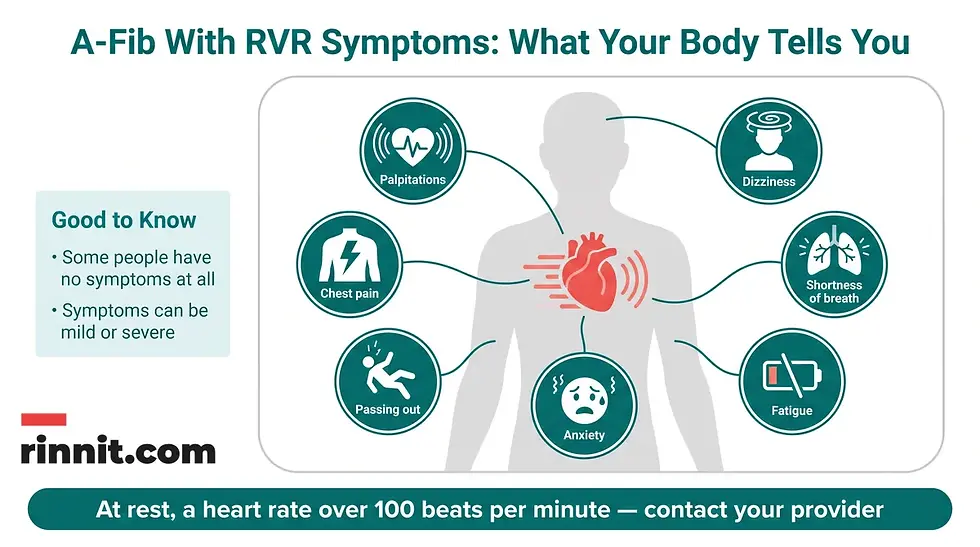
The hallmark symptom is heart palpitations — a fluttering, pounding, or racing feeling in your chest. But the fast, irregular heartbeat can show up in other ways too.
Symptom | What You Might Experience |
Heart palpitations | Fluttering, pounding, or racing heartbeat |
Dizziness | Feeling lightheaded or off-balance |
Passing out | Fainting or losing consciousness |
Chest pain | Aching, pressure, or tightness in the chest |
Shortness of breath | Feeling winded or unable to catch your breath |
Anxiety | Feeling unusually nervous or uneasy |
Fatigue | Feeling worn out or drained |
It's worth noting that some people don't have symptoms at all [1]. For those who do have symptoms, they may be mild or severe [1]. That's one reason regular checkups matter — A-fib with RVR can be present even when you feel fine.
What Causes A-Fib With RVR?
A-fib with RVR does not arise on its own and usually develops because of another health problem affecting the heart. It's usually tied to an underlying condition that stresses the heart's electrical system:
Cause | How It Contributes |
Coronary artery disease | Narrowed heart arteries disrupt blood supply to the heart muscle |
High blood pressure | Elevated pressure forces the heart to work harder over time |
Heart failure | A weakened heart struggles with irregular, fast rhythms |
Obstructive sleep apnea | Repeated pauses in breathing during sleep stress the heart |
Heart surgery | You can be at risk for A-fib with RVR days or weeks after your operation |
Who Is at Higher Risk?
You're more likely to have A-fib with RVR if you:
Risk Factor | Details |
Age | Over age 50 |
Ethnicity | White |
Geography | Live in North America |
Weight | A BMI higher than 30 |
Sleep health | Obstructive sleep apnea |
Alcohol | Drink alcohol |
Caffeine | Consume a lot of caffeine |
Family history | Have a close relative who's had A-fib |
What Are the Complications of A-Fib With RVR?
A-fib with RVR can lead to complications over time, because a racing, irregular heartbeat takes a toll on the heart. A-fib with RVR can lead to:
Complication | What Happens |
Less ventricular filling time | The ventricles have less time to fill with blood before the next beat |
Oxygen-hungry heart muscle | The heart muscle needs more oxygen as it works harder |
Cardiomyopathy | Disease of the heart muscle |
Stroke | Blood clots forming in the irregularly beating heart can travel to the brain |
Low blood pressure | The fast rhythm reduces the heart's ability to maintain pressure |
Congestive heart failure | Fluid backs up as the heart fails to pump effectively |
How Is A-Fib With RVR Diagnosed?
Diagnosis starts with the basics: a healthcare provider will do a physical exam and ask about your medical history. They'll also order tests to confirm the rhythm and check the heart's structure:
Test | What It Shows |
Electrocardiogram (EKG) | Records the heart's electrical activity — the key test for catching an irregular rhythm |
Echocardiogram | Ultrasound of the heart showing chamber size and pumping strength |
Cardiac computed tomography (CT) | Detailed X-ray images of the heart's structures |
Magnetic resonance imaging (MRI) | Detailed images of heart tissue |
Blood tests | Checks for underlying issues like thyroid problems or electrolyte imbalances |
How Is A-Fib With RVR Treated?
A healthcare provider will work to manage your symptoms of A-fib with RVR and prevent complications from it. Treatment typically combines immediate rate control, clot prevention, and sometimes procedures.
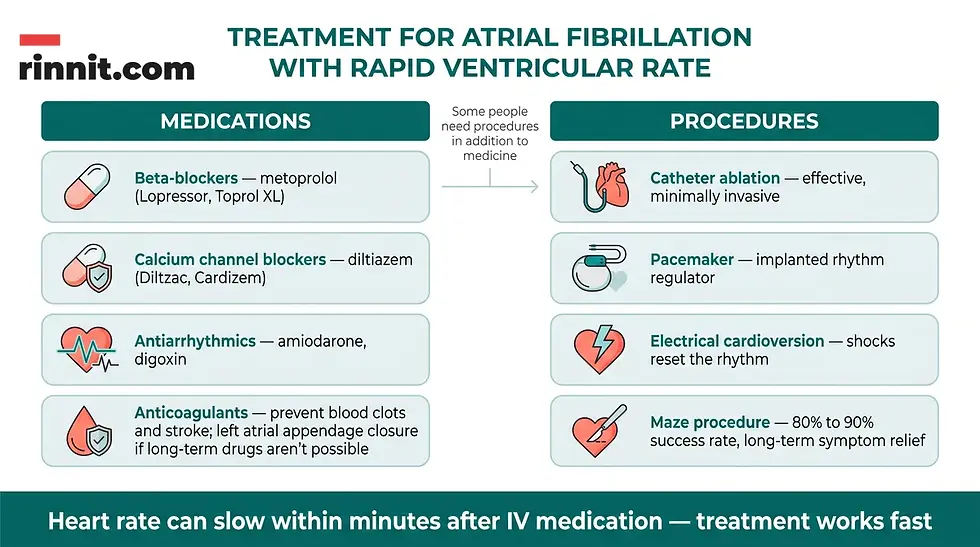
Medications
Initial treatment may include correcting your electrolytes [1] (minerals like magnesium that help the heart beat properly) along with medicines:
Medication Type | Examples | What It Does |
Beta-blockers | Metoprolol (Lopressor or Toprol XL) | Slows the heart rate and reduces the heart's workload |
Calcium channel blockers | Diltiazem (Diltzac or Cardizem) | Relaxes blood vessels and slows the heart rate |
Antiarrhythmics | Amiodarone (Pacerone or Cordarone) or digoxin (Lanoxin or Cardoxin) | Helps the heart maintain a more normal rhythm |
Anticoagulants (blood thinners) | Prescribed alongside other medications | Prevent blood clots that could cause a stroke |
One important detail: if you can't take anticoagulants long-term, you may be able to have a left atrial appendage closure — a procedure that closes off the pouch in the upper left chamber of the heart where clots often form — to prevent blood clots instead [1].
Procedures
Some people who have A-fib with RVR will need more than medicine. They may need a procedure, such as:
Procedure | What It Does |
Catheter ablation | A minimally invasive treatment that destroys the tiny areas of heart tissue misfiring the electrical signals |
Pacemaker | An implanted device that helps regulate the heartbeat |
Electrical cardioversion | Controlled electrical shocks that reset the heart's rhythm |
Maze procedure | Heart surgery that creates a pattern of scar tissue to block abnormal electrical signals |
How Soon Will You Feel Better?
Your heart rate may slow down just minutes after you receive some of the rate-control medicines through an IV [1]. That fast response is one of the reasons this condition is treated aggressively in emergency settings.
What Are the Side Effects of Treatment?
The side effects of A-fib with RVR treatment vary depending on which treatment you receive. It helps to know what to watch for:
Treatment | Possible Side Effects or Complications |
Catheter ablation | Cardiac tamponade (fluid around the heart) or a heart attack |
Pacemaker | Can malfunction |
Maze procedure | Skipped heartbeats or A-fib episodes for a few months afterward |
Medicines | Headache, low blood pressure, dizziness, upset stomach |
What's the Long-Term Outlook?
The outlook is encouraging when you stay on top of treatment. Starting healthier habits, taking medications, and having procedures can help you manage A-fib with RVR [1]. However, without treatment, A-fib with RVR can lead to heart disease, heart failure, or a stroke [1].
Two treatments deserve special mention:
Treatment | Track Record |
Catheter ablation | An effective, minimally invasive treatment of atrial fibrillation |
Maze procedure | A success rate of 80% to 90%, with long-term freedom from symptoms |
How Long Does It Last?
A-fib with RVR can go on for years [1]. Some people have more frequent and longer-lasting episodes as time goes on [1], which makes consistent management all the more important.
How Can I Lower My Risk?
Healthy habits can help lower your risk of developing A-fib with RVR.
Habit | Recommendation |
Exercise | 150 minutes a week at a moderate pace |
Diet | Eating foods that are good for your heart |
Alcohol | Limiting how much you drink |
Tobacco | Avoiding tobacco products |
Other conditions | Managing high blood pressure, high cholesterol, sleep apnea, or diabetes |
How can people live well with A-fib with RVR?
Taking care of yourself with this condition comes down to consistency. Be sure to take all medicines your healthcare provider prescribed. Going to all of your follow-up appointments is important, too. Getting regular exercise — like walking — can improve your quality of life [1] and make it easier to do daily tasks.
When Should I Contact My Provider?
Contact your provider if you have chest pain, a heart rate higher than 100 when you're at rest, dizziness, or shortness of breath [1].
When Should I Go to the ER?
Get emergency treatment if you have stroke symptoms (sudden headache or difficulty with vision, speech or walking), too much bleeding from a blood thinner (red vomit, poop, or pee), or chest pain or other signs of a heart attack or cardiac arrest [1] (shortness of breath or upset stomach).
Questions to Ask Your Doctor
Useful questions to bring to your appointment include: How often do I need follow-up appointments? How long will it take for lifestyle improvements to show results? Which medicine do you recommend and why? Should I undergo a procedure such as cardioversion, ablation, or a maze procedure?
Conclusion: You Have Real Control Over This Condition
The feeling of an unusual heartbeat is unsettling, but treatments are available to help you manage A-fib with RVR. Your healthcare provider can guide you in deciding which treatments are best for you. Medicines can slow your racing heart within minutes, blood thinners protect you from stroke, and procedures with strong track records — including the 80–90% success rate of the maze procedure [1] — offer lasting relief. You can play an important role in your health by keeping your follow-up appointments and taking the medicines your provider prescribed.
Your next step: If your heart is racing while at rest, you're feeling dizzy, or you're short of breath, don't wait it out — contact your healthcare provider. And if you experience signs of a stroke, heavy bleeding from a blood thinner, or chest pain, seek emergency care right away.
Frequently Asked Questions
What is atrial fibrillation with RVR?
A-fib with RVR (rapid ventricular rate) is an abnormal heart rhythm in which the disorganized electrical signals of atrial fibrillation also cause the lower heart chambers (ventricles) to beat irregularly at 100 beats per minute or more.
What does RVR stand for?
RVR stands for rapid ventricular rate. It means the ventricles — the heart's lower pumping chambers — are beating at 100 beats per minute or faster.
Is A-fib with RVR dangerous?
Without treatment, A-fib with RVR can lead to heart disease, heart failure, or a stroke. But with medications and procedures, it can be managed effectively.
What does A-fib with RVR feel like?
Symptoms include heart palpitations, dizziness, passing out, chest pain, shortness of breath, anxiety, and fatigue. Some people have no symptoms at all, and for those who do, symptoms can be mild or severe.
What causes A-fib with RVR?
Causes include coronary artery disease, high blood pressure, heart failure, obstructive sleep apnea, and heart surgery — you can be at risk for days or weeks after an operation.
Who is at risk for A-fib with RVR?
You're more likely to have it if you're over age 50, are white, live in North America, have a BMI higher than 30, have obstructive sleep apnea, drink alcohol, consume a lot of caffeine, or have a close relative who's had A-fib.
How is A-fib with RVR diagnosed?
A provider does a physical exam, reviews your medical history, and orders tests such as an EKG, echocardiogram, cardiac CT, MRI, and blood tests.
How is A-fib with RVR treated?
Treatment includes electrolytes and medications — beta-blockers like metoprolol, calcium channel blockers like diltiazem, antiarrhythmics like amiodarone or digoxin, and anticoagulants to prevent stroke. Some people also need procedures such as catheter ablation, a pacemaker, electrical cardioversion, or a maze procedure.
How fast do the medications work?
Your heart rate may slow down just minutes after you receive rate-control medicines through an IV.
What if I can't take blood thinners long-term?
If you can't take anticoagulants long-term, you may be able to have a left atrial appendage closure to prevent blood clots instead.
How successful is the maze procedure?
The maze procedure has a success rate of 80% to 90% and provides long-term freedom from symptoms.
What are the side effects of treatment?
Medicines may cause headache, low blood pressure, dizziness, or upset stomach. Catheter ablation complications may include cardiac tamponade or a heart attack. Pacemakers can malfunction, and some people have skipped beats or A-fib episodes for a few months after a maze procedure.
How long does A-fib with RVR last?
It can go on for years, and some people have more frequent and longer-lasting episodes as time goes on.
How can I lower my risk?
Exercise 150 minutes a week at a moderate pace, eat heart-healthy foods, limit alcohol, avoid tobacco, and manage other conditions such as high blood pressure, high cholesterol, sleep apnea, or diabetes.
When should I go to the ER?
Get emergency treatment for stroke symptoms (sudden headache or difficulty with vision, speech, or walking), too much bleeding from a blood thinner (red vomit, poop, or pee), or chest pain or other signs of a heart attack or cardiac arrest (shortness of breath or upset stomach).
Related Reading
Atrial Fibrillation (Afib): Complete Guide — the condition behind A-fib with RVR, explained
Atrial Arrhythmia: When Your Heart's Electrical System Misfires and What Treats It — the broader family of irregular upper-chamber rhythms
Heart Palpitations Guide — harmless fluttering versus a sign to call your doctor
Medical Disclaimer
This article is for general informational purposes only and is not a substitute for professional medical advice, diagnosis, or treatment. Always seek the advice of your physician or other qualified health provider with any questions you may have regarding a medical condition. Never disregard professional medical advice or delay seeking it because of something you have read here.
References
Cleveland Clinic. Atrial Fibrillation With RVR. Cleveland Clinic. Last updated January 6, 2023. https://my.clevelandclinic.org/health/diseases/24578-atrial-fibrillation-with-rvr
Lan Q, et al. Intravenous diltiazem versus metoprolol for atrial fibrillation with rapid ventricular rate: A meta-analysis. Am J Emerg Med. 2022;51:248-256. PMID 34781150. https://doi.org/10.1016/j.ajem.2021.08.082
Hoffer M, et al. Utility of magnesium sulfate in the treatment of rapid atrial fibrillation in the emergency department: a systematic review and meta-analysis. Eur J Emerg Med. 2022;29(4):253-261. PMID 35503562. https://doi.org/10.1097/MEJ.0000000000000941



Comments