Atrial Arrhythmia: When Your Heart's Electrical System Misfires and What Treats It

Updated: 2 days ago
Medically reviewed by Dr. Baraa Alnahhal, MD · Last reviewed: October 2026
Quick Answer
Atrial arrhythmia is an irregular heartbeat caused by electrical signal problems that start in the atria, the heart's top two chambers [1]. It can feel like a racing, fluttering or skipping heartbeat, with possible chest pain, dizziness or fainting [1]. Afib, the most common kind, affects around 2.7 million Americans [1]. Treatments include lifestyle changes, medications, cardioversion, ablation, pacemakers and blood thinners [1].
What the research says
Cutting out alcohol can reduce Afib episodes in regular drinkers. In a randomized trial of 140 adults with paroxysmal or persistent atrial fibrillation who drank 10 or more standard drinks a week, Afib came back in 53% (37 of 70) of those who abstained versus 73% (51 of 70) of those who kept drinking (hazard ratio 0.55, 95% CI 0.36–0.84). The abstinence group also spent less time in Afib (median 0.5% vs 1.2%) (Voskoboinik et al., N Engl J Med, 2020) [2].
What Is Atrial Arrhythmia?
Atrial arrhythmias are irregular heartbeats that cause poor circulation [1]. They occur when the upper chambers of your heart are out of rhythm with the lower chambers [1]. This can cause your heart to beat either too fast or slow.
An atrial arrhythmia is an irregular heartbeat. There are many types of atrial arrhythmias. They result from problems with electrical signals that tell the heart when to contract (pump) [1]. The problems start in the atria — the heart's top two chambers.

These arrhythmias may result from too much caffeine, alcohol or stress [1]. They can also result from a serious health condition or heart problem. Atrial arrhythmias can range from harmless to life-threatening [1]. If you notice any irregularities in your heartbeat, see your healthcare provider for an evaluation.
What Are the Types of Atrial Arrhythmias?
The types of atrial arrhythmias include several that behave quite differently from one another:
Type | What Happens |
Atrial fibrillation (Afib) | A very common type of arrhythmia. It causes a fast, disorganized, irregular heartbeat. Untreated, it can lead to stroke and other health problems. |
Accessory pathway tachycardia (bypass tract tachycardia) | A fast heartbeat that results from an extra pathway between the atria and the ventricles. If electrical signals travel more quickly through the pathway than they do through the AV node, the heart beats faster than it should. Wolff-Parkinson-White syndrome is an example of this type. |
Atrial flutter | Happens when electrical signals fire quickly in the atria, causing the atria to beat too fast. It can occur along with heart failure, heart attack and structural problems with the heart. |
Atrial tachycardia (AT) | A fast heart rate (tachycardia) that happens when an electrical signal comes from the wrong place in the atria. |
AV nodal re-entrant tachycardia (AVNRT) | Happens when there is more than one pathway through the AV node. AVNRT is a type of paroxysmal supraventricular tachycardia (PSVT) — a fast heart rate with a regular rhythm that can come and go suddenly. |
Premature atrial contractions (PACs) | A type of ectopic heartbeat that causes the heart to beat too soon. PACs are usually harmless and may not require treatment. |
How Common Are Atrial Arrhythmias?
Heart arrhythmias are common. Millions of people in the United States live with some type of arrhythmia [1]. Atrial fibrillation (Afib) is the most common kind of arrhythmia, and around 2.7 million people in the U.S. have the condition [1]. Premature atrial contractions (PACs) — harmless irregularities in the heart rate — affect nearly everyone from time to time [1].
What Causes Atrial Arrhythmia?
Atrial arrhythmias result from abnormal electrical signals. These signals, or impulses, start in the atria. The abnormal impulses can be inherited (passed down through families) or result from several health problems or heart conditions [1].
Health conditions that can lead to atrial arrhythmias include:
Health Condition | What It Is |
Anemia | Low red blood cell count |
Cardiomyopathy | A disease of the heart muscle |
Diabetes | A condition affecting blood sugar regulation |
Heart attack | Or damage from a previous heart attack |
Heart disease, coronary artery disease (CAD), heart failure | Problems with the heart or its blood supply |
High blood pressure (hypertension) | Elevated force of blood against artery walls |
Lung conditions | Such as chronic obstructive pulmonary disease (COPD) |
Structural heart problems | Including valve disease |
Thyroid problems | Including hyperthyroidism |
Atrial arrhythmias can also develop as a result of lifestyle factors:
Lifestyle Factor | How It Contributes |
Dehydration | Not drinking enough water |
Caffeine | Drinks and foods that contain caffeine; foods high in fat, sugar or carbohydrates can cause heart palpitations after eating |
Certain drugs | Including nasal decongestants that contain pseudoephedrine |
Excessive alcohol | Heavy drinking |
Extra weight and obesity | Carrying excess body weight |
Anxiety and stress | High levels of both |
Hormonal changes | Including those that happen during menopause or pregnancy — heart palpitations during pregnancy are very common and usually harmless |
Smoking and tobacco | Smoking and using tobacco products |
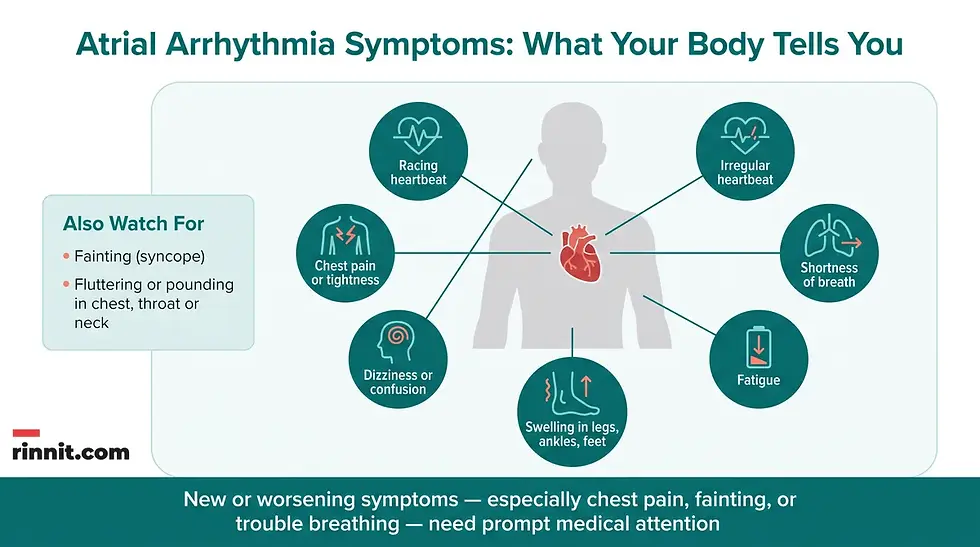
What Are the Symptoms of Atrial Arrhythmia?
Symptoms of atrial arrhythmia include a heartbeat that's fast and regular — it may feel like your heart is racing — and an irregular heartbeat. You may feel like it skipped a beat, stopped for a minute, sped up or slowed down [1].
Other symptoms can include chest pain, discomfort or tightness in the chest; difficulty breathing or shortness of breath; dizziness or confusion; fainting (syncope) or loss of consciousness; fatigue or feeling sluggish; fluttering or pounding in your chest, throat or neck (heart palpitations); and swelling (edema) in your limbs, especially your legs, ankles and feet [1].
Symptom | What It Feels Like |
Racing heartbeat | A heartbeat that's fast and regular, like your heart is racing |
Irregular heartbeat | Feels like it skipped a beat, stopped for a minute, sped up or slowed down |
Chest pain or tightness | Discomfort or tightness in the chest |
Shortness of breath | Difficulty breathing |
Dizziness or confusion | Feeling lightheaded or mentally foggy |
Fainting (syncope) | Loss of consciousness |
Fatigue | Feeling sluggish or worn out |
Heart palpitations | Fluttering or pounding in your chest, throat or neck |
Swelling (edema) | In your limbs, especially your legs, ankles and feet |
How Are Atrial Arrhythmias Diagnosed?
After asking about your symptoms and listening to your heart, your provider will recommend a blood test called a complete blood count (CBC). A blood test looks for anemia, vitamin deficiencies or a problem with your thyroid [1].
Your provider will do a test called an electrocardiogram (EKG or ECG). This test monitors your heart rate using sensors that attach to your skin. You get this test in your provider's office, and it takes about 15 minutes [1].
If the EKG doesn't detect an irregular heartbeat, your provider may recommend an ambulatory monitor such as a Holter monitor. This device is portable and you wear it for about a week [1]. It records your heart rate and any irregular heartbeats.

How Do Providers Treat Atrial Arrhythmias?
If you have an arrhythmia, you'll see a heart specialist called a cardiologist. Your cardiologist will recommend treatment based on your overall health and the type of arrhythmia [1].
Many arrhythmias get better with lifestyle and dietary changes, such as:
Lifestyle Change | What It Involves |
Avoid triggers | Avoiding alcohol, caffeine and some types of medications, such as cold medications and nasal decongestants that include pseudoephedrine |
Stay hydrated | Drinking plenty of water to avoid dehydration |
Manage stress | Getting help for anxiety and doing relaxation exercises and deep breathing to lower stress levels |
Maintain a healthy weight | Losing weight and maintaining a healthy weight if you are obese |
Quit tobacco | Quitting smoking and using tobacco products |
Some arrhythmias require treatments in addition to lifestyle changes. If you have more than one type of arrhythmia, you may need several treatments [1]. Atrial arrhythmia treatments include:
Treatment | What It Does |
Catheter ablation | A minimally invasive procedure that destroys a bit of the tissue on the inside of the heart that is sending irregular electrical signals and causing arrhythmia |
Devices | Such as an implantable cardioverter-defibrillator (ICD), subcutaneous ICD or pacemaker |
Electrical cardioversion | A procedure that delivers safe jolts of energy to your heart and disrupts the abnormal rhythm back to a normal rhythm |
Medications | Arrhythmia medications make your heart rhythm regular or prevent heartbeat irregularities. Other drugs, such as blood thinners, reduce your risk of stroke from Afib |
What's the Outlook for Atrial Arrhythmia?
The outlook for people with atrial arrhythmias depends on several factors, including the type of arrhythmia and your overall health [1]. Many people relieve symptoms with lifestyle and dietary changes [1]. Treatments for atrial arrhythmias can help you live a healthier life overall. See your provider regularly so they can monitor your heart health and work with you to feel your best.
How Can I Reduce My Risk of Atrial Arrhythmia?
You may not be able to prevent atrial arrhythmia, but you can lower your risk by staying healthy and making smart choices. These include following a diet that's good for your heart; getting plenty of exercise and staying active; losing weight and maintaining a healthy weight if you have obesity; lowering your blood pressure if you have hypertension; managing cholesterol; and talking to your provider about a plan to quit smoking and using tobacco [1].
If you have a heart condition or health problem that puts you at an increased risk, talk to your provider. They will give you specific information about other steps you can take to lower your chance of developing arrhythmia.
When Should I See My Healthcare Provider?
If you have any concerns about your heartbeat or you have symptoms of arrhythmia, talk to your provider. If you've been diagnosed with atrial arrhythmia, see your cardiologist on a regular basis.
Seek medical help right away if you have chest pain, fainting spells, sudden or unexplained fatigue or exhaustion, swelling in your legs, feet or ankles, or trouble breathing [1].
How can you take charge of your heart rhythm with atrial arrhythmia?
An atrial arrhythmia is your heart's electrical system sending mixed messages — and the range of outcomes is wide, from harmless skipped beats that nearly everyone feels occasionally to Afib, which needs treatment to protect you from stroke. The encouraging news is that many people relieve symptoms with lifestyle changes alone, and a full toolbox of medications, procedures, and devices exists for the rest. Knowing your symptoms, cutting out the triggers you control, and keeping regular appointments with your cardiologist put you in the driver's seat of your heart health.
Your next step: If your heartbeat ever feels racing, fluttering, or like it's skipping — especially with chest pain, fainting, or trouble breathing — talk to your healthcare provider right away. Early evaluation is what keeps a harmless misfire from being confused with one that needs treatment.
Frequently Asked Questions
What is atrial arrhythmia in simple terms?
It's an irregular heartbeat caused by problems with the electrical signals that tell the heart when to pump. The problems start in the atria, the heart's top two chambers, and can make the heart beat too fast, too slow, or unevenly.
What does atrial arrhythmia feel like?
It can feel like a racing heartbeat, a heartbeat that skips a beat or speeds up and slows down, fluttering or pounding in your chest, throat or neck (palpitations), chest pain or tightness, shortness of breath, dizziness, fatigue, fainting, or swelling in your legs, ankles or feet.
How common is atrial arrhythmia?
Heart arrhythmias are common — millions of people in the U.S. live with some type. Afib, the most common kind, affects around 2.7 million Americans, and harmless premature beats (PACs) affect nearly everyone from time to time.
What are the types of atrial arrhythmia?
The main types are atrial fibrillation (Afib), accessory pathway tachycardia (including Wolff-Parkinson-White syndrome), atrial flutter, atrial tachycardia, AV nodal re-entrant tachycardia (AVNRT), and premature atrial contractions (PACs).
Is atrial arrhythmia dangerous?
It depends on the type. Atrial arrhythmias can range from harmless to life-threatening. Afib, untreated, can lead to stroke and other health problems, while PACs are usually harmless and may not require treatment.
What causes atrial arrhythmia?
Abnormal electrical signals that start in the atria. They can be inherited or come from health conditions such as anemia, cardiomyopathy, diabetes, heart attack damage, high blood pressure, COPD, valve disease, or thyroid problems — or from lifestyle factors like caffeine, alcohol, dehydration, stress, obesity, and smoking.
Can too much caffeine or alcohol cause atrial arrhythmia?
Yes. These arrhythmias may result from too much caffeine, alcohol or stress, among other lifestyle factors.
Are palpitations during pregnancy dangerous?
Heart palpitations during pregnancy are very common and usually harmless.
How is atrial arrhythmia diagnosed?
Your provider reviews your symptoms, listens to your heart, and orders a blood test (CBC) to check for anemia, vitamin deficiencies, or thyroid problems. An EKG — a 15-minute test with skin sensors — monitors your heart rhythm, and if it misses the irregularity, a portable Holter monitor worn for about a week records it.
What is a Holter monitor?
A portable ambulatory monitor you wear for about a week. It records your heart rate and any irregular heartbeats when an office EKG doesn't catch them.
How is atrial arrhythmia treated?
Many arrhythmias improve with lifestyle changes — avoiding alcohol, caffeine, and certain cold medications; staying hydrated; managing stress; losing weight; and quitting tobacco. When more is needed, treatments include medications, electrical cardioversion, catheter ablation, and devices such as pacemakers or ICDs.
Can atrial arrhythmia be cured with ablation?
Catheter ablation is a minimally invasive procedure that destroys a bit of the heart tissue sending irregular electrical signals. It's one of the treatment options your cardiologist may recommend based on your type of arrhythmia and overall health.
What reduces my risk of atrial arrhythmia?
A heart-healthy diet, plenty of exercise, a healthy weight, lowering high blood pressure, managing cholesterol, and quitting tobacco can all lower your risk — though you may not be able to prevent it completely.
When should I seek emergency help for an arrhythmia?
Seek medical help right away for chest pain, fainting spells, sudden or unexplained fatigue or exhaustion, swelling in your legs, feet or ankles, or trouble breathing.
What's the long-term outlook for atrial arrhythmia?
It depends on the type of arrhythmia and your overall health. Many people relieve symptoms with lifestyle and dietary changes, and treatments can help you live a healthier life overall — so keep regular appointments so your provider can monitor your heart health.
Related Reading
Atrial Fibrillation (Afib): Complete Guide — the most common arrhythmia and how it's managed
Heart Arrhythmia: Complete Guide — the broader family of irregular heartbeats
Heart Palpitations Guide — harmless fluttering versus a sign to call your doctor
Medical Disclaimer
This article is for general informational purposes only and is not a substitute for professional medical advice, diagnosis, or treatment. Always seek the advice of your physician or other qualified health provider with any questions you may have regarding a medical condition. Never disregard professional medical advice or delay seeking it because of something you have read here.
References
Cleveland Clinic. Atrial Arrhythmia. Cleveland Clinic. Last updated June 27, 2022. https://my.clevelandclinic.org/health/diseases/23389-atrial-arrhythmia
Voskoboinik A, et al. Alcohol Abstinence in Drinkers with Atrial Fibrillation. N Engl J Med. 2020;382(1):20-28. PMID 31893513. https://doi.org/10.1056/NEJMoa1817591



Comments