What Is Arithmophobia (Fear of Numbers)? Symptoms, Causes, and Treatment

Updated: 2 days ago
Medically reviewed by Dr. Baraa Alnahhal, MD · Last reviewed: October 2026
Quick Answer: What is arithmophobia?
Arithmophobia is an extreme, often irrational fear of numbers that may target every number or only specific ones. [1] It can cause intense anxiety [1], physical symptoms such as sweating and rapid heartbeat, and avoidance that disrupts daily life. Exposure therapy and cognitive behavioral therapy help most people manage or overcome the fear.
Key takeaways
Arithmophobia (also called numerophobia) is the extreme fear of all numbers or specific numbers. [1]
It is not listed in the DSM-5 [1], but clinicians treat it like a specific phobia, and people with it usually know the fear is irrational.
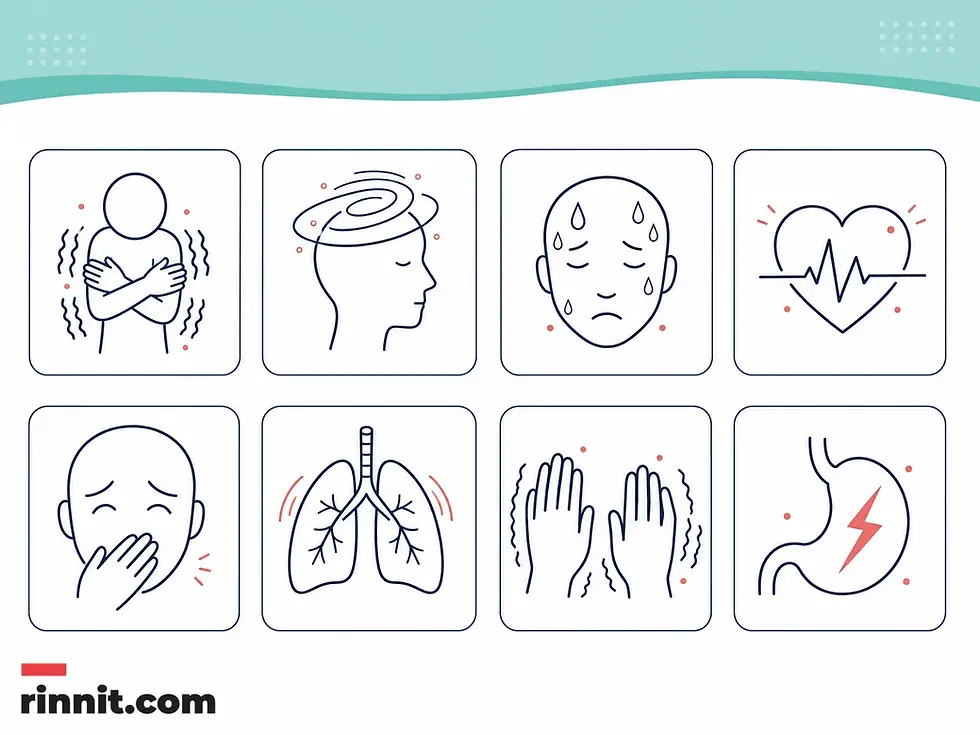
Physical symptoms include chills, sweating, rapid heartbeat, nausea, shortness of breath, and trembling.
Exposure therapy is often the first-line treatment [1] [3]; CBT, hypnotherapy, and medication are also options. [1]
Untreated, arithmophobia can limit job options and make paying bills or managing a budget difficult. [1]
What the research says
Exposure therapy, the usual first treatment for specific phobias, works well, and one session can be enough for many people. Arithmophobia itself is not a formal diagnosis, so the best evidence comes from specific phobias in general. A meta-analysis pooling 30 multi-session and 55 single-session exposure studies (n = 1,758) found large effects on both approach behavior and self-reported symptoms, with no significant difference between single-session and multi-session treatment. Single-session treatment took less time. (Odgers et al., Behav Res Ther, 2022) [4]
CBT and hypnosis have evidence in a closely related specific phobia. A review of 173 randomized trials on dental anxiety and dental phobia (67 qualified for pooled analyses) found CBT reduced dental phobia (SMD -0.43, 95% CI -0.68 to -0.17; low-to-moderate certainty) and trait dental anxiety (SMD -0.65, 95% CI -1.06 to -0.24; moderate certainty). Hypnosis reduced anxiety during oral surgery (SMD -0.31, 95% CI -0.56 to -0.05; moderate certainty). (Steenen et al., J Anxiety Disord, 2024) [5]
Anxiety about numbers can follow people into school and work. Math anxiety is a related but different problem from arithmophobia. A systematic review of cognitive studies describes it as a condition that has a negative effect on educational outcomes and future employment prospects, which mirrors the job and money problems seen when fear of numbers goes untreated. (Moustafa et al., Rev Neurosci, 2020) [6]
What Is Arithmophobia?

Arithmophobia is an extreme fear of numbers. [1] People may feel afraid of all numbers or only specific numbers. [1] Another name for arithmophobia is numerophobia. [1]
Arithmophobia is not a diagnosis listed in the American Psychiatric Association's Diagnostic and Statistical Manual of Mental Disorders (DSM-5). [1] But some people still consider it a specific phobia. [1] As with other specific phobias, people who fear numbers often know the fear is irrational. [1] [2] Still, they may struggle to control or manage arithmophobia symptoms. [1]
Arithmophobia can significantly interfere with daily life. [1] People with the phobia may have a hard time holding certain jobs, paying bills, or managing a budget. [1]
Why Do Some People Fear Specific Numbers?
Some people with arithmophobia fear specific numbers because of a religious belief or superstition. [1] Three numbers are feared most often:
Feared Number | Fear Name | Why It's Feared |
4 | — | |
13 | Triskaidekaphobia | |
666 | Hexakosioihexekontahexaphobia |
What Causes Arithmophobia?
Often, there is not a clear cause of arithmophobia. [1] Factors that may contribute to its development include:
Genetics. Risk increases if you have a parent or other family member who has an anxiety disorder. [1]
Other mental health diagnoses, such as generalized anxiety disorder (GAD). [1]
Past negative experiences or trauma related to numbers, such as being scolded or bullied for not doing well in math class. [1]
What Are the Symptoms of Arithmophobia?
The main symptom of arithmophobia is extreme anxiety when encountering numbers. [1] People may experience anxiety when thinking about any number, or the fear could be linked to only specific numbers. [1]
Any extreme anxiety or specific phobia can cause distressing physical symptoms. [1] You may experience:
How Is Arithmophobia Diagnosed?
Your healthcare provider may ask you questions to determine if you have a phobia of numbers. [1] Sometimes, physical symptoms may relate to a different mental health condition. [1]
Your provider may ask if you experience:
Diagnostic Consideration | What It Looks Like |
Duration | |
Avoidance | Extreme avoidance of thinking about or looking at numbers. [1] |
Anticipatory dread | Immediate dread or distress at the thought of a task that involves numbers. [1] |
Disproportionate panic | Panic that is extreme compared to the actual threat of numbers. [1] |
Functional impairment | Symptoms that disrupt your daily routine or functioning. [1] |
How Is Arithmophobia Treated?
Arithmophobia treatment can draw on a variety of approaches rather than a single method. [1] You may try:
Treatment | How It Works | What to Know |
Exposure therapy | Gradually interacting with the specific fear: imagining number-related tasks first, then working up to doing them in real life. [1] | |
Cognitive behavioral therapy (CBT) | Speaking with a therapist to identify thoughts that are unhelpful or untrue, and retraining your brain to think rational thoughts. [1] | A structured talk-therapy approach for phobias. |
Hypnotherapy | Focused concentration and guided relaxation lead to a state of intense concentration, where you temporarily feel unaware of your surroundings and respond better to suggestions. [1] | May increase the success of phobia treatment. [1] |
Medications | Anti-anxiety or antidepressant medications can lessen symptoms of anxiety or depression that interfere with life. [1] | Helpful when an anxiety disorder is present, but medication is not a cure for arithmophobia. [1] |

How Do I Get Over Arithmophobia?
For some people, a combination of therapy and medication helps them overcome arithmophobia. [1] Others manage symptoms long term. [1]
To lessen the frequency and intensity of anxiety symptoms, you may:
What Is the Outlook for People with Arithmophobia?
With treatment, many people with arithmophobia live a high quality of life. [1] Some find that, after treatment, symptoms no longer interfere with their daily life. [1]
Untreated arithmophobia can interfere with a person's ability to do math. [1] Someone who is afraid of all numbers may have limited professional opportunities. [1] They may also have trouble paying bills or managing a budget. [1]
Can Arithmophobia Be Prevented?
Arithmophobia, the fear of numbers, has no single prevention strategy that works for everyone. [1] Living a healthy lifestyle may lessen how often you experience arithmophobia symptoms. [1] You may:
What Should I Ask My Doctor?
Questions to ask your provider about arithmophobia include its most likely cause, treatment options for specific phobias, ways to manage anxiety and whether the fear will pass.
What is the most likely cause of arithmophobia?
What are the treatment options for specific phobias?
What can I do to manage anxiety symptoms?
Will I get over the fear of numbers?
Conclusion: The Fear of Numbers Is Treatable
Arithmophobia, the extreme fear of numbers, is more than an odd quirk about "unlucky" digits. For people who fear all numbers, it can make everyday tasks like paying bills, budgeting, or holding certain jobs feel overwhelming. [1] The good news is that it responds well to treatment. [1] [3] Exposure therapy is usually the first step, and most people notice real improvement when they practice it as directed. [1] [3] Cognitive behavioral therapy, hypnotherapy, and medication can round out a treatment plan when anxiety symptoms are strong.
Ready to take the first step? If numbers cause you anxiety, talk with a healthcare provider about treatment options for specific phobias. For more clear, verified health information, explore the rest of Rinnit.com, starting with our guides on anxiety disorders and specific phobias.
Need help explaining this article visually? Rinnit.com's health infographic templates let you turn articles like this one into shareable visuals for your own website, newsletter, or social channels.
Frequently Asked Questions
What is arithmophobia?
Arithmophobia is the extreme fear of numbers. [1] People may fear all numbers or only specific ones, such as 4, 13, or 666. [1] It is also called numerophobia. [1]
Is fear of numbers a real phobia?
Arithmophobia is not listed as a formal diagnosis in the DSM-5 [1], but clinicians treat it like a specific phobia. As with other specific phobias, people with it often know the fear is irrational but still struggle to manage the symptoms. [1] [2]
What does arithmophobia feel like?
The main symptom is extreme anxiety when encountering numbers, whether thinking about any number or specific feared numbers. [1] It can trigger physical symptoms such as chills, dizziness, sweating, rapid heartbeat, nausea, shortness of breath, trembling, and an upset stomach.
Why are some people afraid of the number 13?
Fear of 13 (triskaidekaphobia) is often linked to religion or culture: Judas was the 13th guest at the Last Supper in Christian tradition, and Loki was the 13th god in Norse mythology. [1] A related fear of Friday the 13th is called paraskevidekatriaphobia. [1]
Can arithmophobia affect my job or finances?
Yes. Untreated arithmophobia can interfere with a person's ability to do math, limit professional opportunities, and make paying bills or managing a budget difficult. [1]
How is arithmophobia treated?
Exposure therapy, which means gradually interacting with the fear, starting with imagining number-related tasks and working up to doing them in real life, is often the first treatment. [1] Cognitive behavioral therapy, hypnotherapy, and medications can also help manage symptoms, though medication is not a cure. [1]
Can you overcome arithmophobia?
With treatment, many people with arithmophobia live a high quality of life, and some find that symptoms no longer interfere with daily life after treatment. [1] Others manage symptoms long term. [1]
Is arithmophobia the same as math anxiety?
Not exactly. Math anxiety is stress or worry when doing math, such as during a test. Arithmophobia is an extreme fear of numbers themselves that can cause panic even outside math tasks. A therapist can help figure out which one you have.
Why are some people afraid of the number 4?
Fear of the number 4 is called tetraphobia. It is common in some East Asian cultures, where the word for four sounds like the word for death. Like other number fears, it can be treated if it disrupts daily life.
When should I see a provider about a fear of numbers?
See a provider if the fear causes panic attacks, lasts six months or more, or gets in the way of work, school or paying bills. Early treatment can keep the fear from limiting your life.
Related Reading
References
Cleveland Clinic. Arithmophobia (Fear of Numbers). Cleveland Clinic Health Library. Last updated March 22, 2022. Accessed October 15, 2026. https://my.clevelandclinic.org/health/diseases/22545-arithmophobia-fear-of-numbers
National Institute of Mental Health. Specific Phobia. NIMH Health Statistics. Accessed October 15, 2026. https://www.nimh.nih.gov/health/statistics/specific-phobia
Barnhill JW. Specific Phobias. Merck Manual Consumer Version. Last updated April 2026. Accessed October 15, 2026. https://www.merckmanuals.com/home/mental-health-disorders/anxiety-and-trauma-and-stressor-related-disorders/specific-phobias
Odgers K, Kershaw KA, Li SH, et al. The relative efficacy and efficiency of single- and multi-session exposure therapies for specific phobia: a meta-analysis. Behav Res Ther. 2022;159:104203. PMID: 36323055. https://doi.org/10.1016/j.brat.2022.104203
Steenen SA, Linke F, van Westrhenen R, et al. Interventions to reduce adult state anxiety, dental trait anxiety, and dental phobia: a systematic review and meta-analyses of randomized controlled trials. J Anxiety Disord. 2024;105:102891. PMID: 38945067. https://doi.org/10.1016/j.janxdis.2024.102891
Moustafa AA, Porter A, Megreya AM. Mathematics anxiety and cognition: an integrated neural network model. Rev Neurosci. 2020;31(3):287-296. PMID: 31730536. https://doi.org/10.1515/revneuro-2019-0068
Medical disclaimer
The information provided in this article is for educational purposes only and is not intended as medical advice. Always seek the advice of your physician or other qualified health provider with any questions you may have regarding a medical condition.



Comments