Antiphospholipid Syndrome: Symptoms, Causes, Treatment & Complete Guide

Updated: 3 days ago
Medically reviewed by Dr. Baraa Alnahhal, MD · Last reviewed: October 2026
Antiphospholipid syndrome (APS) is an immune-system condition in which mistaken antibodies make blood far more likely to clot — sometimes causing a stroke in a young person with no other risk factors, or repeated pregnancy loss. There is no cure, but blood thinners and careful monitoring greatly reduce the risk.
Quick Answer
Antiphospholipid syndrome is a condition in which the immune system mistakenly makes antibodies that cause blood clots in arteries and veins, which can lead to heart attack, stroke and other conditions [1]. During pregnancy it can cause miscarriage and stillbirth [1]. Some people with the antibodies have no symptoms. There is no cure, but medicines reduce the risk of clots and miscarriage [1].
What the research says
Warfarin remains the standard for clot prevention. A Cochrane review of eight trials (811 people) found that rivaroxaban versus standard-dose warfarin showed no difference in overall thromboembolic events or major bleeding but an increased risk of stroke (risk ratio 14.13; 95% CI 1.87–106.8; 3 trials; moderate-certainty evidence), while higher-intensity warfarin did not reduce thrombotic events and may increase bleeding (Bala et al., Cochrane Database of Systematic Reviews, 2020) [3].
Newer oral blood thinners looked worse for arterial clots. A meta-analysis of five randomized trials (648 people) found arterial thrombosis was significantly more common with direct oral anticoagulants than with warfarin (OR 5.168; 95% CI 1.567–17.04), especially in people positive for all three antibodies, while venous thrombosis and bleeding did not differ significantly (Lee and Song, Lupus, 2022) [4].
Hydroxychloroquine may help pregnancy outcomes, but the evidence is observational. In a meta-analysis of seven observational studies (750 patients), pooled live births were 89.9% with hydroxychloroquine plus standard therapy versus 73.9% with standard therapy alone (OR 2.66; 95% CI 1.44–4.91), and about 20% of women with APS have obstetric complications despite aspirin and heparin (Berman et al., RMD Open, 2025) [5].
Antiphospholipid Syndrome at a Glance
Aspect | Summary |
What it is | Immune system makes antibodies that cause blood clots in arteries and veins [1] |
Affected areas | Legs, lungs, brain, kidneys, spleen, heart valves |
Pregnancy effects | Repeated miscarriage, stillbirth, preeclampsia, premature delivery [1] |
Who gets it more | More common in women; higher risk with lupus or other autoimmune diseases [1] |
Confirmed by | Antibodies in blood at least twice, 12 or more weeks apart [2] |
First-line treatment | Blood-thinning medicines: heparin (injections) + warfarin (pill); aspirin [2] |
Pregnancy treatment | Heparin, or heparin with aspirin — never warfarin (can affect the fetus) [2] |
Biggest daily caution | Increased bleeding risk; careful self-care and food/medicine choices with warfarin |
Cure | No cure — but medicines reduce the risk of clots and miscarriage [1] |
What Is Antiphospholipid Syndrome?
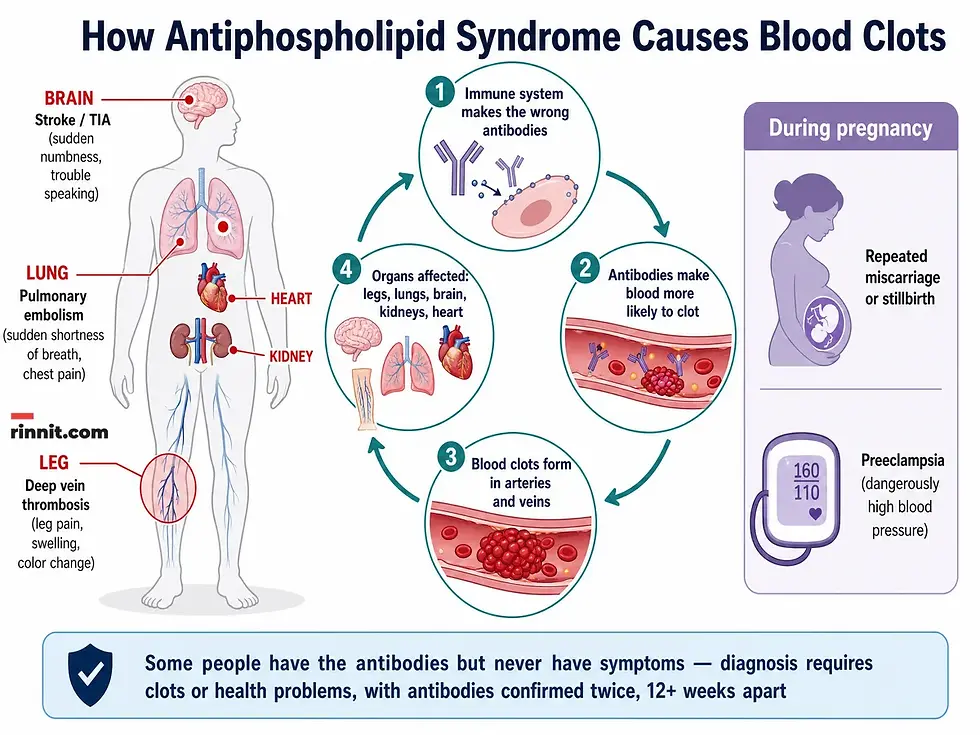
Antiphospholipid syndrome (APS) is a condition in which the immune system mistakenly makes antibodies that attack tissues in the body [1]. These antibodies can cause blood clots to form in arteries and veins [1].
Blood clots can form in the legs, lungs and other organs, such as the kidneys and spleen [1]. The clots can lead to heart attack, stroke and other conditions [1]. During pregnancy, antiphospholipid syndrome also can result in miscarriage and stillbirth [1]. Some people who have the antibodies may not have any symptoms [1].
There is no cure for this uncommon condition, but medicines can reduce the risk of blood clots and miscarriage [1].
What are the symptoms of antiphospholipid syndrome?
Antiphospholipid syndrome has five main symptoms, and beyond those, less common symptoms show that the syndrome can also reach other body systems.
The Five Main Symptoms
Symptom | What to look for |
Blood clots in the legs (deep vein thrombosis, DVT) | Pain, swelling and a change in skin color. These clots can travel to the lungs and cause a condition called pulmonary embolism [1]. |
Repeated miscarriages or stillbirths | Other pregnancy complications include dangerously high blood pressure (preeclampsia) and premature delivery [1]. |
Stroke | A stroke can occur in a young person who has antiphospholipid syndrome but no known risk factors for cardiovascular disease [1]. |
Transient ischemic attack (TIA) | Similar to a stroke, a TIA usually lasts only a few minutes and causes no permanent damage [1]. |
Rash | Some people develop a rash with a lacy, netlike pattern [1]. |
Less Common Symptoms
Beyond the main five, the syndrome can reach other systems:
Symptom | What happens |
Neurological symptoms | Chronic headaches, including migraines, as well as dementia and seizures are possible when a blood clot blocks blood flow to parts of the brain [1]. |
Cardiovascular disease | Antiphospholipid syndrome can damage heart valves [1]. |
Low blood platelet counts (thrombocytopenia) | This decrease in blood cells needed for clotting can cause episodes of bleeding, particularly from the nose and gums. Bleeding into the skin can appear as patches of small, discolored spots [1]. |
When should you see a doctor for antiphospholipid syndrome?
Three situations call for emergency care — do not wait:
Emergency | Warning signs |
Stroke | A clot in your brain can cause sudden numbness, weakness or paralysis of your face, arm or leg. You may have trouble speaking or understanding speech, visual disturbances, and a severe headache [1]. |
Pulmonary embolism | If a clot lodges in your lung, you may have sudden shortness of breath and chest pain or cough up blood-streaked mucus [1]. |
Deep vein thrombosis (DVT) | Symptoms include swelling, a change in skin color, or pain in a leg or arm [1]. |
Additionally, contact your healthcare professional if you have any of the following signs of serious bleeding:
Bleeding sign | Detail |
Nose or gums | Bleeding from the nose or gums that can't be explained [1]. |
Menstrual period | A heavy menstrual period that is not usual [1]. |
Vomit | Vomit that is bright red or looks like coffee grounds [1]. |
Stools | Black, tarry stool or bright red stool [1]. |
Belly pain | Abdominal pain with no explanation [1]. |
What causes antiphospholipid syndrome?
Antiphospholipid syndrome occurs when the immune system mistakenly produces antibodies that make blood much more likely to clot. Antibodies usually protect the body against invaders, such as viruses and bacteria [1] — in this condition, they turn against the body's own tissues instead.
Two paths lead to the syndrome:
What are the risk factors for antiphospholipid syndrome?
Antiphospholipid syndrome is more common in women than in men [1]. Having another autoimmune condition, such as systemic lupus erythematosus or other connective tissue diseases, increases the risk of antiphospholipid syndrome [1].
It is possible to have the antibodies linked to antiphospholipid syndrome without getting symptoms. But having these antibodies increases your risk of having blood clots, particularly if you [1]:
Risk factor | Why it matters |
Become pregnant | Pregnancy raises clot risk on top of the antibodies |
Are not mobile for a time | Such as being on bed rest or sitting during a long flight [1] |
Have surgery | Surgery adds a clot-forming stress on the body |
Smoke cigarettes | Smoking damages vessels and promotes clotting |
Take contraceptives by mouth or estrogen therapy for menopause | Estrogen increases clotting tendency |
Have high cholesterol and triglyceride levels | Blood-fat levels add to cardiovascular strain |
What are the complications of antiphospholipid syndrome?
Antiphospholipid syndrome can lead to a number of complications, and in rare, severe cases it can damage multiple organs in a short time.
Complication | How it develops |
Kidney failure | This can result from decreased blood flow to the kidneys [1]. |
Stroke | Decreased blood flow to a part of the brain can cause a stroke. This can result in lasting neurological damage, such as partial paralysis and loss of speech [1]. |
Cardiovascular problems | |
Lung problems | These can include high blood pressure in the lungs and pulmonary embolism [1]. |
Pregnancy complications | These can include miscarriage, stillbirth, premature delivery, slow fetal growth and dangerously high blood pressure during pregnancy (preeclampsia) [1]. |
Rarely, severe antiphospholipid syndrome can cause damage to multiple organs in a short time [1].

How is antiphospholipid syndrome diagnosed?
If you have had episodes of blood clots or pregnancy loss that are not explained by known health conditions, talk with your healthcare professional. The health professional can schedule blood tests to check for clotting and for the presence of the antibodies associated with antiphospholipid syndrome [2].
The confirmation rule is precise:
To confirm a diagnosis of antiphospholipid syndrome, the antibodies must appear in your blood at least twice, in tests conducted 12 or more weeks apart [2].
Two important nuances: you can have antiphospholipid antibodies and never have symptoms, and a diagnosis of antiphospholipid syndrome is made only when these antibodies cause health problems [2]. Having the antibodies alone is not the diagnosis.
How is antiphospholipid syndrome treated?
Antiphospholipid syndrome with blood clots is usually treated first with a combination of blood-thinning medicines, most commonly heparin and warfarin, while other medicines are still under study.
Blood-Thinning Medicines
If you have blood clots, the standard first treatment is a combination of blood-thinning medicines [2]. The most common are heparin and warfarin (Jantoven). Heparin is fast acting and delivered via shots (injections). Warfarin comes in pill form and takes several days to have an effect [2]. Aspirin also is a blood thinner used to prevent blood clots [2].
When you are taking blood thinners, you have an increased risk of bleeding episodes [2]. Your healthcare team monitors your dosage with blood tests. This monitoring helps make sure your blood can clot well enough to stop the bleeding of a cut or the bleeding under the skin from a bruise [2].
Other Medicines Under Study
There is some evidence that other medicines might be helpful in treating antiphospholipid syndrome. These include hydroxychloroquine (Plaquenil), rituximab (Rituxan), eculizumab (Soliris) and medicines called statins [2]. More study is needed.
Treatment During Pregnancy
It is possible to have a successful pregnancy if you have antiphospholipid syndrome, especially with treatment [2]. Treatment often involves heparin or heparin with aspirin. Warfarin is not given to pregnant women because it can affect the fetus [2].
What self-care steps help with antiphospholipid syndrome?
Self-care for antiphospholipid syndrome depends on your treatment plan and can include extra steps to protect your health. If you take blood-thinning medicines, take extra care to keep from injuring yourself and to avoid bleeding:
Self-care practice | Detail |
Avoid contact sports | Or other activities that could cause bruising or injury or cause you to fall. |
Dental care | Use a soft toothbrush and waxed floss [2]. |
Shaving | Shave with an electric razor [2]. |
Sharp tools | Take extra care when using knives, scissors and other sharp tools. |
Estrogen caution | Women should avoid using estrogen therapy for birth control or menopause symptoms [2]. |
Food and Dietary Supplements
Certain foods and medicines may affect how well your blood thinners work. Ask your healthcare professional for guidance about the following:
Item | Effect on blood thinners |
Vitamin K–rich foods | |
Alcohol | Alcohol can increase warfarin's blood-thinning effect [2]. Ask your healthcare professional if you need to limit or avoid alcohol. |
Medicines and supplements | Certain medicines, vitamins and herbal products can interact dangerously with warfarin. These include some pain relievers, cold medicines, upset stomach remedies and multivitamins, as well as garlic, ginkgo and green tea [2]. |
How should you prepare for an antiphospholipid syndrome appointment?
Complications of antiphospholipid syndrome — such as DVT, stroke or pregnancy loss — may prompt you to seek medical care. Depending on your complication, you will likely see a specialist in vascular disease, obstetrics or hematology [2].
Before the appointment, be aware of any restrictions (ask when booking). Make a list of:
Your symptoms and when they began.
Key personal information, including major recent events or changes in your life.
Key medical information, including other conditions or infections you have and your family medical history — tell your health professional about any relatives, such as parents, grandparents or cousins, who have had antiphospholipid syndrome.
All medicines, vitamins and other supplements you take, including doses.
Take a family member or friend along, if possible, to help you remember the information you get. Questions to ask your healthcare professional include:
What is the most likely cause of my symptoms?
What tests do I need?
What treatment do you recommend?
How will we know if my treatment is working?
Does this condition increase my risk of other medical problems?
Does this condition increase my risk of health problems during pregnancy — are there treatments to reduce that risk?
Are there brochures or other printed material I can have, and what websites do you recommend?
Don't hesitate to ask other questions as well. Your doctor will likely ask:
Do you have a history of stroke or blood clots?
Do you have a history of pregnancy complications, such as high blood pressure, miscarriage or stillbirth?
Do you have lupus or another autoimmune disease?
Have you ever been tested for sexually transmitted infections or chronic viral diseases, such as hepatitis?
Do you have frequent headaches?
Have you noticed a discolored, netlike rash on your wrists or knees?
Do you smoke?
Conclusion
An immune-system error with a clotting consequence. Mistaken antibodies attack the body's tissues and make blood far more likely to clot in arteries and veins — striking the legs, lungs, brain, kidneys and heart, and sometimes producing a stroke in a young person with no known cardiovascular risk factors.
Diagnosis is deliberate, not accidental. The antibodies must appear at least twice, 12 or more weeks apart, and only when they cause real health problems.
Treatment is a long-term partnership. Blood thinners such as heparin and warfarin reduce clot risk, but they require dose monitoring, daily bleeding precautions, and careful choices about food, alcohol and other medicines.
Frequently Asked Questions
What is antiphospholipid syndrome?
Antiphospholipid syndrome is a condition in which the immune system mistakenly makes antibodies that attack tissues in the body, and these antibodies can cause blood clots to form in arteries and veins — most often in the legs, lungs, brain, kidneys and spleen.
Can someone with antiphospholipid antibodies have no symptoms at all?
Yes. Some people who have the antibodies may not have any symptoms [1]. A diagnosis of antiphospholipid syndrome is made only when these antibodies cause health problems.
How is the diagnosis confirmed?
The antibodies must appear in your blood at least twice, in tests conducted 12 or more weeks apart. One positive test is not enough.
Why is pregnancy a major concern with this syndrome?
During pregnancy, antiphospholipid syndrome can result in miscarriage, stillbirth, preeclampsia (dangerously high blood pressure), premature delivery and slow fetal growth. But a successful pregnancy is possible, especially with treatment — typically heparin, or heparin with aspirin.
What is the standard first treatment?
A combination of blood-thinning medicines, most commonly heparin (fast acting, given by injection) and warfarin (a pill that takes several days to take effect), plus aspirin as a blood thinner used to prevent clots.
Does treatment increase bleeding risk?
Yes. When you take blood thinners, you have an increased risk of bleeding episodes. Your healthcare team monitors your dosage with blood tests to make sure your blood can still clot well enough to stop bleeding from a cut or a bruise.
What daily precautions matter on blood thinners?
Avoid contact sports and activities that could cause bruising or injury, use a soft toothbrush and waxed floss, shave with an electric razor, take extra care with sharp tools, and ask your healthcare professional about vitamin K–rich foods, alcohol and medicines or supplements — several common ones interact dangerously with warfarin.
Related Reading
D-dimer Test: What It Is, Why It's Done, How It Works and What Results Mean explains the D-dimer blood test used when an abnormal clot is suspected.
References
Mayo Clinic Staff. Antiphospholipid syndrome - Symptoms and causes. Mayo Clinic. Sept. 19, 2025. https://www.mayoclinic.org/diseases-conditions/antiphospholipid-syndrome/symptoms-causes/syc-20355831
Mayo Clinic Staff. Antiphospholipid syndrome - Diagnosis and treatment. Mayo Clinic. Sept. 19, 2025. https://www.mayoclinic.org/diseases-conditions/antiphospholipid-syndrome/diagnosis-treatment/drc-20355836
Bala MM, Celinska-Lowenhoff M, Szot W, et al. Antiplatelet and anticoagulant agents for secondary prevention of stroke and other thromboembolic events in people with antiphospholipid syndrome. Cochrane Database Syst Rev. 2020;(10):CD012169. PMID: 33045766. https://doi.org/10.1002/14651858.CD012169.pub3
Lee YH, Song GG. Direct oral anticoagulants versus warfarin in patients with antiphospholipid syndrome: a meta-analysis of randomized controlled trials. Lupus. 2022;31(11):1335-1343. PMID: 35968627. https://doi.org/10.1177/09612033221118463
Berman A, Kenet G, Lubetsky A, et al. Hydroxychloroquine and pregnancy outcomes in patients with anti-phospholipid syndrome: a systematic review and meta-analysis. RMD Open. 2025;11(3):e005825. PMID: 40866107. https://doi.org/10.1136/rmdopen-2025-005825
Medical disclaimer
This article is for general informational purposes only and is not a substitute for professional medical advice, diagnosis, or treatment. Always seek the advice of a qualified healthcare provider with any questions about a medical condition.



Comments