Abdominal Muscles: Anatomy, Function, Common Problems and Care

Updated: 3 days ago
Medically reviewed by Dr. Baraa Alnahhal, MD · Last reviewed: October 2026
Quick Answer: What are the abdominal muscles?
The abdominal muscles are five pairs of muscles at the front of the trunk, between the ribs and pelvis. They stabilize the body, support movement and posture, regulate abdominal pressure and protect internal organs. Common problems include strains and hernias. Significant pain, difficulty breathing or moving, or a new abdominal or groin bulge needs professional evaluation. [1]
What the research says
Core stability exercise gave better short-term pain and disability relief than general exercise in chronic low back pain, but the advantage faded by six months. A meta-analysis of 5 randomized trials (414 participants) found core stability exercise reduced pain more than general exercise at short-term follow-up (mean difference −1.29; 95% CI −2.47 to −0.11) and also reduced disability (mean difference −7.14; 95% CI −11.64 to −2.65). At 6 and 12 months, there were no significant differences in pain between the two approaches (Wang et al., PLoS One, 2012). [2]
For mildly symptomatic or asymptomatic inguinal hernias in men aged 50 and older, watchful waiting was a reasonable alternative to routine repair, but many men eventually had surgery. In a randomized trial of 496 analyzed men (234 assigned to elective repair, 262 to watchful waiting), the mean pain/discomfort score at 24 months was 0.35 with repair and 0.58 with watchful waiting (difference −0.23; 95% CI −0.32 to −0.14), so the trial could not rule out a relevant difference favoring repair. In the watchful-waiting group, 35.4% eventually had elective surgery and 2.3% needed emergency surgery for strangulation or incarceration (de Goede et al., Ann Surg, 2018). [3]
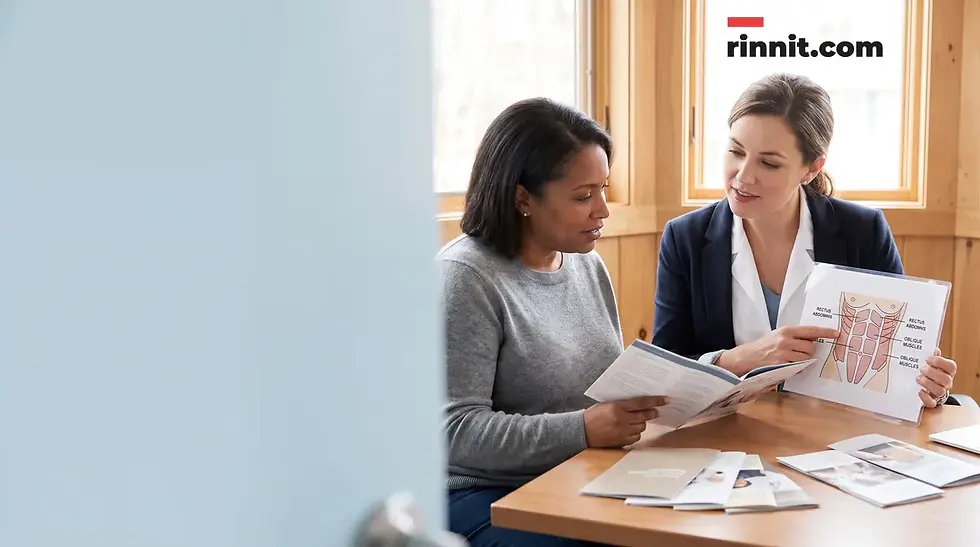
What are the abdominal muscles?
The abdominal muscles are strong bands of muscle that line the walls of your abdomen. They sit toward the front of your body, between your ribcage and pelvis. Together, they form an important part of the abdominal wall and help connect movement in your upper and lower body. [1]
Your abdominal muscles work with your back muscles to form your core. A healthy core is not defined only by appearance. Its practical roles include helping your trunk stay stable, supporting balance and posture, and assisting with everyday movements such as walking, sitting down, standing up and turning. [1]
What are the five main abdominal muscles?
The five main abdominal muscles are the rectus abdominis, pyramidalis, external obliques, internal obliques and transversus abdominis, arranged in layers that give the abdominal wall movement and support. [1]
Muscle | Where it is | Main role described in this guide |
Rectus abdominis | A paired vertical muscle near the center of the abdomen, extending from the ribs toward the front of the pelvis | Helps hold internal organs in place and supports stability during movement |
Pyramidalis | A small triangular muscle at the base of the pubic bone, in front of the rectus abdominis | Helps maintain internal pressure in the abdomen; some people do not have this muscle |
External obliques | The largest of the flat muscles, placed along the sides of the trunk | Helps the trunk twist from side to side |
Internal obliques | A thinner layer inside the external obliques, near the hip bones | Works with the external obliques to support twisting and turning |
Transversus abdominis | The deepest of the three flat abdominal-muscle layers | Helps stabilize the trunk and maintain internal abdominal pressure |
A simple way to picture the layers
The rectus abdominis and pyramidalis run mainly up and down. The external obliques, internal obliques and transversus abdominis are flatter muscles arranged in layers along the sides and front of the trunk. [1]
This layered arrangement gives the abdominal wall both movement and support. It also helps the body manage pressure when you cough, sneeze, vomit, have a bowel movement or perform other activities that require pressure inside the abdomen.

What do the abdominal muscles do?
The abdominal muscles stabilize the trunk, help control pressure inside the abdomen, support movement and help hold and protect internal organs. [1]
They stabilize the trunk
Abdominal muscles help keep your trunk steady as you walk, sit, stand, bend or turn. This stability works together with your back muscles to support balance and protect the spine during movement. [1]
They help control internal abdominal pressure
Your abdominal muscles help maintain and adjust pressure inside the abdomen. This matters during breathing, coughing, vomiting and bowel movements. The same pressure-control role is involved during childbirth. [1]
They support movement
The abdominal wall helps your body move between the ribcage and pelvis. The oblique muscles are especially involved in twisting and turning, while the deeper abdominal muscles contribute to trunk control. [1]
They help hold and protect internal organs
The abdominal muscles help hold internal organs in place and provide a protective wall around structures such as the stomach, intestines, pancreas, liver and gallbladder. [1]
They support posture
Because the abdominal muscles help stabilize the trunk, they contribute to posture and everyday core support. Strengthening should be appropriate for your body and guided by a healthcare professional when pain, injury or a medical condition is present. [1]
What common conditions affect the abdominal wall?
Common conditions that affect the abdominal wall include abdominal muscle strain, hernia and prune belly syndrome, a rare condition present at birth. [1]
Abdominal muscle strain
An abdominal strain, sometimes called a pulled abdominal muscle, can happen when the muscles are overstretched, overused or exposed to a quick, forceful twisting movement. Strains can range from small tears in muscle fibers to severe injuries. [1]
Twisting sports such as tennis, football, baseball and golf can place the abdominal muscles under this kind of demand. A strain can also occur during lifting, exercise or an awkward movement outside sports. [1]
Hernia
A hernia happens when an internal organ pushes through a weak spot in a muscle. For example, part of the small intestine may push through a weakened area in the groin, causing an inguinal hernia. [1]
A hernia is not the same as a straightforward muscle strain. A visible or palpable bulge, especially one that becomes more noticeable with straining or lifting, is a reason to arrange an evaluation.
Prune belly syndrome
Prune belly syndrome is a rare condition present at birth in which the abdominal-wall muscles are absent or weak. An infant’s abdomen may look wrinkled or prune-like. Other associated findings can include undescended testicles and urinary-system problems. [1]
This condition requires individualized medical care. It should not be confused with an exercise-related abdominal strain or an adult hernia.
What symptoms of abdominal muscle problems should you watch for?
Symptoms depend on whether the problem involves a muscle strain, a hernia or a condition present from birth.
Pattern | Symptoms that may occur |
Abdominal strain | Difficulty moving; core muscle spasms; pain during exercise, laughing, coughing or sneezing; swelling or bruising; trouble breathing in severe cases |
Hernia | Pain or aching at the site; a visible or palpable bulge; heaviness or aching around the swelling; pain or bulging with lifting |
Prune belly syndrome | A wrinkled or prune-like abdominal wall; a large abdomen with intestinal loops visible through the skin; undescended testicles; urinary-system issues |
A symptom table can help organize what you notice, but it cannot identify the cause by itself. Pain, swelling or a bulge may have more than one explanation, so a clinician’s examination matters.
What can cause an abdominal strain?
The main movement-related causes are overstretching, overuse and quick, violent twisting of the trunk. Risk may rise when the body is not warmed up, when activity intensity increases too quickly, or when lifting and sports movements are performed with poor form. [1]
A strain may hurt more when the abdominal wall contracts. That is why coughing, sneezing, laughing, exercising or changing position can make symptoms more noticeable.
How are abdominal wall problems evaluated?
Evaluation depends on the symptom pattern. A healthcare professional may ask when the pain began, what movement caused it, whether the area is swollen or bruised, and whether coughing, lifting or straining changes the symptoms.
A new abdominal or groin bulge also deserves attention. The clinician may examine the area while you stand, move, cough or strain, depending on the situation.
For a newborn with an unusual abdominal-wall appearance, evaluation may include assessment of the abdominal muscles, genitals, bladder, kidneys and urinary system. The exact evaluation depends on the child’s findings.
How are abdominal muscle problems treated, depending on the cause?
Treatment for abdominal muscle problems depends on the cause: a strain may need rest, ice or heat and physical therapy, while a hernia typically requires surgical repair. [1]
Care for an abdominal strain
Treatment may include local ice or heat, gentle stretching that does not cause pain, rest, physical therapy, compression or nonsteroidal anti-inflammatory drugs (NSAIDs). The appropriate approach depends on the injury and your health history. [1]
Ask a healthcare professional before using a binder or compression garment. It is important to confirm whether compression is appropriate and how long it should be used. Medication choices also need to account for other medicines and health conditions.
Care for a hernia
Hernias typically require surgical repair. During repair, a surgeon returns the herniated tissue to its proper place and reinforces the weak area with surgical mesh or stitches. Laparoscopic surgery uses a thin camera and surgical tools through small openings. [1]
The best approach depends on the hernia’s location, size, symptoms and other health factors. A visible or painful bulge should be assessed rather than managed only with exercise or home treatment.
Care for prune belly syndrome
Treatment may include antibiotics for mild urinary symptoms and surgery to address problems involving the abdominal wall, genitals or bladder. Care is individualized for the infant’s anatomy and medical needs. [1]
What are practical ways to protect your abdominal muscles?
Practical ways to protect your abdominal muscles include avoiding sudden, jerky trunk movements, lifting with your legs, using good form, increasing activity gradually and resting when pain appears. [1]
Practical habit | Why it matters |
Avoid sudden, jerky trunk movements | Reduces abrupt stress on the abdominal wall |
Lift with your legs or ask for help | May reduce excessive strain during heavy lifting |
Use good form during sports and exercise | Helps your body manage movement more safely |
Increase activity gradually | Avoids doing too much too quickly |
Warm up and stretch around activity | Prepares the body for movement and supports flexibility |
Rest when discomfort or pain appears | Gives you a chance to respond before symptoms worsen |
Drink water and eat nutritious foods | Supports regular bowel movements and may help reduce constipation-related straining |
Discuss strengthening with a healthcare professional | Helps tailor core work to your body, symptoms and goals |
Tighten your abdominal muscles when coughing or sneezing | May provide additional abdominal-wall support |
These habits do not guarantee that an injury or hernia will not occur. They are practical steps that may support abdominal-wall health when combined with appropriate medical care.

When should you call a healthcare professional?
Arrange an evaluation for significant abdominal symptoms, especially when pain or weakness makes it difficult to breathe, move, sit, sleep or walk.
You should also seek evaluation if you can see or feel a bulge in your abdomen or groin. A bulge that becomes more noticeable with lifting or straining may be a sign of a hernia. Get emergency care if a hernia bulge becomes very painful, firm or discolored, cannot be pushed back in, or comes with nausea, vomiting or fever, because the hernia may be trapped and losing its blood supply. [1]
Seek urgent help for severe or rapidly worsening symptoms, particularly trouble breathing or major difficulty moving. If you are unsure whether symptoms are urgent, contact a healthcare professional or local emergency service for guidance.
What questions should you ask about abdominal muscle problems at an appointment?
Useful questions about abdominal muscle problems include whether the pain suggests a strain or hernia, which movements to avoid, when you can return to exercise and which warning signs need urgent care.
Does the pattern of pain suggest a muscle strain, a hernia or another problem?
What movements should I avoid while the area heals?
Is gentle stretching appropriate for me?
Should I use ice, heat, medication or compression?
When can I return to exercise or lifting?
If there is a bulge, could it be a hernia?
What warning signs should prompt urgent care?
How can I strengthen my core safely?
Conclusion: Know your abdominal wall, move with care and act on warning signs
Your abdominal muscles do much more than create a visible “six-pack.” The five main muscle groups help stabilize your trunk, support movement and posture, regulate pressure inside the abdomen, and hold and protect internal organs. [1]
Strains can follow overstretching, overuse or forceful twisting. Hernias can cause a bulge when internal tissue pushes through a weak area. Early evaluation is especially important when symptoms interfere with breathing, movement, sleep or walking, or when a new abdominal or groin bulge appears. [1]
Frequently Asked Questions
How many abdominal muscles are there?
There are five main pairs of abdominal muscles: rectus abdominis, pyramidalis, external obliques, internal obliques and transversus abdominis. Some are mainly vertical, while others are layered flat muscles.
Are abdominal muscles the same as core muscles?
The abdominal muscles are part of the core. The core also includes back muscles that work with the abdominal wall to support spinal protection, balance and trunk stability.
What is the most common abdominal-muscle problem?
Abdominal strain is described as the most common condition affecting the abdominal muscles. It can follow overstretching, overuse or a quick, forceful twisting movement.
How can I tell a muscle strain from a hernia?
A strain may cause pain, spasms, swelling or bruising after a movement or overuse. A hernia may cause a visible or palpable bulge, pain or heaviness that becomes more noticeable with straining or lifting. Symptoms overlap, so a clinician should evaluate a new or concerning pattern.
Can coughing or sneezing hurt an abdominal strain?
Yes. Pain from an abdominal strain may become more noticeable when you cough, sneeze, laugh or exercise because these actions engage the abdominal wall and change internal pressure.
Should I exercise through abdominal pain?
Do not push through pain. Rest and ask a healthcare professional what activity is appropriate, especially if you have swelling, bruising, spasms, difficulty moving or symptoms that persist.
When does an abdominal bulge need evaluation?
A visible or palpable bulge in the abdomen or groin should be evaluated, particularly if it causes pain, heaviness or bulging with lifting or straining.
How is a hernia treated?
Hernia treatment typically includes surgical repair. The surgeon returns the herniated tissue and reinforces the weak area with mesh or stitches. Some repairs use laparoscopic surgery.
What is prune belly syndrome?
Prune belly syndrome is a rare condition present at birth involving absent or weak abdominal-wall muscles. It can be associated with a wrinkled abdominal appearance, undescended testicles and urinary-system problems.
Can I strengthen my abdominal muscles safely?
Discuss strengthening with a healthcare professional if you have pain, an injury, a hernia or another medical condition. Good form, gradual progression, warm-ups and stopping when discomfort appears are important parts of safer activity.
Related guides
References
Cleveland Clinic. Abdominal Muscles. Cleveland Clinic. Last updated June 5, 2024. https://my.clevelandclinic.org/health/body/21755-abdominal-muscles
Wang XQ, Zheng JJ, Yu ZW, et al. A meta-analysis of core stability exercise versus general exercise for chronic low back pain. PLoS One. 2012;7(12):e52082. PMID 23284879. https://doi.org/10.1371/journal.pone.0052082
de Goede B, Wijsmuller AR, van Ramshorst GH, et al. Watchful waiting versus surgery of mildly symptomatic or asymptomatic inguinal hernia in men aged 50 years and older: a randomized controlled trial. Ann Surg. 2018;267(1):42-49. PMID 28350567. https://doi.org/10.1097/SLA.0000000000002243
National Institutes of Health. Health Information. National Institutes of Health (NIH). Last reviewed March 21, 2025. https://www.nih.gov/health-information
Disclaimer
This article is for general educational purposes and is not a substitute for professional medical advice, diagnosis or treatment. Always seek the advice of a qualified healthcare professional with any questions about a medical condition or treatment.



Comments