Abdominal Aortic Aneurysm (AAA): Complete Guide to Symptoms, Causes, Screening, and Treatment Options

Updated: 2 days ago
Medically reviewed by Dr. Baraa Alnahhal, MD · Last reviewed: September 2026
Quick Answer: What Is an Abdominal Aortic Aneurysm (AAA)?
An abdominal aortic aneurysm (AAA) is an enlarged area in the lower part of the body's main artery, the aorta, where a weak spot in the artery wall bulges outward like a balloon. It usually grows slowly with no symptoms, but a rupture causes life-threatening bleeding inside the body. Treatment ranges from regular checkups and ultrasound monitoring to endovascular or open surgery, depending on the aneurysm's size and how fast it grows.
TL;DR
What it is: A weakened, bulging section in the part of the aorta that runs through the belly area, like a balloon bulge in the artery wall.
Symptoms: Often none. If it grows: deep, constant belly or side pain, back pain, a throbbing or pulsing feeling near the belly button.
Biggest risk: Rupture, which is sudden, life-threatening bleeding inside the body. Larger and faster-growing aneurysms carry the greatest risk.
Strongest risk factor: Tobacco use, which weakens blood vessel walls. Age 65+, male sex, and family history also raise risk.
Screening: Men ages 65–75 who have ever smoked should get a one-time abdominal ultrasound.
Treatment: Small aneurysms are monitored with regular ultrasounds; surgery (endovascular stent repair or open surgery) is recommended at 1.9–2.2 inches (4.8–5.6 cm) or larger, or when it grows quickly.
AAA at a Glance
What it is: An enlarged, bulging area in the lower part of the aorta, the body's main artery.
Where it happens: The part of the aorta running through the belly area (abdomen).
Why it matters: A rupture causes life-threatening bleeding inside the body.
Strongest risk factor: Tobacco use; also age 65+, male sex, being white, and family history.
Growing aneurysm symptoms: Deep belly or side pain, back pain, throbbing or pulsing near the belly button.
Rupture warning signs: Sudden, very bad, long-lasting belly or back pain (ripping or tearing feeling), low blood pressure, fast pulse.
Screening: One-time abdominal ultrasound for men ages 65–75 who have ever smoked.
Main tests: Abdominal ultrasound (most common), abdominal CT scan, abdominal MRI.
When surgery is recommended: The aneurysm is 1.9–2.2 inches (4.8–5.6 cm) or larger, growing quickly, leaking, or causing pain.
Surgery options: Endovascular repair (stent graft), the most often used; open surgery, a major operation with a month or more of recovery.
Outlook: Long-term survival rates are similar for both surgery types; small aneurysms can be safely monitored.
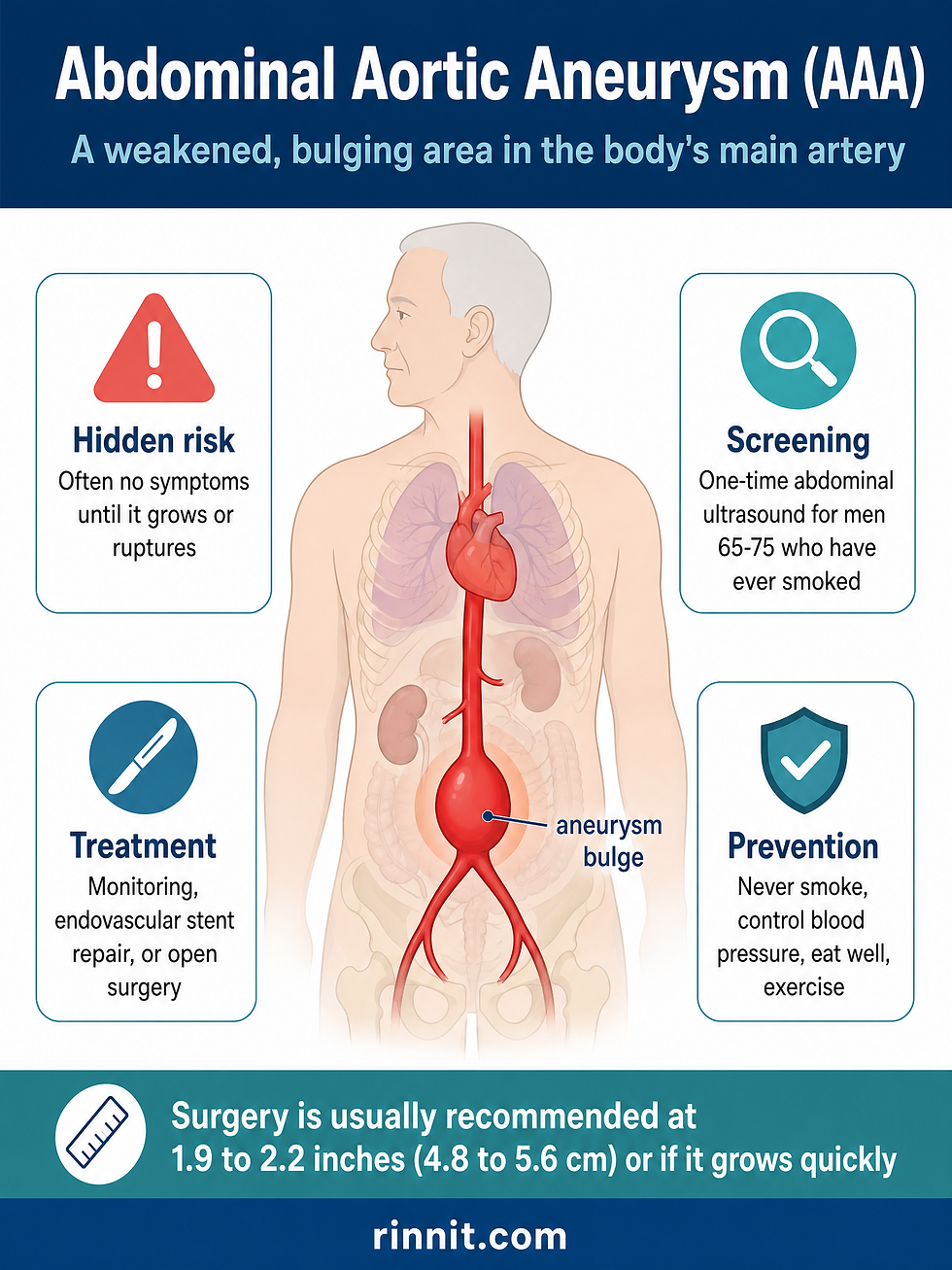
An AAA is often silent until it grows or ruptures, which is why screening with a simple ultrasound matters.
What Is an Abdominal Aortic Aneurysm?
An abdominal aortic aneurysm (AAA) is an enlarged area in the lower part of the body's main artery, called the aorta. The aorta carries blood from the heart down through the center of the chest and the belly area, which is called the abdomen.
An aneurysm occurs when a lower part of the aorta gets weak and bulges outward like a balloon. An aneurysm can grow in any part of the aorta, but most aortic aneurysms happen in the belly area.
If an abdominal aortic aneurysm ruptures, it can cause life-threatening bleeding.
An AAA usually grows slowly, and you might not notice any symptoms. This makes it hard to find. Many aneurysms start small and stay small, while others grow over time, sometimes quickly. Some aneurysms never rupture.
Treatment depends on how big the aneurysm is and how fast it is growing. It may range from regular health checkups and imaging tests to emergency surgery.
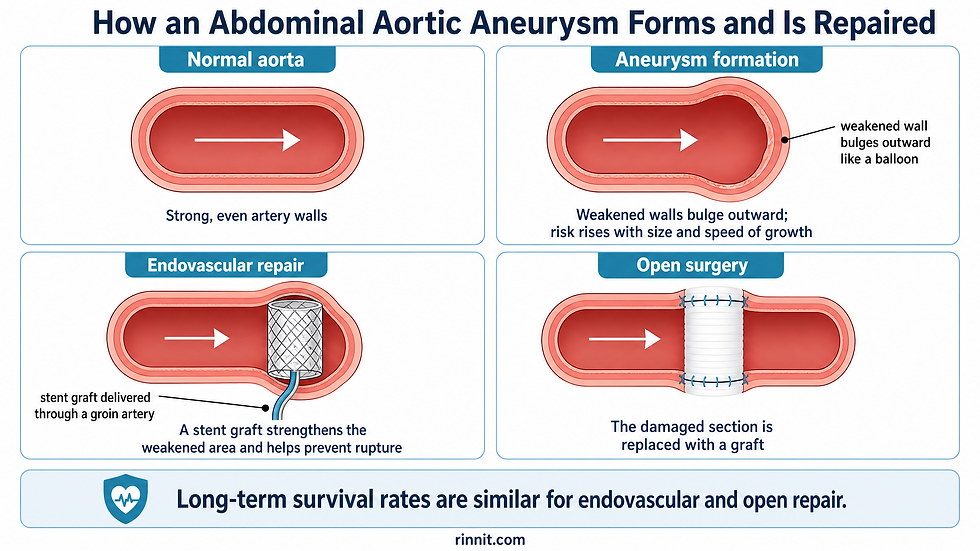
Weakened artery walls bulge like a balloon, and the risk rises with the aneurysm's size and speed of growth.
Symptoms of an Abdominal Aortic Aneurysm
Because AAAs often grow slowly and quietly, most people don't notice symptoms. Many start small and stay small, others grow over time, and some never rupture, which is why they are hard to find.
If your abdominal aortic aneurysm is getting bigger, symptoms might include:
Deep, constant pain in the belly area or on the side of the belly
Back pain
A throbbing or pulsing feeling near the belly button
When to See a Doctor
If you have pain, especially if it is sudden and very bad, get medical help right away.
Causes of Abdominal Aortic Aneurysm
The most common underlying process is atherosclerosis, the hardening of the arteries. This happens when fat and other substances build up in and on the artery walls.
Things that can cause an abdominal aortic aneurysm include:
Atherosclerosis (hardening of the arteries): buildup of fat and other substances in and on the artery walls.
High blood pressure: damages and weakens the aorta's walls.
Blood vessel diseases: cause blood vessels to become swollen and irritated.
Infection in the aorta: rarely, germs can infect the aorta and cause an aneurysm.
Trauma: for example, an injury from a car accident.
Risk Factors
The strongest risk factor for aortic aneurysms is tobacco use. Smoking weakens the walls of blood vessels, including the aorta, raising the risk of both an aneurysm and its rupture. The longer and more you use tobacco, the greater your chances of developing one.
Other risk factors include:
Age: abdominal aortic aneurysms occur most often in people age 65 and older.
Sex: men get abdominal aortic aneurysms much more often than women.
Being white: people who are white are at higher risk.
Family history: having family members with abdominal aortic aneurysms increases your risk.
Other aneurysms: having an aneurysm in the chest part of the aorta (thoracic aortic aneurysm) or in another large blood vessel, such as the artery behind the knee, might increase the risk.
If you are at risk, your doctor may prescribe medicines to lower blood pressure and relieve stress on weakened arteries.
Complications: Rupture and Blood Clots
The two possible complications of an abdominal aortic aneurysm are:
Aortic dissection: tears in one or more layers of the aorta's wall.
Rupture: the aneurysm bursts, causing life-threatening bleeding inside the body.
In general, the larger the aneurysm and the faster it grows, the greater the risk of rupture.
Symptoms that an aortic aneurysm has ruptured can include:
Sudden, very bad, long-lasting belly or back pain, which may feel like ripping or tearing
Low blood pressure
Fast pulse
Emergency: A rupture is a life-threatening emergency. If you have sudden, severe belly or back pain, get emergency medical help immediately.
Aortic aneurysms also increase the risk of blood clots in the area. If a clot breaks loose, it can block a blood vessel elsewhere in the body. A blocked vessel may cause pain or reduced blood flow to the legs, toes, kidneys, or belly area.
Who Should Get Screened: The Ultrasound Test
Because AAAs usually cause no symptoms, screening saves lives. Abdominal ultrasound is the most common test: sound waves create pictures that show how blood flows through the structures in the belly area, including the aorta.
Screening guidance in general:
Men ages 65 to 75 who have ever smoked should have a one-time screening using abdominal ultrasound.
Men ages 65 to 75 who have never smoked: the need for an ultrasound depends on other risk factors, such as a family history of aneurysm.
Women who have never smoked generally don't need to be screened. There isn't enough evidence to say whether women ages 65 to 75 with a smoking or family history benefit from screening, so ask your healthcare professional if screening is right for you.
How an Abdominal Aortic Aneurysm Is Diagnosed
Abdominal aortic aneurysms are often found when a physical exam or imaging test is done for another reason. To diagnose an AAA, a healthcare professional examines you and asks about your medical and family history.
Tests to diagnose an abdominal aortic aneurysm include:
Abdominal ultrasound: the most common test; sound waves create pictures showing blood flow through belly structures, including the aorta.
Abdominal CT scan: X-rays create detailed images of the belly structures and show the size and shape of the aneurysm.
Abdominal MRI: a magnetic field and radio waves make detailed pictures of the belly structures.
During some CT and MRI scans, a liquid called contrast may be given through a vein. Contrast makes the blood vessels show up more clearly on the images.
Treatment Options
The goal of treatment is to prevent the aneurysm from rupturing. Treatment involves either frequent health checkups and imaging (called medical monitoring or watchful waiting) or surgery. Which path you take depends on the size of the aneurysm and how fast it is growing.
Medical Monitoring (Watchful Waiting)
If the aneurysm is small and causing no symptoms, you may only need frequent checkups and imaging tests to see whether it is growing.
Typically, a person with a small, symptom-free AAA needs an ultrasound at least six months after diagnosis, and again at regular follow-up appointments. During checkups, the healthcare professional also looks for conditions, such as high blood pressure, that could make the aneurysm worse.
When Surgery Is Recommended
Surgery to repair an abdominal aortic aneurysm is generally recommended if:
The aneurysm is 1.9 to 2.2 inches (4.8 to 5.6 centimeters) or larger, or
It is growing quickly, or
You have symptoms such as stomach pain, or a leaking, tender, or painful aneurysm
The type of surgery depends on the size and location of the aneurysm, your age, and your overall health.
Endovascular Repair
Endovascular repair is the treatment most often used to repair an abdominal aortic aneurysm. The surgeon places a thin, flexible tube called a catheter into an artery in the groin and guides it to the aorta. A metal mesh tube on the end of the catheter, called a stent graft, is placed at the site of the aneurysm. The stent graft expands and strengthens the weakened area of the aorta, helping to prevent rupture.
Endovascular surgery isn't an option for everyone, so you and your healthcare professional should discuss the best repair option for you. Regular imaging tests are done afterward to make sure the blood vessel isn't leaking.
Open Surgery
Open surgery is major surgery. The surgeon removes the damaged part of the aorta and replaces it with a graft, which is sewn into place. Full recovery may take a month or more.
Importantly, long-term survival rates are similar for both endovascular surgery and open surgery.
Lifestyle Steps: Protecting Your Arteries
To prevent an abdominal aortic aneurysm or keep one from worsening:
Don't smoke or use tobacco products. If you smoke or chew tobacco, quit, and avoid secondhand smoke. Ask your healthcare team about strategies that may help you quit.
Eat a healthy diet. Choose fruits and vegetables, whole grains, chicken, fish, and low-fat dairy. Avoid saturated and trans fats, and limit salt.
Keep blood pressure and cholesterol under control. Take your medicines as directed.
Get regular exercise. Aim for at least 150 minutes a week of moderate aerobic activity. If you haven't been active, start slowly and build up.
If you have an aneurysm, your healthcare professional may also tell you to avoid heavy lifting and vigorous physical activity, since these can cause extreme increases in blood pressure that may make the aneurysm worse. Emotional stress can also raise blood pressure, so try to avoid conflict and stressful situations, and tell your healthcare professional if you are feeling stressed or anxious.
Preparing for Your Appointment
If you are concerned about your aneurysm risk, make an appointment. If you have severe pain, get emergency help. Before your visit, list your symptoms and when they began, your family history of heart disease or aneurysms, all medicines and supplements with doses, and your questions. Good questions to ask include: What's the most likely cause of my symptoms? What tests do I need? Do I need a screening test, and how often?
Frequently Asked Questions
What is an abdominal aortic aneurysm (AAA)?
An AAA is an enlarged area in the lower part of the aorta, the body's main artery. A weak spot in the artery wall bulges outward like a balloon. If it ruptures, it can cause life-threatening bleeding inside the body.
What are the symptoms of an abdominal aortic aneurysm?
Most people have no symptoms because aneurysms grow slowly and silently. If it is growing, symptoms may include deep, constant belly or side pain, back pain, and a throbbing or pulsing feeling near the belly button.
What causes an abdominal aortic aneurysm?
The main underlying cause is atherosclerosis, the hardening of arteries from fat and other substance buildup on artery walls. High blood pressure, blood vessel diseases, infection in the aorta (rarely), and trauma can also cause one.
Who should be screened for an abdominal aortic aneurysm?
Men ages 65 to 75 who have ever smoked should have a one-time screening with abdominal ultrasound. Men the same age who never smoked may need screening based on risk factors like family history.
When does an abdominal aortic aneurysm need surgery?
Repair surgery is generally recommended when the aneurysm reaches 1.9 to 2.2 inches (4.8 to 5.6 cm) or larger, grows quickly, leaks, or causes pain. Small, symptom-free aneurysms are usually monitored with regular ultrasounds instead.
Is endovascular repair better than open surgery?
Both approaches are effective, and long-term survival rates are similar. Endovascular repair, placing a stent graft through a groin artery, is used most often, while open surgery removes the damaged aorta section and replaces it with a sewn-in graft.
Conclusion: What to Remember About Abdominal Aortic Aneurysm
An abdominal aortic aneurysm is a silent threat: a balloon-like bulge in the body's main artery that usually causes no symptoms until it grows or ruptures, when it becomes life-threatening. The three lessons to carry from this guide are:
Never smoke, and quit if you do. Tobacco use is the strongest risk factor, weakening artery walls and raising rupture risk.
Know your screening eligibility. Men ages 65–75 who have ever smoked should get a one-time abdominal ultrasound. It is a simple test that can catch a hidden aneurysm early.
Size determines the plan. Small aneurysms are safely monitored with regular ultrasounds, while those at 1.9–2.2 inches or growing quickly are repaired with endovascular or open surgery, with similar long-term survival either way.
This guide gives you one clear, plain-language place to understand AAA from its silent beginnings to its treatment options. If you are a man over 65 who has ever smoked, the best next step is to ask your healthcare professional about a screening ultrasound.
This article is for informational purposes only and is not a substitute for professional medical advice. Always consult a qualified healthcare provider for diagnosis and treatment.
Comments