X-Linked Hypophosphatemia (XLH): Symptoms, Causes, and Treatment Guide

Updated: 2 days ago
Medically reviewed by Dr. Baraa Alnahhal, MD · Last reviewed: October 2026
Quick Answer: Key Facts About XLH
X-linked hypophosphatemia (XLH) is a rare genetic disease that weakens bones and teeth, a form of rickets caused by a PHEX gene mutation that leads to phosphate loss. Symptoms include bowed legs, bone pain, short stature and dental abscesses. It is diagnosed with blood, urine and genetic tests. Treatment includes burosumab, phosphate supplements and physical therapy.
Feature | Details |
What it is | A rare genetic disease causing weakened bones and teeth (a form of rickets). |
Primary Cause | PHEX gene mutation leading to excess FGF23 hormone and phosphate loss. |
Main Symptoms | Bowed legs, bone pain, short stature, and dental abscesses. |
Inheritance | X-linked dominant; passed from parents to children via sex chromosomes. |
Diagnosis | Blood and urine tests for phosphate levels, genetic testing, and X-rays. |
Treatment | Monoclonal antibodies (burosumab), phosphate supplements, and physical therapy. |
Prevention | Cannot be prevented, but early treatment can stop symptoms from developing. |
What the research says
Burosumab improved rickets more than conventional therapy in children. In a randomized trial of 61 children aged 1–12 with XLH, those switched to burosumab improved more on the Radiographic Global Impression of Change rickets score at week 40 than those who continued oral phosphate and active vitamin D (+1.9 vs +0.8; difference 1.1, 95% CI 0.8–1.5). Treatment-related side effects were more common with burosumab (59% vs 22%) (Imel et al., Lancet, 2019).
Burosumab also helped adults. In a placebo-controlled trial of 134 adults with XLH and bone pain, 94.1% of those taking burosumab reached a blood phosphate level above the lower limit of normal versus 7.6% on placebo, and 43.1% of active fractures had fully healed at week 24 versus 7.7% (Insogna et al., J Bone Miner Res, 2018).
XLH is rare, and survival in later life may be lower. A UK primary-care cohort study estimated XLH prevalence at 14.0 per million in 2012–2016 and found higher mortality in later life (hazard ratio 2.93, 95% CI 1.24–6.91), based on a small number of deaths (9 among 122 possible cases) (Hawley et al., J Clin Endocrinol Metab, 2020).
Research summaries are based on article abstracts retrieved from PubMed.
What is X-Linked Hypophosphatemia (XLH)?
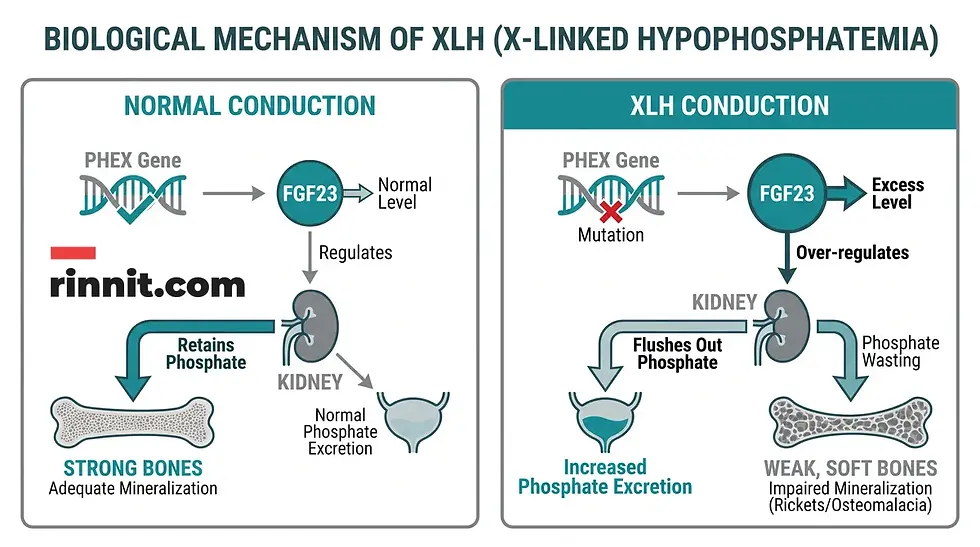
X-linked hypophosphatemia, commonly referred to as XLH, is a lifelong genetic disorder that primarily affects the skeletal system. It is classified as a form of rickets, a condition characterized by soft and weak bones. In individuals with XLH, the body is unable to maintain adequate levels of phosphate, an essential mineral for building and maintaining strong bones and teeth. Instead of retaining phosphate, the kidneys filter too much of it into the urine, leading to a chronic deficiency in the bloodstream. [1]
This condition is rare and often first becomes apparent in early childhood when a child begins to walk. Parents may notice that their child’s legs appear bowed or that they have difficulty keeping up with peers. While the physical symptoms are most visible in the legs, the condition affects the entire body, including the muscles and the teeth. [1]
What are the symptoms of X-linked hypophosphatemia (XLH)?
The signs of XLH vary depending on the age of the individual, but the underlying bone weakness remains the central challenge.
Symptoms in Children
In young children, the most common signs include a delay in learning to walk or a noticeable waddle. As the child grows, the legs may begin to bow outward or tilt inward at the knees, a condition known as knock knees. Because the bones are not hardening properly, children often experience persistent bone and muscle pain. Other physical signs include a shorter-than-average stature and differences in the shape of the head or face due to the premature fusing of skull bones. [1]
Dental health is also significantly impacted. Children with XLH may lose their baby teeth much earlier than usual and are prone to painful tooth abscesses and frequent cavities, even with good oral hygiene. [1]
Symptoms in Adults
As individuals with XLH reach adulthood, new symptoms may emerge. Many adults experience hearing loss, frequent headaches, and a narrowing of the spinal canal known as spinal stenosis. The ligaments and tendons may begin to harden, leading to joint stiffness and a loss of flexibility. Adults are also at a higher risk for bone fractures and “pseudofractures,” which are areas that appear broken on X-rays but are actually severe weaknesses in the bone. [1]
What is the genetic cause of X-linked hypophosphatemia, and how is it inherited?
XLH is caused by a mutation in the PHEX gene. This gene is responsible for regulating a hormone called fibroblast growth factor 23 (FGF23), which tells the kidneys how much phosphate to keep or discard. In a person with XLH, the mutation causes the body to produce too much FGF23. This excess hormone forces the kidneys to get rid of phosphate even when the body needs it. [1]
The condition follows an X-linked dominant inheritance pattern. Because the gene is located on the X chromosome, a mother with XLH has a 50% chance of passing the condition to any of her children. A father with XLH will pass the gene to all of his daughters but none of his sons. In some cases, the mutation occurs spontaneously, meaning neither parent has the condition. [1]
How is X-linked hypophosphatemia (XLH) diagnosed?
Diagnosing XLH typically involves a combination of laboratory tests and imaging. Doctors will order blood and urine tests to measure the levels of phosphate and the FGF23 hormone. A genetic test is often used to confirm the presence of the PHEX mutation. Additionally, X-rays and bone density tests help healthcare providers assess the extent of bone weakening or deformities. [1]

How is X-linked hypophosphatemia (XLH) treated and managed?
X-linked hypophosphatemia cannot be cured, but medications such as burosumab, phosphate supplements and calcitriol, plus supportive therapies, can manage it.
Medication and Supplements
The primary goal of treatment is to maintain bone health rather than reaching perfectly normal phosphate levels. One of the most significant advancements is the use of burosumab, a monoclonal antibody that blocks the excess FGF23 hormone. When started early in childhood, this treatment can allow for normal growth and prevent most symptoms. Other common treatments include oral phosphate supplements and a specific form of vitamin D called calcitriol. [1]
Supportive Therapies and Surgery
Physical and occupational therapy are often recommended to help strengthen muscles and improve mobility. In cases where bone deformities are severe, surgery may be necessary to realign the legs or repair fractures. Growth hormone is sometimes used to help children reach a more typical height. Regular dental checkups are also essential to manage the high risk of abscesses and tooth loss. [1]

Frequently Asked Questions
Is XLH the same as regular rickets?
XLH is a form of rickets, but unlike nutritional rickets caused by a lack of vitamin D, XLH is a genetic condition that affects how the body handles phosphate.
Can XLH be cured?
There is currently no cure for XLH, but it can be managed effectively with medication and therapy to prevent major complications.
How does XLH affect height?
Because it weakens the bones during growth, many children with XLH are shorter than their peers. Growth hormone therapy may be considered for short stature, and early treatment can help support normal growth.
Is XLH contagious?
No, it is a genetic condition passed down through families or caused by a random mutation at birth.
Why does XLH cause dental problems?
Phosphate is essential for the mineralization of teeth. A lack of phosphate leads to poorly mineralized teeth, making them prone to abscesses, cavities, and early loss.
Can adults develop XLH?
XLH is present from birth, but some people with mild cases may not be diagnosed until adulthood, when symptoms like joint pain or hearing loss become more noticeable.
What is burosumab?
Burosumab is a monoclonal antibody that blocks FGF23, the hormone responsible for phosphate loss in XLH. It is a major advance in treating XLH.
Do all children with XLH need surgery?
No. Many children respond well to medication, and some bone deformities improve without surgery or cause no problems.
Is hearing loss common in XLH?
Hearing loss is a recognized symptom in adults with XLH, and hearing aids may be needed. Tell your provider about any changes in your hearing.
Can people with XLH exercise?
Yes. Physical activity is encouraged to strengthen muscles, but it should be done under the guidance of a healthcare provider to avoid injury.
What is a pseudofracture?
A pseudofracture is an area of bone weakness that looks like a crack on an X-ray even though the bone has not fully broken.
Does XLH affect life expectancy?
A UK population study found higher mortality in later life among people with XLH, and Cleveland Clinic notes that life expectancy may be about eight years shorter, although experts are not sure why. With early diagnosis and good management, many people with XLH live long, healthy lives.
How is XLH inherited from a father?
A father passes his only X chromosome to his daughters and his Y chromosome to his sons. Therefore, all of his daughters will inherit the condition, but none of his sons will.
What are the signs of a dental abscess in XLH?
Signs include severe tooth pain, swelling of the face or jaw, and fever. These require immediate dental attention.
Should I see a genetic counselor?
If you have XLH or a family history of the condition, a genetic counselor can help you understand the risk of passing it on to your children.
Conclusion
X-linked hypophosphatemia is a complex condition, but with early detection and the latest medical treatments, the outlook for patients is better than ever. By focusing on bone health, regular monitoring, and a multidisciplinary care team, individuals with XLH can maintain their mobility and overall well-being. If you notice signs of bowed legs or delayed walking in your child, consult a pediatrician or an endocrinologist for a thorough evaluation.
References
Cleveland Clinic. XLH (X-Linked Hypophosphatemia). Cleveland Clinic Health Library. Last updated May 31, 2024. Accessed October 15, 2026. https://my.clevelandclinic.org/health/diseases/x-linked-hypophosphatemia-xlh
Imel EA, Glorieux FH, Whyte MP, et al. Burosumab versus conventional therapy in children with X-linked hypophosphataemia: a randomised, active-controlled, open-label, phase 3 trial. Lancet. 2019;393(10189):2416-2427. PMID 31104833. https://doi.org/10.1016/S0140-6736(19)30654-3
Insogna KL, Briot K, Imel EA, et al. A randomized, double-blind, placebo-controlled, phase 3 trial evaluating the efficacy of burosumab, an anti-FGF23 antibody, in adults with X-linked hypophosphatemia: week 24 primary analysis. J Bone Miner Res. 2018;33(8):1383-1393. PMID 29947083. https://doi.org/10.1002/jbmr.3475
Hawley S, Shaw NJ, Delmestri A, et al. Prevalence and mortality of individuals with X-linked hypophosphatemia: a United Kingdom real-world data analysis. J Clin Endocrinol Metab. 2020;105(3):e871-8. PMID 31730177. https://doi.org/10.1210/clinem/dgz203
Medical disclaimer
The information provided in this article is for educational purposes only and should not be used as a substitute for professional medical advice, diagnosis, or treatment. Always seek the advice of your physician or other qualified health provider with any questions you may have regarding a medical condition.



Comments