What Is Mantle Cell Lymphoma? A Plain-Language Guide to This Rare Blood Cancer

Updated: 3 days ago
Medically reviewed by Dr. Baraa Alnahhal, MD · Last reviewed: October 2026
Quick Answer: Key Facts About Mantle Cell Lymphoma
Mantle cell lymphoma is a rare type of non-Hodgkin lymphoma that starts in B cells in the mantle zone of a lymph node. It often causes no early symptoms, later bringing painless lymph node swelling, fever, fatigue and weight loss. It most often affects people 60 or older. Treatment depends on stage, from watchful waiting to chemotherapy and transplant.
Feature | Details |
What it is | A rare type of non-Hodgkin lymphoma that starts in B cells in the mantle zone of a lymph node. [1] |
What it feels like | Often nothing at first. Later it can cause painless swelling in the neck, armpit or groin, fever, fatigue, and weight loss without trying. [1] |
What makes it unique | The cancer cells build up in the lymph nodes but can also affect the blood, bone marrow, spleen, liver, and digestive tract. [1] |
Who gets it | Most often people 60 or older. White people are more likely to develop it than people of other races. [1] |
How it is treated | Watch and wait, radiation therapy, immunotherapy, chemotherapy, targeted therapy, CAR-T cell therapy, or bone marrow transplant, chosen based on stage, growth rate, and overall health. [2] |
What the research says
CAR-T cell therapy produced durable responses in relapsed or refractory disease. In the ZUMA-2 study, 68 treated patients had an objective response rate of 91%, with 68% complete responses, after a median follow-up of 35.6 months. Median duration of response was 28.2 months, median progression-free survival was 25.8 months, and median overall survival was 46.6 months. (Wang et al., J Clin Oncol, 2023)
In older adults with untreated disease, reaching a complete response was linked to much longer progression-free survival. In a secondary analysis of the SHINE trial (523 patients, median age 71, median follow-up 94.5 months), median progression-free survival was 97.8 months with ibrutinib plus bendamustine and rituximab and 87.9 months with placebo plus bendamustine and rituximab in patients who reached a complete response, versus 27.6 and 16.7 months with a partial response. Patients given ibrutinib were more likely to reach a complete response (odds ratio 1.48). (Mishima et al., Ann Hematol, 2025)
What Is Mantle Cell Lymphoma?
Mantle cell lymphoma is a type of lymphoma. Lymphoma is cancer that affects the lymphatic system. The lymphatic system is made up of organs, glands, tubelike vessels, and clusters of cells called lymph nodes. It is part of the body's germ-fighting immune system. Mantle cell lymphoma typically affects the lymph nodes, but it also can affect the blood, bone marrow, and other tissues throughout the body. [1]
There are many types of lymphoma, usually divided into two categories: Hodgkin lymphoma and non-Hodgkin lymphoma. Mantle cell lymphoma is a type of non-Hodgkin lymphoma. [1]
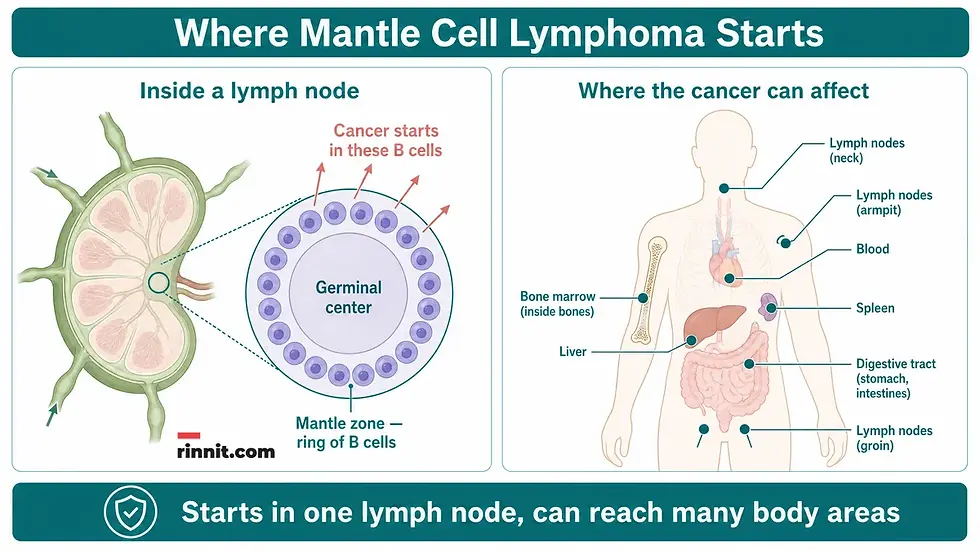
It gets its name from where the cancer starts: inside the mantle zone of a lymph node. The mantle zone is a ring of cells surrounding the inner part of the lymph node. These cells are germ-fighting white blood cells called B lymphocytes. In mantle cell lymphoma, changes happen that turn the B lymphocytes into cancer cells. The cancer cells build up in the lymph nodes and other parts of the body. [1]
Mantle cell lymphoma is a rare and often aggressive type of cancer. While it often cannot be cured, treatments can shrink the cancer and help contain it. Treatment may increase the time that the cancer stays away, known as remission, and help prolong life. [1]
What Are the Types of Mantle Cell Lymphoma?
Mantle cell lymphoma includes classic and leukemic nonnodal types, which can have rare but aggressive blastoid and pleomorphic variants that are harder to treat.
Type | What it involves |
Classic (nodal) mantle cell lymphoma | The most common type. It is typically found in the lymph nodes but also can be found in the bone marrow, spleen, and digestive system. |
Leukemic nonnodal mantle cell lymphoma | Grows slowly and is mainly found in the blood and spleen. It may not cause symptoms and may not need treatment right away, with the healthcare team watching it over time. |
In situ mantle cell neoplasia | A very early form, often found accidentally during testing for other reasons. It is found in small areas of lymph tissue and does not cause symptoms. It usually never turns into cancer and may only need monitoring. |
Classic and leukemic nonnodal mantle cell lymphomas can also have variants called blastoid and pleomorphic variants. These are rare but aggressive types found in the lymph nodes and bone marrow that can spread to other organs. These variants are often harder to treat and need stronger therapy. [1]
What Are the Symptoms of Mantle Cell Lymphoma?
Mantle cell lymphoma may not cause symptoms at first. When they happen, signs and symptoms may include: [1]
Symptom | What it involves |
Painless swelling | Swelling in the neck, armpit, or groin that does not hurt. |
Fever | Elevated body temperature. |
Fatigue | Ongoing tiredness. |
Decreased appetite | Less interest in food. |
Weight loss | Losing weight without trying. |
Digestive symptoms | Nausea, diarrhea, or bloating. |
If the cancer involves the digestive system, symptoms may include changes in bowel habits and blood in the stool. [1]
When should you see a doctor?
Make an appointment with a healthcare professional if you have any symptoms that worry you. [1]
What Causes Mantle Cell Lymphoma?
Mantle cell lymphoma has no clear cause, but it develops when gene changes in B cells of a lymph node's mantle zone make them multiply rapidly. This cancer starts inside the mantle zone of a lymph node. The mantle zone is a ring of cells surrounding the inner part of the lymph node, called the germinal center. These cells are germ-fighting white blood cells called B cells. [1]
In mantle cell lymphoma, gene changes cause the cell's DNA to rearrange. This is known as translocation. Certain translocations cause the B cells to turn into cancer cells that multiply rapidly and invade and destroy healthy body tissue. [1]
Where can the cancer affect the body?
Mantle cell lymphoma can affect the lymph nodes, bone marrow, blood, spleen, liver, and digestive tract, and, rarely, the central nervous system. [1]
Who is more likely to get it?
Factor | What is known |
Age | It can happen at any age, but it is most common in people 60 or older. |
Race | White people are more likely to develop mantle cell lymphoma than people of other races. |
There is no known way to prevent mantle cell lymphoma. [1]

Can Mantle Cell Lymphoma Cause Complications?
Complications can include the risk of relapse, complications of advanced cancer, and side effects of treatment. [1]
Risk of relapse
Even after successful treatment, mantle cell lymphoma usually comes back. This is called a relapse. Sometimes the relapse happens years later. The risk of relapse continues throughout life, so most people have a lifetime of monitoring after treatment. [1]
Complications of advanced cancer
Complications of advanced mantle cell lymphoma may include swollen lymph nodes that press on nearby parts of the body. This may include pressing on the throat and causing difficulty swallowing or breathing. When swollen, lymph nodes also may not be able to drain properly, which can cause swelling in the legs. Advanced mantle cell lymphoma also can cause fluid to build up in the chest and belly, which can cause breathing troubles, heart troubles, discomfort, and swelling in the belly. [1]
Side effects of treatment
Treatments may cause nausea, vomiting, fatigue, fever, rash, diarrhea, and more. Harmful side effects may include: [1]
Side effect | What it involves |
Bone marrow suppression | The bone marrow cannot make enough blood cells, including white blood cells (raising infection risk) and platelets (increasing bleeding risk). |
Medicine toxicity | Some cancer medicines can be harmful to the body, causing organ damage and other issues. This depends on the medicine type and dose. |
Reactivating viruses | Past viral infections such as hepatitis B or C can become active again with some treatments, leading to liver inflammation, liver damage, and other complications. |
Tumor lysis syndrome | A serious condition that happens when cancer cells break down quickly after treatment, releasing substances such as potassium and uric acid into the bloodstream that can overwhelm the kidneys, heart, and other organs. Medicines may help prevent or treat it. |
How Is Mantle Cell Lymphoma Diagnosed?
Diagnosis often begins with a physical exam that checks for swollen lymph nodes in the neck, underarms, and groin. The exam also checks for a swollen spleen or liver. Other tests and procedures might include blood tests, imaging tests, and taking a sample of tissue for lab testing. [2]
Test | What it does |
Blood tests | Can sometimes show if lymphoma cells are present. They also measure lactate dehydrogenase (LDH), which is often higher in people with lymphoma. |
Imaging tests | CT and PET scans make pictures of the body and can show the location and extent of the cancer. |
Lymph node biopsy | A procedure to remove all or part of a lymph node. Lab tests on the sample show whether you have mantle cell lymphoma. |
Bone marrow aspiration and biopsy | Needles collect fluid and solid tissue samples, most often from the hip bone, from the bone marrow, the soft matter inside bones where blood cells are made, to help determine the cancer's extent. |
How do labs confirm mantle cell lymphoma?
In the lab, specialized tests look for specific things about the cells. To decide whether the cells are mantle cell lymphoma cells, the lab looks for: [2]
What the lab looks for | What it means |
Proteins on the cell surface (markers) | Mantle cell lymphoma cells have certain proteins on their surface that help identify them. Common markers are CD19, CD20, CD5, and SOX11. |
Changes in the DNA | The cells have a gene change that causes their DNA to rearrange (translocation), which causes the cells to stop dying and multiply rapidly. The genes linked to mantle cell lymphoma include cyclin D1 and TP53. |
What are the stages of mantle cell lymphoma?
If you are diagnosed, the next step is determining the cancer's extent, called the stage. Imaging tests, blood tests, and biopsies may be used to determine the stage, and your healthcare team uses it to help create your treatment plan. [2]
Stage | What it means |
Stage 1 | Only one lymph node region is affected. |
Stage 2 | Two or more lymph node regions on the same side of the diaphragm are involved. |
Stage 3 | Lymph node regions above and below the diaphragm are involved. |
Stage 4 | Regions outside of the lymph nodes are involved. |
What is the outlook (prognosis)?
The cancer prognosis tells you how likely it is that the cancer can be treated. Your healthcare team can get a general sense of your outlook using your stage, but the stage cannot tell your future. Your prognosis may depend on your age, overall health, the cancer's stage, lymph node and bone marrow biopsy results, and certain gene changes. [2]
Mantle cell lymphoma is often a fast-growing cancer. The survival rate for this cancer is often lower than other types of lymphoma that grow more slowly. If you want to know more about your prognosis, talk with your care team. [2]
What Is the Treatment for Mantle Cell Lymphoma?
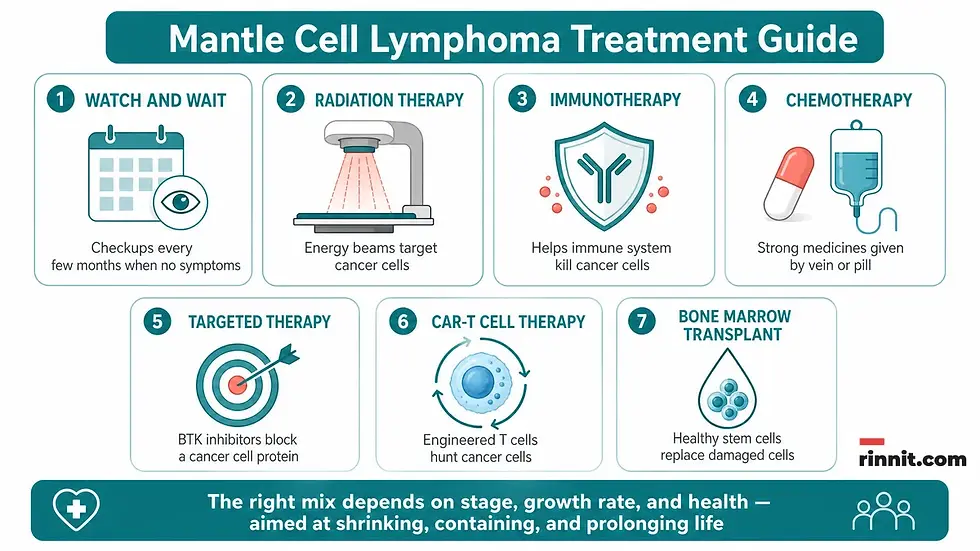
Treatments may include the watch and wait method, radiation therapy, immunotherapy, chemotherapy, targeted therapy, CAR-T cell therapy, and bone marrow transplant. Which treatment is best depends on the extent of your cancer (the stage), how quickly it is growing, your overall health, and what you prefer. [2]
Treatment | What it involves |
Watch and wait | If the lymphoma does not cause symptoms, you might not need treatment right away. Instead, checkups every few months watch whether the cancer is growing. |
Radiation therapy | Powerful energy beams from X-rays, protons, or other sources kill cancer cells by targeting precise points. It is not common because the cancer often affects multiple body parts by diagnosis, but it may be used for early-stage disease, for people who cannot handle other treatments, or to relieve symptoms. |
Immunotherapy | Medicine that helps the immune system find and kill cancer cells. It may be a first-line treatment, often combined with chemotherapy, and may be used afterward as maintenance therapy to keep the cancer away longer. |
Chemotherapy | Strong medicines, most given through a vein and some in pill form. It may be a first-line treatment, often combined with immunotherapy, or used for advanced or relapsed cancer. |
Targeted therapy | Medicines that attack specific chemicals in cancer cells, causing them to die. For this lymphoma, medicines often target a protein called Bruton tyrosine kinase (BTK) and are called BTK inhibitors. They may be used first line, for relapsed cancer, or when other treatments have not worked (refractory lymphoma). |
CAR-T cell therapy | White blood cells, including T cells, are removed from the blood and treated in a lab so they make special receptors that recognize a marker on the lymphoma cells. When put back into the body, the CAR-T cells find and destroy the cancer. It is an option for refractory or relapsed lymphoma. |
Bone marrow transplant | Healthy bone marrow stem cells, from your own body (autologous) or a donor (allogeneic), replace cells hurt by chemotherapy and other treatments. For some people it can slow the cancer's progression and extend remission. It is typically an option for some who are younger and in good health, with chemotherapy before and immunotherapy maintenance after. |
How Can You Cope With and Prepare for Care?
With time, you will find what helps you cope with the uncertainty and worry of a cancer diagnosis. Three approaches may help: [2]
Learn enough to make decisions about your care. Ask your healthcare team about your cancer, including your test results, treatment options, and, if you want, your prognosis.
Keep friends and family close. Strong relationships provide practical support, like help at home if you are in the hospital, and emotional support when you feel overwhelmed.
Find someone to talk with. A friend, family member, counselor, medical social worker, clergy member, or cancer support group can all help. Ask your healthcare team about support groups in your area.
If you have symptoms that worry you, make an appointment with a healthcare professional. You may be referred to a hematologist (a doctor who specializes in diseases that affect blood cells) or an oncologist (a doctor who specializes in treating cancer). To prepare, write down your symptoms, important personal information, and all medicines, vitamins, and supplements with doses; take a family member or friend along; and bring a list of questions ranked from most to least important. [2]
What questions should you ask your healthcare professional?
Do I have mantle cell lymphoma? What is the stage?
Will I need more tests?
What are the treatment options, and what are the potential side effects of each?
How will each treatment affect my daily life?
Is there one treatment option you believe is best? What would you recommend to a friend or family member in my situation?
Should I see a specialist?
Are there brochures or printed material I can take, and what websites do you recommend?
What will determine whether I should plan for a follow-up visit?
What questions will your doctor ask you?
Be prepared to answer: When did your symptoms begin? Have they been continuous or occasional? How severe are they? What seems to improve them, and what worsens them? Have you had any fevers, night sweats, or weight loss? Have you noticed any lumps, swelling, or pain anywhere? Have you had any other cancers in the past? Do you have other health conditions, such as diabetes, heart disease, or kidney problems? What are your biggest concerns or fears about your diagnosis or treatment? [2]
Talk with a healthcare professional. If you have symptoms that worry you, especially painless swelling in the neck, armpit, or groin, contact a doctor or other healthcare professional for an evaluation. For more evidence-based health guides, visit Rinnit.com.
Frequently Asked Questions
Is mantle cell lymphoma a cancer?
Yes. It is a type of lymphoma, a cancer of the lymphatic system, and specifically a type of non-Hodgkin lymphoma that starts in B cells within the mantle zone of a lymph node. [1]
What causes mantle cell lymphoma?
The exact cause is not clear. Gene changes cause the cells' DNA to rearrange, a process called translocation, which turns B cells into cancer cells that multiply rapidly. [1]
Who gets mantle cell lymphoma?
Mantle cell lymphoma can happen at any age but is most common in people 60 or older, and White people are more likely to develop it than people of other races. There is no known way to prevent it. [1]
What are the early symptoms?
Mantle cell lymphoma may not cause symptoms at first. When symptoms appear, they can include painless swelling in the neck, armpit, or groin, fever, fatigue, decreased appetite, weight loss without trying, nausea, diarrhea, and bloating. [1]
Can it be cured?
Mantle cell lymphoma often cannot be cured, but treatments can shrink the cancer, help contain it, and prolong life. Even after successful treatment, it usually comes back (relapses), which is why most people have lifetime monitoring. [1]
What treatments are available?
Watch and wait, radiation therapy, immunotherapy, chemotherapy, targeted therapy (BTK inhibitors), CAR-T cell therapy, and bone marrow transplant. The best option depends on the stage, how quickly the cancer is growing, overall health, and your preferences. [2]
What does "watch and wait" mean?
If the lymphoma is not causing symptoms, you might not need treatment right away. Instead, checkups every few months let the healthcare team watch whether the cancer is growing. [2]
What happens after treatment?
Because the risk of relapse continues throughout life, most people have long-term monitoring after treatment. Coping support, such as learning about the disease, keeping loved ones close, and finding someone to talk with, is also an important part of care. [1] [2]
How is mantle cell lymphoma diagnosed?
A provider removes a lymph node or a small piece of tissue (a biopsy) so it can be tested in a lab. Blood tests, imaging scans such as CT or PET, and sometimes a bone marrow biopsy show how far the cancer has spread.
Is mantle cell lymphoma fast-growing?
It is often an aggressive lymphoma, but some forms grow slowly. Slow-growing cases that cause no symptoms may be watched closely before treatment starts.
Related Reading
Conclusion
Mantle cell lymphoma is a rare, often aggressive non-Hodgkin lymphoma that begins when gene changes turn the B cells of the mantle zone into fast-multiplying cancer cells. It most often strikes people 60 or older, may cause no symptoms at first, and can show up as painless swelling, fever, fatigue, and unplanned weight loss. Treatment, from watch and wait to radiation, immunotherapy, chemotherapy, targeted therapy, CAR-T cell therapy, or bone marrow transplant, cannot always cure it, but it can shrink the cancer, help contain it, and prolong life. Because the cancer usually comes back at some point, long-term monitoring is part of life after treatment, and staying informed and connected with your care team matters most.
References
Mayo Clinic Staff. Mantle cell lymphoma - Symptoms and causes. Mayo Clinic. June 25, 2025. https://www.mayoclinic.org/diseases-conditions/mantle-cell-lymphoma/symptoms-causes/syc-20584872
Mayo Clinic Staff. Mantle cell lymphoma - Diagnosis and treatment. Mayo Clinic. June 25, 2025. https://www.mayoclinic.org/diseases-conditions/mantle-cell-lymphoma/diagnosis-treatment/drc-20584873
Wang M, et al. Three-Year Follow-Up of KTE-X19 in Patients With Relapsed/Refractory Mantle Cell Lymphoma, Including High-Risk Subgroups, in the ZUMA-2 Study. J Clin Oncol. 2023;41(3):555-567. PMID 35658525. https://doi.org/10.1200/JCO.21.02370
Mishima Y, et al. Impact of best response to ibrutinib plus Bendamustine and rituximab on PFS in MCL: a secondary analysis of SHINE. Ann Hematol. 2025;104(9):4605-4610. PMID 40940567. https://doi.org/10.1007/s00277-025-06569-7
Medical disclaimer
This article is for educational purposes only and is not intended as medical advice. Always consult a qualified healthcare professional for diagnosis and treatment decisions.



Comments