What is Junctional Tachycardia?

Updated: 3 days ago
Medically reviewed by Dr. Baraa Alnahhal, MD · Last reviewed: October 2026
Quick Answer: What Is Junctional Tachycardia?
Junctional tachycardia is an abnormal, rapid heart rhythm in which the heartbeat signal starts in the atrioventricular (AV) node instead of the sinoatrial (SA) node, often over 100 beats per minute in adults. [1] It is usually temporary after heart surgery in children but can also result from medication toxicity or heart attacks. [1] Most cases resolve once the trigger is treated. [1]
What the research says
JET is common after tetralogy of Fallot repair, and beta-blockers before surgery were linked to a lower risk. In a retrospective study of 322 children under 2 years old, 96 (29.8%) developed postoperative junctional ectopic tachycardia (JET). Younger age, a higher heart rate before surgery, cyanotic spells, not receiving beta-blockers, and low magnesium and calcium were independent predictors, and JET prolonged intensive care stay (Ismail et al., Journal of Cardiothoracic Surgery, 2018 [2]).
Amiodarone or dexmedetomidine given before surgery reduced the rate of JET. In a randomized trial of 225 children having open-heart surgery, JET occurred in 8.5% of those given amiodarone and 14.2% of those given dexmedetomidine, compared with 24.7% of controls (P = 0.022), with no significant increase in side effects such as bradycardia or hypotension (Wadile et al., Annals of Pediatric Cardiology, 2023 [3]).
Amiodarone controls postoperative JET in most children, and intravenous sotalol is an emerging alternative. In a single-center review of 32 children treated for postoperative JET, amiodarone successfully controlled the rhythm in 75% of cases and intravenous sotalol in 83%. The JET rate fell faster in the first 90 minutes after a sotalol dose, and amiodarone had to be stopped early for low blood pressure or a slow heart rate in 2 patients, versus none on sotalol (Rochelson et al., Heart Rhythm, 2022 [4]).
Key Takeaways: Junctional Tachycardia Facts
Feature | Details |
Medical Term | Junctional Tachycardia / Junctional Ectopic Tachycardia |
Origin Point | Atrioventricular (AV) node (the heart's junction) [1] |
Primary Types | Congenital (rare) and Postoperative (common) [1] |
Common Triggers | Heart surgery, digoxin toxicity, myocarditis, heart attack [1] |
Typical Heart Rate | Over 100 bpm (can reach 200-250 bpm in infants) [1] |
Main Treatments | Heart rate medications, cryoablation, electrolyte correction [1] |
What are the core features and symptoms of junctional tachycardia?
Junctional tachycardia occurs when the heart's electrical system bypasses its primary controller, leading to a rapid and sometimes inefficient rhythm.
Understanding the "Understudy" Pacemaker
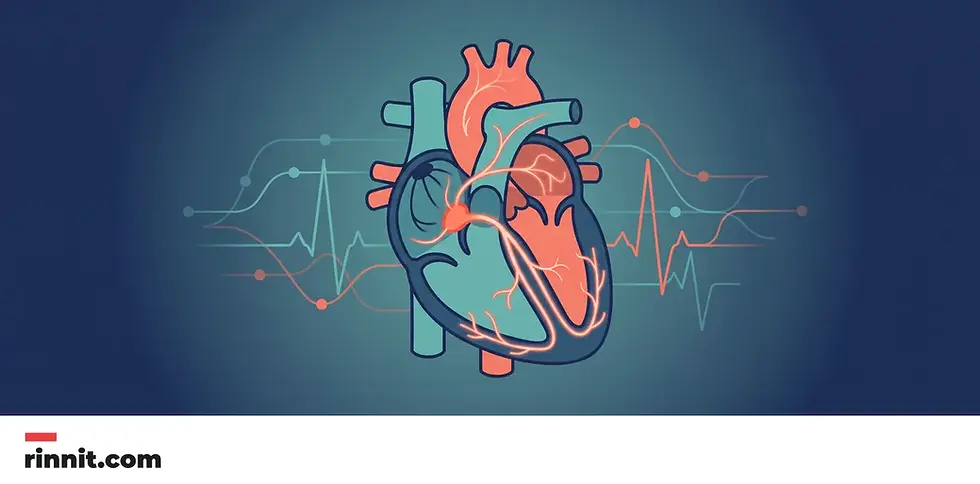
The heart typically relies on the sinoatrial (SA) node to set a steady pace. If the SA node is damaged or electrical signals are blocked, the atrioventricular (AV) node takes over. [1] In junctional tachycardia, this backup system fires too rapidly. In the congenital form, which is present at birth, an infant's heart rate can soar to 200 or 250 beats per minute. [1] The more common postoperative form usually appears two to three days after a child has surgery to repair a heart defect, such as tetralogy of Fallot. [1]
Common Signs and Sensations
Many individuals with junctional tachycardia may not experience noticeable symptoms [1], especially if the heart rate is only mildly elevated. When symptoms do occur, they often include:
Palpitations: A sensation of a racing heart, fluttering, or skipped beats. [1]
Dizziness and Fainting: Reduced blood flow to the brain can cause lightheadedness or passing out (syncope). [1]
Fatigue: The heart has to work harder but may pump blood less efficiently, leading to extreme tiredness. [1]
Low Blood Pressure: In postoperative cases, the rapid rhythm can cause a significant drop in blood pressure. [1]
What causes junctional tachycardia, and how is it diagnosed?
Identifying why the heart has switched to a junctional rhythm is critical for determining the right course of action.
Triggers and Risk Factors
Several factors can interfere with the SA node's ability to lead the heart's rhythm:
Heart Surgery: The most frequent cause, occurring in 5% to 11% of children undergoing surgery for congenital heart defects. [1]
Medication Toxicity: High levels of certain drugs, particularly digoxin, can trigger the condition. [1]
Inflammation and Injury: Conditions like myocarditis (heart muscle inflammation) or a heart attack can damage the primary electrical pathways. [1]
Infections: Rare cases have been linked to systemic infections like Lyme disease. [1]
Ablation Complications: Procedures intended to treat other arrhythmias can sometimes inadvertently trigger junctional tachycardia. [1]
The Diagnostic Process
Healthcare providers use specific tools to confirm a diagnosis and rule out other types of supraventricular tachycardia (SVT):
Electrocardiogram (ECG): The primary tool. A key indicator is a missing or abnormal "P wave," which signifies that the SA node did not start the heartbeat. [1]
Echocardiogram: An ultrasound of the heart to visualize its structure and how well it is pumping. [1]
Blood Tests: Used to check for electrolyte imbalances (like potassium or magnesium) and signs of medication toxicity [6] or infection.

How is junctional tachycardia managed and treated?
Treatment is highly individualized, focusing on whether the condition is congenital or a temporary postoperative complication.
Immediate Postoperative Care
If the rhythm occurs after heart surgery, the medical team focuses on stabilization:
Correcting Imbalances: Fixing electrolyte levels and managing fevers can often help the heart return to a normal rhythm. [1] [2]
External Pacing: Doctors may use "overdrive atrial pacing," where an external pacemaker temporarily takes control to guide the heart back to its natural pace. [1]
Medication: Drugs like amiodarone are commonly used to slow the heart rate and restore a sinus rhythm. [1] [4]
Long-Term and Advanced Interventions
For persistent or congenital cases, more permanent solutions may be required:
Cryoablation: A procedure that uses extreme cold to destroy the tiny area of tissue causing the abnormal signals. It is often preferred over heat-based ablation because it carries a lower risk of permanent heart block. [1]
Pacemaker Implantation: If ablation is unsuccessful or if the heart's natural pathways are permanently damaged, a pacemaker may be necessary to maintain a healthy heart rate. [1]
What is the outlook for junctional tachycardia, and how can people live well?
The prognosis for junctional tachycardia depends heavily on the type and how early it is treated.
Aspect | Impact and Guidance |
Postoperative Recovery | Usually temporary; often resolves within a week after surgery. [1] |
Congenital Outlook | More challenging; requires early treatment to prevent heart failure or heart block. [1] |
Activity Level | Most can return to normal activities quickly after successful treatment or ablation. [1] |
Long-Term Monitoring | Periodic follow-ups with a cardiologist are essential to ensure the rhythm remains stable. |

Conclusion
Junctional tachycardia is a complex but manageable heart rhythm disorder. Whether it arises as a rare congenital condition or a temporary challenge following heart surgery, modern medical interventions like medication and cryoablation offer excellent outcomes for most patients. Understanding the heart's backup system is the first step toward restoring its natural rhythm. If you or a loved one are navigating a heart rhythm diagnosis, consistent communication with a cardiology specialist is vital.
For more helpful health resources and visual guides, explore our infographic templates.
Frequently Asked Questions
What is junctional tachycardia?
It is a rapid heart rhythm that starts in the atrioventricular (AV) node instead of the sinoatrial (SA) node. [1]
Is junctional tachycardia rare?
Yes, it is considered a rare heart rhythm disorder, most commonly seen after pediatric heart surgery. [1]
What is the normal origin of a heartbeat?
The heartbeat normally starts in the sinoatrial (SA) node, the heart's natural pacemaker. [1]
What does "junctional" mean in this context?
It refers to the AV node, which is the junction between the heart's upper and lower chambers. [1]
What is the difference between a normal heart rate and tachycardia?
A normal rate is 60–100 bpm; tachycardia is typically any rate over 100 bpm. [1]
Who is most likely to get junctional tachycardia?
Children who have recently undergone surgery for congenital heart defects. [1]
Can you be born with junctional tachycardia?
Yes, there is a rare congenital form that is present at birth. [1]
What are the symptoms of a rapid junctional rhythm?
Palpitations, dizziness, fainting, fatigue, and low blood pressure. [1]
Can junctional tachycardia be asymptomatic?
Yes, some people have no noticeable symptoms at all. [1]
What causes the heart to switch to a junctional rhythm?
Injury to the SA node, medication toxicity, heart surgery, or inflammation. [1]
How is it diagnosed?
Primarily through an electrocardiogram (ECG/EKG) showing a missing P wave. [1]
What is a P wave on an ECG?
It is the electrical signal that represents the SA node starting a heartbeat.
Is junctional tachycardia life-threatening?
The congenital form can be fatal if untreated [1], but the postoperative form is usually manageable.
What is digoxin toxicity?
A condition where high levels of the heart medication digoxin cause heart rhythm problems. [6]
How does heart surgery trigger this condition?
Surgical manipulation or inflammation near the heart's electrical pathways can temporarily suppress the SA node.
What is tetralogy of Fallot?
A common congenital heart defect that often requires surgery, which can lead to junctional tachycardia. [2]
Can Lyme disease cause junctional tachycardia?
Yes, Lyme disease can cause heart inflammation that leads to rhythm disorders.
What is the first line of treatment for postoperative cases?
Correcting electrolyte imbalances, managing fever, and using rate-slowing medications. [1]
What medication is commonly used for this condition?
What is overdrive atrial pacing?
Using a temporary external pacemaker to "override" the fast rhythm and reset the heart. [1]
What is cryoablation?
A procedure that uses extreme cold to stop abnormal electrical signals in the heart.
Why is cryoablation preferred over heat-based ablation?
It has a lower risk of causing a permanent heart block. [1]
What is a heart block?
A condition where electrical signals cannot travel from the top to the bottom of the heart.
When is a permanent pacemaker needed?
If the abnormal rhythm persists after multiple treatments [1] or if heart block occurs.
How long does it take to recover from ablation?
Most patients return to normal activities the next day, avoiding strenuous tasks for a few days. [1]
Does postoperative junctional tachycardia go away?
Yes, it often resolves on its own within a week after surgery. [1]
What is the survival rate for congenital junctional tachycardia?
With treatment, the outlook is good, but untreated cases have a mortality rate of up to 9%. [1]
Can adults get junctional tachycardia?
It is rare in adults. [1] When it does occur, it is often linked to causes such as digoxin toxicity or a heart attack.
What is myocarditis?
Inflammation of the heart muscle, which can interfere with electrical signals.
Does electrolyte imbalance cause heart problems?
Yes, abnormal levels of potassium or magnesium can trigger various arrhythmias.
What is an echocardiogram?
An ultrasound test that creates images of the heart's structure and movement.
Can stress cause junctional tachycardia?
While stress can increase heart rate, it is not a direct cause of this specific junctional rhythm.
Is junctional tachycardia the same as SVT?
It is a type of supraventricular tachycardia (SVT) [1], meaning it starts above the ventricles.
What should I do if I feel my heart racing?
Consult a healthcare provider immediately for an evaluation and ECG.
Are there dietary restrictions for this condition?
Generally no, unless related to managing underlying conditions like heart failure.
Can exercise trigger a junctional rhythm?
Exercise increases heart rate, but it doesn't typically cause the origin of the rhythm to shift to the AV node.
Is there a genetic test for junctional tachycardia?
Genetic testing may be recommended for the rare congenital form.
What is the role of a pediatric cardiologist?
A specialist who manages heart conditions in infants, children, and adolescents.
Can caffeine affect junctional tachycardia?
Stimulants like caffeine can worsen a fast heart rate but are rarely the primary cause.
How often should I have follow-up ECGs?
Your cardiologist will determine a schedule based on the severity and cause of your condition.
What is the "junctional area" of the heart?
The region containing the AV node and the Bundle of His.
Can a heart attack cause this?
Yes, damage to the SA node during a heart attack can lead to a junctional rhythm.
Is ablation a surgery?
It is a minimally invasive catheter-based procedure, not traditional open-heart surgery. [5]
What are the risks of catheter ablation?
Risks include bleeding at the site, infection, or damage to the heart's electrical system.
Why does the heart rate get so high in infants?
Infants naturally have higher heart rates, and rhythm disorders can push them to extreme levels.
Can junctional tachycardia lead to heart failure?
Yes, if the heart beats too fast for too long, it can weaken the heart muscle.
What is the "lead actor" analogy?
The SA node is the lead actor, and the AV node is the understudy that takes over when the lead is "sick." [1]
Should I avoid certain medications?
Only those specifically advised by your doctor, such as certain doses of digoxin.
What is the main goal of treatment?
To slow the heart rate and, if possible, restore the heart's natural sinus rhythm.
Related Reading
References
Cleveland Clinic. Junctional Tachycardia: Causes, Symptoms and Treatment. Cleveland Clinic. Last updated May 28, 2022. https://my.clevelandclinic.org/health/diseases/23216-junctional-tachycardia
Ismail MF, Arafat AA, Hamouda TE, et al. Junctional ectopic tachycardia following tetralogy of Fallot repair in children under 2 years. J Cardiothorac Surg. 2018;13(1):60. PMID 29871684. https://doi.org/10.1186/s13019-018-0749-y
Wadile S, Sivakumar K, Murmu UC, et al. Randomized controlled trial to evaluate the effect of prophylactic amiodarone versus dexmedetomidine on reducing the incidence of postoperative junctional ectopic tachycardia after pediatric open heart surgery. Ann Pediatr Cardiol. 2023;16(1):4-10. PMID 37287843. https://doi.org/10.4103/apc.apc_150_22
Rochelson E, Valdés SO, Asadourian V, et al. Sotalol versus amiodarone for postoperative junctional tachycardia after congenital heart surgery. Heart Rhythm. 2022;19(3):450-456. PMID 34801734. https://doi.org/10.1016/j.hrthm.2021.11.021
MedlinePlus. Cardiac ablation procedures. MedlinePlus. Last reviewed July 14, 2024. https://medlineplus.gov/ency/article/007368.htm
MedlinePlus. Digitalis toxicity. MedlinePlus. Last reviewed May 5, 2025. https://medlineplus.gov/ency/article/000165.htm
Disclaimer
This information is for educational purposes only and does not constitute medical advice. Always seek the counsel of a qualified healthcare professional regarding any medical condition or emergency. If you are experiencing a life-threatening emergency, call 911 or your local emergency services immediately.



Comments