What Is Central Pain Syndrome (CPS)? A Complete Guide

Updated: 3 days ago
Medically reviewed by Dr. Baraa Alnahhal, MD · Last reviewed: October 17, 2026
Quick Answer
Central pain syndrome (CPS) is ongoing pain caused by a problem in the central nervous system itself, where damaged brain or spinal cord cells misfire and report pain. [4] Roughly 7 million people worldwide have it, including many people with spinal cord injuries or multiple sclerosis. [4] Treatment includes antiseizure drugs, antidepressants, brain stimulation and physical and mental health support. [4]
Key takeaways
CPS pain comes from the nervous system malfunctioning, not from a physical injury in the painful area. [4]
The pain is usually constant, moderate to severe, and often feels like burning, stabbing, or intense pressure. [4]
Typical painkillers, including opioids, often don't work; [4] antiseizure medications and certain antidepressants are the first-line options. [2]
CPS commonly follows stroke, spinal cord injury, multiple sclerosis, or long-standing chronic pain conditions. [4]
There is no cure, but combination therapy, early treatment, and mental health support can meaningfully improve quality of life.
What the research says
Roughly 11% of stroke patients develop central post-stroke pain, and it can start late. A systematic review and meta-analysis of 69 papers found a pooled prevalence of central post-stroke pain of 11% (95% CI 7 to 18%) among patients with stroke at any location, rising to more than 50% in subgroups with medullary or thalamic strokes. The pain coincided with the stroke in 26% of patients, appeared within a month of symptom onset in 31%, appeared between one month and one year in 41%, and began more than 12 months after the stroke in 5%. The authors advise clinicians to look for central neuropathic pain for at least 12 months after stroke (Liampas et al., Adv Ther, 2020) [1].
First-line nerve pain drugs help only a minority of patients. A meta-analysis of 229 randomized, double-blind studies of drugs for neuropathic pain in general (not central pain alone) found that the number needed to treat for 50% pain relief was 6.4 for SNRIs (mainly duloxetine), 7.7 for pregabalin, and 7.2 for gabapentin, with lower numbers for tricyclic antidepressants. A number needed to treat of 6 to 8 means that many patients must be treated for one to reach at least 50% relief. Tricyclic antidepressants, SNRIs, pregabalin, and gabapentin received strong first-line recommendations, but the authors describe trial outcomes as modest and an inadequate response to drugs as a substantial unmet need (Finnerup et al., Lancet Neurol, 2015) [2].
Treatment works best when it targets nerve hyperexcitability. A Lancet Neurology review describes central post-stroke pain as a neuropathic pain syndrome with pain and sensory abnormalities in the body parts matching the brain territory injured by the stroke. Sensory loss together with hypersensitivity in the painful area may reflect nerve deafferentation followed by neuronal hyperexcitability, and the authors report that the most effective approaches target that hyperexcitability. They also note that the exact prevalence is unknown, partly because the syndrome is hard to tell apart from other pain after stroke (Klit et al., Lancet Neurol, 2009) [3].
What Is Central Pain Syndrome (CPS)?
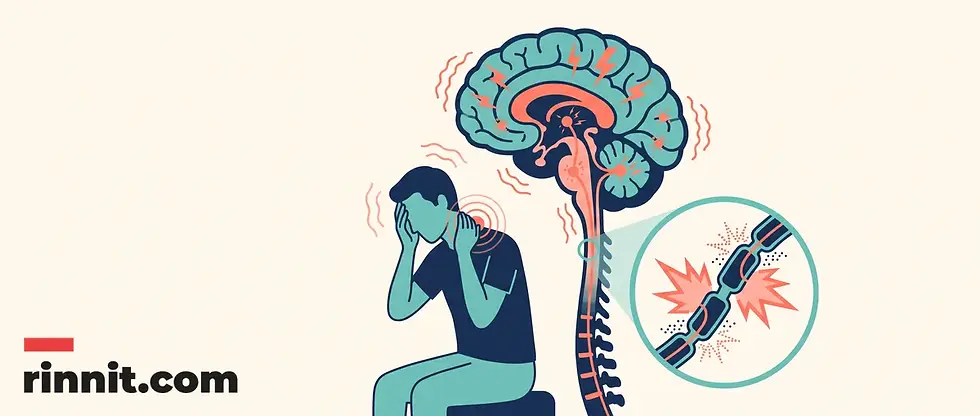
Central pain syndrome is a chronic neurological condition that changes how your body experiences pain. [4] It develops when there is damage to the brain or spinal cord, or when long-lasting chronic pain alters the way the nervous system processes pain signals. [4]
In the injury-driven form, damaged brain or nerve cells malfunction and transmit a continuous stream of pain signals. [4] In the chronic-pain-driven form, nerve cells become overly sensitive. They may fire pain signals by mistake, or interpret signals that aren't painful as painful. [4]
The condition is famously difficult to treat. Ordinary pain relievers, and even stronger opioid medications, commonly fail to bring relief. [4] However, newer treatment methods and medication combinations have been shown to help many people manage the condition.
How Central Pain Syndrome Feels
CPS pain is unlike the pain from a cut or a bruise. It arises without any physical cause in the area that hurts. [4] Understanding its signature pattern helps people recognize it and describe it accurately to their healthcare provider.

Pain Feature | What It Looks Like in CPS |
Location | Depends on which part of the nervous system is affected; may be one-sided or widespread |
Timing | Usually constant, though it can come and go; occurs without anything causing it |
Intensity | Typically moderate to severe, sometimes fluctuating |
Triggers | May worsen with cold, stress, being upset, or being startled; activity can also affect it |
Onset | Can begin weeks, months, or even years after the original illness or injury |
Pain threshold | Often a higher threshold for pain caused by outside sources |
The pain itself is usually described in consistent ways. People with CPS most often report burning sensations, sharp or stabbing pain, severe itching, painful numbness or tingling, deep tissue or muscle pain, aching or intense pressure, and cutting or slicing feelings. [4]
Changes in the sense of touch frequently accompany the pain. Numbness, tingling, and a "pins and needles" sensation known as paresthesia are common. [4]
How Central Pain Syndrome Affects the Body
Your body treats pain as a high priority because pain is meant to protect you from further damage. Think of the nervous system as a building's fire alarm: smoke detectors (nerve endings) sense chemical warning markers released by damaged cells and send high-priority signals to the brain through the spinal cord, which then orders protective action.
Two kinds of pain exist. Acute pain is the body's reaction to illness or injury and resolves within about three months as healing occurs. [4] Chronic pain develops when acute pain persists longer than three to six months. [4]
When the central nervous system is damaged, this alarm system breaks down in two main ways.
Damage-driven pain. After brain damage, malfunctioning brain cells send pain signals as though something were actively hurting. After spinal cord damage, affected nerve cells misfire and transmit pain signals as if a real injury were happening, even though no injury exists. [4] The signals are false, but the pain feels completely real.
Sensitivity-driven pain. Living with chronic pain forces the nervous system to handle high-priority alarm signals far more often and for far longer than normal. Over time, the system becomes oversensitive and processes pain abnormally. [4] This produces two named phenomena.
Term | Meaning | What Happens |
Hyperalgesia | "Too much pain" (Greek) | The nervous system amplifies pain signals, making pain feel far worse than it should |
Allodynia | "Other pain" (Greek) | Non-pain signals are disrupted and interpreted as pain, such as feeling pain from simply touching a piece of cloth |
Because pain activates other body systems, including hormones, immunity, and self-repair processes, chronic pain and CPS can also disturb those systems. This can affect the endocrine system and contribute to adrenal disorders. [4]
Conditions That Cause Central Pain Syndrome
CPS arises through two pathways: direct injury to the brain or spinal cord, and chronic pain conditions that rewire how the nervous system works.
Damage to the Brain or Spinal Cord
Many conditions can damage the central nervous system. The most common contributors include the following.
Category | Examples |
Tumors | Brain cancer or benign (noncancerous) brain tumors |
Surgery | Brain surgery or spinal surgery |
Trauma | Concussions or traumatic brain injuries |
Degenerative and inflammatory disease | Multiple sclerosis, Parkinson's disease |
Seizure disorders | Epilepsy and nonepileptic seizures |
Infection | Infections affecting the nervous system |
Structural injury | Spinal cord injuries |
Vascular | Stroke |
Chronic Pain Conditions
Any condition that causes chronic pain can also set the stage for CPS, because prolonged pain reshapes how the nervous system processes signals. Linked conditions include arthritis and osteoarthritis, back pain, cancer, chronic fatigue syndrome (myalgic encephalomyelitis), chronic pelvic pain, complex regional pain syndrome (CRPS), fibromyalgia, inflammatory conditions such as rheumatoid arthritis, psoriatic arthritis, lupus, and Sjogren's syndrome, irritable bowel syndrome, joint pain, migraines, peripheral neuropathy (nerve damage in the arms or legs, most often caused by Type 2 diabetes), postherpetic neuralgia (nerve pain left over from shingles), and temporomandibular joint (TMJ) disorders. [4]
Fibromyalgia deserves special mention. CPS and fibromyalgia are not the same condition, but they are often connected. Fibromyalgia is a chronic pain condition affecting the joints and muscles, and people with fibromyalgia are far more likely to develop CPS because chronic pain alters how the nervous system works. [4]
Genetics
Family history matters. People with a first-degree relative (a biological parent, sibling, or child) who has central pain syndrome face a risk of developing pain problems that is eight times higher than people without a family history. [4] Researchers have not yet identified the specific genetic mutations behind this increased risk. [4]
Who Does Central Pain Syndrome Affect?
CPS can affect anyone with damage to the central nervous system or anyone living with chronic pain. It is substantially more likely in people with certain neurological conditions.
Condition | Estimated Share of People Who Also Have CPS |
Stroke | 8% to 10% |
Spinal cord injuries | 20% to 40% |
Multiple sclerosis | About 30% |
In total, central pain syndrome affects as many as 7 million people around the world. [4]
Other Symptoms That Come With CPS
Living with chronic pain takes a heavy toll on mental health and daily well-being. People with pain-related conditions like CPS often also experience anxiety, depression (frequently accompanied by suicidal thoughts or behaviors), memory loss or brain fog, fatigue or exhaustion, and trouble sleeping. [4]
How Is Central Pain Syndrome Diagnosed?
Diagnosing CPS is often tricky because pain feels different from person to person. A healthcare provider starts by gathering a detailed pain history.
History Element | What the Provider Asks About |
Location | Where does it hurt? Is it in one place or on one side only? |
Description | What does the pain feel like? |
Timing | When did it start? Does it occur at certain times of day or in certain circumstances? |
Environmental effects | Does temperature, loud noise, stress, or anxiety change the pain? |
Medical history | Are there injuries, problems, or conditions that could contribute? |
Other symptoms | Any additional symptoms, swelling, or tenderness around the painful area? |
Providers may also order diagnostic, imaging, or lab tests. Lab work most often looks for an undiagnosed inflammatory or immune disorder that could explain the pain. [4] When CPS stems from brain or spinal cord injury, the following tests frequently help pinpoint the problem.
Test | What It Does |
EEG (electroencephalography) | Records electrical activity in the brain |
MRI (magnetic resonance imaging) | Produces detailed pictures of brain and spinal cord structures |
fMRI (functional MRI) | Detects brain activity, including whether different brain areas work together |
MEG (magnetoencephalography) | Maps brain activity by measuring magnetic fields produced by neurons |
PET scan (positron emission tomography) | Shows metabolic activity in brain tissue |
How Is Central Pain Syndrome Treated?
There is currently no cure for central pain syndrome. [4] When an underlying, treatable condition is driving CPS, treating or curing that condition can improve the pain. [4]

Medications
Most treatment plans begin with pain medications ranging from nonsteroidal anti-inflammatory drugs (NSAIDs) such as aspirin or ibuprofen up to controlled-substance opioids. But these common painkillers, even strong opioids, often fail to treat CPS effectively. [4] When they don't work, providers may turn to one or more of the following medications, alone or in combination.
Medication Type | Examples |
Antiseizure medications | Gabapentin, lamotrigine |
SNRIs (serotonin-norepinephrine reuptake inhibitors, a class of antidepressant) | Duloxetine, venlafaxine |
Tricyclic antidepressants (TCAs) | Amitriptyline, nortriptyline |
Surface anesthetics (topical creams or patches) | Lidocaine |
Some experimental treatments involve drugs best known for recreational use that are now the focus of active research, including medical cannabis and ketamine injections. [4] These may one day become part of standard CPS treatment.
Nonmedication Methods
A wide range of nonmedication approaches, some approved and some experimental, may also help with CPS. These include acupuncture, deep brain stimulation (DBS), frequency-specific microcurrent (FSM), transcranial magnetic stimulation (TMS), and transcutaneous electrical nerve stimulation (TENS). [4]
Nonmedication Treatment | How It Works |
Acupuncture | Fine needles stimulate specific points to modulate pain signaling |
Deep brain stimulation (DBS) | Implanted electrodes deliver electrical impulses to pain-processing brain regions |
Frequency-specific microcurrent (FSM) | Low-level electrical currents applied at specific frequencies |
Transcranial magnetic stimulation (TMS) | Magnetic pulses stimulate nerve cells in the brain noninvasively |
Transcutaneous electrical nerve stimulation (TENS) | A small device sends mild electrical currents through skin electrodes to disrupt pain signals |
Other Treatments
Because mental health conditions are so common with pain conditions, treatment plans for CPS often include mental health support. Cognitive behavioral therapy (CBT) helps people learn and develop coping techniques for the anxiety and depression that frequently accompany CPS. [4] Physical therapy helps people adapt to their condition while improving muscle strength, flexibility, and coordination. [4]
Complications and side effects vary widely depending on which treatments are used, so your healthcare provider is the best source for what to expect with your specific plan.
What Is the Outlook?
Central pain syndrome can have major effects on quality of life, especially the ability to do the things you enjoy. The outlook depends strongly on whether an underlying cause exists and whether that cause is curable. [4] When the underlying cause can be treated or cured, some effects of CPS may improve or even reverse. [4] When the cause is not curable, the goal shifts to treating symptoms and preventing them from worsening.
Early diagnosis and treatment matter. Mental health care is equally important, because people with this condition face a higher risk of developing anxiety and depression, and a higher risk of dying by suicide. [4]
CPS is usually a permanent condition, though in some cases the effects are reversible depending on why it developed and how quickly treatment began. [4]
Can Central Pain Syndrome Be Prevented?
CPS develops unpredictably based on several factors, most of which are beyond your control, so the condition is not preventable in a strict sense. When CPS follows brain or spinal cord injury, there is little you can do to reduce risk, though wearing safety equipment to avoid head and spinal injuries lowers the risk slightly by preventing injuries that could lead to CPS. [4]
The most effective step is prevention through early action. When CPS relates to chronic pain, getting treatment for pain-related conditions sooner rather than later, and following your provider's guidance, reduces the risk of the chronic pain that can lead to CPS in the future. [4]
Living With Central Pain Syndrome
Self-care for CPS centers on three habits: taking medications exactly as prescribed, avoiding activities and situations that make the pain worse, and never neglecting your mental health. [4]
Because CPS cannot be self-diagnosed, you should not try to treat it on your own. If you suspect you have the condition, see a healthcare provider for diagnosis and treatment guidance. Follow your provider's recommended schedule of regular appointments so treatments can be adjusted as needed, and report changes in symptoms, especially changes that happen quickly or disrupt your routine.
Seek emergency medical care if symptoms change or become especially severe in a short period, particularly if any stroke symptoms appear. [4]
Conclusion
Central pain syndrome is a serious condition in which the nervous system itself becomes the source of constant pain, whether through direct damage to the brain or spinal cord or through the rewiring effects of long-term chronic pain. It is often resistant to conventional painkillers, but a growing toolkit of antiseizure medications, antidepressants, topical anesthetics, electrical and magnetic stimulation therapies, physical therapy, and cognitive behavioral therapy gives many people real relief. Early diagnosis, consistent treatment, and strong mental health support offer the best path to a better quality of life.
Want to explain health topics like this one visually? If you or a loved one is navigating chronic pain, clear visual explanations can make conversations with care teams far easier. Rinnit's infographic templates help you create custom visuals that simplify complex health topics.
Frequently Asked Questions
What is central pain syndrome in simple terms?
Central pain syndrome is ongoing pain caused by a malfunction in the central nervous system. The brain or spinal cord sends pain signals even though nothing is physically hurting the body. [4]
Is central pain syndrome the same as fibromyalgia?
No. Fibromyalgia is a chronic pain condition affecting the joints and muscles, while CPS is a neurological condition where the nervous system misfires pain signals. They are often connected, because people with fibromyalgia are far more likely to develop CPS. [4]
What does central pain syndrome feel like?
People commonly describe burning, sharp or stabbing sensations, severe itching, painful numbness or tingling, deep tissue or muscle pain, aching or intense pressure, and cutting or slicing feelings. [4]
Is the pain of CPS constant?
The pain is usually constant, though in some people it comes and goes. Importantly, it happens without anything occurring in the body that would normally cause the pain. [4]
Why do painkillers often fail for central pain syndrome?
CPS pain comes from malfunctioning nerve signals rather than from tissue damage, so typical pain relievers, including strong opioids, commonly fail to bring relief. [4] Medications that calm nerve signaling, such as antiseizure drugs, tend to work better.
What is hyperalgesia?
Hyperalgesia means "too much pain" in Greek. It occurs when the nervous system amplifies pain signals, making pain feel far worse than it should. [4]
What is allodynia?
Allodynia means "other pain" in Greek. It happens when non-pain signals are misinterpreted, causing pain from things that should not hurt, such as the light touch of a piece of cloth. [4]
How many people have central pain syndrome?
As many as 7 million people worldwide live with central pain syndrome. [4]
How common is CPS after a stroke?
Between 8% and 10% of stroke survivors develop central pain syndrome. [4]
How common is CPS after a spinal cord injury?
Roughly 20% to 40% of people with spinal cord injuries develop CPS. [4]
What share of people with multiple sclerosis develop CPS?
About 30% of people with multiple sclerosis also have central pain syndrome. [4]
Can central pain syndrome run in families?
Family history raises the risk. People with a first-degree relative (parent, sibling, or child) who has CPS face an eight-times-higher risk of developing pain problems, though the specific genetic mutations have not yet been identified. [4]
What injuries can cause central pain syndrome?
Brain tumors (cancerous or benign), brain surgery, spinal surgery, concussions, traumatic brain injuries, infections, spinal cord injuries, and stroke can all damage the central nervous system and lead to CPS. [4]
Which diseases can cause CPS?
Multiple sclerosis, Parkinson's disease, epilepsy and nonepileptic seizures, and degenerative or inflammatory conditions affecting the brain and spinal cord are recognized contributors. [4]
Can chronic pain conditions cause CPS?
Yes. Any condition that produces long-lasting chronic pain can rewire the nervous system. Linked conditions include osteoarthritis, back pain, cancer, chronic fatigue syndrome, chronic pelvic pain, CRPS, fibromyalgia, rheumatoid arthritis, psoriatic arthritis, lupus, Sjogren's syndrome, irritable bowel syndrome, joint pain, migraines, peripheral neuropathy, postherpetic neuralgia, and TMJ disorders. [4]
What is peripheral neuropathy's role in CPS?
Peripheral neuropathy is nerve damage in the arms or legs, most commonly caused by Type 2 diabetes. [4] As a chronic pain condition, it can alter nervous system processing and contribute to CPS.
How is postherpetic neuralgia related to CPS?
Postherpetic neuralgia is lingering nerve pain after shingles. [4] As a chronic pain condition, it can sensitize the nervous system and contribute to central pain syndrome.
Can brain tumors cause central pain syndrome?
Yes. Both cancerous brain tumors and benign (noncancerous) tumors that damage brain tissue can disrupt pain processing and produce CPS. [4]
Does numbness belong to central pain syndrome?
Yes. Changes in the sense of touch are common, including numbness, tingling, and a pins-and-needles feeling called paresthesia. [4]
When does CPS pain start after an injury?
CPS pain can begin within weeks, months, or even years of the original illness, injury, or related event [4], which makes the link easy to miss.
What makes CPS pain worse?
Pain may intensify when you are cold, upset, stressed, or startled. Your level of physical activity can also affect the pain. [4]
Why do people with CPS have a higher pain threshold for outside pain?
People with CPS often show a higher threshold when it comes to pain that comes from an external cause [4], as their nervous system processes pain signals differently.
Does CPS affect sleep?
Trouble sleeping is a common companion symptom, along with fatigue, exhaustion, memory loss, and brain fog. [4]
Is central pain syndrome linked to depression?
Yes. People with CPS often also experience anxiety and depression, and the depression may include suicidal thoughts or behaviors. [4] Seeking mental health support is an essential part of care.
Can CPS affect memory?
Memory loss and brain fog are common associated symptoms, along with fatigue and sleep problems. [4]
How is central pain syndrome diagnosed?
There is no single test. Providers take a detailed history covering pain location, description, timing, environmental triggers, medical history, and other symptoms, and may order lab tests to rule out inflammatory or immune disorders. [4]
What tests help confirm CPS from brain or spinal cord damage?
EEG (electroencephalography), MRI, functional MRI (fMRI), magnetoencephalography (MEG), and PET scans [4] can help pinpoint the underlying damage.
What is a functional MRI and how does it help?
Functional MRI detects brain activity and shows whether different areas of the brain are working together [4], which can reveal abnormal pain-processing patterns.
Are there blood tests for central pain syndrome?
Lab tests may be ordered to check for an undiagnosed inflammatory or immune disorder that could explain the pain pattern [4], though no blood test directly diagnoses CPS.
What medications treat central pain syndrome?
When NSAIDs and opioids fail, providers often use antiseizure medications (gabapentin, lamotrigine), SNRIs such as duloxetine and venlafaxine, tricyclic antidepressants such as amitriptyline and nortriptyline, and topical anesthetics like lidocaine creams or patches. [4]
Is ketamine used for central pain syndrome?
Ketamine injections are an experimental treatment under active research for CPS and may one day become part of standard care. [4]
Can medical cannabis help central pain syndrome?
Medical marijuana is another experimental option being studied for CPS. It is not yet standard treatment. [4]
What is TENS and how does it help CPS?
Transcutaneous electrical nerve stimulation (TENS) uses a small device to send mild electrical currents through skin electrodes, which can disrupt pain signals. Other stimulation options include TMS, FSM, and deep brain stimulation. [4]
Does cognitive behavioral therapy help with CPS?
Yes. CBT helps people develop coping techniques for the anxiety, depression, and distress that frequently accompany chronic pain conditions like CPS. [4]
Is there a cure for central pain syndrome?
No cure currently exists. If an underlying cause is treatable, treating it can improve or sometimes reverse CPS effects. Otherwise, treatment focuses on symptom control and preventing worsening. [4]
Is central pain syndrome permanent?
CPS is usually a permanent condition, though in some cases the effects are reversible depending on the cause and how quickly treatment begins. [4]
Can central pain syndrome be prevented?
Not directly. The safest practical steps are wearing protective gear to avoid head and spinal injuries and treating pain conditions early before they become chronic. [4]
Should I see a doctor for suspected central pain syndrome?
Yes. CPS cannot be self-diagnosed, and self-treatment attempts are not advisable. [4] A provider can evaluate the pattern of symptoms and arrange appropriate testing and treatment.
When should I go to the ER with CPS?
Seek emergency care if symptoms change or become severely worse in a short period, especially if any stroke symptoms appear. [4]
Can CPS damage the endocrine system?
Chronic pain activates hormone, immune, and self-repair systems, and prolonged disruption can affect the endocrine system and contribute to adrenal disorders. [4]
What role does physical therapy play in CPS?
Physical therapy helps you adapt to the condition while improving muscle strength, flexibility, and coordination. [4]
Why is early treatment important for central pain syndrome?
Early diagnosis and treatment improve the odds of controlling symptoms and preventing them from worsening, and they reduce the mental health burden that builds with prolonged unmanaged pain.
References
Liampas A, Velidakis N, Georgiou T, et al. Prevalence and management challenges in central post-stroke neuropathic pain: a systematic review and meta-analysis. Adv Ther. 2020;37(7):3278-3291. PMID: 32451951. https://doi.org/10.1007/s12325-020-01388-w
Finnerup NB, Attal N, Haroutounian S, et al. Pharmacotherapy for neuropathic pain in adults: a systematic review and meta-analysis. Lancet Neurol. 2015;14(2):162-173. PMID: 25575710. https://doi.org/10.1016/S1474-4422(14)70251-0
Klit H, Finnerup NB, Jensen TS. Central post-stroke pain: clinical characteristics, pathophysiology, and management. Lancet Neurol. 2009;8(9):857-868. PMID: 19679277. https://doi.org/10.1016/S1474-4422(09)70176-0
Cleveland Clinic. Central pain syndrome (CPS): symptoms & treatment. Cleveland Clinic Health Library. Last updated June 30, 2023. https://my.clevelandclinic.org/health/diseases/6012-central-pain-syndrome
Medical disclaimer
This content is for informational purposes only and is not a substitute for professional medical advice, diagnosis, or treatment. Always seek the advice of your physician or other qualified health provider with any questions you may have regarding a medical condition.



Comments