What Is Cardiovascular-Kidney-Metabolic (CKM) Syndrome? Symptoms, Stages, and Treatment

Updated: 2 days ago
Medically reviewed by Dr. Baraa Alnahhal, MD · Last reviewed: October 17, 2026
Quick Answer: What is cardiovascular-kidney-metabolic (CKM) syndrome?
Cardiovascular-kidney-metabolic (CKM) syndrome is a newly named condition linking four related issues: cardiovascular disease, kidney disease, Type 2 diabetes and obesity. [1] [2] Each can lead to or worsen the others, [2] and people often have more than one. [6] Early stages may need only lifestyle changes, while advanced stages may need heart procedures, dialysis or bariatric surgery. [6]
Key takeaways
CKM syndrome is a complex disorder that affects most of your major organs, including your heart, kidneys, brain, and liver. [1] [6]
It is made up of four related conditions: cardiovascular disease, kidney disease, Type 2 diabetes, and obesity [1] — and each can lead to or worsen the others. [2]
1 in 3 American adults has at least three of the risk factors for CKM syndrome. [1] [2]
Symptoms can include chest pain, shortness of breath, fainting, swelling, leg pain when walking, tiredness, appetite changes, frequent urination, dry skin, sleep apnea, and gout. [6]
Providers stage the condition from 0 to 4, with 4 being the highest-risk stage for cardiovascular disease [2] — and you can change your stage with treatment. [6]
Complications include heart failure, arrhythmias, heart attack, and stroke [6] — call 911 for signs of a heart attack, stroke, or hyperosmolar hyperglycemic state (HHS). [6]
What the research says
Medicines that work across several CKM conditions lower heart failure risk. A systematic review and meta-analysis of 15 large trials (100,952 participants) found that, compared with placebo, SGLT2 inhibitors reduced the risk of a first hospitalization for heart failure by 29% in people with heart failure (hazard ratio 0.71, 95% CI 0.67–0.77), 28% in type 2 diabetes (0.72, 0.67–0.77), 32% in chronic kidney disease (0.68, 0.61–0.77), and 28% in atherosclerotic cardiovascular disease (0.72, 0.66–0.79). Cardiovascular death was also lower, by 15% in type 2 diabetes (0.85, 0.79–0.91) and 11% in chronic kidney disease (0.89, 0.82–0.96) (Usman et al., Lancet Diabetes Endocrinol, 2024; https://doi.org/10.1016/S2213-8587(24)00102-5) [4].
Social disadvantage is linked to more advanced CKM stages. In a cross-sectional analysis of 18,373 US adults aged 20 to 79 from national survey data (1999–2018), people with the lowest social-risk-profile scores — meaning the fewest favorable conditions such as employment, income, food security, education, insurance, home ownership, and marriage — had higher odds than those with the highest scores of being in CKM stage 1 (odds ratio 1.34, 95% CI 1.06–1.70), stage 2 (2.03, 1.59–2.58), stage 3 (5.28, 3.29–8.47), and stage 4 (5.97, 4.20–8.49), independent of demographic and lifestyle factors. This design shows an association, not cause (Li et al., J Am Heart Assoc, 2024; https://doi.org/10.1161/JAHA.124.034996) [5].
What Is Cardiovascular-Kidney-Metabolic (CKM) Syndrome?
CKM syndrome (cardiovascular-kidney-metabolic syndrome) is a newly named medical condition that affects most of your major organs, including your heart, kidneys, brain, and liver. [1] [6] This complex disorder consists of four related medical issues and notes the links between them. [6] These conditions are:
The letters CKM stand for cardiovascular, kidney, and metabolic. Metabolic means getting energy from food. [6] Obesity and Type 2 diabetes are metabolic conditions. [2] Each of the four conditions in CKM syndrome can lead to or worsen one another. [2]
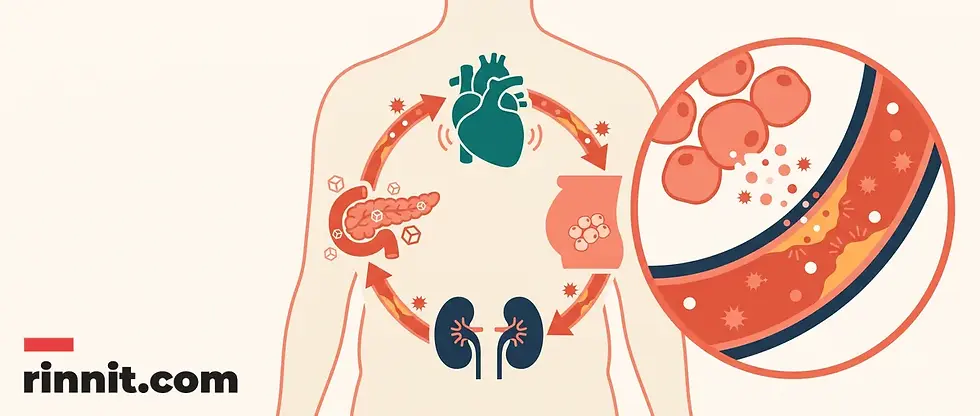
People often have more than one of these conditions at a time. This isn't surprising because these conditions share a connection through your blood. [6] After you digest what you eat or drink, nutrients and energy travel through your blood to your body's cells. Your heart and blood vessels circulate your blood through your body, and your kidneys filter wastes out of your blood. For good health, your body needs all of these systems to work well. Having more than one of the listed conditions gives people with CKM syndrome risk factors for the others. [6]
How Common Is CKM Syndrome?
As a newly identified condition, CKM syndrome doesn't have a history of data like conditions researchers found years ago. [6] However, 1 in 3 American adults has at least three of the risk factors for cardiovascular-kidney-metabolic syndrome. [1] [2] [6]
Symptoms of CKM Syndrome
CKM syndrome symptoms may include any of the issues you get with the four conditions that make up cardiovascular-kidney-metabolic syndrome. [6]

Symptom | What You May Notice |
Chest pain | Pain or pressure in the chest |
Shortness of breath | Difficulty catching your breath |
Syncope (passing out) | Fainting or loss of consciousness |
Swelling | In your legs, feet, hands, or ankles |
Pain in your legs while walking | Discomfort or cramping triggered by walking |
Tiredness | Ongoing low energy and exhaustion |
Loss of appetite or an increase in appetite | Appetite changes in either direction |
Need to pee more often | More frequent urination |
Dry skin | Skin that stays dry and irritated |
Sleep apnea | Disrupted breathing during sleep |
Gout | Painful joint inflammation, often in the toe |
Causes of CKM Syndrome
Extra adipose tissue (body fat) or body fat that's abnormal causes CKM syndrome. [6] This type of tissue releases substances that inflame and damage tissues in your heart, kidneys, and arteries. [6] Inflammation makes insulin less effective. It also encourages plaque and kidney damage to develop. [6]
Cause | How It Works |
Extra or abnormal body fat | Releases substances that inflame and damage heart, kidney, and artery tissues |
Inflammation | Makes insulin less effective and encourages plaque and kidney damage |
What Are the Risk Factors for CKM Syndrome?
Risk Factor | Notes |
Obesity | Excess body weight raises risk of all four linked conditions |
Extra body fat around your waist | Abdominal fat is especially harmful |
High cholesterol | Drives plaque buildup in arteries |
High blood pressure | Strains the heart and damages blood vessels |
Kidney disease | Connected to heart and metabolic problems |
Diabetes | Damages blood vessels and nerves over time |
Metabolic syndrome | A cluster of conditions tied to metabolic problems |
Complications
Complications of CKM syndrome include heart failure, arrhythmias (abnormal heart rhythms), heart attack, and stroke. [6]
Complication | Description |
Heart failure | The heart cannot pump blood effectively |
Arrhythmias | Abnormal heart rhythms |
Heart attack | Blockage of blood flow to the heart muscle |
Stroke | Interruption of blood flow to the brain |
How Is CKM Syndrome Diagnosed?
Healthcare providers can use multiple tests to diagnose CKM syndrome. [6] Providers can also screen children for these issues to give them an early start at preventing cardiovascular-kidney-metabolic syndrome. [1] [2] [6] After test results confirm a diagnosis, providers stage the condition from 0 to 4, with 4 being the highest-risk stage for cardiovascular disease. [2]
Diagnostic Test | What It Checks |
Blood pressure check | Measures the pressure in your arteries |
Lipid panel | Measures cholesterol and fat levels in your blood |
Blood sugar check | Measures glucose levels in your blood |
Kidney function check | Measures how well your kidneys are filtering wastes |
Coronary artery calcium measurement | Detects calcium buildup in the heart's arteries |
BMI (body mass index) measurement | Estimates body fat based on height and weight |
CKM Syndrome Stages
Stage | What It Means |
Stage 0 | You have no risk factors |
Stage 1 | You have extra body fat, especially in your belly |
Stage 2 | You have Type 2 diabetes, high triglycerides, high blood pressure, or kidney disease |
Stage 3 | You have early cardiovascular disease (but no symptoms) or a high risk of it |
Stage 4 | You have cardiovascular disease (with symptoms), extra body fat, and risk factors for metabolic conditions; you may or may not have kidney failure |
You can change the stage you're in by making changes to improve your health. [6]
Treatment for CKM Syndrome
Treatments for cardiovascular-kidney-metabolic syndrome vary by which of the related conditions you have. [6] In treating CKM syndrome, healthcare providers can tailor a plan just for you. With multiple organs involved in CKM syndrome, your best bet is a treatment plan with input from several providers. [6]

Treatment by Stage
Stage | Typical Treatment Approach |
Early stage | Lifestyle changes, like getting more physical activity |
Middle stage | Medicines to manage blood pressure, cholesterol, and blood sugar; appetite-decreasing medicine for obesity |
Advanced stage | Stents, cardioversion or ablation, heart surgery, dialysis, or bariatric surgery |
Advanced-Stage Treatment Options
Treatment | What It Involves |
Stents | Hold blocked arteries open for blood flow |
Cardioversion | A procedure that resets an abnormal heart rhythm |
Ablation | A procedure that stops abnormal heart tissue from causing irregular rhythms |
Open or minimally invasive heart surgery | Surgery to treat the heart through large or small incisions |
Kidney dialysis | A treatment that filters your blood when kidneys fail |
Weight loss (bariatric) surgery | Surgery that helps reduce body weight |
Complications and Side Effects of Treatments
Lifestyle changes don't have any side effects, but many medications do. [6] Talk to your provider if you have side effects that bother you. Surgeries and dialysis can put you at risk for infections and blood clots. [6] Ask your provider about possible complications for the procedure you're having.
Recovery Time
If you have a procedure or surgery, it can take a week or several weeks to recover. This depends on the kind of surgery you have, other conditions you have, and other factors. [6]
Outlook and Prognosis
With CKM syndrome, you can expect to have symptoms of the specific conditions involved. But having more than one condition can complicate your healthcare. Researchers are hoping for a future where everyone gets holistic treatment for CKM syndrome instead of treatment for one body system at a time. [6] If you're seeing multiple providers and you're getting conflicting advice, speak up and ask for clear direction.
Your outlook for CKM syndrome depends on how well you and your healthcare team can manage your conditions. [6] You have the power to change your stage of cardiovascular-kidney-metabolic syndrome by getting the treatments your provider recommends.
Prevention
Some people can prevent CKM syndrome with a healthy lifestyle. For others, a healthy lifestyle may only slow the progression of CKM syndrome. [6] Based on your family history, a healthcare provider can help you identify areas where you could have risks for cardiovascular-kidney-metabolic syndrome. [6] They can work with you on a plan to be at your healthiest.
Prevention Step | Details |
Eat healthy foods | For example, a Mediterranean-style eating pattern |
Get enough sleep | Supports healthy metabolism and blood pressure |
Avoid tobacco products | Protects your heart, vessels, and kidneys |
Manage blood pressure, blood sugar, and cholesterol | Keeps the four linked conditions in check |
Get regular physical activity | Aim for 30 minutes a day |
Stay at a healthy weight | Reduces excess and abnormal body fat |
Living With CKM Syndrome
You can take care of yourself by keeping healthy habits and following your provider's advice.
Self-Care Habit | Details |
Eat nutritious foods | Supports all four organ systems |
Get physical activity | Keeps your heart and metabolism strong |
Check your blood sugar regularly | Important if you have Type 2 diabetes |
Check your blood pressure regularly | Use a home monitor |
Take medications for your conditions | Helps manage each linked condition |
When to See Your Healthcare Provider
Keeping appointments with your providers is key to managing CKM syndrome. [6] Seeing providers regularly allows them to monitor your risk factors or symptoms. It also helps them ensure that you're managing your conditions well and taking the right amounts of medications. They can catch developing issues before they get worse and become harder to treat. [6]
When to Go to the ER
Call 911 or your local emergency services number if you have life-threatening complications from CKM syndrome. These may include a heart attack, stroke, or hyperosmolar hyperglycemic state (HHS). [6]
Questions to Ask Your Doctor
Question | Why It Matters |
What's the most important thing I can do to prevent CKM syndrome or change my stage? | Focuses your effort where it matters most |
Should I be taking medicines to help me reduce my risk of CKM syndrome? | Ensures you're on the right prevention plan |
How often do I need testing to check my progress in meeting my health goals? | Keeps your care on track |
Should my family get testing for the conditions I have? | Protects relatives who share your risk factors |
Conclusion
Cardiovascular-kidney-metabolic (CKM) syndrome is a newly named medical condition that affects most of your major organs, including your heart, kidneys, brain, and liver. The letters CKM stand for cardiovascular, kidney, and metabolic. The syndrome consists of four related medical issues — cardiovascular (heart and blood vessel) disease, kidney disease, Type 2 diabetes, and obesity — and it notes the links between them. Obesity and Type 2 diabetes are metabolic conditions, since metabolic means getting energy from food. Each of the four conditions can lead to or worsen one another, and people often have more than one at a time because the conditions share a connection through your blood.
The condition is common: 1 in 3 American adults has at least three of the risk factors. Symptoms may include chest pain, shortness of breath, passing out, swelling in the legs, feet, hands or ankles, leg pain while walking, tiredness, appetite changes, frequent urination, dry skin, sleep apnea, and gout. The cause is extra or abnormal body fat, which releases substances that inflame and damage tissues in your heart, kidneys, and arteries — and inflammation makes insulin less effective while encouraging plaque and kidney damage. Risk factors include obesity, extra belly fat, high cholesterol, high blood pressure, kidney disease, diabetes, and metabolic syndrome. Complications include heart failure, arrhythmias, heart attack, and stroke.
Diagnosis uses multiple tests: blood pressure checks, lipid panels, blood sugar checks, kidney function tests, coronary artery calcium measurement, and BMI measurement. Providers can screen children for these issues for an early prevention start. Staging runs from 0 (no risk factors) to 4 (cardiovascular disease with symptoms, plus extra body fat and metabolic risk factors, with or without kidney failure) — and you can change your stage with treatment. Treatment ranges from lifestyle changes at an early stage, to blood pressure, cholesterol, blood sugar, and appetite medications at a middle stage, to stents, cardioversion, ablation, open or minimally invasive heart surgery, dialysis, and bariatric surgery at advanced stages. Lifestyle changes have no side effects, but many medications do, and surgeries and dialysis carry risks of infection and blood clots. Recovery from procedures or surgery takes a week to several weeks.
Some people can prevent CKM syndrome with a healthy lifestyle — healthy eating, enough sleep, avoiding tobacco, managing blood pressure, blood sugar and cholesterol, 30 minutes of daily activity, and a healthy weight — while for others lifestyle changes may only slow progression. Your outlook depends on how well you and your healthcare team manage your conditions, and keeping regular appointments helps providers catch developing issues early. Call 911 for life-threatening complications such as a heart attack, stroke, or hyperosmolar hyperglycemic state (HHS).
If you would like to turn your own health content into clear, shareable visuals like the ones in this guide, explore Rinnit's infographic templates to build patient-friendly graphics in minutes.
Frequently Asked Questions
What does CKM stand for?
CKM stands for cardiovascular, kidney, and metabolic. [6]
What is cardiovascular-kidney-metabolic (CKM) syndrome?
CKM syndrome is a newly named medical condition that affects most of your major organs, like your heart, kidneys, brain, and liver. This complex disorder consists of four related medical issues and notes the links between them. [6]
What are the four conditions in CKM syndrome?
The four conditions are cardiovascular (heart and blood vessel) disease, kidney disease, Type 2 diabetes, and obesity. [1] [2]
What does metabolic mean?
Metabolic means getting energy from food. Obesity and Type 2 diabetes are metabolic conditions. [6] [2]
How are the four conditions connected?
Each of the four conditions in CKM syndrome can lead to or worsen one another. [2] These conditions share a connection through your blood — your heart and blood vessels circulate blood through your body, and your kidneys filter wastes out of your blood. [6]
Why do people often have more than one condition at once?
After you digest what you eat or drink, nutrients and energy travel through your blood to your body's cells. Having more than one of the listed conditions gives people with CKM syndrome risk factors for the others. [6]
How common is CKM syndrome?
As a newly identified condition, CKM syndrome doesn't have a history of data like conditions researchers found years ago. However, 1 in 3 American adults has at least three of the risk factors for cardiovascular-kidney-metabolic syndrome. [1] [2] [6]
What are the symptoms of CKM syndrome?
CKM syndrome symptoms may include any of the issues you get with the four conditions that make up the syndrome, such as chest pain, shortness of breath, syncope (passing out), swelling in your legs, feet, hands or ankles, pain in your legs while walking, tiredness, loss of appetite or an increase in appetite, the need to pee more often, dry skin, sleep apnea, and gout. [6]
Does CKM syndrome cause chest pain?
Yes. Chest pain is one of the possible symptoms [6], coming from the cardiovascular conditions involved.
Does CKM syndrome cause shortness of breath?
Yes. Shortness of breath is one of the possible symptoms of the conditions involved. [6]
What is syncope?
Syncope means passing out, and it is one of the possible symptoms of CKM syndrome. [6]
Can CKM syndrome cause swelling?
Yes. Swelling in your legs, feet, hands, or ankles is a possible symptom. [6]
Can CKM syndrome cause leg pain while walking?
Yes. Pain in your legs while walking is one of the possible symptoms. [6]
Does CKM syndrome cause tiredness?
Yes. Tiredness is one of the possible symptoms. [6]
Can CKM syndrome change your appetite?
Yes. You may experience a loss of appetite or an increase in appetite. [6]
Can CKM syndrome make you pee more often?
Yes. The need to pee more often is one of the possible symptoms. [6]
Can CKM syndrome cause dry skin?
Yes. Dry skin is one of the possible symptoms. [6]
Is sleep apnea linked to CKM syndrome?
Yes. Sleep apnea is one of the possible symptoms of the conditions involved. [6]
Is gout linked to CKM syndrome?
Yes. Gout is one of the possible symptoms. [6]
What causes CKM syndrome?
Extra adipose tissue (body fat) or body fat that's abnormal causes CKM syndrome. [6]
What is adipose tissue?
Adipose tissue is body fat. [6]
How does body fat cause CKM syndrome?
Abnormal body fat releases substances that inflame and damage tissues in your heart, kidneys, and arteries. Inflammation makes insulin less effective and also encourages plaque and kidney damage to develop. [6]
What are the risk factors for CKM syndrome?
Risk factors include obesity, extra body fat around your waist, high cholesterol, high blood pressure, kidney disease, diabetes, and metabolic syndrome. [6]
Does belly fat raise my risk?
Yes. Extra body fat around your waist is a specific risk factor for CKM syndrome. [6]
What are the complications of CKM syndrome?
Complications include heart failure, arrhythmias (abnormal heart rhythms), heart attack, and stroke. [6]
How is CKM syndrome diagnosed?
Healthcare providers can use multiple tests to diagnose CKM syndrome, including checking your blood pressure, ordering a lipid panel, checking your blood sugar, checking your kidney function, measuring coronary artery calcium, and measuring BMI (body mass index). [6]
What does a lipid panel check?
A lipid panel measures the fat and cholesterol levels in your blood.
What is coronary artery calcium measurement?
Coronary artery calcium measurement measures the amount of calcium buildup in the arteries of your heart as a marker of cardiovascular risk.
Can children be screened for CKM syndrome?
Yes. Providers can screen children for these issues to give them an early start at preventing cardiovascular-kidney-metabolic syndrome. [1] [2] [6]
What are the CKM syndrome stages?
Providers choose from stages that progress from 0 to 4, with 4 being the highest-risk stage for cardiovascular disease. [2]
What is Stage 0 CKM syndrome?
At Stage 0, you have no risk factors. [6]
What is Stage 1 CKM syndrome?
At Stage 1, you have extra body fat, especially in your belly. [6]
What is Stage 2 CKM syndrome?
At Stage 2, you have Type 2 diabetes, high triglycerides, high blood pressure, or kidney disease. [6]
What is Stage 3 CKM syndrome?
At Stage 3, you have early cardiovascular disease (but no symptoms) or a high risk of it. [6]
What is Stage 4 CKM syndrome?
At Stage 4, you have cardiovascular disease (with symptoms), extra body fat, and risk factors for metabolic conditions. You may or may not have kidney failure. [6]
Can I change my CKM syndrome stage?
Yes. You can change the stage you're in by making changes to improve your health and by getting the treatments your provider recommends. [6]
How is CKM syndrome treated?
Treatments vary by which of the related conditions you have, and providers can tailor a plan just for you. With multiple organs involved, your best bet is a treatment plan with input from several providers. [6]
What is treatment like at an early stage?
At an early stage, you may only need to make some lifestyle changes, like getting more physical activity. [6]
What is treatment like at a middle stage?
If you're at a middle stage, you may need to take medicines to manage blood pressure, cholesterol, and blood sugar. People who have obesity may need medicine to decrease their appetite. Your provider may need to adjust how much of these medicines you take down the road. [6]
What treatments are used at advanced stages?
At more advanced stages, you may need stents to hold blocked arteries open, heart procedures like cardioversion or ablation, open or minimally invasive heart surgery, kidney dialysis, or weight loss (bariatric) surgery. [6]
What do stents do?
Stents hold blocked arteries open for blood flow. [6]
What are cardioversion and ablation?
Cardioversion and ablation are heart procedures that address abnormal heart rhythms.
What is bariatric surgery?
Weight loss (bariatric) surgery is an option for treating obesity in advanced CKM syndrome. [6]
Do the treatments have side effects?
Lifestyle changes don't have any side effects, but many medications do. Talk to your provider if you have side effects that bother you. Surgeries and dialysis can put you at risk for infections and blood clots. [6] Ask your provider about possible complications for the procedure you're having.
How long does recovery from treatment take?
If you have a procedure or surgery, it can take a week or several weeks to recover. This depends on the kind of surgery you have, other conditions you have, and other factors. [6]
What is the outlook for CKM syndrome?
Your outlook depends on how well you and your healthcare team can manage your conditions. [6] You have the power to change your stage of cardiovascular-kidney-metabolic syndrome by getting the treatments your provider recommends.
What should I expect living with CKM syndrome?
With CKM syndrome, you can expect to have symptoms of the specific conditions involved. But having more than one condition can complicate your healthcare. If you're seeing multiple providers and you're getting conflicting advice, speak up and ask for clear direction.
Can CKM syndrome be prevented?
Yes. Some people can prevent CKM syndrome with a healthy lifestyle. For others, a healthy lifestyle may only slow the progression of CKM syndrome. [6]
How can I lower my risk of CKM syndrome?
You can lower your risk by eating healthy foods, getting enough sleep, avoiding tobacco products, managing blood pressure, blood sugar and cholesterol levels, getting regular physical activity (30 minutes a day), and staying at a weight that's healthy for you. [6]
How much physical activity is recommended?
Getting regular physical activity of 30 minutes a day can help lower your risk. [6]
Can my provider help me identify my risk?
Yes. Based on your family history, a healthcare provider can help you identify areas where you could have risks for cardiovascular-kidney-metabolic syndrome [6] and work with you on a plan to be at your healthiest.
How do I take care of myself with CKM syndrome?
You can take care of yourself by eating nutritious foods, getting physical activity, checking your blood sugar regularly if you have Type 2 diabetes, checking your blood pressure regularly with a home monitor, and taking medications for the conditions you have. [6]
Why are regular appointments important?
Keeping appointments with your providers is key to managing CKM syndrome. Regular visits allow them to monitor your risk factors or symptoms, ensure you're managing your conditions well and taking the right amounts of medications, and catch developing issues before they get worse and become harder to treat. [6]
When should I go to the ER?
Call 911 or your local emergency services number if you have life-threatening complications from CKM syndrome. These may include a heart attack, stroke, or hyperosmolar hyperglycemic state (HHS). [6]
What is hyperosmolar hyperglycemic state (HHS)?
HHS is a life-threatening complication of high blood sugar that can occur with the conditions involved in CKM syndrome.
What questions should I ask my doctor?
Consider asking: What's the most important thing I can do to prevent CKM syndrome or change my stage? Should I be taking medicines to reduce my risk? How often do I need testing to check my progress toward my health goals? Should my family get testing for the conditions I have? [6]
Related Reading
What Is Cardiovascular Disease? Symptoms, Causes, and Prevention
Chronic Kidney Disease: What It Is, Its 5 Stages, Causes, and How It's Treated
Diabetes: Symptoms, Types, Causes, Diagnosis & Treatment — Complete Guide
Obesity: Symptoms, Causes, Complications and Treatment — A Complete Guide
High Blood Pressure: Silent Symptoms, Serious Risks, and Proven Ways to Lower It
References
American Heart Association. Heart disease risk, prevention and management redefined. AHA Newsroom. October 9, 2023. https://newsroom.heart.org/news/heart-disease-risk-prevention-and-management-redefined
American Kidney Fund. What you need to know about CKM syndrome. American Kidney Fund Blog. November 17, 2023. https://www.kidneyfund.org/article/what-you-need-know-about-ckm-syndrome
Ndumele CE, Neeland IJ, Tuttle KR, et al. A Synopsis of the Evidence for the Science and Clinical Management of Cardiovascular-Kidney-Metabolic (CKM) Syndrome: A Scientific Statement From the American Heart Association. Circulation. 2023;148(20):1636-1664. PMID: 37807920. https://doi.org/10.1161/CIR.0000000000001186
Usman MS, Bhatt DL, Hameed I, et al. Effect of SGLT2 inhibitors on heart failure outcomes and cardiovascular death across the cardiometabolic disease spectrum: a systematic review and meta-analysis. Lancet Diabetes Endocrinol. 2024;12(7):447-461. PMID: 38768620. https://doi.org/10.1016/S2213-8587(24)00102-5
Li J, Lei L, Wang W, et al. Social Risk Profile and Cardiovascular-Kidney-Metabolic Syndrome in US Adults. J Am Heart Assoc. 2024;13(16):e034996. PMID: 39136302. https://doi.org/10.1161/JAHA.124.034996
Cleveland Clinic. Cardiovascular-Kidney-Metabolic (CKM) Syndrome. Cleveland Clinic. Last updated January 2, 2024. https://my.clevelandclinic.org/health/diseases/cardiovascular-kidney-metabolic-syndrome
Medical disclaimer
This article is for informational purposes only and is not a substitute for professional medical advice, diagnosis, or treatment. Always seek the advice of a qualified healthcare provider with any questions about a medical condition. Never disregard professional medical advice or delay seeking it because of something you have read here. Call 911 or your local emergency services number if you experience life-threatening complications such as a heart attack, stroke, or hyperosmolar hyperglycemic state (HHS).



Comments