What Is Cardiorenal Syndrome? Heart-Kidney Connection, Types, and Treatment

Updated: 2 days ago
Medically reviewed by Dr. Baraa Alnahhal, MD · Last reviewed: October 17, 2026
Quick Answer: What is cardiorenal syndrome?
Cardiorenal syndrome is a disorder of the heart and kidneys in which a problem with one organ causes a problem in the other, either acute or chronic. [8] [10] Because the heart moves blood and the kidneys control salt and water, the body struggles to keep blood and fluid levels normal. Symptoms include shortness of breath, swelling, low urine output and fatigue.
Key takeaways
Cardiorenal syndrome is a disorder where an issue in your heart harms your kidneys, or the other way around, and it can happen suddenly or over a longer time period. [8] [10]
It is very common to have heart and kidney issues at the same time: kidney disease is seen in up to 6 out of 10 people with chronic heart failure. [14]
There are five types, classified by which organ is affected first and whether the problem is acute or chronic. [5] [9]
Symptoms include chronic pain, confusion, depression, fatigue, a feeling of your heart skipping a beat, low urine output, shortness of breath, and swelling of the legs and belly. [14]
No single "gold standard" test diagnoses it; providers combine a fluid assessment with blood tests, imaging, echocardiogram, catheterization, and urinalysis. [14]
Treatments range from medications to devices to transplants, but the prognosis is poor — your risk of death is higher than with a heart-only or kidney-only problem, so early treatment matters. [14]
What the research says
Kidney injury raises the odds of later kidney and heart problems. A systematic review and meta-analysis of 13 cohort studies found that patients who had acute kidney injury were more likely than those without it to develop chronic kidney disease (pooled adjusted hazard ratio 8.8, 95% CI 3.1–25.5) and end-stage kidney disease (3.1, 1.9–5.0), and were more likely to die (2.0, 1.3–3.1). The data were limited, but acute kidney injury was also independently associated with cardiovascular disease and congestive heart failure, which is the kidney-to-heart direction seen in the renocardiac types (Coca et al., Kidney Int, 2012; https://doi.org/10.1038/ki.2011.379) [11].
When diuretics fall short, ultrafiltration is a safe option, but it has not been shown to improve survival. A meta-analysis of 8 randomized trials (608 patients) in decompensated heart failure with cardiorenal syndrome found that ultrafiltration removed about 1.28 L more fluid and produced about 1.44 kg more weight loss than diuretics, without a significant difference in mortality (relative risk 0.90, 95% CI 0.61–1.33) or in worsening kidney function (RR 1.29, 95% CI 0.90–1.85) (Chen et al., Nephron, 2015; https://doi.org/10.1159/000371447) [12]. A later systematic review of 13 studies (1,100 patients) found fewer readmissions with ultrafiltration but no difference in 1-month mortality, and its authors called for larger prospective randomized trials (Guerrero Cervera et al., ESC Heart Fail, 2025; https://doi.org/10.1002/ehf2.15125) [13].
What Is Cardiorenal Syndrome?
Cardiorenal syndrome is a disorder of your heart and kidneys where an issue with one organ causes a problem in the other. [8] [10] These problems can be acute (happening now) or chronic (long-term). [3] [14]
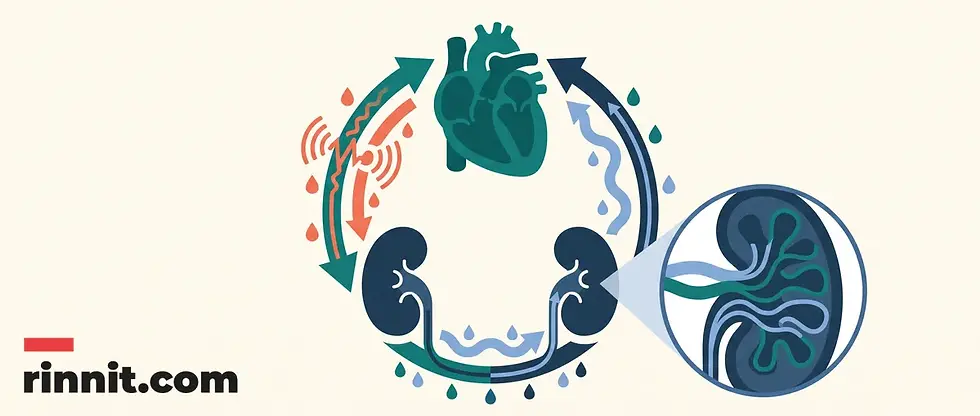
Your kidneys and heart both handle your blood. Your heart keeps blood moving through your body, and your kidneys clean waste from your blood. But your kidneys also control how much salt and water leave your body. This affects your blood pressure and how much fluid your body holds onto. [14]
Cardiorenal syndrome involves a complex process with many different factors affecting your kidneys and heart. [6] Some factors involved may include higher blood pressure in the large veins that bring blood to your heart, lower cardiac output or heart failure, and reduced blood flow to your kidneys, causing injury to them. [5] [7]
It's very common for people to have issues with their hearts and kidneys at the same time. [1] [14] About 64 million people in the world have heart failure, and healthcare providers have seen kidney disease in up to 6 out of 10 people with chronic heart failure. [14] Sometimes, it's difficult for providers to know which organ had issues first. [14] It's best to seek treatment early, as this syndrome doesn't have a good prognosis (outlook). [1] [14]
The Five Types of Cardiorenal Syndrome
When healthcare providers talk about this condition, they assign it a type based on the organ that started it and how long ago it began. [14] Cardiorenal syndrome has five types, which differ by how the problem starts, which organ it affects, and how long that takes. [5] [10]
Type | Name | How It Develops |
Type 1 | Acute cardiorenal | Your heart suddenly isn't working well, which leads to injury to your kidneys, making them unable to do their job well. This is an acute problem for all organs involved. |
Type 2 | Chronic cardiorenal | Chronic issues with how well your heart works harm your kidneys over time. |
Type 3 | Acute renocardiac | Acute kidney injury causes acute heart failure. |
Type 4 | Chronic renocardiac | Chronic kidney disease causes long-term issues with your heart, like abnormal heart rhythms, heart failure, or coronary artery disease (CAD). |
Type 5 | Secondary cardiorenal | A disorder that affects your whole body makes your heart and kidneys unable to work well. |
Symptoms of Cardiorenal Syndrome
Cardiorenal syndrome symptoms may differ depending on the organ it started in and when. [14] They include chronic pain, confusion, depression, fatigue, a feeling of your heart skipping a beat, low urine output, shortness of breath, and swelling of your legs and belly. [14]

Symptom | Description |
Chronic pain | Ongoing, long-term bodily pain |
Confusion | Trouble thinking clearly or staying oriented |
Depression | Persistent low mood |
Fatigue | Ongoing tiredness and low energy |
Heart skipping a beat | A feeling of your heart missing or fluttering beats |
Low urine output | Producing less urine than normal |
Shortness of breath | Difficulty catching your breath |
Swelling of your legs and belly | Fluid buildup in your lower legs and abdomen |
Causes of Cardiorenal Syndrome
Causes of cardiorenal syndrome may include electrolyte disorders, heart surgery complications, heart valve disease, inflammation in your kidneys, heart, or blood vessels, kidney disease or injury, low blood flow (heart attack, heart failure, or shock), pulmonary embolism (PE), and sepsis. [14]
Cause | Description |
Electrolyte disorders | Imbalances in the minerals your body needs |
Heart surgery complications | Problems that arise after heart surgery |
Heart valve disease | Damaged or diseased heart valves |
Inflammation | Inflammation in your kidneys, heart, or blood vessels |
Kidney disease or injury | Existing damage to the kidneys |
Low blood flow | From heart attack, heart failure, or shock |
Pulmonary embolism (PE) | A blood clot in the lungs |
Sepsis | A life-threatening response to infection |
Risk Factors
Cardiorenal syndrome risk factors include a body mass index (BMI) greater than 30, blood vessel disorders, diabetes, hardening of your arteries, heart failure, high blood pressure, and kidney disease. [14]
Risk Factor | Notes |
BMI greater than 30 | Excess body weight strains the heart and vessels |
Blood vessel disorders | Conditions affecting circulation |
Diabetes | A leading cause of kidney and heart damage |
Hardening of your arteries | Narrows and stiffens blood vessels |
Heart failure | Directly involved in the syndrome |
High blood pressure | Damages both heart and kidneys over time |
Kidney disease | Directly involved in the syndrome |
You may be able to lower your risk of cardiorenal disease by treating these conditions. [1] [14] Taking the right medications for these conditions at the right dose is important. Otherwise, they can make your kidney function worse. [1] [14]
Complications
With cardiorenal syndrome, you don't have a normal amount of blood and fluids in your body. [14] When you have heart failure, your heart can't pump as well as it should, which allows fluid to collect in parts of your body. [2] [14] Your kidneys play a role in moving fluid out of your body to maintain the right fluid level. [14] It can be challenging to achieve this when you have issues with your heart and kidneys at the same time.
Complication | Description |
Cardiogenic shock | A sudden drop in the heart's pumping ability |
Hardening of your arteries | Progressive narrowing and stiffening of vessels |
Inflammation | Ongoing inflammatory damage in organs |
Liver failure | Loss of liver function |
Respiratory failure | Inability of the lungs to work properly |
Worsening kidney disease | Progressive decline in kidney function |
How Is Cardiorenal Syndrome Diagnosed?
Cardiorenal syndrome doesn't have one "gold standard" test a healthcare provider can use to diagnose it. [14] A provider may get information by examining the amount of fluid in your body. They do this by assessing your heart, lungs, belly, legs, and blood vessels. They may also order various tests. [14]
Diagnostic Test | What It Involves |
Blood tests | Checking kidney and heart markers in the blood |
Chest X-ray | Imaging the heart and lungs |
Echocardiogram | Ultrasound imaging of heart structure and function |
Right heart catheterization | Measuring pressures inside the heart with a thin tube |
Ultrasound of your kidneys and/or chest | Imaging the kidneys and chest with sound waves |
Urinalysis | A set of tests on your urine |
Treatment for Cardiorenal Syndrome
Cardiorenal syndrome treatments range from medicines to devices to transplants. [14]

Medications
Medicines for this condition include eight classes of drugs that support heart pumping, control blood pressure, and manage fluid levels. [14]
Medication | Class / Purpose |
ACE inhibitors | Lower blood pressure and reduce heart strain |
ARBs | Angiotensin II receptor blockers that relax blood vessels |
ARNI | Angiotensin receptor/neprilysin inhibitors |
Beta-blockers | Slow the heart rate and reduce its workload |
Diuretics | Help the body release extra fluid |
Inotropes | Strengthen the heart's pumping force |
Mineralocorticoid receptor antagonists | Reduce fluid retention and heart strain |
Renin angiotensin system blockers | Block hormone pathways that raise blood pressure |
Procedures and Devices
Procedures and devices for cardiorenal syndrome include ultrafiltration or dialysis, cardiac resynchronization therapy (CRT), implantable cardioverter defibrillator (ICD), left ventricular assist device (LVAD), heart transplant, and kidney transplant. [14]
Procedure or Device | What It Involves |
Ultrafiltration or dialysis | Filtering excess fluid and waste from the blood |
Cardiac resynchronization therapy (CRT) | Helping the heart's chambers beat in a coordinated way |
Implantable cardioverter defibrillator (ICD) | Monitoring rhythm and delivering a correcting shock |
Left ventricular assist device (LVAD) | Mechanically supporting the heart's pumping |
Heart transplant | Replacing the failing heart with a donor heart |
Kidney transplant | Replacing a failing kidney with a donor kidney |
When to See Your Healthcare Provider
Tell your provider about any symptoms you have that are new or get worse. Keep your scheduled appointments with your provider. [14] Get immediate help if you're not producing urine or you can't catch your breath. [14]
Question to Ask Your Provider | Why It Matters |
What's the best treatment for me? | Sets your care plan |
Can you treat me with medications? | Clarifies your medication options |
Is there a support group for people with cardiorenal disease? | Connects you with others managing the condition |
How advanced is my condition? | Helps you understand what to expect |
Outlook and Prognosis
Getting an early diagnosis for cardiorenal syndrome is important. Having the right treatment when you need it can improve your quality of life. [14]
The prognosis for cardiorenal syndrome is poor. [1] [14] Your risk of death is higher with this condition than if you only had a kidney issue or a heart issue. [4] [14] Palliative care can help you if you have advanced cardiorenal syndrome. [8] It can help you avoid trips to the hospital. [14]
Having cardiorenal syndrome is difficult because it means that three important organs — your heart and two kidneys — aren't working right. [14] Follow your provider's instructions as closely as you can for the best results. Informing your loved ones about your wishes can give you peace of mind. If your condition worsens quickly and you have a living will, it can guide your family in deciding what care you want. [14]
Prevention
You may be able to lower your risk of cardiorenal disease by treating the conditions that raise your risk. [1] [14] Key steps include managing your blood pressure, controlling diabetes, keeping your BMI in a healthy range, treating blood vessel disorders, and treating kidney disease early. Taking the right medications for these conditions at the right dose is important, because otherwise they can make your kidney function worse. [1] [14]
Prevention Step | Why It Helps |
Treat high blood pressure | Protects both heart and kidneys |
Control diabetes | Prevents vessel and organ damage |
Maintain a healthy BMI | Reduces strain on the heart |
Manage blood vessel disorders | Keeps circulation healthy |
Treat heart failure | Addresses one half of the syndrome |
Treat kidney disease | Addresses the other half of the syndrome |
Take medications at the right dose | Prevents worsening kidney function |
Living With Cardiorenal Syndrome
Lifestyle choices and close follow-up affect how well you manage this condition. Follow your provider's instructions as closely as you can for the best results, keep your scheduled appointments, and tell your provider about any symptoms that are new or get worse.
When to Get Immediate Help
Get immediate help if you're not producing urine or you can't catch your breath. [14]
Questions to Ask Your Doctor
Question | Why It Matters |
What's the best treatment for me? | Sets your care plan |
Can you treat me with medications? | Clarifies your medication options |
Is there a support group for people with cardiorenal disease? | Connects you with others managing the condition |
How advanced is my condition? | Helps you understand what to expect |
Conclusion
Cardiorenal syndrome is a disorder of the heart and kidneys where an issue with one organ causes a problem in the other, and it can develop suddenly (acute) or over a longer period (chronic). Your heart keeps blood moving through your body while your kidneys clean waste from the blood and control how much salt and water leave your body, affecting blood pressure and fluid retention. The syndrome involves a complex process driven by factors such as higher blood pressure in the large veins that bring blood to the heart, lower cardiac output or heart failure, and reduced blood flow to the kidneys. About 64 million people worldwide have heart failure, and kidney disease appears in up to 6 out of 10 people with chronic heart failure. Five types are recognized, from acute cardiorenal to secondary cardiorenal.
Symptoms include chronic pain, confusion, depression, fatigue, a feeling of the heart skipping a beat, low urine output, shortness of breath, and swelling of the legs and belly. Causes include electrolyte disorders, heart surgery complications, heart valve disease, inflammation, kidney disease or injury, low blood flow, pulmonary embolism, and sepsis. There is no gold-standard diagnostic test; providers assess fluid in the body and order blood tests, chest X-ray, echocardiogram, right heart catheterization, ultrasound, and urinalysis. Treatments range from eight medication classes to devices such as CRT, ICD, and LVAD, to ultrafiltration, dialysis, and heart or kidney transplants. The prognosis is poor, with a higher risk of death than with heart-only or kidney-only disease, which makes early diagnosis, following your provider's instructions, and palliative care for advanced cases important parts of management.
If you live with heart or kidney disease, don't ignore new or worsening symptoms — seek evaluation from a healthcare provider early, since this condition doesn't have a good outlook when it goes untreated.
If you would like to turn your own health content into clear, shareable visuals like the ones in this guide, explore Rinnit's infographic templates to build patient-friendly graphics in minutes.
Frequently Asked Questions
What is cardiorenal syndrome?
Cardiorenal syndrome is a disorder of your heart and kidneys where an issue with one organ causes a problem in the other. [8] [10] These problems can be acute (happening now) or chronic (long-term). [3] [14]
Is cardiorenal syndrome acute or chronic?
Cardiorenal syndrome can be either. The problems can be acute (happening now) or chronic (long-term), and the syndrome has five types that cover both acute and chronic forms. [14]
How do the heart and kidneys work together?
Your heart keeps blood moving through your body, and your kidneys clean waste from your blood. Your kidneys also control how much salt and water leave your body through urine, which affects your blood pressure and how much fluid your body holds onto. [14]
What happens in cardiorenal syndrome?
The syndrome involves a complex process with many different factors affecting your kidneys and heart, including higher blood pressure in the large veins that bring blood to your heart, lower cardiac output or heart failure, and reduced blood flow to your kidneys, causing injury to them. [5] [7]
How common is cardiorenal syndrome?
It's very common for people to have issues with their hearts and kidneys at the same time. About 64 million people in the world have heart failure, and kidney disease is seen in up to 6 out of 10 people with chronic heart failure. [14]
Can doctors tell which organ was affected first?
Sometimes it's difficult for providers to know which organ had issues first [14], which is why the condition is classified into five types.
What is Type 1 cardiorenal syndrome?
Type 1, or acute cardiorenal syndrome, happens when your heart suddenly isn't working well, which leads to injury to your kidneys. This makes your kidneys unable to do their job well. It is an acute problem for all organs involved. [14]
What is Type 2 cardiorenal syndrome?
Type 2, or chronic cardiorenal syndrome, happens when chronic issues with how well your heart works harm your kidneys over time. [14]
What is Type 3 cardiorenal syndrome?
Type 3, or acute renocardiac syndrome, happens when acute kidney injury causes acute heart failure. [14]
What is Type 4 cardiorenal syndrome?
Type 4, or chronic renocardiac syndrome, happens when chronic kidney disease causes long-term issues with your heart, like abnormal heart rhythms, heart failure, or coronary artery disease (CAD). [14]
What is Type 5 cardiorenal syndrome?
Type 5, or secondary cardiorenal syndrome, happens when a disorder that affects your whole body makes your heart and kidneys unable to work well. [14]
How are the types of cardiorenal syndrome classified?
Healthcare providers assign a type based on the organ that started the problem and how long ago it began. The types differ by how the problem starts, which organ it affects, and how long that takes. [14]
What are the symptoms of cardiorenal syndrome?
Symptoms include chronic pain, confusion, depression, fatigue, a feeling of your heart skipping a beat, low urine output, shortness of breath, and swelling of your legs and belly. [14]
Can symptoms vary?
Yes. Cardiorenal syndrome symptoms may differ depending on the organ it started in and when. [14]
What does low urine output mean?
Low urine output means you're producing less urine than normal, a sign that your kidneys aren't clearing fluid from your body as they should.
What causes cardiorenal syndrome?
Causes may include electrolyte disorders, heart surgery complications, heart valve disease, inflammation in your kidneys, heart, or blood vessels, kidney disease or injury, low blood flow (heart attack, heart failure, or shock), pulmonary embolism (PE), and sepsis. [14]
Can heart surgery cause cardiorenal syndrome?
Yes. Heart surgery complications are one of the possible causes. [14]
Can sepsis cause cardiorenal syndrome?
Yes. Sepsis, a life-threatening response to infection, is one of the possible causes.
What is the role of pulmonary embolism?
Pulmonary embolism (PE), a blood clot in the lungs, is one of the possible causes of cardiorenal syndrome.
What are the risk factors for cardiorenal syndrome?
Risk factors include a body mass index (BMI) greater than 30, blood vessel disorders, diabetes, hardening of your arteries, heart failure, high blood pressure, and kidney disease. [14]
Can I lower my risk?
You may be able to lower your risk of cardiorenal disease by treating these conditions. Taking the right medications for these conditions at the right dose is important. [14]
What happens if medications aren't taken at the right dose?
Otherwise, they can make your kidney function worse. [14]
What are the complications of cardiorenal syndrome?
With cardiorenal syndrome, you don't have a normal amount of blood and fluids in your body. It can lead to cardiogenic shock, hardening of your arteries, inflammation, liver failure, respiratory failure, and worsening kidney disease. [14]
Why does fluid build up?
When you have heart failure, your heart can't pump as well as it should, which allows fluid to collect in parts of your body. Your kidneys play a role in moving fluid out of your body to maintain the right fluid level [14], but it can be challenging to achieve this when you have issues with your heart and kidneys at the same time.
How is cardiorenal syndrome diagnosed?
Cardiorenal syndrome doesn't have one "gold standard" test. A provider may get information by examining the amount of fluid in your body, assessing your heart, lungs, belly, legs, and blood vessels, and ordering various tests. [14]
What tests are used?
Healthcare providers can diagnose cardiorenal syndrome with blood tests, chest X-ray, echocardiogram, right heart catheterization, ultrasound of your kidneys and/or chest, and urinalysis (a set of tests on your urine). [14]
What is a right heart catheterization?
A right heart catheterization is a procedure that uses a thin tube to measure pressures inside the heart, helping providers understand how fluid and blood flow are being affected.
How is cardiorenal syndrome treated?
Treatments range from medicines to devices to transplants. [14]
What medications are used?
Medicines include ACE inhibitors, ARBs, ARNI (angiotensin receptor/neprilysin inhibitors), beta-blockers, diuretics, inotropes, mineralocorticoid receptor antagonists, and renin angiotensin system blockers. [14]
What is a diuretic?
Diuretics are medications that help the body release extra fluid, easing the workload on both the heart and kidneys.
What is an ICD?
An implantable cardioverter defibrillator (ICD) is a device that monitors your heart rhythm and delivers a correcting shock when needed.
What is an LVAD?
A left ventricular assist device (LVAD) is a mechanical pump that supports the heart's pumping.
What is cardiac resynchronization therapy (CRT)?
CRT is a treatment that helps the heart's chambers beat in a coordinated way.
Are transplants an option?
Yes. Procedures for cardiorenal syndrome include heart transplant and kidney transplant [14], depending on which organ is failing.
What is ultrafiltration?
Ultrafiltration or dialysis is a procedure that filters excess fluid and waste from your blood when your kidneys can't do the job well.
What is the outlook for cardiorenal syndrome?
The prognosis for cardiorenal syndrome is poor. Your risk of death is higher with this condition than if you only had a kidney issue or a heart issue. [14]
Can early diagnosis help?
Yes. Getting an early diagnosis is important, and having the right treatment when you need it can improve your quality of life. [14]
What is palliative care for cardiorenal syndrome?
Palliative care can help you if you have advanced cardiorenal syndrome. It can help you avoid trips to the hospital. [14]
What should I do if I have a living will?
Informing your loved ones about your wishes can give you peace of mind. If your condition worsens quickly and you have a living will, it can guide your family in deciding what care you want. [14]
When should I call my provider?
Tell your provider about any symptoms you have that are new or get worse, and keep your scheduled appointments with your provider. [14]
When should I get emergency help?
Get immediate help if you're not producing urine or you can't catch your breath. [14]
What questions should I ask my doctor?
You may want to ask what the best treatment for you is, whether you can be treated with medications, whether there is a support group for people with cardiorenal disease, and how advanced your condition is. [14]
What organs are affected by cardiorenal syndrome?
Having cardiorenal syndrome is difficult because it means that three important organs — your heart and two kidneys — aren't working right. [14]
How can I manage cardiorenal syndrome day to day?
Follow your provider's instructions as closely as you can for the best results, keep your scheduled appointments, and report any new or worsening symptoms right away.
Related Reading
References
Dai X, Zhou B, Fan S, Xiao HB. Cardiorenal syndrome: a Bright idea with earlier roots. Br J Cardiol. 2021;28(2):22. PMID: 35747450. https://doi.org/10.5837/bjc.2021.022
Fine NM. Acute Heart Failure (Congestive Heart Failure). Merck Manual Professional Edition. Merck & Co., Inc.; last updated July 2026. https://www.merckmanuals.com/professional/cardiovascular-disorders/heart-failure/acute-heart-failure
Ronco C, Haapio M, House AA, Anavekar N, Bellomo R. Cardiorenal syndrome. J Am Coll Cardiol. 2008;52(19):1527-1539. PMID: 19007588. https://doi.org/10.1016/j.jacc.2008.07.051
Khattab E, Kyriakou S, Karelas D, et al. Challenges of Biomarker Application in Patients with Cardiorenal Syndrome. Biomedicines. 2026;14(8):1864. PMID: 42652245. https://doi.org/10.3390/biomedicines14081864
Kousa O, Rout P, Aslam A, et al. Cardiorenal Syndrome. In: StatPearls [Internet]. Treasure Island (FL): StatPearls Publishing; 2025 Jan-. Updated June 22, 2025. PMID 31194445. https://www.ncbi.nlm.nih.gov/books/NBK542305/
Kumar U, Wettersten N, Garimella PS. Cardiorenal Syndrome: Pathophysiology. Cardiol Clin. 2019;37(3):251-265. PMID: 31279419. https://doi.org/10.1016/j.ccl.2019.04.001
McCallum W, Testani JM. Updates in Cardiorenal Syndrome. Med Clin North Am. 2023;107(4):763-780. PMID: 37258013. https://doi.org/10.1016/j.mcna.2023.03.011
Rangaswami J, Bhalla V, Blair JEA, et al. Cardiorenal Syndrome: Classification, Pathophysiology, Diagnosis, and Treatment Strategies: A Scientific Statement From the American Heart Association. Circulation. 2019;139(16):e840-e878. PMID: 30852913. https://doi.org/10.1161/CIR.0000000000000664
Ricci Z, Romagnoli S, Ronco C. Cardiorenal Syndrome. Crit Care Clin. 2021;37(2):335-347. PMID: 33752859. https://doi.org/10.1016/j.ccc.2020.11.003
Ronco C, Bellasi A, Di Lullo L. Cardiorenal Syndrome: An Overview. Adv Chronic Kidney Dis. 2018;25(5):382-390. PMID: 30309455. https://doi.org/10.1053/j.ackd.2018.08.004
Coca SG, Singanamala S, Parikh CR. Chronic kidney disease after acute kidney injury: a systematic review and meta-analysis. Kidney Int. 2012;81(5):442-448. PMID: 22113526. https://doi.org/10.1038/ki.2011.379
Chen HY, Chou KJ, Fang HC, et al. Effect of ultrafiltration versus intravenous furosemide for decompensated heart failure in cardiorenal syndrome: a systematic review with meta-analysis of randomized controlled trials. Nephron. 2015;129(3):189-196. PMID: 25765606. https://doi.org/10.1159/000371447
Guerrero Cervera B, López-Vilella R, Donoso Trenado V, et al. Analysis of the usefulness and benefits of ultrafiltration in cardiorenal syndrome: A systematic review. ESC Heart Fail. 2025;12(2):1194-1202. PMID: 39575645. https://doi.org/10.1002/ehf2.15125
Cleveland Clinic. Cardiorenal Syndrome. Cleveland Clinic. Last reviewed August 7, 2025. https://my.clevelandclinic.org/health/diseases/25240-cardiorenal-syndrome
Medical disclaimer
This article is for informational purposes only and is not a substitute for professional medical advice, diagnosis, or treatment. Always seek the advice of a qualified healthcare provider with any questions about a medical condition. Never disregard professional medical advice or delay seeking it because of something you have read here. If you are not producing urine or cannot catch your breath, seek emergency medical care immediately.



Comments