What Is Beryllium Disease? Symptoms, Causes, Diagnosis, and Treatment Explained

Updated: 3 days ago
Medically reviewed by Dr. Baraa Alnahhal, MD · Last reviewed: October 2026
Quick Answer: What is beryllium disease?
Beryllium disease, also called berylliosis, is chronic lung inflammation caused by inhaling dust or fumes containing beryllium, a lightweight metal used in cars, computers and electrical equipment. [1] The solid metal is safe; disease occurs only in people who inhale it and have developed an immune response called beryllium sensitization. [1] Simply being exposed does not mean you have the disease. [1]
Key takeaways
Beryllium disease is an immune response, not a simple exposure effect. Only people with an allergy to beryllium, called beryllium sensitization, develop the disease. Exposure alone is not enough. [1]
The chronic form is a lung disease with slowly worsening symptoms. Most people experience coughing and difficulty breathing, which can lead to scarring of lung tissue and reduced lung function. [1]
Only 2% to 6% of susceptible exposed workers develop the disease. [1] Most people who work regularly with beryllium never develop sensitization or chronic beryllium disease. [1]
There is no cure, but treatment can reduce symptoms and slow progression. Care typically combines corticosteroids, long-term immune-suppressing medication, and oxygen therapy. [1]
Avoiding exposure is the most effective prevention. Workplace safety standards such as ventilation, isolation of beryllium procedures, and protective equipment help keep dust out of the air. [1] [2]
What the research says
Sensitization does not always become disease, but years of exposure raise the odds. Among 21,854 construction workers screened for beryllium at U.S. Department of Energy nuclear sites between 1998 and 2020, 262 (1.20%) were sensitized. Of 177 sensitized workers interviewed, 35 (19.8%) reported an accepted chronic beryllium disease claim, and that share rose from 8.4% with under 5 years of site work to 33.3% with 25 or more years. (Cloeren et al., Am J Ind Med, 2022) [4]
The outlook for sensitized people is often favorable for years, but lung function can slip. In 72 sensitized current and former beryllium-manufacturing employees followed for about 7.4 years, only 8 (11.1%) showed physiologic or radiologic abnormalities typical of chronic beryllium disease. Even so, the lungs' gas-transfer measure (DLCO) dropped by an average of 17.4% of predicted, which the authors say may signal more serious disease later. (Duggal et al., BMC Public Health, 2010) [5]
A combined prevention program can keep sensitization rates low. A beryllium manufacturer introduced respiratory and skin protection, enclosure and better ventilation of high-risk processes, dust control, improved housekeeping, and worker education. Nine years later, 0.7% of surveyed workers hired since the program began were sensitized (2 of 298), and the rate among later-hired workers was 0.6% (1 of 175). (Thomas et al., Am J Ind Med, 2013) [6]
What Is Beryllium Disease?

Beryllium disease, also known as berylliosis, is chronic inflammation in your lungs caused by inhaling fumes or dust that contain beryllium. [1] Beryllium is a metal used to manufacture many different products. [1]
The word "chronic" matters here. Unlike many workplace lung injuries that strike quickly, beryllium disease usually builds up over time, and only in a specific group of people: those whose immune systems mount a reaction to the metal.
Beryllium itself is a remarkable material from an engineering standpoint. It is light, non-magnetic, and an excellent conductor of heat and electricity, which is why it shows up in cars, computers, golf clubs, and electrical equipment. [1] The solid metal is safe in daily use. [1] Problems arise only when beryllium dust or fumes enter the air and are inhaled by someone whose immune system reacts to it. [1]
Two types of beryllium disease
There are two types of beryllium disease, and they differ sharply in how they behave.
Type | Onset and course | Key facts |
Chronic beryllium disease (CBD, berylliosis) | Develops at any time after sensitization, even without ongoing exposure | An autoimmune condition; can be mistaken for diseases like sarcoidosis; the form most people mean when they say "berylliosis" |
Acute beryllium disease | Rapid onset that progresses quickly | Very rare today, because workplace safety regulations prevent the large quantities of airborne beryllium that cause it |
Chronic beryllium disease develops in people who have become sensitized to beryllium. It can appear at any time after sensitization, even if a person no longer works with beryllium-containing products. [1] Because the acute form is now so rare, the terms berylliosis and chronic beryllium disease are typically used interchangeably. [1]
Beryllium can also cause a skin rash called contact dermatitis. [1] People who develop this rash while working with beryllium are very likely to develop beryllium sensitization and should seek evaluation from a healthcare provider. [1]
How common is beryllium disease?
Most studies show that between 2% and 6% of workers who are susceptible to beryllium sensitization will develop the disease after exposure. [1] Many people work regularly with beryllium and never develop sensitization or chronic beryllium disease. [1]
Symptoms of Beryllium Disease
Symptoms typically progress slowly and intensify over time. In fact, many people with chronic beryllium disease may not have any symptoms when they receive a diagnosis. [1]
Here is what happens inside the lungs. When you develop CBD, inflammation occurs in your lungs because they are reacting to beryllium as a foreign substance. Your lungs respond by developing collections of cells known as granulomas, which may eventually cause scarring. [1] That scarring reduces your lungs' ability to function. [1] As the inflammatory response continues, symptoms gradually appear.
Symptoms at a glance
Symptom | Details |
Difficulty breathing / shortness of breath | The hallmark respiratory symptom as lung function declines |
Cough | Persistent and often one of the first signs |
Fatigue | General tiredness that worsens as breathing becomes harder |
Chest pain | Discomfort in the chest related to lung inflammation |
Loss of appetite | Reduced desire to eat |
Joint pain | Aching in the joints |
Night sweats | Sweating during sleep |

What Causes Beryllium Disease?
You can only get beryllium disease if two conditions are met: you are exposed to beryllium, and you develop an immune response to it. This immune response occurs because your T-cells become sensitized to beryllium. [1] Healthcare providers also believe there is a genetic component to beryllium sensitivity. [1]
Most people who are exposed to beryllium never get the disease. You must be sensitized to it first. [1]
Who gets beryllium disease?
Beryllium disease mainly affects people who work in jobs where they are exposed to beryllium. Higher-level exposures can increase the risk of developing the disease, but even people with very limited exposure can become sensitized and develop CBD. [1] If you work in a job with known beryllium exposure, your employer should offer regular screenings for beryllium sensitization and chronic beryllium disease. [1]
An important and sometimes unsettling fact: you can develop symptoms of CBD decades after your last exposure to beryllium. [1] Even if you no longer work with the metal, a diagnosis of beryllium sensitization means you should keep up with regular check-ups to make sure you have not developed CBD. [1]
Possible complications
The strain placed on your heart when your lungs are damaged can lead to an enlarged heart and heart disease. [1] The most common complication, however, is a continuation of symptoms or not finding relief from treatment. [1]
How Is Beryllium Disease Diagnosed?
Your healthcare provider can diagnose CBD by taking your full health history, including any history of exposure to beryllium. Exposure history is not a side detail here; it is often the clue that opens the case. It also helps tell CBD apart from conditions it can be mistaken for, such as sarcoidosis. [1]
During examination, providers may look for certain signs, including unusual breath sounds in your lungs and swollen lymph nodes. [1] These signs tend to develop in later stages of the disease. [1]
Your provider may order all or some of the following tests:
Test | What it involves |
BeLPT blood test | The beryllium lymphocyte proliferation test measures your white blood cells' reaction to beryllium |
CT scan of your chest | Allows the provider to see how much scarring or inflammation is occurring in your lungs |
Breathing tests | Spirometry, the most common way to measure how much air you can inhale and exhale |
Bronchoscopy | A tube with a camera is inserted into your lungs; providers look for evidence of sensitization and take biopsies of lung tissue, checking for granulomas or testing lung fluid for an allergic reaction to beryllium |
How Is Beryllium Disease Treated?
There is no cure for chronic beryllium disease. [1] The goal of treatment is to reduce your symptoms and stop the disease from progressing. [1] Outcomes vary: some people feel better within a few weeks of starting treatment, while others may live with severe symptoms for the rest of their lives. [1]
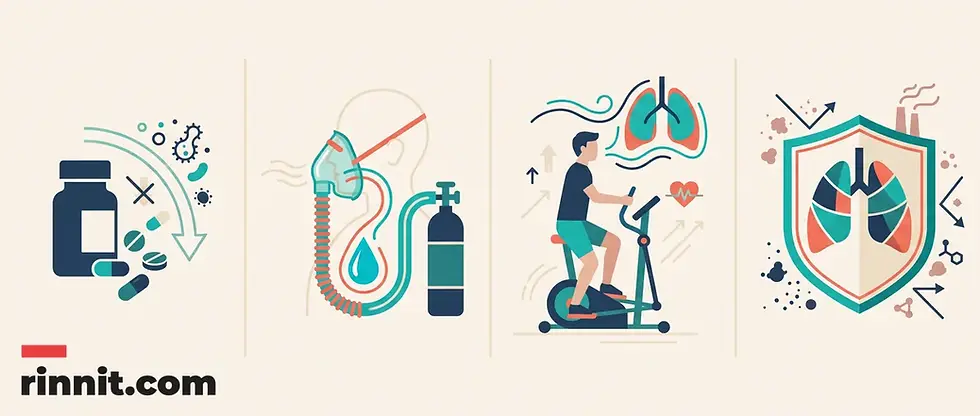
Most healthcare providers treat CBD with medication to suppress the immune system. Treatment typically includes a corticosteroid such as prednisone, along with long-term medication like methotrexate or azathioprine. [1] These medications help suppress the inflammation in your lungs, prevent scarring, and manage symptoms. [1]
Your provider may also prescribe oxygen therapy, also called supplemental oxygen, to help you breathe. [1] Oxygen therapy can be delivered in several different ways, each with its own pros and cons, which you can discuss with your provider.
Pulmonary rehabilitation can help improve your symptoms and rebuild lung function. [1] It is typically recommended for people with severe symptoms or for those who still feel short of breath after starting treatment. [1] In severe cases, a person may require a lung transplant [1], though this is not common.
Treatment options at a glance
Treatment | Purpose |
Corticosteroids (e.g., prednisone) | Suppress lung inflammation |
Long-term medication (methotrexate, azathioprine) | Keep the immune response in check, prevent scarring, manage symptoms |
Oxygen therapy | Help with breathing; delivered in several methods |
Pulmonary rehabilitation | Improve symptoms and rebuild lung function |
Lung transplant | Reserved for severe cases; not common |
Outlook and Prognosis
Healthcare providers still do not fully understand why chronic beryllium disease progresses differently in different people. Some people have granulomas in their lungs without ever experiencing symptoms. Others develop breathing difficulties that worsen over time. Some only learn they have the disease once it has become life-threatening. [1]
There is no way to predict how CBD will affect you. [1] This is why regular evaluation and monitoring with a healthcare provider matters.
Can chronic beryllium disease be fatal?
It can be. People with CBD can experience severe lung damage, which puts added strain on the heart. This can lead to heart failure or death. [1] With early diagnosis and treatment, however, the risk of severe CBD is much lower. [1] Regular screening for anyone diagnosed with beryllium sensitization is very important.
On a hopeful note: with prompt treatment, most people still enjoy a good quality of life. [1]
Can Beryllium Disease Be Prevented?
Avoiding exposure to beryllium is the most effective way to prevent chronic beryllium disease. [1] Both employers and employees must try to minimize exposure. In the U.S., employers must follow standards set by occupational safety regulators, which include:
Prevention measure | What it involves |
Adequate ventilation | Keeping workspaces well ventilated so dust and fumes do not accumulate |
Minimal use of beryllium | Using equivalent metals instead of beryllium wherever possible |
Isolation of procedures | Separating work processes that use beryllium from the rest of the workplace |
HEPA vacuum cleaning | Safe use of high-efficiency particulate air vacuums for cleaning |
Personal protective equipment | Face masks and respirators for workers in beryllium areas |
Although there is a permissible exposure limit set for beryllium forms that cause CBD, this standard may still be too high. [1] It is worth asking your employer about the company's specific limit.
Protecting your family
If you work with beryllium, there are several actions you can take to avoid carrying the metal home and exposing your family:
Remove street clothes and put on a uniform before entering the work area.
Before leaving work, leave the uniform in a hamper with a lid at your workplace.
Shower before leaving work.
Clean work shoes before leaving your work area and do not wear them home.
Can genetic testing help?
Genetic testing may be able to identify individuals with a higher risk of developing beryllium sensitization or progression to CBD. More studies are needed before such testing becomes commonplace. [1] Currently, genetic testing for beryllium sensitivity is offered on a case-by-case basis [1], after careful discussion with a genetic counselor and your healthcare provider.
Living With Beryllium Disease
When to see a healthcare provider
Contact your healthcare provider if you have any symptoms of beryllium disease, especially if you have worked in a job with exposure to beryllium.
Questions to ask your provider
It is normal to have questions about a diagnosis. Some questions you may want to ask include:
What can I expect from this condition?
How do I prevent future exposure?
Can I go back to work around beryllium?
Should people in my family be tested for a beryllium allergy?
What is the best treatment for my symptoms?
Will I have to be on medication or oxygen forever?
Conclusion
Beryllium disease is chronic lung inflammation triggered by inhaling beryllium dust or fumes, but only in the people whose immune systems become sensitized to the metal. [1] It is fundamentally an occupational condition, affecting people who work with beryllium in manufacturing settings, and it can appear even decades after the last exposure. [1]
Symptoms develop slowly and include cough, shortness of breath, fatigue, chest pain, loss of appetite, joint pain, and night sweats. [1] Diagnosis rests on exposure history, the BeLPT blood test, chest imaging, breathing tests, and sometimes bronchoscopy. [1] While there is no cure, corticosteroids, long-term immune-suppressing medication, oxygen therapy, and pulmonary rehabilitation can reduce symptoms and slow the disease's progression. [1] Prevention is centered on strict workplace exposure controls and simple decontamination routines that keep beryllium dust away from home life. [1]
If you have symptoms and a history of beryllium exposure, the most important step is a prompt evaluation and regular follow-up. Early treatment meaningfully lowers the risk of severe disease, and most people maintain a good quality of life with proper care. [1]
Make complex health topics easier to explain. If you share health information with teams or audiences, Rinnit's library of infographic templates can help you turn occupational health content like this into clear visuals, no design experience required.
Frequently Asked Questions
What is beryllium disease?
Beryllium disease, also called berylliosis, is chronic inflammation in the lungs caused by inhaling fumes or dust containing beryllium, a metal used to manufacture products such as cars, computers, golf clubs, and electrical equipment. [1] It develops only in people whose immune systems become sensitized to the metal. [1]
Is the solid metal dangerous?
The solid metal is safe in everyday use. [1] Beryllium disease occurs when beryllium dust or fumes are inhaled by people with an allergy or immune response to it. [1]
What is beryllium sensitization?
Beryllium sensitization is the condition in which your immune system, specifically your T-cells, develops a reaction to beryllium. [1] Only people who become sensitized can develop beryllium disease; exposure alone is not enough. [1]
What are the two types of beryllium disease?
There are two types: chronic beryllium disease (CBD), the long-developing form most people mean by "berylliosis," and acute beryllium disease, which has rapid onset and progresses quickly. [1] The acute form is very rare today because workplace safety regulations prevent the large quantities of airborne beryllium that cause it. [1]
Is berylliosis the same as chronic beryllium disease?
Yes. The two terms are typically used interchangeably, mainly because the acute form of the disease is rare. [1]
What are the symptoms of chronic beryllium disease?
Symptoms progress slowly and include difficulty breathing or shortness of breath, cough, fatigue, chest pain, loss of appetite, joint pain, and night sweats. [1] Many people have no symptoms at the time they are diagnosed. [1]
What happens to the lungs in beryllium disease?
The lungs react to beryllium as a foreign substance by developing collections of cells called granulomas. [1] These may eventually cause scarring that reduces the lungs' ability to function. [1]
Who is at risk of beryllium disease?
The disease mainly affects people who work in jobs with beryllium exposure. [1] Higher-level exposures increase risk, but even very limited exposure can cause sensitization and CBD in susceptible people. [1]
How common is beryllium disease?
Most studies show that between 2% and 6% of workers who are susceptible to beryllium sensitization will develop the disease after exposure. [1] Many people work regularly with beryllium and never develop sensitization or CBD. [1]
Can symptoms appear long after exposure ends?
Yes. You can develop symptoms of CBD decades after your last exposure to beryllium. [1] Anyone diagnosed with beryllium sensitization should keep up with regular check-ups even after leaving beryllium work. [1]
Is there a genetic component?
Healthcare providers believe there is a genetic component to beryllium sensitivity. [1] Genetic testing may identify individuals at higher risk of developing sensitization or progression to CBD, though it is currently offered on a case-by-case basis after discussion with a genetic counselor. [1]
How is beryllium disease diagnosed?
A provider takes a full health history, including exposure history, and may note unusual breath sounds or swollen lymph nodes. [1] Tests can include the BeLPT blood test (which measures white blood cells' reaction to beryllium), a chest CT scan, spirometry breathing tests, and bronchoscopy with biopsies of lung tissue. [1]
Is there a cure for beryllium disease?
There is no cure for chronic beryllium disease. [1] The goal of treatment is to reduce symptoms and stop the disease from progressing. [1] Some people feel better within a few weeks of treatment; others may live with severe symptoms for life. [1]
How is beryllium disease treated?
Treatment typically includes a corticosteroid such as prednisone plus long-term immune-suppressing medication like methotrexate or azathioprine. [1] Oxygen therapy, pulmonary rehabilitation, and, in rare severe cases, lung transplantation may also be used. [1]
Can beryllium disease be prevented?
Avoiding exposure is the most effective prevention. [1] Employers must provide adequate ventilation, minimize beryllium use, isolate beryllium procedures, use HEPA vacuums, and supply protective equipment. [1] Workers should change clothes, shower before leaving, and keep work shoes at the workplace to protect their families. [1]
Is beryllium a carcinogen?
The International Agency for Research on Cancer lists beryllium as a human and animal carcinogen [1], meaning studies have shown it can increase your risk of developing cancer. This is separate from the allergic mechanism that causes beryllium disease.
Is there beryllium in food?
Beryllium occurs naturally in soil, so some vegetables contain small deposits. According to health agencies, garden peas, kidney beans, and pears contain the highest amounts. [1] There is no risk of developing beryllium sensitization from the food you eat. [1]
Can beryllium disease be fatal?
Beryllium disease can be. Severe lung damage can put added strain on the heart, potentially leading to heart failure or death. [1] With early diagnosis and treatment, the risk of severe disease is much lower. [1]
What should I ask my healthcare provider?
Useful questions include what to expect from the condition, how to prevent future exposure, whether you can return to work around beryllium, whether family members should be tested, what the best treatment is, and whether medication or oxygen will be needed long-term. [1]
Related Reading
References
Cleveland Clinic. Beryllium Disease. Cleveland Clinic Health Library. Last updated March 12, 2024. Accessed October 15, 2026. https://my.clevelandclinic.org/health/diseases/13807-beryllium-disease
U.S. Department of Labor, Occupational Safety and Health Administration. OSHA's rulemaking to protect workers from beryllium exposure. OSHA Beryllium Safety and Health Topics. Last revised August 2020. Accessed October 15, 2026. https://www.osha.gov/beryllium/rulemaking
MacMurdo MG, Mroz MM, Culver DA, et al. Chronic beryllium disease: update on a moving target. Chest. 2020;158(6):2458-2466. PMID: 32768458. https://doi.org/10.1016/j.chest.2020.07.074
Cloeren M, Dement J, Gaitens J, et al. Beryllium disease among construction trade workers at Department of Energy nuclear sites: a follow-up. Am J Ind Med. 2022;65(9):708-720. PMID: 35833586. https://doi.org/10.1002/ajim.23411
Duggal M, Deubner DC, Curtis AM, et al. Long-term follow-up of beryllium sensitized workers from a single employer. BMC Public Health. 2010;10:5. PMID: 20047684. https://doi.org/10.1186/1471-2458-10-5
Thomas CA, Deubner DC, Stanton ML, et al. Long-term efficacy of a program to prevent beryllium disease. Am J Ind Med. 2013;56(7):733-741. PMID: 23450749. https://doi.org/10.1002/ajim.22175
Medical disclaimer
The information provided in this article is for educational purposes only and is not intended as medical advice. Always seek the advice of your physician or other qualified health provider with any questions you may have regarding a medical condition. If you work with beryllium and have a cough or shortness of breath, contact your healthcare provider promptly.



Comments