What is an Umbilical Cord Cyst?

Updated: 3 days ago
Medically reviewed by Dr. Baraa Alnahhal, MD · Last reviewed: October 2026
Quick Answer
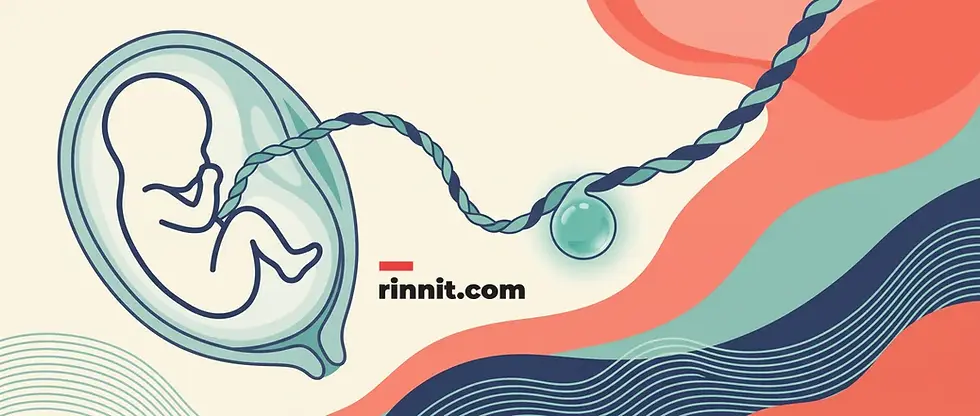
An umbilical cord cyst is a fluid-filled sac that develops within the umbilical cord. True cysts form from leftover embryonic tissue, while pseudocysts develop from Wharton's jelly. Most are benign and disappear without intervention, but a large or persistent cyst, or one found in the second or third trimester, may prompt testing for chromosomal conditions or growth restriction. [1]
What the research says
Single cysts found early in pregnancy usually have good outcomes, while multiple cysts carry more risk. In a screening study of 1,159 pregnancies at 7–14 weeks, umbilical cord cysts were found in 2.1% (24 of 1,159); 18 were single and 6 were multiple. All women with a single cyst delivered an infant without structural abnormalities or features suggesting a chromosomal abnormality. Among the women with multiple cysts, 4 had a missed miscarriage and 1 had a fetus with obstructive uropathy (Ghezzi et al., Ultrasound in Obstetrics & Gynecology, 2003). [2]
First-trimester cysts did not raise the risk of poor pregnancy outcomes in a matched cohort. A study compared 45 pregnancies with first-trimester cord cysts with 85 pregnancies with normal cords. All cysts resolved on follow-up ultrasound. Fetal abnormalities on ultrasound were found in 11.1% of the cyst group and 9.4% of the comparison group (no significant difference), and gestational age at delivery and birth weight did not differ (Hannaford et al., Journal of Ultrasound in Medicine, 2013). [3]
Large cysts need closer follow-up. A systematic review of 16 papers found that 79% of cysts were single. Where genetic testing was done, 22.76% of results were abnormal, and trisomy 18 was the most frequent disorder (53.57% of the abnormal results). The authors concluded that large cysts could be associated with an increased risk of fetal anomalies and intrauterine fetal death (Nastasia et al., Journal of Clinical Medicine, 2025). [4]
Key Takeaways
Feature | Details |
Prevalence | Approximately 1 in 100 pregnancies |
Detection Method | Routine prenatal ultrasound |
Primary Types | True Cysts and Pseudocysts (False Cysts) |
Symptoms | None (asymptomatic for the pregnant person) |
Common Outcome | Often resolve spontaneously in the first trimester |
Potential Risks | Genetic conditions (e.g., Trisomy 18), IUGR, cord compression |
Management | Frequent ultrasounds, maternal-fetal medicine consultation |
Treatment | Delivery planning (no direct surgical removal possible) |
Understanding Umbilical Cord Cysts
The umbilical cord is the lifeline between a pregnant person and the developing fetus, delivering oxygen and nutrients while removing waste. An umbilical cord cyst is a fluid-filled sac that appears within this structure. Most often, these are discovered during a routine first-trimester ultrasound. [1]
While hearing the word "cyst" can be concerning, it is important to note that the majority of these findings do not negatively impact the pregnancy. In many cases, the cyst is a temporary developmental occurrence that disappears as the fetus continues to grow. [1]
Types of Cysts and Their Causes
Healthcare providers distinguish between two main categories of umbilical cord cysts based on their origin and location.
True Cysts
True cysts are formed from leftover embryonic tissue that typically vanishes during early fetal development. When this tissue persists, it can form a sac near the point where the cord attaches to the fetus. These are generally considered harmless and rarely cause complications. [1]
Pseudocysts (False Cysts)
Pseudocysts are more common than true cysts and can appear anywhere along the length of the umbilical cord. They form when Wharton’s jelly—the gelatinous substance that protects the cord's blood vessels—swells with fluid or begins to break down. While many pseudocysts are also benign, they are more frequently associated with abnormal fetal development if they persist into the later stages of pregnancy.

Risks and Potential Complications
The clinical significance of an umbilical cord cyst depends heavily on its size, number, and the timing of its discovery.
Cord Compression: If a cyst is particularly large or if multiple cysts are present, they can exert pressure on the umbilical vessels. This may potentially restrict the flow of blood and nutrients to the fetus. [1]
Genetic Associations: Cysts found in the second or third trimester may be linked to chromosomal conditions such as Down syndrome (Trisomy 21), Edwards syndrome (Trisomy 18), or Patau syndrome (Trisomy 13). [1]
Growth Restriction: Some cases are associated with Intrauterine Growth Restriction (IUGR), where the fetus does not grow at the expected rate. [1]
Delivery Planning: A large cyst may increase the risk of fetal distress during labor, leading to a higher likelihood of a recommended C-section or preterm delivery. [1]
Diagnosis and Clinical Monitoring
Because umbilical cord cysts cause no physical symptoms for the pregnant person, they are diagnosed exclusively through medical imaging. [1]
Initial Ultrasound: Most cysts are identified during the 10-14 week "dating" or screening ultrasound.
Advanced Ultrasound: If a cyst persists or is found later, a detailed anatomy scan is performed to check fetal organs for other abnormalities.
Genetic Testing: Providers may suggest non-invasive prenatal testing (NIPT) or amniocentesis to screen for genetic disorders if the cyst is large or found alongside other ultrasound markers. [1]
Specialist Referral: You may be referred to a maternal-fetal medicine specialist (perinatologist) for expert monitoring of high-risk pregnancy factors. [1]

Management and Outlook
There is no medical procedure to remove a cyst from the umbilical cord while the fetus is in the womb. Instead, the focus is on careful management and risk mitigation. [1]
Monitoring Strategy
For cysts found in the first trimester that appear isolated (with no other abnormalities), the standard approach is "watchful waiting." Most of these cysts will have disappeared by the time the mid-pregnancy anatomy scan is performed. [1]
Safe Delivery
If a cyst remains present or causes concern near the end of pregnancy, your healthcare team will develop a delivery plan that prioritizes safety. This might involve more frequent monitoring of the baby's heart rate or planning for a C-section if there are signs that the cord is being compressed.
Conclusion
Most umbilical cord cysts are temporary findings that do not affect the long-term health of the baby. While the diagnosis requires a more thorough approach to prenatal care, including extra ultrasounds and possibly genetic screening, the overall outlook is positive for the majority of pregnancies.
For more visual guides on prenatal health and development, explore Rinnit's infographic templates.
Frequently Asked Questions
Can an umbilical cord cyst be seen on a regular ultrasound?
Yes, they are typically found during routine prenatal ultrasounds, often as early as the first trimester.
Is a pseudocyst more dangerous than a true cyst?
Pseudocysts are more common and are more frequently linked to other developmental concerns, especially if they are found later in pregnancy.
Will my baby have birth defects if a cyst is found?
Not necessarily. Most babies with an isolated umbilical cord cyst are born completely healthy.
Can the cyst pop inside the womb?
Cysts do not typically "pop" in a way that causes harm; most simply resolve or are absorbed by the surrounding tissue.
How large can these cysts get?
They can range from a few millimeters to several centimeters. Larger cysts are monitored more closely for cord compression.
Do I need to go on bed rest if I have a cord cyst?
No, a cord cyst generally does not require changes to your physical activity level unless specified by your doctor.
What is Wharton's jelly?
It is a clear, gelatinous substance inside the umbilical cord that protects and cushions the umbilical arteries and vein.
Can a cord cyst cause a miscarriage?
While rare, complications like severe cord compression could theoretically pose a risk, but most cysts are not associated with pregnancy loss.
What is Trisomy 18?
Also known as Edwards syndrome, it is a chromosomal condition that can sometimes be associated with persistent umbilical cord cysts.
Does the number of cysts matter?
Yes, having multiple cysts is often viewed with more caution than having a single, isolated cyst.
Can diet or lifestyle cause these cysts?
No, there is no evidence that a pregnant person's diet or lifestyle choices cause umbilical cord cysts.
How often will I need ultrasounds?
Your provider may schedule follow-up scans every few weeks to monitor the size and appearance of the cyst.
What happens if the cyst blocks blood flow?
If blood flow is significantly restricted, your doctor may recommend an early delivery to ensure the baby's safety.
Is amniocentesis mandatory?
No, genetic testing is optional, though it may be recommended if the cyst is found alongside other risk factors.
Can a cyst be treated with medication?
No, there are no medications that can shrink or remove an umbilical cord cyst.
What is a perinatologist?
A perinatologist is a doctor who specializes in high-risk pregnancies and maternal-fetal medicine.
Are these cysts hereditary?
There is currently no strong evidence suggesting that umbilical cord cysts are a hereditary condition.
Does the location of the cyst matter?
True cysts are usually near the fetal end of the cord, while pseudocysts can be anywhere. The location helps providers determine the type.
Can a cyst cause the baby to be small?
Yes, in some cases, it can be associated with Intrauterine Growth Restriction (IUGR).
Will the cyst be removed after birth?
The umbilical cord is clamped and cut after birth, so the cyst is removed along with the rest of the cord.
Can I still have a natural birth?
Yes, many people with cord cysts have successful vaginal deliveries, provided there is no fetal distress.
What is fetal distress?
It is a sign that the baby is not receiving enough oxygen, which can sometimes happen if a large cyst compresses the cord during labor.
Do cysts found in the first trimester always go away?
They don't always go away, but a very high percentage of them resolve by the second trimester.
What is NIPT?
Non-Invasive Prenatal Testing is a blood test that screens for common chromosomal conditions and is often used as a first step after a cyst is found.
Is a cord cyst the same as an umbilical hernia?
No, an umbilical hernia involves the baby's intestines pushing through the abdominal muscles near the belly button.
Can twins both have cord cysts?
It is possible, though rare, for one or both twins to have an umbilical cord cyst.
Does the cyst contain blood?
No, it contains fluid, similar to the amniotic fluid surrounding the baby.
How common is Trisomy 13?
It is a rare chromosomal condition that, like Trisomy 18, can sometimes be linked to persistent cord cysts.
Can a cyst affect the baby's heart rate?
If the cyst compresses the cord, it could potentially cause changes in the baby's heart rate.
Should I see a specialist immediately?
Your regular OB/GYN will let you know if a referral to a maternal-fetal medicine specialist is necessary based on the ultrasound findings.
Can an umbilical cord cyst cause pain?
No, the pregnant person will not feel any pain or discomfort from the cyst.
Is there a link between cord cysts and gestational diabetes?
There is no established link between these two conditions.
What is a "dating" ultrasound?
It is an early pregnancy scan used to confirm the due date and check for basic developmental milestones.
Can a cyst be caused by an infection?
There is no evidence that maternal infections cause umbilical cord cysts.
Are true cysts filled with urine?
Some true cysts, called allantoic cysts, are related to the fetal bladder system, but they are still fluid-filled sacs.
What is an anatomy scan?
It is a detailed ultrasound typically performed around 20 weeks to check all of the baby's organs and structures.
Can a cyst lead to a preterm birth?
Yes, if the cyst causes complications that make it safer for the baby to be born early.
Do I need to tell my family about the cyst?
That is a personal choice; many parents wait until follow-up scans provide more information.
Can a cyst be misdiagnosed?
While ultrasound is very accurate, it can sometimes be difficult to distinguish between a true cyst and a pseudocyst.
Does the age of the mother matter?
Advanced maternal age is a risk factor for chromosomal conditions, which are sometimes linked to persistent cysts.
Can a cyst affect the placenta?
The cyst is in the cord, not the placenta, but both are part of the fetal support system.
What is "watchful waiting"?
It is a medical strategy where the condition is monitored closely over time rather than being treated immediately.
Can a cyst be seen on a 3D ultrasound?
Yes, 3D and 4D ultrasounds can provide even clearer images of the umbilical cord and any cysts.
Does a cyst affect the baby's movement?
No, the baby's movement should not be affected by the presence of a cord cyst.
What is the difference between a cyst and a knot?
A cyst is a fluid-filled sac, while a "true knot" is a physical loop in the umbilical cord.
Can a cyst be caused by IVF?
There is some research suggesting a slightly higher incidence of cord abnormalities in IVF pregnancies, but cysts occur in natural conceptions too.
Is the fluid in the cyst dangerous?
No, the fluid itself is not harmful to the baby or the parent.
Can I get a second opinion?
Yes, you can always request that your ultrasound images be reviewed by a different radiologist or specialist.
Will my insurance cover extra ultrasounds?
Most insurance plans cover medically necessary follow-up scans, but you should check with your provider.
What is the most important thing to remember?
Most umbilical cord cysts resolve on their own, and the majority of babies with this finding are born healthy.
References
Cleveland Clinic. Umbilical Cord Cyst: Types, Causes, Symptoms & Treatment. Cleveland Clinic Health Library. Last updated May 8, 2026. https://my.clevelandclinic.org/health/diseases/umbilical-cord-cyst
Ghezzi F, Raio L, Di Naro E, et al. Single and multiple umbilical cord cysts in early gestation: two different entities. Ultrasound Obstet Gynecol. 2003;21(3):215-219. PMID 12666213. https://doi.org/10.1002/uog.68
Hannaford K, Reeves S, Wegner E. Umbilical cord cysts in the first trimester: are they associated with pregnancy complications? J Ultrasound Med. 2013;32(5):801-806. PMID 23620322. https://doi.org/10.7863/ultra.32.5.801
Nastasia Ș, Nenciu AE, Russu MC, et al. Clinical Significance and Prognosis of Prenatal Diagnosis of Large Umbilical Cord Cysts—A Review Triggered by a Clinical Case. J Clin Med. 2025;14(8):2564. PMID 40283396. https://doi.org/10.3390/jcm14082564
Disclaimer
This article is for informational purposes only and does not constitute medical advice. Always consult with a qualified healthcare professional for diagnosis and treatment.



Comments