What is a Keloid on the Ear?

Updated: 3 days ago
Medically reviewed by Dr. Baraa Alnahhal, MD · Last reviewed: October 2026
Quick Answer: What Is a Keloid on the Ear?
An ear keloid is an overgrowth of scar tissue that develops after an injury to the earlobe, cartilage or area behind the ear. [1] It is not dangerous or contagious but is firm, rubbery and often darker than nearby skin. [1] Because keloids often return, surgery is commonly combined with radiation, cryotherapy or pressure devices. [1] [2]

What the research says
After surgery, adding brachytherapy or compression gave low regrowth rates in ear keloids that had already come back once. A systematic review and meta-analysis of 13 studies of recalcitrant auricular keloids estimated recurrence at 9% after excision plus brachytherapy, 14% with compression therapy, 17% with external beam radiation, and 18% with steroid injections. The differences were not statistically significant, and the studies were mostly lower-quality (Oxford level III or IV), so no single best treatment could be named (Zawadiuk et al., Plast Surg, 2022 [3]).
Radiation after keloid removal works well, and ear keloids did better than keloids elsewhere. A meta-analysis of 28 studies covering 3,128 excised keloids found a recurrence rate of 16% overall after postoperative electron beam radiation, and 11% for ear keloids. Higher biologically effective radiation doses were linked to lower recurrence (Hwang et al., Radiother Oncol, 2022 [4]).
In one cohort study, radiotherapy led to fewer recurrences than compression after surgery. Among 251 patients with ear keloids treated with keloid-cross-flap surgery (123 given superficial radiotherapy and 128 given compression therapy), one-year recurrence was 13.54% with radiotherapy versus 25.58% with compression. Non-completion of the adjuvant treatment was also higher in the compression group (17.97%). This was a cohort study rather than a randomized trial, so results may not apply to everyone (Li et al., Radiother Oncol, 2024 [5]).
Key Takeaways: Keloid on the Ear Facts
Feature | Details |
Definition | Overgrowth of fibrous scar tissue extending beyond the original injury [1] |
Primary Cause | Ear piercings (most common), cuts, burns, or acne [1] |
Common Locations | Earlobe, cartilage, or behind the ear [1] |
Risk Factors | Darker skin tones (Black, Hispanic, Asian), family history [1] |
Symptoms | Firm, shiny, raised growth; may itch or feel tender [1] |
Treatment | |
Recurrence |
Understanding Keloids on the Ear
An ear keloid is a specific type of fibrous scar tissue that forms during the body's healing process. While a normal scar stays within the boundaries of a wound, a keloid extends outward, often becoming significantly larger than the initial injury. [1] These growths can appear anywhere on the ear, including the soft earlobe, the stiff cartilage, or the hidden area behind the ear. [1]
Most ear keloids are triggered by minor trauma, with ear piercings being the single most frequent cause. [1] While they are not harmful to your physical health, their appearance can cause significant emotional distress, leading to anxiety or self-consciousness. [1]
Who is at Risk?
Although anyone can develop a keloid, certain factors increase the likelihood:
Symptoms and Causes
Ear keloids are unique in their development and appearance. They do not appear immediately after an injury; instead, they develop slowly, often taking three to 12 months to become noticeable. [1]
Recognizing the Signs
Texture: They may feel soft and squishy or firm and rubbery. [1]
Appearance: The surface is typically shiny, smooth, and darker than the surrounding skin (often appearing pink, red, purple, or brown). [1]
Shape: Most ear keloids are round or oval. [7]
Sensation: While usually painless, they can itch or feel tender, especially during growth phases. [1]
Size: They can range from a small bump (1/4 inch) to a massive growth larger than the ear itself. [1]
Common Triggers
Keloids form when the body produces too much collagen during healing. [6] Common injuries that lead to ear keloids include:
It is important to note that keloids are not contagious; they are a localized skin reaction, not the result of a virus or bacteria. [1]
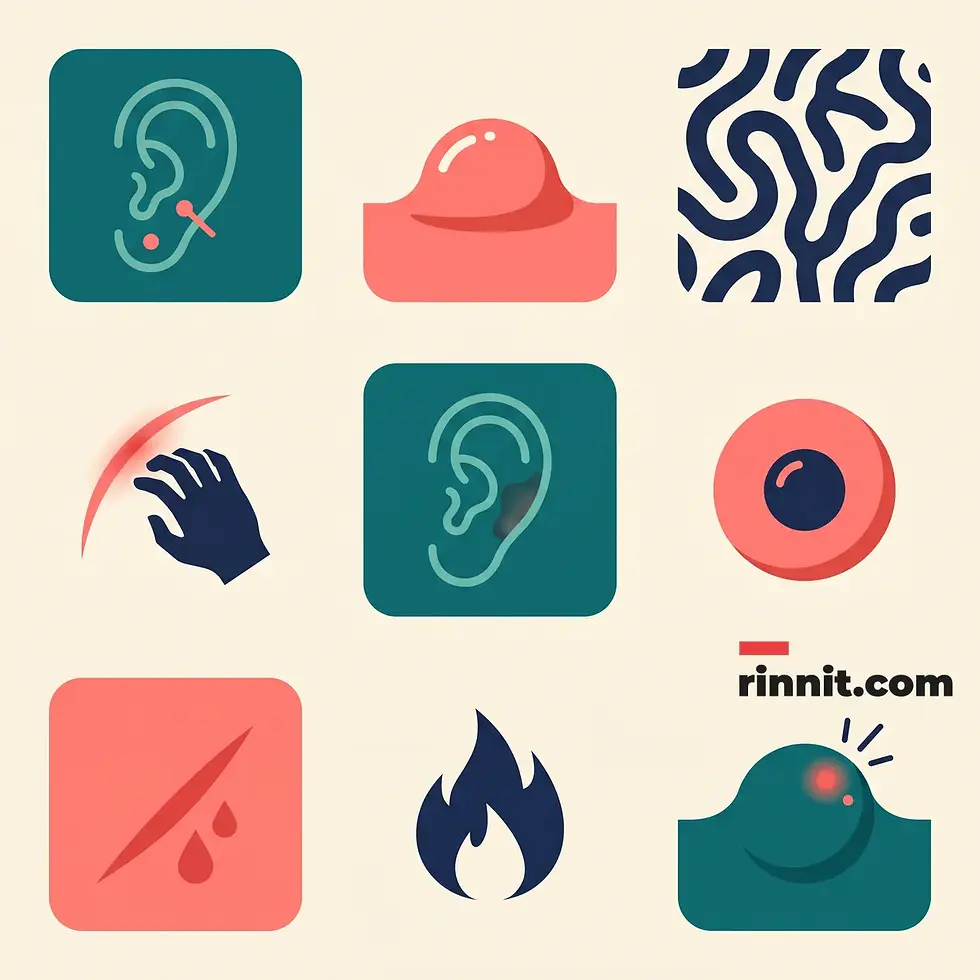
Diagnosis and Management
Diagnosing an ear keloid is usually straightforward. A healthcare provider can typically identify the growth through a simple physical examination. [1] In rare cases where the diagnosis is uncertain, a skin biopsy may be performed to rule out other conditions, such as dermatofibrosarcoma protuberans (DFSP), a rare type of skin cancer. [1]
Treatment Strategies
Because ear keloids are notoriously difficult to treat, a multi-pronged approach is often the most successful.
Corticosteroid Injections: Injections every four to six weeks help reduce inflammation and shrink the tissue. [1] [2]
Surgical Removal: A surgeon uses a scalpel to remove the growth. Because surgery alone often triggers a new keloid, it is almost always paired with other treatments. [2]
Pressure Earrings (Zimmer Splints): These specialized clips apply constant pressure to the earlobe, reducing blood flow and preventing the scar from reforming. [2] They must be worn for up to 16 hours a day for six to 12 months. [1]
Cryotherapy: Using extreme cold to freeze and destroy the scar tissue. [1] [2]
Radiation Therapy: Low-dose radiation applied after surgery can effectively prevent recurrence. [1] [2]
Laser Treatment: Used to reduce the size and improve the discoloration of the scar. [1] [2]

Outlook and Prevention
The long-term outlook for ear keloids is positive, though patience is required. While they will not go away on their own, they can be successfully managed with consistent medical care. [1]
Can You Pop a Keloid?
It is a common misconception that a keloid can be "popped" like a pimple. You cannot pop an ear keloid. They are made of solid scar tissue, not pus. [1] Attempting to squeeze or cut a keloid at home will only damage the skin further and significantly increase the risk of infection and even larger scar growth.
Prevention Tips
The most effective way to handle ear keloids is to prevent them from forming:
Avoid Piercings: If you have a family history of keloids, it is best to avoid ear piercings entirely. [6]
Monitor Healing: If you do get a piercing, watch for any thickening or rubbery texture in the skin. [1]
Seek Early Care: Contact a dermatologist immediately if you notice a new growth. Early intervention with pressure therapy or injections is much more effective than treating a large, established keloid.
Conclusion
Ear keloids are a challenging but manageable skin condition. While their tendency to return after treatment can be frustrating, modern combination therapies offer a high success rate for permanent removal. By understanding the triggers and seeking professional medical advice early, you can protect your skin and maintain your confidence.
Visualizing the stages of scar healing and the mechanics of pressure therapy can help patients stay committed to their treatment plans. Use our infographic templates to create clear, professional diagrams for patient education, dermatology clinics, and medical blogs.
Frequently Asked Questions
What is an ear keloid?
A type of raised, fibrous scar tissue that grows beyond the original injury site. [1]
What causes keloids on the ear?
Most commonly ear piercings, but also cuts, burns, acne, and bug bites. [1]
Are they dangerous?
No, they are not harmful to your physical health, but they can be emotionally distressing. [1]
Are keloids contagious?
No, they are not caused by germs and cannot be spread to others. [1]
Why do they form?
They occur when the body produces too much collagen during the healing process. [6]
Who is most likely to get them?
People with darker skin tones and those with a family history of keloids. [1]
Do they hurt?
Usually not, but they can be itchy or tender when touched. [1]
Can I pop an ear keloid?
No. They are solid tissue, not fluid-filled, and trying to pop them causes damage. [1]
How long does it take for a keloid to appear?
They typically develop three to 12 months after an injury. [1]
Do they stop growing?
Eventually, yes, but they will not disappear without treatment. [1]
Can they be larger than the ear?
Yes, "massive" keloids can grow larger than the surface area of the ear. [1]
What is the most common treatment?
A combination of surgery and pressure therapy or injections. [2]
What are pressure earrings?
Specialized clips that reduce blood flow to the earlobe to prevent scar growth. [2]
How long do I wear pressure earrings?
Usually 16 hours a day for six to 12 months. [1]
What are corticosteroid injections?
Shots given directly into the keloid to reduce its size and inflammation. [2]
How many injections are needed?
Typically four or more, spaced four to six weeks apart. [1]
Does surgery work alone?
Rarely. [2] Surgery alone often triggers the keloid to grow back even larger.
What is cryotherapy?
Can lasers remove keloids?
Is radiation used for keloids?
What is ligature?
Can acne cause ear keloids?
Yes, severe acne on the ear or jawline can trigger them.
Do tattoos cause keloids?
Yes, the skin trauma from tattooing can lead to keloid formation. [1]
How are they diagnosed?
Usually through a simple physical exam by a doctor. [1]
Is a biopsy necessary?
Only if the doctor needs to rule out other conditions like skin cancer. [1]
What is DFSP?
A rare skin cancer that can sometimes look like a keloid. [1]
Can I hide an ear keloid?
Yes, with hairstyles, wigs, or specific clothing until treatment is finished. [1]
Should I remove my earring if a keloid forms?
Consult your doctor first; they may recommend immediate removal or a specific wait time. [1]
Can children get ear keloids?
Yes, anyone at any age can develop them after an injury. [1]
Is it safe to pierce my ears if my mom has keloids?
It is risky, as a family history increases your chances significantly. [1]
What happens if I ignore a keloid?
It may continue to grow for years before eventually stabilizing. [1]
Do keloids turn into cancer?
No, keloids are benign (non-cancerous) growths. [6]
Can they form behind the ear?
Yes, this is a common location for keloids after surgery or piercings.
Why are they shiny?
The overproduction of collagen creates a smooth, reflective surface.
Do they change color?
Yes, they often get darker as they grow. [1]
Is treatment painful?
Injections and surgery involve some discomfort, usually managed with local anesthesia.
Can I get a keloid from a bug bite?
Yes, any injury that breaks the skin can potentially cause one.
What is a Zimmer splint?
Another name for a medical-grade pressure earring. [1]
Can I use over-the-counter scar creams?
These are generally ineffective for established keloids; see a doctor.
Do they affect hearing?
No, they are external growths and do not impact the inner ear or hearing.
Can keloids form on cartilage?
Yes, and cartilage keloids can be particularly difficult to treat.
What is the success rate of removal?
High, but only when combination therapy is used consistently.
Can I get a keloid from chickenpox?
Yes, if the chickenpox sores on the ear are scratched or become infected.
Are there side effects to injections?
Possible thinning of the skin or visible blood vessels in the area. [1]
How do I prevent recurrence?
Follow all post-surgical instructions and wear pressure devices as directed.
Can stress cause keloids?
No, but having them can cause emotional stress.
Is the removal covered by insurance?
Often, especially if they are causing physical discomfort or itching.
Should I see a dermatologist?
Yes, they are the specialists best equipped to treat keloids.
Can keloids form on other parts of the body?
Yes, if you have one on your ear, you are more likely to get them elsewhere.
Where can I learn more?
Consult the Cleveland Clinic Health Library or the American Academy of Dermatology.
Related Reading
References
Cleveland Clinic. Keloid on Ear. Cleveland Clinic. Last updated August 22, 2022. https://my.clevelandclinic.org/health/diseases/24047-keloid-on-ear
American Academy of Dermatology (AAD). Keloid scars: Diagnosis and treatment. AAD. Last updated January 26, 2023. https://www.aad.org/public/diseases/a-z/keloids-treatment
Zawadiuk LRR, Van Slyke AC, Bone J, et al. What Do We Know About Treating Recalcitrant Auricular Keloids? A Systematic Review and Meta-Analysis. Plast Surg (Oakv). 2022;30(1):49-58. PMID 35096693. https://doi.org/10.1177/2292550321995746
Hwang NH, Chang JH, Lee NK, et al. Effect of the biologically effective dose of electron beam radiation therapy on recurrence rate after keloid excision: A meta-analysis. Radiother Oncol. 2022;173:146-153. PMID 35688397. https://doi.org/10.1016/j.radonc.2022.06.003
Li Q, Chen Z, Zou X, et al. Effectiveness of postoperative superficial radiotherapy following the keloid-cross-flap surgery for auricular keloid: A prospective cohort study. Radiother Oncol. 2024;199:110425. PMID 39002572. https://doi.org/10.1016/j.radonc.2024.110425
McGinty S, Siddiqui WJ. Keloid. StatPearls. Treasure Island (FL): StatPearls Publishing; 2023. PMID 29939676. https://www.ncbi.nlm.nih.gov/books/NBK507899/
American Academy of Dermatology (AAD). Keloid scars: Signs and symptoms. AAD. Last updated August 30, 2022. https://www.aad.org/public/diseases/a-z/keloids-symptoms
Disclaimer
This information is for educational purposes only and does not constitute medical advice. Always seek the counsel of a qualified healthcare professional regarding any medical condition or emergency. If you are experiencing a life-threatening emergency, call 911 or your local emergency services immediately.



Comments