What Is a Growth Spurt? Signs, Timing, and How to Help Your Child

Updated: 3 days ago
Medically reviewed by Dr. Baraa Alnahhal, MD · Last reviewed: October 2026
Quick Answer
A growth spurt is a short period in which a child's height or length and weight rapidly increase [1]. Genes largely determine how tall a child grows, while nutrition, sleep and exercise support growth [1] [5]. Spurts are most frequent in the first year, slow during childhood and speed up again at puberty [1]. During a spurt, appetite, sleep and mood may change [1].
Key takeaways
Definition: Short periods of rapid growth in height and weight [1].
Infants: Spurts typically occur at about 2 to 3 weeks, 6 weeks, 3 months, 6 months, and 9 months [1].
Adolescents: Females typically have growth spurts between ages 9 and 15, and males between ages 12 and 17 [1].
Common signs: Changes in height and weight, increased or decreased hunger, fussiness, and changes in sleep [1].
Role of genetics: Genes largely determine how tall a child will be and how quickly they reach that height [1].
How to help: Offer extra meals, keep regular bedtimes, and be patient with changing emotions [1].
What the research says
Babies grow in bursts, not in a smooth line. Researchers measured the length of 31 infants weekly (10 infants), twice weekly (18) or daily (3) during their first 21 months. Growth came in sudden spurts of 0.5 to 2.5 centimeters, separated by stretches of 2 to 63 days with no measurable growth (Lampl et al., Science, 1992) [2].
The teenage growth spurt starts earlier in girls than in boys. In a study of schoolchildren aged 4 to 17 living at high altitude in Peru, peak height velocity came at about 9.96 years in girls and 13.21 years in boys, so girls reached it about 3.25 years earlier. Ages vary between populations and settings, so treat these as one example (Sanchez-Macedo et al., J Pediatr (Rio J), 2024) [3].
Fast growth can make injuries more likely in young athletes. In 26 talented young soccer players followed for 3 years, there were 1.41 traumatic injuries per player in the peak-height-velocity year compared with 0.81 the year before, and days missed to injury rose from 7.27 to 15.69 per player per year. The group was small and made up of athletes (van der Sluis et al., Int J Sports Med, 2014) [4].
The Nature of Growth Spurts

Growth spurts are a normal part of development and affect babies, children, and adolescents. Each child follows a unique pattern and grows at their own pace until reaching physical maturity. Spurts aren't only about getting taller: they involve changes in weight and, in adolescence, sexual development [1].
Growth spurts are different from developmental milestones. A spurt is a change in physical size, while milestones are skills such as walking or speaking [1]. The two can happen around the same time, but they are separate processes.
Timing and Frequency Across Ages
Infancy (the first year)
Many growth spurts happen in a baby's first year, and they tend to come quickly and suddenly. They typically occur at about 2 to 3 weeks, 6 weeks, 3 months, 6 months, and 9 months [1]. Over the first year, a baby grows about 10 inches (25 centimeters) longer and triples their weight [1].
Childhood (toddler years to puberty)
Toddlers have limited growth spurts, and their height and weight rise at a fairly consistent pace [1]. Between preschool and puberty, growth is slow and steady. By age 5, a child has typically doubled their height from birth [1], and growth then continues with regular yearly increases until adolescence [1].
Adolescence (the pubertal spurt)
Adolescents have growth spurts around the time of puberty, and the timing depends on sex. Females typically have growth spurts between ages 9 and 15, and males between ages 12 and 17 [1]. During a spurt, height increases by an average of 3 to 4 inches (9 to 10 centimeters) each year [1].
Identifying a Growth Spurt
The clearest sign is a change in height and weight [1], such as a child outgrowing clothes quickly. Other signs can include:
Appetite changes: An increase or a decrease in hunger [1].
Sleep changes: Different sleep habits than usual [1].
Mood and behavior: Fussiness or emotional outbursts [1], especially in babies [1].
Dental changes: Baby teeth appearing [1], or permanent teeth replacing baby teeth [1].
Sexual development: In adolescents, menstruation, voice change, and pubic and armpit hair growth [1].
A growth spurt doesn't feel like anything [1]. Any fussiness is related to changes in eating and sleeping, not pain, and growth spurts don't cause the arm and leg aches known as growing pains [1].

Factors Influencing Growth
Genetics play a key role. A child's genes determine how tall they will grow and how quickly they reach their greatest height [1] [5]. Environmental factors can also affect growth:
Nutrition: What a child eats and their access to healthy food [1] [5].
Sleep: The amount of sleep they get [1].
Physical activity: How much exercise they get [1].
Pregnancy complications: Problems during pregnancy can influence growth [1].
Harmful substances: Exposure to harmful substances in water or air [1].
Supporting Your Child's Growth
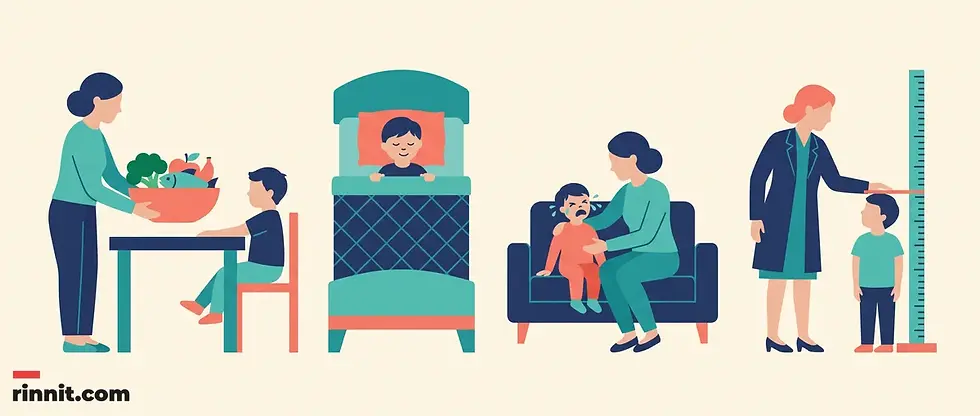
Parents can help in four ways:
Nutritional flexibility: Offer extra healthy meals and snacks to satisfy a bigger appetite [1].
Healthy sleep habits: Keep a regular bedtime and a positive sleep routine [1].
Emotional patience: Be understanding about temporary fussiness, irritability, or tiredness [1].
Regular monitoring: Keep up with well-child checkups so the provider can track height and weight on growth charts [1] [6].
When to contact a healthcare provider
Growth spurts don't cause health problems, so there is usually no need to rush to the pediatrician [1]. Contact your child's provider if a baby is fussy or uncomfortable, the symptoms are hard to ease, they last more than a week, and there are no signs of illness [1]. Also talk to the provider if you notice your child isn't meeting height or weight expectations for their age [1].
Conclusion
Growth spurts are a natural and exciting part of a child's journey to adulthood. Knowing when they tend to happen and what they look like helps parents offer the extra food, rest, and patience that a growing child needs.
For more visual health guides and educational resources, explore Rinnit's infographic templates.
Frequently Asked Questions
What is a growth spurt?
A short period of rapid growth in a child's height (or length) and weight.
How long do growth spurts last?
In babies, they may last up to about three days. In adolescents, growth spurts can occur multiple times over a couple of years.
Do growth spurts cause pain?
No. Growth spurts don't feel like anything. Growing pains, which are aches in the arms and legs, are a separate issue.
When is the first growth spurt?
Typically at around 2 to 3 weeks of age.
How much do babies grow in the first year?
About 10 inches (25 centimeters) in length, and they usually triple their weight by their first birthday.
Do growth spurts affect sleep?
Yes. Sleep habits can change during a growth spurt.
Is increased hunger normal?
Yes. Hunger may increase, although some children eat less during a spurt.
Can appetite drop during a growth spurt?
Yes. Both increases and decreases in hunger are common signs.
When do girls have their growth spurt?
Typically between ages 9 and 15.
When do boys have their growth spurt?
Typically between ages 12 and 17.
Do growth spurts affect mood?
Yes. Fussiness and emotional outbursts are common.
Is teething related to growth spurts?
They can happen around the same time. Baby teeth appearing, and permanent teeth replacing baby teeth, are among the signs.
How do genes affect growth?
Genes help determine how tall a child will grow and how quickly they reach their greatest height.
Does sleep affect growth?
The amount of sleep a child gets is one of the environmental factors that can affect growth, so regular sleep habits are worth protecting.
What are growing pains?
Aches in the arms and legs that are different from a growth spurt. Ask your child's provider if your child complains of limb pain.
How often should I measure my child?
Regular well-child checkups are enough. Your child's provider will track height and weight at each visit.
What is a growth chart?
A tool providers use to check whether a child is growing on target compared with peers of the same age.
Can nutrition affect a growth spurt?
Yes. What a child eats and their access to healthy food affect growth.
Do growth spurts really happen in the blink of an eye?
They can feel that way, because clothes may suddenly stop fitting.
Is it normal for growth to slow down?
Yes. Between preschool and puberty, growth is slow and steady.
What else can affect a child's growth?
Beyond genes, pregnancy complications, nutrition, harmful substances in water or air, sleep, and exercise can all play a role.
Do growth spurts happen at the same time as milestones?
They can, but they are different. Growth spurts are physical changes, while milestones are skills such as walking or talking.
What should I feed my child during a spurt?
Offer extra healthy meals and snacks, with a variety of nutrient-dense foods.
Can exercise help growth?
Exercise is one of the factors that supports healthy growth.
Is it normal for a teenager to eat a lot?
Yes. Hunger often increases during a spurt, and growing bodies need the energy.
Do all children have growth spurts at the same age?
No. Each child grows at their own pace.
Can illness affect growth?
Ongoing health problems can affect growth. Talk to your child's provider if you are concerned.
Is it okay to give extra snacks?
Yes, if they are healthy options that satisfy the extra hunger.
When do growth spurts stop?
When a child reaches physical maturity.
Can I predict when a spurt will happen?
Not exactly, but the typical ages for babies, girls, and boys can help you know what to expect.
Can growth spurts make a child clumsy?
Some young athletes get injured more often during peak growth. One study of young soccer players found more traumatic injuries in the year of peak height velocity.
What if my child isn't growing at all?
Talk to your child's healthcare provider if your child isn't meeting height or weight expectations for their age.
Can a growth spurt cause a fever?
No. Growth spurts don't cause health problems, so a fever points to something else and is worth discussing with a provider.
Are growth spurts preventable?
No, and you wouldn't want to prevent them. They are a natural part of growing.
What are developmental milestones?
Skills such as language and fine motor abilities that mark a child's maturity at specific stages.
Do babies get hungrier during a spurt?
Yes. Babies often show growth spurts through fussiness and periods of increased hunger.
Can environmental toxins affect growth?
Exposure to harmful substances in water or air can affect a child's growth.
Is it normal for a baby to be fussier?
Yes. Fussiness is a common sign of a growth spurt and it is temporary.
Do toddlers have growth spurts?
Toddler growth spurts are limited. Height and weight usually rise at a steady pace.
How do I track growth at home?
A wall height chart can be fun, but rely on your provider's measurements for medical tracking.
Do growth spurts cause headaches?
Growth spurts don't cause health problems. If your child has frequent headaches, talk to a provider.
Is it normal for a child to be extra tired?
Changes in sleep habits are common during a spurt, and children can be more tired than usual.
Can growth spurts happen in adults?
No. Growth spurts occur until a person reaches physical maturity.
Do growth spurts affect voice changes?
In adolescence, voice change is one of the signs of sexual development that comes with the pubertal growth spurt.
What is a stadiometer?
A measuring table or device that providers use to measure height accurately.
Can growing pains be treated?
Ask your child's provider. Comfort measures such as gentle massage are often suggested.
Is every child's growth pattern the same?
No. Each child's growth pattern is unique.
Should I be worried if my child is taller than peers?
Not necessarily. Bring it up at checkups so the provider can confirm your child is following a healthy growth pattern.
What is the best way to support my child?
Offer extra meals, keep regular bedtimes, be patient with changing emotions, and keep up with checkups.
Related Reading
Helpful Resources
References
Cleveland Clinic. Growth Spurt. Cleveland Clinic. Medically reviewed; last updated August 14, 2025. https://my.clevelandclinic.org/health/diseases/22070-growth-spurts
Lampl M, Veldhuis JD, Johnson ML. Saltation and stasis: a model of human growth. Science. 1992;258(5083):801-803. PMID: 1439787. https://doi.org/10.1126/science.1439787
Sanchez-Macedo L, Vidal-Espinoza R, Minango-Negrete J, et al. Parameters of pubertal growth spurt in children and adolescents living at high altitude in Peru. J Pediatr (Rio J). 2024;100(2):189-195 (Epub November 7, 2023). PMID: 37944907. https://doi.org/10.1016/j.jped.2023.08.010
van der Sluis A, Elferink-Gemser MT, Coelho-e-Silva MJ, et al. Sport injuries aligned to peak height velocity in talented pubertal soccer players. Int J Sports Med. 2014;35(4):351-355. PMID: 24022568. https://doi.org/10.1055/s-0033-1349874
Balasundaram P, Avulakunta ID. Human Growth and Development. In: StatPearls [Internet]. Treasure Island (FL): StatPearls Publishing; 2025 Jan-. Updated March 8, 2023. PMID: 33620844. https://pubmed.ncbi.nlm.nih.gov/33620844/
Centers for Disease Control and Prevention. Growth Charts. CDC. Last reviewed September 2, 2024. https://www.cdc.gov/growthcharts
Medical disclaimer
This article is for informational purposes only and is not a substitute for professional medical advice, diagnosis, or treatment. Always seek the advice of a qualified healthcare provider with any questions about a medical condition or before making decisions about treatment. Never disregard professional medical advice or delay seeking it because of something you have read here.



Comments