Vestibular Hypofunction: Causes, Symptoms, and Recovery

Updated: 2 days ago
Medically reviewed by Dr. Baraa Alnahhal, MD · Last reviewed: October 2026
TL;DR: Vestibular hypofunction is a rare balance disorder that occurs when the inner ear's vestibular system is damaged by injury, illness, or age. [1] This condition disrupts the brain's ability to process motion and gravity, leading to dizziness, blurred vision, and frequent falls. [1] While it can affect one or both ears, most cases respond well to Vestibular Rehabilitation Therapy (VRT). Through specialized exercises, patients can retrain their brains to manage balance issues and return to their daily routines.
Quick Answer
Vestibular hypofunction happens when the vestibular system in the inner ear stops sending accurate motion signals to the brain. This results in persistent dizziness, unsteadiness, and blurred vision. Common causes include infections, head injuries, and certain medications. [1] Diagnosis involves specialized eye and motion tests, while the primary treatment is Vestibular Rehabilitation Therapy (VRT) [1], which uses exercises to restore balance.
What the research says
Vestibular rehabilitation works for one-sided inner-ear loss. A Cochrane review of 39 trials (2,441 participants) found that, for the frequency of dizziness, rehabilitation beat control or no intervention (OR 2.67, 95% CI 1.85–3.86; 4 studies, 565 participants), and no adverse effects were reported (McDonnell & Hillier, Cochrane Database Syst Rev, 2015) [2].
Current guidelines strongly recommend offering rehabilitation for one-sided and two-sided loss. An updated clinical practice guideline (67 articles appraised) advises, based on strong evidence, that clinicians offer vestibular rehabilitation to adults with unilateral and bilateral vestibular hypofunction, and not rely on eye movements without head movement on their own for gaze stability (Hall et al., J Neurol Phys Ther, 2022) [3].
Therapy is a structured program, not a quick fix. The earlier guideline (135 articles) suggested weekly supervised sessions for about 2–3 weeks in acute or subacute one-sided loss, 4–6 weeks in chronic one-sided loss, and 8–12 weeks in two-sided loss, plus a daily home exercise program with gaze stability exercises at least 3 times a day (Hall et al., J Neurol Phys Ther, 2016) [4].
What is Vestibular Hypofunction?
Vestibular hypofunction is a clinical condition where the vestibular system—the complex network in the inner ear responsible for sensing motion and gravity [1]—becomes impaired. This system typically works in harmony with the eyes, muscles, and joints to send constant balance data to the brain. [1] When this flow of information is interrupted due to injury or illness, the brain receives incomplete or conflicting signals, resulting in significant unsteadiness.
This disorder can manifest in two primary ways. Unilateral vestibular hypofunction affects only one ear and is the most common type [1], often causing the brain to receive "mixed signals." Bilateral vestibular hypofunction affects both ears and can be more severe, sometimes causing patients to feel off-balance even when they are not moving. [1]

Recognizing the Symptoms
The symptoms of vestibular hypofunction can vary significantly depending on whether one or both ears are affected. Because the vestibular system is closely linked to vision and muscle coordination, the impact is often widespread.
Symptom Category | Common Experiences |
|---|---|
Balance & Motion | Vertigo, dizziness, unsteadiness, and frequent, unexplained falls. |
Visual Issues | Blurred vision (oscillopsia), especially when the head is in motion. |
Cognitive & Physical | Difficulty concentrating, persistent fatigue, and nausea. [1] |
Emotional Impact | Anxiety or depression resulting from the inability to drive or work. [1] |
If you experience frequent dizzy spells or feel that your sense of balance is consistently "off," it is essential to consult a healthcare provider for a formal evaluation. Call 911 right away if sudden dizziness comes with a severe headache, double vision, slurred speech, face drooping, or weakness or numbness on one side, as these can signal a stroke.
Primary Causes and Risk Factors
Vestibular hypofunction can be triggered by several factors ranging from natural aging to sudden trauma. Identifying the underlying cause is a critical step in determining the most effective treatment plan.
Age and Degeneration
The vestibular system naturally weakens as part of the aging process. [1] Consequently, this condition most frequently affects individuals aged 55 and older. [1]
Infections and Diseases
Certain illnesses can directly damage the inner ear's sensory cells. These include:
Labyrinthitis: Inflammation of the inner ear.
Vestibular Neuritis: Inflammation of the vestibular nerve.
Meniere's Disease: A disorder of the inner ear that causes vertigo and hearing loss.
Trauma and Ototoxicity
Physical damage from a concussion or traumatic brain injury (TBI) can impair the vestibular system. [1] Additionally, ototoxicity—damage caused by certain antibiotics or cancer medications—is the leading cause of bilateral vestibular hypofunction. [1]

The Diagnostic Process
Diagnosing vestibular hypofunction requires specialized tests designed to measure how well the inner ear communicates with the brain and eyes. A healthcare provider will typically begin with a detailed medical history [1] before proceeding to clinical testing.
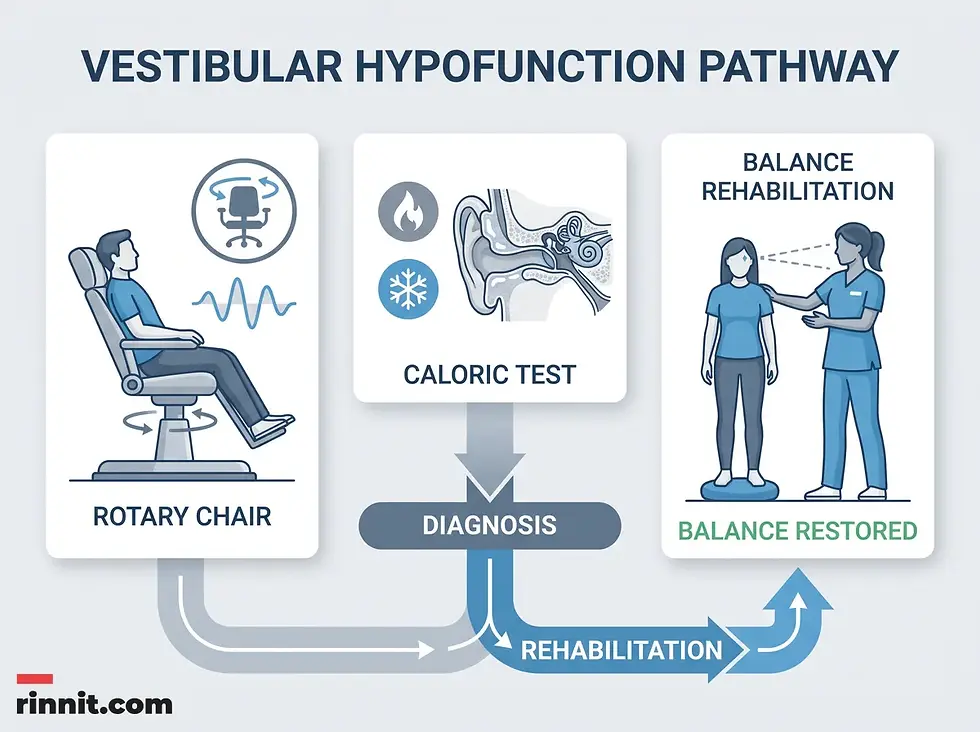
Caloric Test: Providers use warm or cool water in the ear canal [1] to check for specific, involuntary eye movements.
Rotary Chair Test: This measures how well the eyes and vestibular system coordinate vision while the body is in motion.
Videonystagmography (VNG): A test that monitors for uncontrollable eye movements, known as nystagmus. [1]
VEMP Test: This focuses on the otolith organs, which sense up-and-down or back-and-forth body movements. [1]
Management and Rehabilitation
The cornerstone of treatment for vestibular hypofunction is Vestibular Rehabilitation Therapy (VRT). This is a specialized form of physical therapy [3] designed to alleviate the symptoms of balance disorders through exercise-based retraining.
How VRT Works
VRT involves a customized program of exercises that help the brain compensate for the loss of vestibular function. These may include:
Eye Control Exercises: Improving visual stability during head movements.
Balance Retraining: Gradually increasing the difficulty of standing and walking tasks.
Habituation: Repeatedly performing movements that trigger dizziness to desensitize the brain.
While some individuals with long-term bilateral hypofunction may have persistent symptoms [1], most patients find that consistent therapy significantly reduces the interference of the condition with their daily lives. [1]
Conclusion
Vestibular hypofunction is a complex disorder that can significantly impact an individual's independence and emotional well-being. However, the brain's remarkable ability to adapt means that recovery is possible for the vast majority of patients. Through early diagnosis and committed participation in Vestibular Rehabilitation Therapy, those affected can retrain their systems, reduce dizziness, and regain their footing. If you are experiencing persistent balance issues, consult a specialist to begin your journey back to solid ground.
Related reading: Vestibular rehabilitation therapy · Dizziness and vertigo · Ototoxicity
Frequently Asked Questions
Is vestibular hypofunction the same as vertigo?
Vertigo is a symptom, while vestibular hypofunction is the underlying condition. Hypofunction causes vertigo because the brain isn't getting correct balance signals.
Can I drive with vestibular hypofunction?
In many cases, symptoms like blurred vision and dizziness make driving unsafe. You should only resume driving once your healthcare provider confirms your balance is stable.
How long does Vestibular Rehabilitation Therapy (VRT) take?
The duration varies, but many patients see significant improvement within a few weeks to months of consistent exercise.
Does vestibular hypofunction ever go away on its own?
While some acute infections may resolve, the damage to the vestibular system often requires VRT to help the brain compensate and restore balance.
Can anxiety make my balance issues worse?
Yes. The stress of dealing with a balance disorder can lead to anxiety, which in turn can exacerbate the sensation of dizziness.
Is vestibular hypofunction a rare condition?
Yes, it is considered a rare balance disorder, though it is a common focus in specialized balance and dizziness clinics.
What is the most common cause of damage to both ears?
Ototoxicity—damage from certain high-dose antibiotics or chemotherapy medications—is the most frequent cause of bilateral vestibular hypofunction.
Are there medications to treat this condition?
While medications can help manage symptoms like nausea or acute vertigo, they do not "fix" the vestibular system. VRT is the primary treatment for long-term recovery.
Can children get vestibular hypofunction?
While it most commonly affects older adults (55+), it can occur at any age following an infection or head injury.
What should I do if I have a sudden fall?
If you fall for no apparent reason, seek medical attention. It could be a sign of vestibular hypofunction or another serious health issue.
References
Cleveland Clinic. Vestibular Hypofunction: Symptoms, Causes & Treatment. Cleveland Clinic. Last updated 04/17/2026. https://my.clevelandclinic.org/health/diseases/vestibular-hypofunction
McDonnell MN, Hillier SL. Vestibular rehabilitation for unilateral peripheral vestibular dysfunction. Cochrane Database Syst Rev. 2015;1(1):CD005397. PMID 25581507. https://doi.org/10.1002/14651858.CD005397.pub4
Hall CD, Herdman SJ, Whitney SL, et al. Vestibular rehabilitation for peripheral vestibular hypofunction: an updated clinical practice guideline from the Academy of Neurologic Physical Therapy of the American Physical Therapy Association. J Neurol Phys Ther. 2022;46(2):118-177. PMID 34864777. https://doi.org/10.1097/NPT.0000000000000382
Hall CD, Herdman SJ, Whitney SL, et al. Vestibular rehabilitation for peripheral vestibular hypofunction: an evidence-based clinical practice guideline. J Neurol Phys Ther. 2016;40(2):124-155. PMID 26913496. https://doi.org/10.1097/NPT.0000000000000120
Medical disclaimer
This article is for educational purposes only and is not a substitute for professional medical advice, diagnosis, or treatment. Always seek the advice of your physician or other qualified health provider with any questions about a medical condition.



Comments