
Understanding Visceral Fat: Health Risks, Causes, and Management

Updated: 2 days ago
Medically reviewed by Dr. Baraa Alnahhal, MD · Last reviewed: October 2026
Quick Answer: What is visceral fat and how do you reduce it?
Visceral fat is body fat stored deep inside the abdomen, wrapping around organs such as the heart, liver, kidneys and intestines. A small amount protects the organs, but too much is linked to higher cardiovascular disease risk. Waist measurements estimate it. Exercise, balanced eating, sleep and less alcohol help, with changes visible in two to three months. [1]
What the research says
More visceral fat is linked to a higher risk of death. A systematic review and dose-response meta-analysis of 35 prospective cohort studies (923,295 participants, 68,389 deaths) found that each 1-standard-deviation increase in visceral adipose tissue was associated with a 17% higher risk of all-cause mortality (hazard ratio 1.17, 95% CI 1.03–1.33), while the same increase in subcutaneous fat was associated with a lower risk (HR 0.81, 95% CI 0.66–0.99); the authors note that reverse causation and confounding may influence these associations (Jayedi et al., International Journal of Obesity, 2022) [2].
Exercise reduces visceral fat. A systematic review and network meta-analysis of 34 randomized trials (1,962 participants) found that high-intensity interval training (standardized mean difference −0.39, 95% CI −0.60 to −0.18) and aerobic exercise of at least moderate intensity (−0.26, 95% CI −0.38 to −0.13) reduced visceral fat; the effective dose was three sessions a week for 12 to 16 weeks (Chang et al., International Journal of Obesity, 2021) [3].
Aerobic exercise shrinks the waistline. A meta-analysis of 25 randomized trials (1,686 adults with overweight or obesity) found that regular aerobic exercise reduced waist circumference by 3.2 cm (95% CI −3.86 to −2.51) versus control, and that change in waist circumference was associated with change in visceral fat; vigorous intensity reduced it by 4.2 cm versus 2.5 cm for moderate intensity (Armstrong et al., Obesity Reviews, 2022) [4].
What Is Visceral Fat?
Visceral fat is a type of body fat you have deeper inside you. It gets its name from its location: viscera is the term for internal organs and tissues. Visceral fat lines your abdominal walls and wraps around many of your internal organs [1].
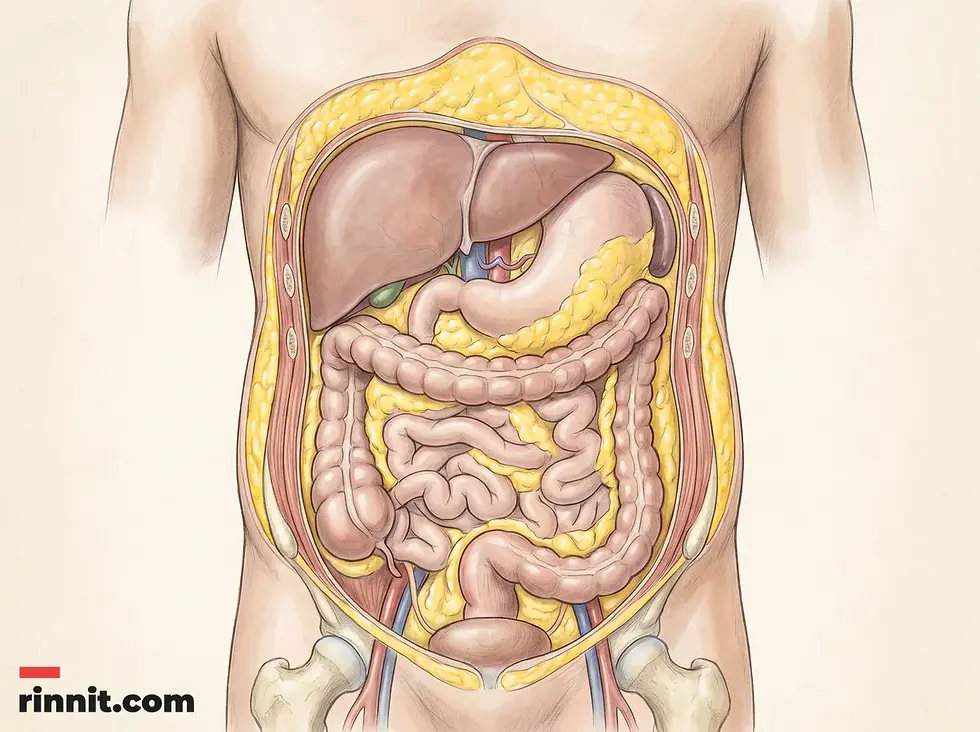
Everyone has some visceral fat. It is a layer of soft, cushioning protection around several of your internal organs, and it also has a role in how your body stores and uses energy. It differs from subcutaneous fat, the soft fat just beneath your skin; belly fat includes both types [1]. But you can have too much of a good thing, and having too much may increase your risk of health problems.
Anatomy and Function
Visceral fat is sometimes called "active fat" because it plays an active role in how your body functions. Having some is normal and healthy: it cushions and protects your internal organs [1].
Visceral fat cushions or surrounds several internal organs, including your [1]:
Heart
Intestines
Kidneys
Liver and gallbladder
Mesentery (the tissue that attaches your intestines)
Pancreas
Stomach
Visceral fat consists of adipocytes, or fat cells, and the adipocytes in visceral fat are sensitive to hormones — the chemical messenger molecules your body uses. That can affect the way your body metabolizes and stores fat [1].
Health Risks and Associated Conditions
Research links having too much visceral fat to a higher risk of cardiovascular disease. Metabolic syndrome conditions like diabetes often change how your body handles hormone signals, which might explain why more visceral fat raises cardiovascular risk [1].
The most common conditions that affect visceral fat are obesity and related problems, including diabetes, high cholesterol, and circulatory system diseases like atherosclerosis. Certain endocrine system diseases can also affect visceral fat. Most are uncommon but can be very serious, such as lipodystrophies (disorders of fat tissue), Cushing syndrome, hypothyroidism, and metabolic dysfunction-associated steatohepatitis (MASH) [1].
Causes of Visceral Fat Accumulation
Genetics contribute to how much visceral fat you have and where it is in your body, which is part of what determines your body's shape. Environmental factors and your choices also matter [1]:
Diet: eating fatty foods and carbohydrates (sugars) can make your body form more visceral fat.
Inactivity: if you aren't active enough, you will make more visceral fat than your body uses for energy.
Stress: the stress hormone cortisol affects visceral fat cells and makes your body add to its store of visceral fat.
Assessing Your Visceral Fat Levels
Since you can't see or feel visceral fat, you have to rely on other ways to keep tabs on it. The main signs of an issue are how much visceral fat you have and changes — especially sudden ones — in how much you have. Your body shape and measurements are the best indicators [1].
Assessment method | High-risk threshold (females) | High-risk threshold (males) |
|---|---|---|
Waist measurement (tape measure just above the hip bones) | 35 inches or more | 40 inches or more |
Waist-to-hip ratio | Above 0.85 | Above 0.90 |
Body mass index (BMI) | 30 or more | 30 or more |
Waist-height ratio | Waist should be no more than half of your height | Waist should be no more than half of your height |
A BMI of 30 or more suggests you may have a higher level of visceral fat. Taking these measurements and making sense of them on your own can be tricky, so talk to your primary care provider if you have questions about what they mean [1].

Management and Reduction Strategies
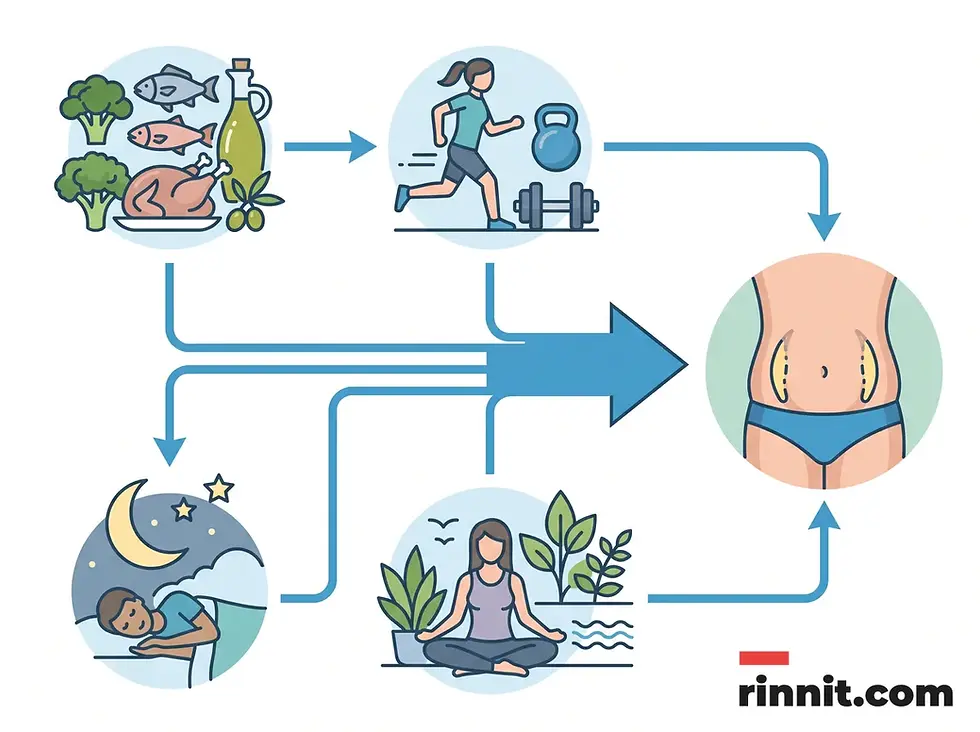
Maintaining a healthy lifestyle is the best way to lose visceral fat. You can lower your visceral fat level with the same methods that help you lose weight and lower your total body fat [1]:
Stay active: aim for at least 30 minutes of exercise a day, five days a week, using cardio or strength training; high-intensity interval training (HIIT) is also popular.
Manage what you eat: the Mediterranean diet and the DASH diet are examples of eating patterns you can follow, and your primary care provider can guide what to prioritize on your plate.
Consider intermittent fasting: this strategy focuses on when you eat, encouraging your body to burn stored fat.
Get enough quality sleep: not getting enough sleep puts stress on your body, which can make more visceral fat develop or make it harder to lose.
Reduce stress: your body makes more cortisol when you're stressed, and stress can contribute to weight gain.
Limit alcohol: alcohol has a lot of empty calories, and too much can strain your liver, which also processes fat.
Outlook and Prevention
Visceral fat is not hard to lose — it is actually easier to lose than subcutaneous fat. If you're consistent with staying active and managing what you eat, you can start to see fat loss in two to three months [1].
Prevention follows the same lifestyle habits: stay active, follow a balanced eating pattern, manage stress to keep cortisol in check, get enough sleep, and limit alcohol [1].
Conclusion
Visceral fat is normal, healthy, and part of how your body develops and works — but having too much of it isn't a good thing. By understanding its role as "active fat," watching your waist measurements, and building steady habits around activity, eating, sleep, and stress, you can keep it in a healthier range. If you have questions or concerns about visceral fat and how it might be affecting you, talk to your primary care provider; they can help you understand your situation and what you can do about it [1].
Frequently Asked Questions
What is the main difference between visceral and subcutaneous fat?
Subcutaneous fat sits just under the skin and is the soft fat you can feel, while visceral fat is stored deeper inside, lining your abdominal walls and wrapping around internal organs. Belly fat includes both types [1].
Why is visceral fat considered "active fat"?
Visceral fat is called active fat because it plays an active role in how your body functions. Visceral fat cells are sensitive to hormones, which can affect the way your body metabolizes and stores fat [1].
Can you see visceral fat?
No. You can't see or feel visceral fat, so you have to rely on other ways to keep tabs on it. Your body shape and measurements, such as waist circumference, are the best indicators of how much you have and whether the amount changes [1].
Does stress cause visceral fat?
Stress can play a role. The stress hormone cortisol can affect visceral fat cells and makes your body add to its store of visceral fat [1].
How much visceral fat is normal?
Having some visceral fat is normal and healthy. The normal visceral fat range should be about 10% of your body fat; if your total body fat percentage is higher than recommended, your visceral fat range will be higher too [1].
Is visceral fat harder to lose than other fat?
No. Visceral fat is actually easier to lose than subcutaneous fat. If you are consistent with staying active and managing what you eat, you can start to see fat loss in two to three months [1].
What are the biggest health risks of high visceral fat?
Research links too much visceral fat to a higher risk of cardiovascular disease [1]. The conditions most commonly associated with visceral fat are obesity and related problems such as diabetes, high cholesterol, and atherosclerosis [1].
Does alcohol contribute to visceral fat?
Alcohol can. Alcohol contains a lot of "empty" calories, and too much can strain your liver, which also processes fat so your body can use it [1].
How often should I exercise to reduce visceral fat?
Cleveland Clinic recommends at least 30 minutes of exercise a day, five days a week, using cardio or strength training; high-intensity interval training (HIIT) is also popular [1].
Can genetics determine my visceral fat levels?
Genetics contribute to how much visceral fat you have and where it sits in your body, which is part of what determines your body shape. But environmental factors and your choices — what you eat, how active you are, and how you manage stress — also influence how much you carry [1].
References
Source currency note: The Cleveland Clinic page was last updated on August 22, 2025, and the three studies were checked against PubMed. This article reflects the most current information available from those sources.
Cleveland Clinic. Visceral fat: what it is & how it affects you. Cleveland Clinic. August 22, 2025. https://my.clevelandclinic.org/health/diseases/24147-visceral-fat
Jayedi A, Khan TA, Aune D, et al. Body fat and risk of all-cause mortality: a systematic review and dose-response meta-analysis of prospective cohort studies. International Journal of Obesity. 2022;46(9):1573-1581. PMID 35717418. https://doi.org/10.1038/s41366-022-01165-5
Chang YH, Yang HY, Shun SC. Effect of exercise intervention dosage on reducing visceral adipose tissue: a systematic review and network meta-analysis of randomized controlled trials. International Journal of Obesity. 2021;45(5):982-997. PMID 33558643. https://doi.org/10.1038/s41366-021-00767-9
Armstrong A, Jungbluth Rodriguez K, Sabag A, et al. Effect of aerobic exercise on waist circumference in adults with overweight or obesity: a systematic review and meta-analysis. Obesity Reviews. 2022;23(8):e13446. PMID 35383401. https://doi.org/10.1111/obr.13446
Medical disclaimer
Health information, not medical advice. This article is for general education and is not a substitute for professional diagnosis or treatment. Always consult a qualified healthcare provider about your own health, and seek emergency care for urgent symptoms.



Comments