Understanding Torn Calf Muscles: Symptoms, Causes, and Care

Updated: 2 days ago
Medically reviewed by Dr. Baraa Alnahhal, MD | Last reviewed: October 7, 2026

Quick Answer
A torn calf muscle is a severe calf strain in which the muscles behind the shin bone are overstretched until they tear [1]. Symptoms include a snapping sensation, sudden pain, swelling and bruising [1]. Most injuries heal within weeks using rest, ice, compression and elevation plus physical therapy, though complete ruptures occasionally need surgery [1]. Consistent rehabilitation restores strength.
What the research says
Age and a previous calf strain are the strongest predictors of a new calf injury. A systematic review of 10 studies covering 5,397 athletes and 518 calf or lower-leg muscle injuries (football, Australian football, rugby union, basketball and triathlon) found that increasing age and a previous calf strain were the strongest risk factors for future calf muscle injury, while height, weight, gender and side dominance lacked evidence of an association (Green & Pizzari, British Journal of Sports Medicine, 2017) [2].
MRI may help predict time lost after a calf strain, but clear return-to-play guidelines are lacking. A systematic review of 34 studies on musculoskeletal injuries in tackle-collision team sports found that MRI showed promise in predicting time lost after hamstring and calf strains, and that there are currently no clear guidelines for returning to play after these injuries (Geldenhuys et al., European Journal of Sport Science, 2022) [3].
What Is a Torn Calf Muscle?
A torn calf muscle, clinically referred to as a severe calf strain, occurs when the muscle fibers in the lower leg are overstretched to the point of tearing. These injuries typically affect the gastrocnemius or soleus muscles, which span the area between the knee and the heel [1]. Because these muscles sit between two major joints, the ankle and the knee [1], they are subjected to significant tension during movement.
Tears can range from partial disruptions of the muscle fibers to a complete rupture. When a tear occurs, the structural integrity of the lower leg is compromised, often leading to immediate functional limitations. Understanding the distinction between a minor pull and a true tear is critical for determining the appropriate level of medical care and the expected recovery timeline.
Recognizing Common Symptoms
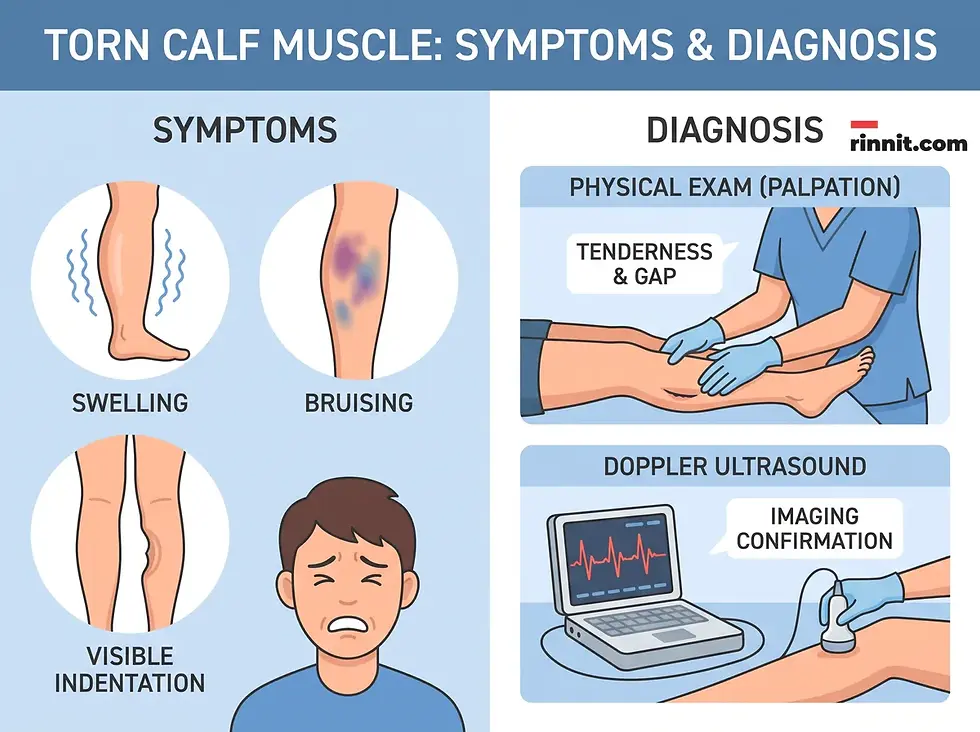
The symptoms of a torn calf muscle are often sudden and unmistakable. Many people report an audible snapping or popping sensation at the moment of injury, followed by intense pain that can feel like a direct kick to the back of the leg [1]. This initial trauma is typically followed by physical changes that indicate the severity of the muscle damage.
Symptom category | Common clinical signs |
Immediate sensation | Snapping or popping sensation [1]; sudden, sharp pain in the lower leg |
Physical appearance | Visible bruising, significant swelling, or a noticeable indentation in the muscle [1] |
Functional loss | Inability to bear weight, loss of balance, or failure to rise onto the toes [1] |
Potential Causes and Risk Factors
Calf muscle tears are primarily caused by abrupt mechanical stress. Sudden jumps, quick pivots, or stop-and-go movements common in sports like basketball and tennis are frequent triggers [1]. Over time, overworking the muscles without adequate recovery can also weaken the fibers, making them more susceptible to acute injury during routine activities.
Risk factor | Impact on muscle health |
Age (40+) | Natural aging leads to decreased flexibility and weakened muscle fibers |
Activity type | High-impact sports requiring rapid changes in direction or explosive jumping |
Conditioning | Starting intense exercise without proper warm-ups or muscle conditioning [1] |
Diagnostic and Restorative Procedures
A professional evaluation is necessary to confirm a muscle tear and rule out other conditions such as deep vein thrombosis (DVT) or an Achilles tendon rupture [1]. Providers typically begin with a physical examination, palpating the calf to identify areas of tenderness and structural gaps. Imaging tests provide further clarity on the extent of the damage.
Doppler ultrasound is frequently used to visualize soft tissue and assess blood flow, while an MRI can offer highly detailed images of the muscle fibers and surrounding tendons [1]. Treatment almost always begins with the RICE protocol: resting the leg, applying ice to manage swelling, using compression wraps, and elevating the limb above the heart [1]. In rare cases where pain persists or a complete rupture occurs in a competitive athlete, surgical intervention may be required to restore full function [1].
Prevention and Long-Term Care
Preventing a recurrence is vital, as healed muscles often contain scar tissue that is less flexible and strong than the original tissue. A comprehensive prevention strategy focuses on maintaining muscle elasticity and strength through consistent conditioning and proper technique during physical activity.
Key preventive habits include performing dynamic warm-ups before exercise and allowing for adequate recovery time between intense sessions [1]. Wearing supportive, well-fitting footwear also helps distribute mechanical stress more evenly across the lower leg. Once the initial healing phase is complete, physical therapy is often recommended to regain the flexibility needed for daily activities and a safe return to sports.

Conclusion
The long-term outlook for people with a torn calf muscle is generally positive, with most returning to their normal activities within a few weeks or months [1]. While the presence of scar tissue requires ongoing mindfulness, a dedicated approach to rehabilitation and prevention can ensure a full recovery.
Next Steps
If you experience sudden calf pain or notice significant swelling, consult a healthcare professional promptly. Early intervention and a structured care plan are the most effective ways to ensure your muscles heal correctly and remain strong for years to come.
Frequently Asked Questions
What is a torn calf muscle?
A torn calf muscle is a severe strain in which the gastrocnemius or soleus muscles are partially or completely torn.
What does a calf tear feel like?
A calf tear often feels like a sudden, sharp pain, similar to being kicked in the back of the leg.
Can I walk with a torn calf muscle?
In severe cases, you may be unable to bear weight or balance on the injured leg.
What is the RICE method?
RICE stands for Rest, Ice, Compression and Elevation, the standard initial treatment for muscle tears.
How long does it take to heal?
Most people recover within a few weeks to a few months, depending on the tear’s severity.
Is a pop sound normal?
Yes. A snapping or popping sensation is a common sign of a muscle tear.
When is surgery needed?
Surgery is rare but may be used for complete ruptures or persistent pain in active individuals.
What are the risk factors?
Being over 40, playing high-impact sports and poor conditioning increase injury risk.
Can scar tissue cause problems?
Yes. Scar tissue is less strong and flexible than the surrounding muscle, which may increase the risk of future tears.
How does an MRI help?
An MRI provides detailed images that help distinguish between muscle tears and tendon injuries.
What is a Doppler ultrasound?
A Doppler ultrasound is a test that uses sound waves to check soft tissue and blood flow in the leg.
Should I use heat or massage on the injury?
No. Avoid applying heat or massaging the calf until your healthcare provider says it is OK.
Are crutches necessary?
Some people need crutches or a boot to move around while the muscle heals.
How can I prevent a tear?
Use dynamic warm-ups, wear supportive shoes, keep your muscles strong and conditioned, and allow rest between workouts.
What are rare complications?
Rare complications include deep vein thrombosis (DVT) and compartment syndrome.
Sources
Cleveland Clinic. Torn Calf Muscle. Cleveland Clinic. Last updated July 8, 2024. https://my.clevelandclinic.org/health/diseases/21696-torn-calf-muscle
Green B, Pizzari T. Calf muscle strain injuries in sport: a systematic review of risk factors for injury. Br J Sports Med. 2017;51(16):1189-1194. PMID 28259848. https://doi.org/10.1136/bjsports-2016-097177
Geldenhuys AG, Burgess T, Roche S, et al. Return to play protocols for musculoskeletal upper and lower limb injuries in tackle-collision team sports: a systematic review. Eur J Sport Sci. 2022;22(11):1743-1756. PMID 34328056. https://doi.org/10.1080/17461391.2021.1960623
Medical disclaimer
This information is for educational purposes only and does not constitute medical advice. Always consult a qualified healthcare professional about any concerns regarding muscle injuries or leg pain.



Comments