Understanding the Ileum: Functions, Anatomy, and Health

Updated: 3 days ago
Medically reviewed by Dr. Baraa Alnahhal, MD | Last reviewed: October 7, 2026
Quick Answer: What is the ileum?
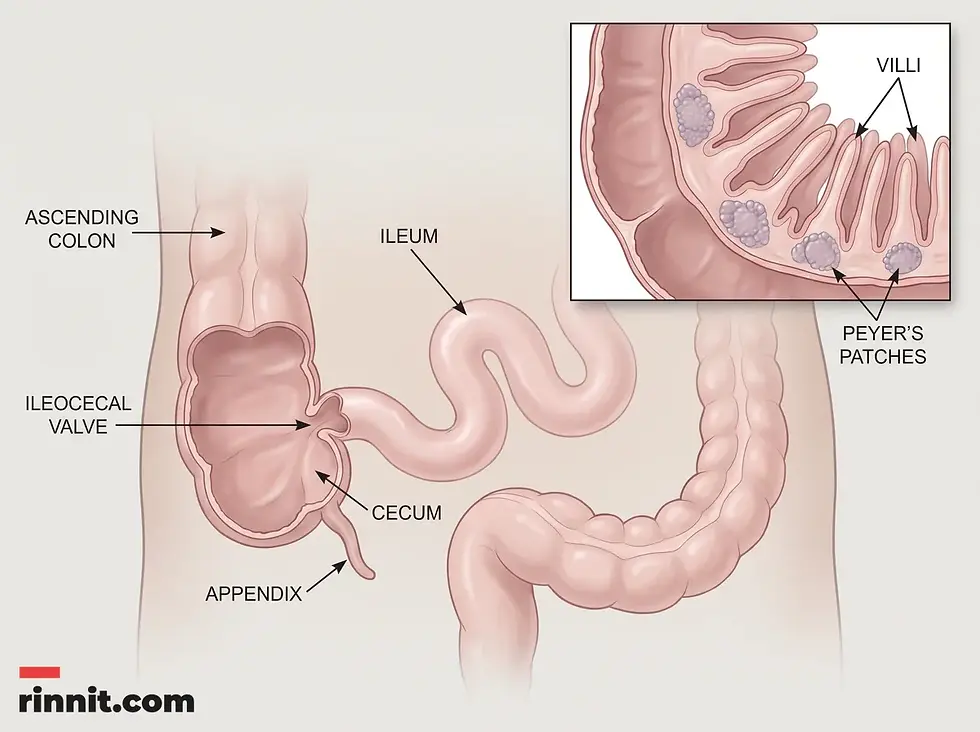
The ileum is the final segment of the small intestine, measuring about 11.5 feet long, located in the lower right abdomen. [1] It completes digestion by absorbing nutrients such as vitamin B12 and recycling bile salts, and its Peyer's patches protect the gut from harmful bacteria. [1] It connects to the large intestine through the ileocecal valve. [1]
What the research says
Celiac disease, which damages the lining of the small intestine, affects about 1 in 100 people worldwide. A systematic review and meta-analysis of 96 articles found a pooled global prevalence of 1.4% (95% CI 1.1–1.7%) based on blood antibody tests (275,818 people) and 0.7% (95% CI 0.5–0.9%) based on biopsy (138,792 people); prevalence was higher in females than males (0.6% vs 0.4%) and in children than adults (0.9% vs 0.5%) (Singh et al., Clinical Gastroenterology and Hepatology, 2018) [2].
Crohn’s disease that affects the ileum is harder to put into remission than disease limited to the colon. A meta-analysis of 14 randomized trials (3,139 people with moderate-to-severe Crohn’s disease) found that advanced therapies beat placebo for inducing remission in ileal disease (OR 1.80, 95% CI 1.23–2.63), but by a much smaller margin than in isolated colonic disease (OR 4.09, 95% CI 3.02–5.54) (Lee et al., Clinical Gastroenterology and Hepatology, 2026) [3].
Meckel’s diverticulum, a pouch in the ileal wall, is present in roughly 1 to 2 in 100 people. A systematic review and meta-analysis of 172 studies found a pooled prevalence of 1.56% (95% CI 0.98–2.28%). Symptomatic cases most often presented with intestinal obstruction, diverticulitis and bleeding, and ectopic gastric mucosa was found in over 40% of pediatric cases (Plutecki et al., Journal of Clinical Medicine, 2026) [4].
The Critical Role of the Ileum in Human Digestion
The ileum represents the final and most extensive portion of the small intestine, serving as the bridge between the jejunum and the large intestine. [1] Its primary physiological responsibility is the specialized absorption of nutrients that have bypassed earlier stages of the digestive tract. Specifically, the ileum is the exclusive site for the uptake of vitamin B12 and the reclamation of bile salts, which are essential for fat digestion and metabolic energy production.
Beyond its mechanical and chemical digestive roles, the ileum functions as a vital component of the body’s immune system. It contains specialized clusters of lymphoid follicles known as Peyer’s patches, which actively monitor the gut environment for pathogenic microorganisms. [1] By detecting and neutralizing harmful bacteria, the ileum helps maintain the delicate balance of the intestinal microbiome and prevents systemic infections.
Anatomical Structure and Composition
The ileum is a highly specialized tube consisting of four distinct tissue layers that facilitate its diverse functions. From the innermost to the outermost, these layers include the mucosa, submucosa, muscularis externa, and serosa. [1] The mucosa is lined with tiny, finger-like projections called villi, which significantly increase the surface area available for nutrient absorption. The muscularis externa, comprised of smooth muscle, enables the rhythmic contractions necessary to move digested material toward the large intestine. [1]
Anatomical Layer | Composition and Primary Function |
Mucosa | Innermost layer featuring villi and Peyer’s patches for absorption and immune defense. |
Submucosa | Connective tissue layer housing blood vessels, lymph nodes, and nerve networks. |
Muscularis Externa | Dual smooth muscle layers (circular and longitudinal) that facilitate peristalsis. |
Serosa | Protective outer membrane that covers and secures the ileum within the abdominal cavity. |
Physically, the ileum is characterized by its light pink color and coiled, flexible structure. [1] It measures roughly 11.5 feet (3.5 meters), accounting for approximately three-fifths of the small intestine’s total length. [1] The terminal ileum, located at the very end of the segment, is particularly critical as it interfaces with the large intestine through the ileocecal valve, a specialized structure that prevents the backflow of bacteria [1] and waste.

Common Disorders and Health Implications
Several clinical conditions can compromise the functionality of the ileum, often leading to significant nutritional deficiencies and gastrointestinal distress. Crohn’s disease, a chronic inflammatory bowel condition, frequently targets the ileum, causing painful swelling and ulcerations. [1] Similarly, celiac disease involves an autoimmune reaction to gluten that damages the lining of the small intestine, severely hindering its ability to process and absorb nutrients. [1]
Condition | Primary Impact on the Ileum |
Crohn’s Disease | Chronic inflammation leading to pain, diarrhea, and significant malabsorption. |
Celiac Disease | Autoimmune damage to the small intestinal lining, including the ileum, triggered by gluten consumption. |
Ileal Atresia | A congenital blockage or absence of a portion of the ileum, obstructing digestion. |
Meckel’s Diverticulum | A small, congenital pouch in the intestinal wall that can cause bleeding or infection. |
Ileitis | General inflammation of the ileum resulting in abdominal cramps and fatigue. |
When the ileum is not functioning correctly, individuals may experience a range of symptoms indicative of malabsorption or inflammation. Common signs include persistent abdominal pain, chronic diarrhea, bloating, and unexplained weight loss. [1] Furthermore, because the ileum is responsible for B12 absorption, dysfunction often results in systemic fatigue and weakness. [1]
Proactive Strategies for Maintaining Ileal Health
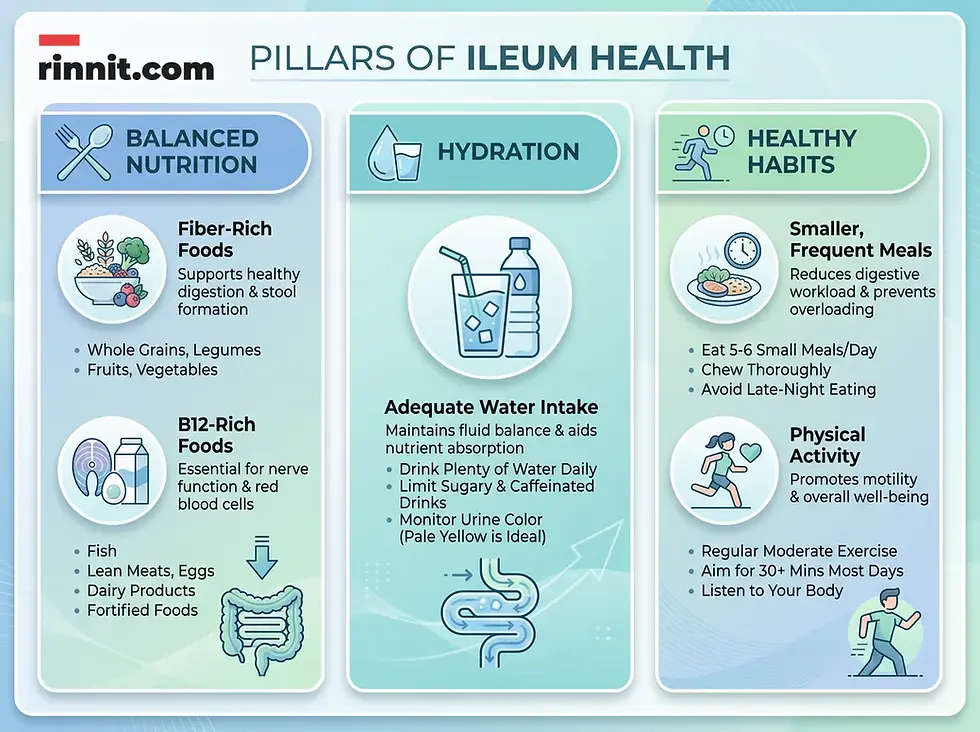
Supporting the health of the ileum requires a combination of nutritional discipline and proactive lifestyle habits. A diet rich in fiber, lean proteins, and healthy fats provides the necessary environment for optimal digestion. [1] Furthermore, ensuring adequate intake of vitamin B12 through sources such as fish, meat, and eggs is essential, as the ileum is the primary site for its processing. [1]
Hydration is equally critical, as water facilitates the movement of material through the digestive tract and supports the integrity of the mucosal lining. Individuals should aim to consume smaller, more frequent meals to avoid overtaxing the small intestine and should limit the intake of processed sugars and artificial sweeteners [1], which can disrupt the gut microbiome. Regular physical activity and stress management also contribute to efficient digestive motility and overall gut resilience.
Conclusion
The ileum is a cornerstone of the human digestive and immune systems, performing essential tasks that sustain energy levels and protect against infection. By understanding its complex anatomy and the factors that influence its health, individuals can take meaningful steps to ensure long-term digestive wellness. Persistent symptoms should always be addressed by a healthcare professional to prevent complications and maintain optimal nutrient absorption.
Call to Action
Prioritize your digestive health today by incorporating nutrient-dense foods and maintaining consistent hydration. If you are experiencing persistent abdominal discomfort or fatigue, consult with a medical professional to evaluate your gastrointestinal function and develop a personalized wellness plan.
Frequently Asked Questions
What is the primary function of the ileum?
The primary function of the ileum is to absorb vitamin B12, bile salts, and any remaining nutrients that were not processed in the earlier stages of the small intestine.
Where is the ileum located?
The ileum is located in the lower right portion of the abdominal cavity, connecting the jejunum to the large intestine.
How long is the human ileum?
In adults, the ileum is approximately 11.5 feet (3.5 meters) long, making up about 60% of the small intestine’s length.
What are Peyer’s patches?
Peyer’s patches are clusters of lymphoid tissue in the ileum that help detect and fight harmful bacteria entering the digestive system.
What happens if the ileum is damaged?
Damage to the ileum can lead to malabsorption, resulting in deficiencies in vitamin B12 and fats, as well as symptoms like diarrhea and fatigue.
Can you live without an ileum?
While it is possible to live after a partial or total removal of the ileum, specialized medical management and nutritional supplements are typically required to prevent severe malabsorption.
What is the ileocecal valve?
The ileocecal valve is a muscular structure at the end of the ileum that controls the flow of material into the large intestine and prevents backflow.
How does Crohn’s disease affect the ileum?
Crohn’s disease causes chronic inflammation, swelling, and sores in the ileal lining, which can lead to pain and difficulty absorbing nutrients.
What is the terminal ileum?
The terminal ileum is the final segment of the ileum that connects to the large intestine and is specifically responsible for absorbing B12 and bile salts.
Why is vitamin B12 absorption important?
Vitamin B12 is essential for nerve function, the production of red blood cells, and overall energy levels.
What are the signs of ileal inflammation?
Common signs include stomach cramps, persistent diarrhea, bloating, unexplained weight loss, and chronic fatigue.
How does diet affect the ileum?
A high-fiber diet with lean proteins and healthy fats supports ileal function, while processed and high-sugar foods can cause irritation and microbiome imbalance.
What is ileal atresia?
Ileal atresia is a rare congenital condition where a portion of the ileum is missing or blocked, preventing normal digestion.
Is the ileum different from the jejunum?
Yes, the ileum is longer, has a thinner wall, a lighter pink color, and contains more lymphoid tissue (Peyer’s patches) than the jejunum.
How can I support my gut microbiome?
Supporting the gut microbiome involves eating diverse fiber-rich foods, staying hydrated, managing stress, and avoiding excessive artificial additives.
Related reading on Rinnit
Sources
Cleveland Clinic. Ileum. Cleveland Clinic. Last updated May 11, 2026. https://my.clevelandclinic.org/health/body/ileum
Singh P, Arora A, Strand TA, et al. Global Prevalence of Celiac Disease: Systematic Review and Meta-analysis. Clin Gastroenterol Hepatol. 2018;16(6):823-836.e2. PMID 29551598. https://doi.org/10.1016/j.cgh.2017.06.037
Lee HH, Yuan Y, Boland BS, et al. Efficacy of Advanced Therapies in Achieving Remission by Disease Location in Crohn's Disease: A Systematic Review and Meta-analysis. Clin Gastroenterol Hepatol. 2026;24(4):923-931. PMID 40712715. https://doi.org/10.1016/j.cgh.2025.07.009
Plutecki D, Bonczar M, Kozioł T, et al. Clinical and Anatomical Spectrum of Meckel's Diverticulum: A Systematic Review and Meta-Analysis. J Clin Med. 2026;15(10):3599. PMID 42194561. https://doi.org/10.3390/jcm15103599
Medical disclaimer
The information provided in this article is for educational purposes only and is not intended as medical advice. Always seek the guidance of a qualified healthcare provider regarding any medical condition or treatment.



Comments