Understanding the Gut-Brain Connection

Updated: 3 days ago
Medically reviewed by Dr. Baraa Alnahhal, MD · Last reviewed: October 2026
The gut-brain connection is a complex, bidirectional communication network between the digestive system and the central nervous system [1]. It involves the enteric nervous system, the vagus nerve, and the gut microbiome, influencing everything from hunger and digestion to mood and stress levels [1].
Quick Answer: What is the gut-brain connection?
The gut-brain connection is a two-way communication network in which signals pass constantly between the digestive system and the central nervous system [1]. It involves the enteric nervous system, often called the second brain, the vagus nerve and the gut microbiome [1]. This crosstalk influences hunger, digestion, stress and mood [1], so a healthy balance supports digestive and psychological well-being.
What the research says
Psychological therapies can ease irritable bowel syndrome (IBS) symptoms. In a network meta-analysis of 41 randomized trials with 4,072 participants, the relative risk of remaining symptomatic after treatment was 0.62 for face-to-face cognitive behavioral therapy (95% CI 0.48 to 0.80), 0.61 for self-administered or minimal-contact CBT (95% CI 0.45 to 0.83) and 0.67 for gut-directed hypnotherapy (95% CI 0.49 to 0.91); the trials had a high risk of bias, so the benefit may be overestimated (Black et al., Gut, 2020) [2].
Probiotics and fecal microbiota transplantation improved IBS symptoms in trials. A network meta-analysis of randomized trials (54 on probiotics, 7 on prebiotics or synbiotics, 6 on fecal microbiota transplantation) found favorable effects versus placebo for probiotics (OR 0.53; 95% CI 0.48 to 0.59) and fecal microbiota transplantation (OR 0.46; 95% CI 0.33 to 0.64) with no serious adverse events reported, while prebiotics and synbiotics showed no significant improvement and the best probiotic strain or combination remains unclear (Wu et al., Nutrients, 2024) [3].
The Bidirectional Communication Network
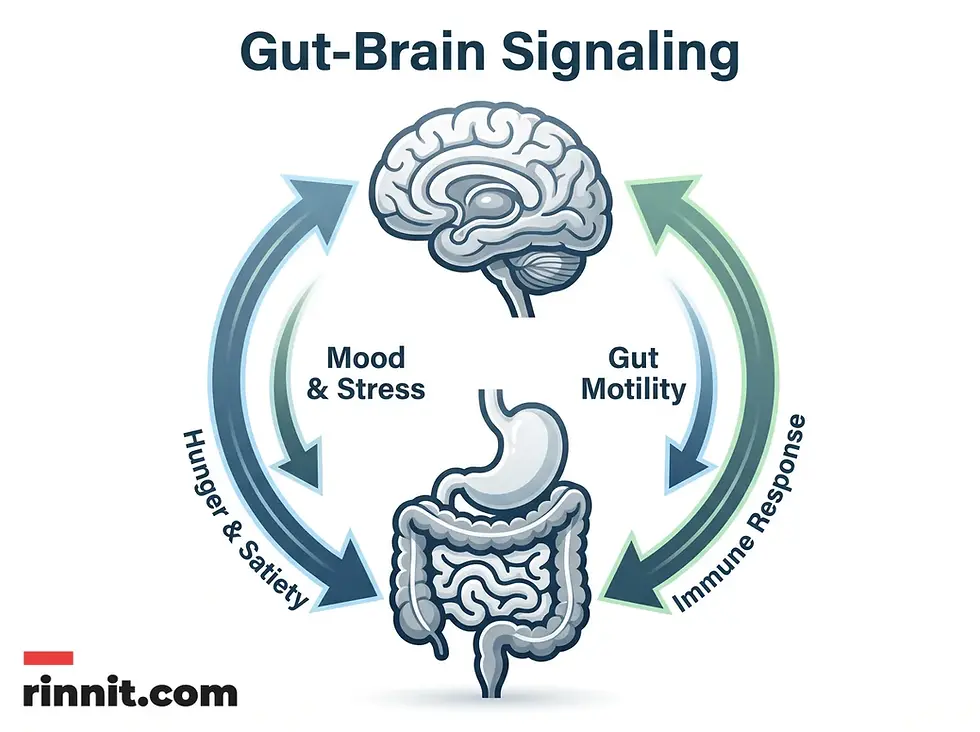
The gut-brain connection, often referred to as the gut-brain axis, represents the complex network of nerves and chemical signals that link the brain and the digestive system [1]. This relationship is bidirectional, meaning information flows constantly in both directions [1]. Health or disease in the digestive tract can significantly impact the central nervous system, and vice versa [1].
This communication is so profound that the digestive system contains more nerve cells than any other part of the body outside the brain [1]. This density of neurons allows the gut to communicate physical sensations and emotional responses, such as the “butterflies” felt during excitement or the “gut-wrenching” feeling associated with dread [1].
Key Components of the Gut-Brain Axis
Several critical systems and biological players facilitate the communication between the gut and the brain. These components work together to monitor the internal environment of the gastrointestinal tract and coordinate appropriate responses.
Component | Role in the Gut-Brain Connection |
Enteric Nervous System (ENS) | A complex neural network in the GI tract with over 500 million neurons [1]; can operate independently as a “second brain.” |
Vagus Nerve | The primary physical link that conveys sensory information from the gut to the brain and motor signals back to the gut [1]. |
Gut Microbiome | Gut bacteria that produce or help produce neurotransmitters and other chemicals that influence brain function through the bloodstream [1]. |
Endocrine System | Produces hormones that communicate signals of hunger, satiety, and stress between the systems [1]. |
Immune System | Responds to injury or disease in the gut, sharing information with the nervous system to coordinate a body-wide response [1]. |

Functions Influenced by the Gut-Brain Axis
The crosstalk between the gut and the brain is essential for survival, helping the body secure necessary nutrients and maintain an alarm system for potential threats [1]. This connection influences a wide range of bodily functions and behaviors [1].
Hunger and Satiety: Signals from the gut tell the brain when to eat and when the body is full [1].
Gut Motility: The brain and ENS coordinate the muscle movements required for digestion [1].
Mood and Behavior: Chemical signals from the gut can influence emotional states and stress levels [1].
Immunity and Metabolism: The axis helps regulate how the body processes energy and defends against pathogens [1].
Pain Sensitivity: The gut-brain connection can modulate how intensely physical sensations in the digestive tract are perceived [1].
Conditions Related to Gut-Brain Interaction
Disorders of gut-brain interaction (DGBI) occur when the communication between these systems becomes disrupted. These conditions often cause persistent symptoms even when there is no obvious physical damage to the organs [1].
Category | Related Conditions |
Functional GI Disorders | Irritable bowel syndrome (IBS), functional dyspepsia, and functional constipation or diarrhea [1]. |
Mental Health | Anxiety disorders, depressive disorders, and chronic stress [1]. |
Neurological Disorders | Parkinson’s disease, multiple sclerosis, and autism spectrum disorders [1]. |
Other Chronic Issues | Chronic fatigue syndrome, chronic pain, obesity, and visceral hypersensitivity [1]. |
Managing the Gut-Brain Connection
Healthcare providers may address disorders of the gut-brain axis through various methods aimed at restoring balance to the system. These treatments often focus on the gut microbiome or the emotional response to physical sensations [1].
Methods for managing this connection include the use of probiotics or antibiotics to alter the gut microbiome [1]. In some cases, fecal microbiota transplantation is explored to introduce a healthier variety of bacteria [1]. Mind-body therapies, such as relaxation therapy, cognitive behavioral therapy (CBT), and gut-directed hypnotherapy, can also help individuals manage persistent symptoms and reduce stress [1] [2].
At home, the best day-to-day ways to support the gut-brain axis are a healthy, balanced diet rich in a wide range of whole, plant-based foods and effective stress management [1].

Conclusion
The gut-brain connection is a fundamental aspect of human biology that ensures the digestive and nervous systems work in harmony. By understanding this bidirectional axis, individuals can better appreciate how their physical and emotional health are intertwined.
Next step: If you experience persistent digestive symptoms accompanied by changes in mood or stress, consult a healthcare provider to explore potential treatments for gut-brain interaction.
Frequently Asked Questions
What is the “second brain”?
The enteric nervous system (ENS) is often called the “second brain” because it is a complex network of over 500 million neurons in the gut that can operate independently of the central nervous system.
How does the vagus nerve help the gut?
The vagus nerve is the main physical link between the gut and the brain, conveying sensory information from the digestive system to the brain and motor signals back to the gut.
Can stress cause digestive problems?
Yes, the gut-brain connection is bidirectional. Emotional stress can intensify physical sensations in the gut, potentially leading to symptoms like pain, bloating, or changes in motility.
What role does the gut microbiome play?
The gut microbiome consists of bacteria that produce or help produce neurotransmitters and other chemicals. These substances can travel through the bloodstream to influence brain function and mood.
What are functional gastrointestinal disorders?
Functional disorders, now often called disorders of gut-brain interaction, cause persistent symptoms like IBS without an obvious physical cause, often stemming from communication issues in the axis.
Can probiotics improve mental health?
Animal studies suggest that a healthier variety of gut microbiota may help relieve gastrointestinal and emotional stress symptoms, but results in humans are still mixed and being researched.
What is gut-directed hypnotherapy?
Gut-directed hypnotherapy is a mind-body therapy that uses hypnosis to help individuals manage the way their brain processes signals from the gut, often used to treat conditions like IBS.
How does the gut influence hunger?
The gut uses the endocrine system to produce hormones that signal to the brain when the body needs nutrients (hunger) or has received enough (satiety).
Why do I feel “butterflies” in my stomach?
The “butterflies” feeling is a direct result of the gut-brain connection, where emotional signals from the brain cause physical responses in the enteric nervous system.
What are the warning signs of a serious gut issue?
While many issues are functional, you should see a doctor if you experience blood in your stool, fever, unexplained weight loss, or persistent, severe pain.
Related Reading
The Gut Microbiome: A Guide to Your Internal Ecosystem explains the gut microbiome and practical ways to support it.
Irritable Bowel Syndrome: Symptoms, Causes, and Treatment covers IBS symptoms, triggers and treatment options.
Vagus Nerve: The Longest Cranial Nerve and Its Essential Functions explains the nerve that links the brain and the digestive tract.
Anxiety Disorders: Symptoms, Types, Causes, Treatment & Complete Guide explains anxiety disorder types, symptoms and effective treatments.
References
Cleveland Clinic. The Gut-Brain Connection. Cleveland Clinic. Last updated September 20, 2023. https://my.clevelandclinic.org/health/body/the-gut-brain-connection
Black CJ, Thakur ER, Houghton LA, et al. Efficacy of psychological therapies for irritable bowel syndrome: systematic review and network meta-analysis. Gut. 2020;69(8):1441-1451. PMID 32276950. https://doi.org/10.1136/gutjnl-2020-321191
Wu Y, Li Y, Zheng Q, et al. The efficacy of probiotics, prebiotics, synbiotics, and fecal microbiota transplantation in irritable bowel syndrome: a systematic review and network meta-analysis. Nutrients. 2024;16(13):2114. PMID 38999862. https://doi.org/10.3390/nu16132114
Medical disclaimer
The information provided in this article is for educational purposes only and should not be used as a substitute for professional medical advice, diagnosis, or treatment. Always seek the advice of your physician or other qualified health provider with any questions you may have regarding a medical condition.



Comments