Understanding Renal Vein Thrombosis: Symptoms, Causes, and Care

Updated: 2 days ago
Medically reviewed by Dr. Baraa Alnahhal, MD · Last reviewed: October 2026
Renal vein thrombosis is a rare condition where a blood clot forms in the vein that carries blood out of the kidney. [1] [4] While many individuals, particularly older adults, may not experience immediate symptoms, the condition can lead to significant kidney damage if left untreated. Common triggers include nephrotic syndrome and cancer. [1] Treatment focuses on resolving the clot through blood thinners or specialized procedures and managing the underlying cause to prevent recurrence.
Quick Answer
Renal vein thrombosis (RVT) is a blood clot in the vein draining the kidney that can partly or completely block blood flow in one or both kidneys. [1] It can occur suddenly, with back pain and blood in the urine, or develop chronically without obvious signs. Treatment typically involves blood thinners and addressing the cause, such as nephrotic syndrome. [1]
What the research says
Clot-removal procedures may help most when renal vein thrombosis is caught early. In a single-center study of 40 adults with renal vein thrombosis (median age 37), nephrotic syndrome was the underlying cause in 30 (75%). In the acute phase (under 14 days from symptom onset), the 23 patients who also had endovascular treatment showed higher thrombus clearance and better improvement in creatinine and GFR than the 17 treated with anticoagulation alone (P < .05) (Zhang et al., Journal of Vascular Surgery: Venous and Lymphatic Disorders, 2023 [2]).
Nephrotic syndrome raises clot risk, but renal vein thrombosis itself is uncommon. Among about 925,000 US hospital discharges with nephrotic syndrome (1979 to 2005), 1.5% had a deep vein thrombosis and 0.5% had a pulmonary embolism, while fewer than 5,000 had renal vein thrombosis; the relative risk of deep vein thrombosis was 1.72 overall and 6.81 in adults aged 18 to 39 (Kayali et al., The American Journal of Medicine, 2008 [3]).
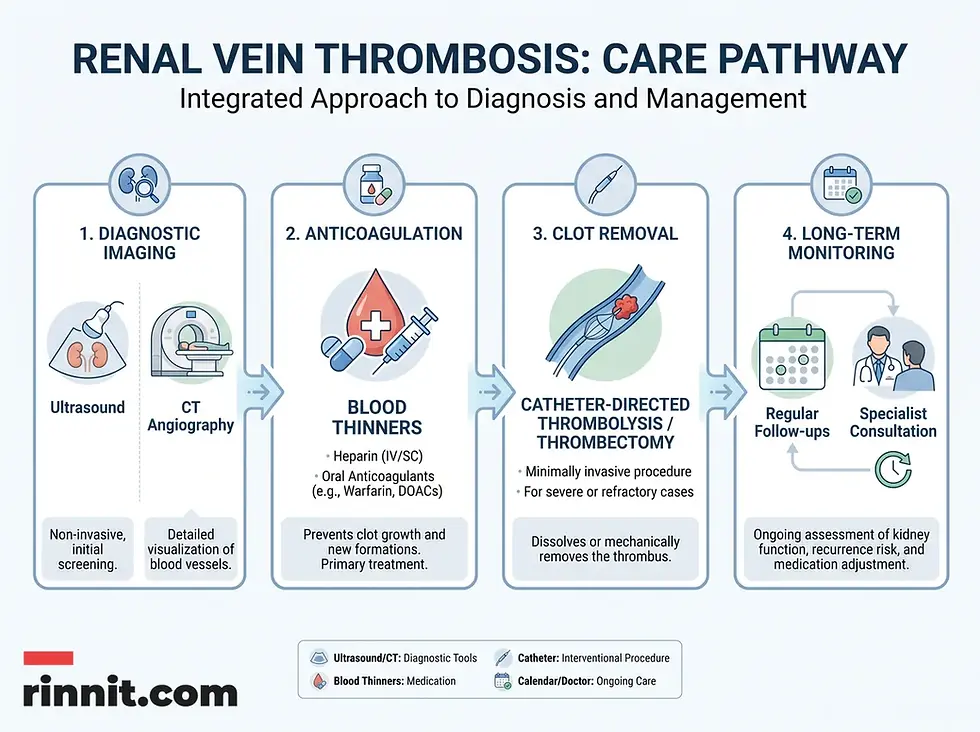
CT angiography and blood thinners are central to modern care. A review that selected 60 published references concluded that CT angiography is considered the investigation of choice, and that management has shifted toward non-surgical therapy, particularly systemic anticoagulation, except in a highly selected group of patients (Asghar et al., European Journal of Vascular and Endovascular Surgery, 2007 [4]).
What is renal vein thrombosis?
Renal vein thrombosis involves the formation of a thrombus, or blood clot, in the vessel responsible for transporting filtered blood away from the kidney. [1] This condition is rare and can be categorized into two primary types: acute and chronic. [1] Acute renal vein thrombosis is more frequently seen in younger adults and is often accompanied by noticeable symptoms. [1] In contrast, the chronic form is more common in older populations and frequently remains asymptomatic, often discovered incidentally during imaging for unrelated health concerns. [1]
The condition can affect both kidneys simultaneously, though it is statistically more likely to occur in the left renal vein. [1] This anatomical preference is due to the positioning of the superior mesenteric artery, which can exert external pressure on the left renal vein, creating an environment more conducive to clot formation. [1] Whether acute or chronic, the primary concern is the restriction of blood flow, which can lead to swelling and functional impairment of the affected organ.
Type | Typical Patient | Symptom Presentation |
Acute | Younger adults | Sudden onset; clear symptoms |
Chronic | Older adults | Gradual onset; often asymptomatic |
Bilateral | Any age | Affects both kidneys simultaneously |
What are the symptoms and signs of renal vein thrombosis?
The presentation of renal vein thrombosis varies significantly depending on the speed at which the clot forms. For those experiencing symptoms, the most common indicators include persistent pain in the back, hip, flank, or abdomen. [1] Hematuria, or the presence of blood in the urine, is another hallmark sign. [1] In children and some adults, these symptoms may appear abruptly without prior warning. [1]
Other systemic signs can include fever, nausea, vomiting, and a noticeable decrease in urine output. [1] Some patients may also develop resistant high blood pressure that does not respond well to standard treatments. [1] In men, a heavy or dragging sensation in the scrotum that improves when lying down may be present, while women might experience dull pelvic pain that worsens during menstruation or sexual activity. [1] Crucially, any difficulty breathing should be treated as a medical emergency, as it may indicate that the clot has traveled to the lungs, a condition known as a pulmonary embolism. [1]
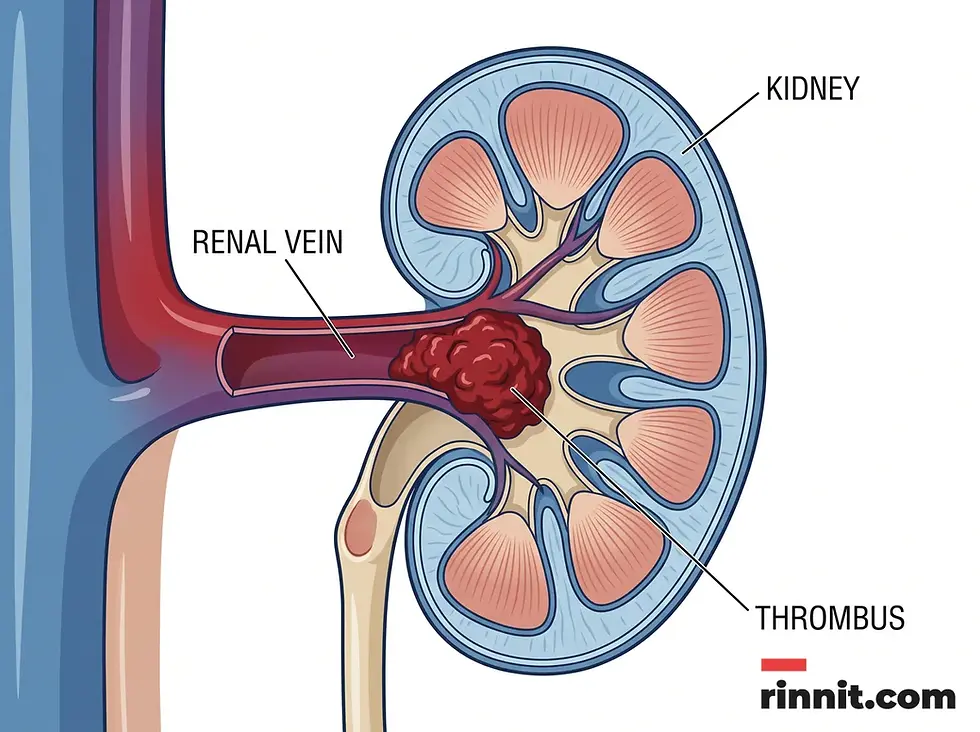
What causes renal vein thrombosis and who is at risk?
In most clinical cases, renal vein thrombosis is a secondary condition triggered by an underlying health issue. The most frequent causes are nephrotic syndrome—a disorder that causes the body to excrete too much protein in the urine—and various forms of cancer. [1] Both conditions alter the blood's chemistry, making it significantly more prone to clotting. Other contributing factors include autoimmune diseases like lupus, vasculitis (inflammation of the blood vessels), and systemic conditions such as diabetes or sickle cell disease that directly affect kidney health. [1]
External factors and lifestyle choices also play a role. Physical injuries to the kidney area, recent kidney transplants, and the use of certain substances like cocaine or oral contraceptives can increase risk. [1] Demographically, the condition is more common in males and individuals between the ages of 30 and 60. [1] Infants are also at risk, particularly if they experience severe dehydration, which can thicken the blood and promote clot formation in the small renal vessels.

How is renal vein thrombosis diagnosed and treated?
Because many cases of renal vein thrombosis are asymptomatic, diagnosis often occurs during imaging for other conditions. [1] When healthcare providers suspect a clot, they utilize specialized tests such as a Doppler ultrasound, CT angiogram, or magnetic resonance venogram to visualize blood flow within the renal vessels. [1] Blood and urine tests are also essential to assess overall kidney function and detect underlying issues like nephrotic syndrome.
The primary goal of treatment is to restore blood flow and prevent the clot from growing or migrating. Anticoagulants, or blood thinners, are the standard treatment and are typically prescribed for six to twelve months. [1] In more severe cases, thrombolytic medications may be used to actively dissolve the clot, or a catheter-based procedure or surgery may be performed to remove it. [1] Following initial treatment, regular check-ups are necessary to monitor kidney health and ensure the clot does not recur.
Conclusion
Renal vein thrombosis is a complex and potentially serious condition that requires a thorough diagnostic approach. While the lack of symptoms in chronic cases can make early detection difficult, understanding the primary risk factors—such as nephrotic syndrome and systemic illness—allows for better monitoring. With prompt medical intervention and consistent long-term care, the prognosis for most individuals is positive, focusing on preserving kidney function and preventing future clotting events.
Frequently Asked Questions
Can renal vein thrombosis cause permanent kidney damage?
Yes. If the blood clot significantly restricts flow for an extended period, it can lead to kidney swelling, chronic kidney disease, or permanent functional loss.
Is renal vein thrombosis a life-threatening condition?
While the clot itself is often manageable, it becomes life-threatening if it breaks loose and travels to the lungs, causing a pulmonary embolism. [1]
Why is the left kidney more commonly affected?
The left renal vein is positioned where it can be compressed by the superior mesenteric artery, which increases the risk of blood stasis and clot formation.
How long does treatment with blood thinners usually last?
Most patients require anticoagulants for six to twelve months, though those with chronic kidney disease or persistent risk factors may need them longer.
Can dehydration cause renal vein thrombosis in babies?
Yes. In infants, severe dehydration is a significant risk factor as it can lead to thicker blood and slower circulation in the renal veins.
What is the connection between nephrotic syndrome and blood clots?
Nephrotic syndrome causes the loss of specific proteins in the urine that normally help prevent blood from clotting too easily.
Are there surgical options for removing the clot?
Yes. In addition to medication, doctors may use a catheter to dissolve the clot or perform surgery to remove it if it is severe or life-threatening.
What should I do if I have flank pain and blood in my urine?
You should seek medical evaluation immediately, as these are hallmark symptoms of acute renal vein thrombosis or other serious kidney issues.
Can oral contraceptives increase the risk of this condition?
Yes. Like many other types of blood clots, the use of oral contraceptives is a recognized risk factor for developing renal vein thrombosis. [1]
References
Cleveland Clinic. Renal Vein Thrombosis. Cleveland Clinic. April 27, 2026. https://my.clevelandclinic.org/health/diseases/renal-vein-thrombosis
Zhang L, Li C, Hua Z, et al. Comparative outcomes of anticoagulation alone versus anticoagulation plus endovascular intervention in adults with isolated renal vein thrombosis. Journal of Vascular Surgery: Venous and Lymphatic Disorders. 2023;11(4):816-823. PMID 37062360. https://doi.org/10.1016/j.jvsv.2023.03.019
Kayali F, Najjar R, Aswad F, et al. Venous thromboembolism in patients hospitalized with nephrotic syndrome. The American Journal of Medicine. 2008;121(3):226-230. PMID 18328307. https://doi.org/10.1016/j.amjmed.2007.08.042
Asghar M, Ahmed K, Shah SS, et al. Renal vein thrombosis. European Journal of Vascular and Endovascular Surgery. 2007;34(2):217-223. PMID 17543556. https://doi.org/10.1016/j.ejvs.2007.02.017
Medical disclaimer
The information provided in this article is for educational purposes only and should not be used as a substitute for professional medical advice, diagnosis, or treatment. Always seek the advice of your physician or other qualified health provider with any questions you may have regarding a medical condition.



Comments