Understanding Renal Infarction: Symptoms, Causes, and Emergency Care

Updated: 2 days ago
Medically reviewed by Dr. Baraa Alnahhal, MD · Last reviewed: October 2026
Renal infarction is a rare but serious medical emergency characterized by a loss of blood flow to the kidney tissue, usually caused by a blood clot. [1] This condition deprives kidney cells of essential oxygen, potentially leading to chronic kidney disease or failure if not treated promptly. Symptoms often mimic more common issues like kidney stones, making professional diagnosis through imaging and blood tests vital. Treatment focuses on restoring blood flow using medications or surgical procedures, with the best outcomes achieved through early intervention. [1]
Quick Answer
Renal infarction is a medical emergency in which blood flow to one or both kidneys is blocked, typically by a blood clot in the renal artery, which can permanently damage kidney tissue. Symptoms include sudden flank pain, nausea and changes in urination. [1] Immediate medical care is needed to dissolve or remove the blockage and prevent kidney failure or chronic hypertension.
What the research says
Most renal infarctions have a cardiac cause, and outcomes can still be serious. In a case series of 438 patients treated at 9 hospitals in Korea, 55.7% of cases were cardiogenic and 30.1% were idiopathic; 5% of patients died during the initial hospitalization, and over a median follow-up of 20 months 2.8% had a recurrent infarction, 20.1% developed acute kidney injury, 10.9% developed new-onset eGFR below 60 mL/min/1.73 m², and 2.1% progressed to end-stage renal disease (Oh et al., American Journal of Kidney Diseases, 2016 [2]).
Atrial fibrillation and unexplained causes account for much of the burden. In a retrospective review of 121 patients with acute renal infarction in Turkey, 36 (30%) had atrial fibrillation, 26 (21.5%) had infarction in both kidneys, and no cause was found in 57%; at a mean follow-up of 14 months, the final mean glomerular filtration rate was 62 mL/min (Eren et al., International Urology and Nephrology, 2018 [3]).
What is renal infarction?
Renal infarction is a rare condition that occurs when the blood supply to a kidney is interrupted. [1] This loss of circulation is most frequently the result of a blood clot that partially or completely obstructs the main renal artery or one of its smaller branches. [1] Because blood carries the oxygen necessary for cell survival, a prolonged blockage can lead to the death of kidney tissue. While it typically affects only one kidney, the condition can occur bilaterally, which significantly complicates the prognosis. [1]
This condition is considered a medical emergency due to the critical role kidneys play in filtering waste and regulating blood pressure. If left untreated, the damage can progress to chronic kidney disease or even total kidney failure. [1] Furthermore, the disruption of renal blood flow can trigger sudden and severe high blood pressure. Recognizing the urgency of these symptoms is essential for preserving renal function and preventing systemic complications.
Feature | Details |
Primary Cause | Blood clot (thromboembolism) |
Urgency Level | Medical Emergency |
Key Risk | Permanent kidney tissue damage |
Common Complications | Chronic kidney disease, kidney failure, hypertension |
What are the symptoms of renal infarction?
Identifying renal infarction can be challenging because its symptoms often overlap with more common conditions like kidney stones or urinary tract infections. In some cases, the condition may even be asymptomatic. [1] However, when symptoms do occur, they typically appear suddenly and intensely. Flank or belly pain is the most frequent complaint, often accompanied by systemic reactions such as nausea and vomiting.
Patients may also notice significant changes in their urinary patterns. This can include pain during urination, blood in the urine (hematuria), or foamy urine, which indicates the presence of protein (proteinuria). There may also be a noticeable change in the frequency or volume of urine produced. [1] Because these signs are non-specific, healthcare providers rely heavily on clinical history and diagnostic testing to distinguish renal infarction from other abdominal or renal issues.

What causes renal infarction and who is at risk?
A blood clot is the most common cause of renal infarction. [1] These clots may form directly within the renal artery or travel from other parts of the body, such as the heart, particularly in individuals with atrial fibrillation (AFib). Other potential causes include physical trauma, blood clotting disorders, or dissections (tears) in the renal artery or aorta. [1] In some instances, pieces of cholesterol plaque may break off and block the artery, a condition known as cholesterol emboli. [1]
Several factors can increase an individual's risk of developing this condition. Age is a significant factor, with most cases occurring in people over 40. Pre-existing heart conditions, high blood pressure, diabetes, and obesity also contribute to the risk. [1] Furthermore, the use of certain substances, such as oral contraceptives, steroids, or cocaine, has been linked to an increased likelihood of renal artery blockages. [1] In some cases, however, a specific cause cannot be identified even after extensive testing. [1]

How is renal infarction diagnosed and treated?
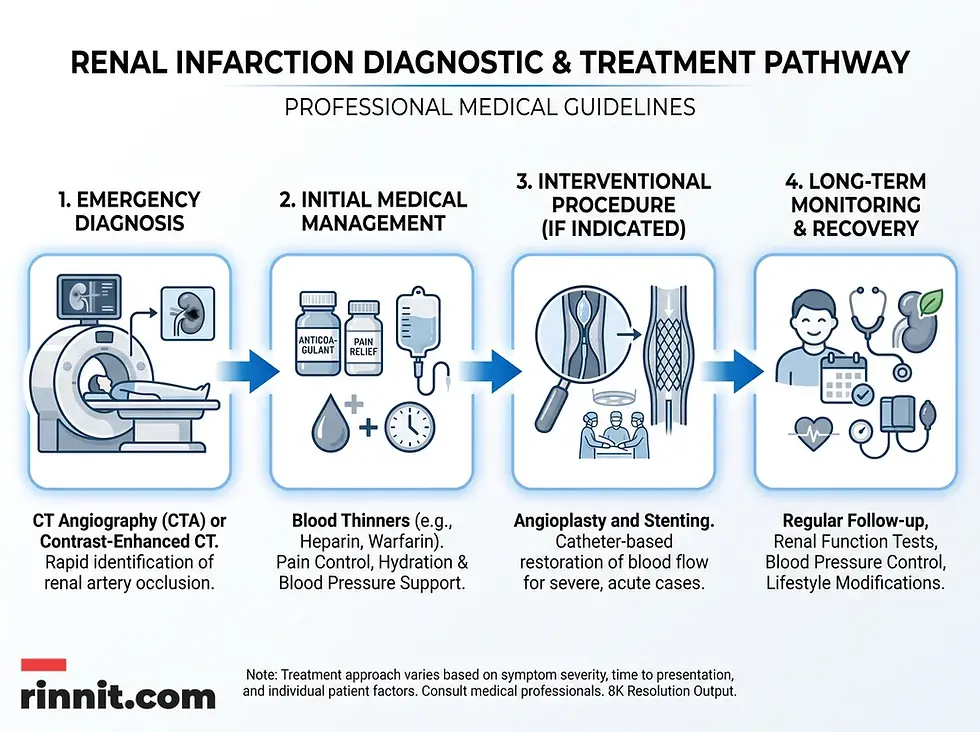
Due to the rarity of renal infarction and its similarity to other conditions, doctors use a combination of laboratory results and advanced imaging for diagnosis. CT scans, including CT angiograms, are the standard for visualizing blood flow in the kidneys. Other tests may include Doppler ultrasound, MRI angiograms, or nuclear medicine kidney scans. [1] Blood and urine tests are also performed to assess kidney function and check for markers of tissue damage.
The primary goal of treatment is to restore blood flow to the affected kidney as quickly as possible. Medical management often involves the use of antiplatelets, anticoagulants (blood thinners), or thrombolytics (clot-dissolving medications). [1] In more severe cases, interventional procedures like angioplasty, potentially with a stent, or surgery to manually remove the clot may be necessary. [1] Recovery typically requires a hospital stay, averaging about 11 days, followed by long-term monitoring and medication to prevent recurrence. [1]
Conclusion
Renal infarction is a critical condition that demands immediate medical intervention. While its symptoms can be deceptive, the potential for permanent kidney damage makes prompt diagnosis essential. By managing underlying risk factors such as heart disease and high blood pressure, individuals can reduce their chances of experiencing this rare emergency. The sooner blood flow is restored, the better the chances for a full recovery and the preservation of long-term kidney health.
Frequently Asked Questions
What is the most common cause of renal infarction?
The most frequent cause is a blood clot that blocks the renal artery. [1] These clots often originate in the heart, particularly in people with atrial fibrillation, and travel to the kidney.
Can renal infarction be mistaken for kidney stones?
Yes. Both conditions cause sudden, severe flank or belly pain and may involve blood in the urine, making advanced imaging necessary to tell them apart.
Is renal infarction fatal?
While not always fatal, it is a medical emergency. If not treated quickly, it can lead to permanent kidney failure, which is a life-threatening condition.
What are the long-term effects of a renal infarction?
Potential long-term effects include chronic kidney disease, a permanent decrease in kidney function, and the development of chronic high blood pressure.
How is a renal infarction diagnosed?
Diagnosis usually involves imaging tests like a CT scan or CT angiogram, along with blood and urine tests to evaluate how well the kidneys are functioning. [1]
Can you have a renal infarction in both kidneys?
Yes, though it typically affects only one. [1] Having an infarction in both kidneys is much more serious and carries a higher risk of total kidney failure.
What medications are used to treat renal infarction?
Treatment often includes blood thinners (anticoagulants), antiplatelet drugs, and sometimes clot-dissolving medications (thrombolytics). [1]
Do I need surgery for a renal infarction?
Surgery is not always required. Many cases are managed with medication or minimally invasive procedures like angioplasty to open the blocked artery.
How long is the hospital stay for renal infarction?
The average hospital stay for recovery is approximately 11 days, during which doctors monitor kidney function and adjust medications.
References
Cleveland Clinic. Renal Infarction. Cleveland Clinic. May 1, 2026. https://my.clevelandclinic.org/health/diseases/renal-infarction
Oh YK, Yang CW, Kim YL, et al. Clinical characteristics and outcomes of renal infarction. American Journal of Kidney Diseases. 2016;67(2):243-250. PMID 26545635. https://doi.org/10.1053/j.ajkd.2015.09.019
Eren N, Gungor O, Kocyigit I, et al. Acute renal infarction in Turkey: a review of 121 cases. International Urology and Nephrology. 2018;50(11):2067-2072. PMID 30251011. https://doi.org/10.1007/s11255-018-1979-6
Medical disclaimer
The information provided in this article is for educational purposes only and should not be used as a substitute for professional medical advice, diagnosis, or treatment. Always seek the advice of your physician or other qualified health provider with any questions you may have regarding a medical condition.



Comments