Understanding Reflux in Babies: Causes, Symptoms, and Care

Updated: 2 days ago
Medically reviewed by Dr. Baraa Alnahhal, MD · Last reviewed: October 2026
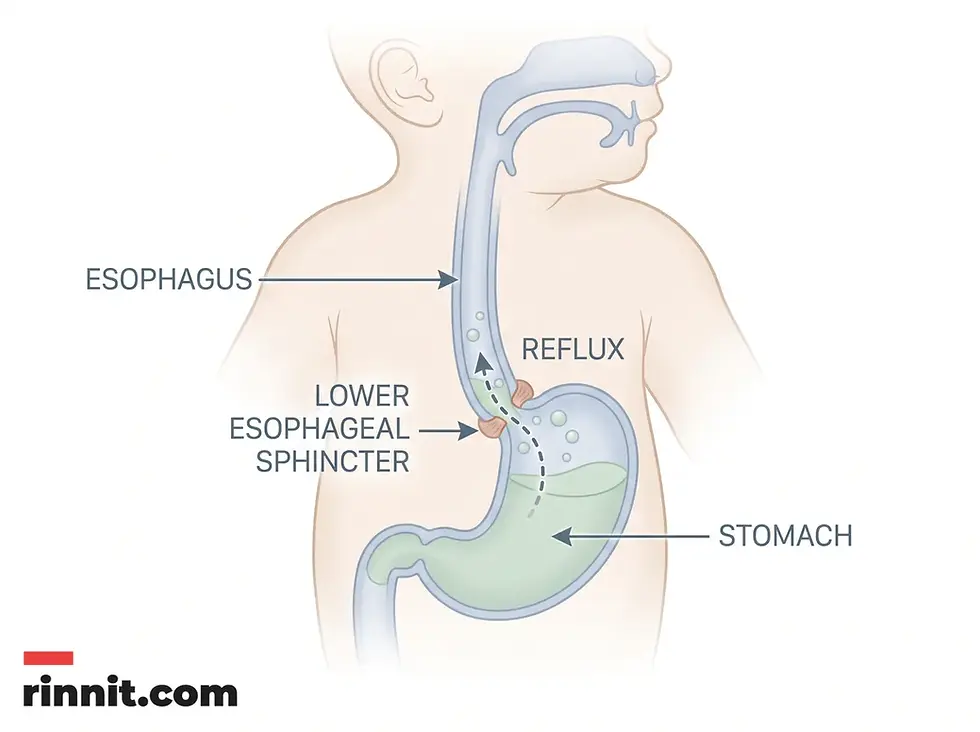
Definition: Infant reflux is a common and usually harmless condition in which stomach contents return to the esophagus.
Typical course: Many infants are "happy spitters" who grow out of it by their first birthday.
When it is serious: Some babies develop gastroesophageal reflux disease (GERD), with poor weight gain, forceful vomiting, and respiratory issues.
Key point: Knowing the difference between normal development and chronic disease is essential for proper infant nutrition and comfort.
Quick Answer
Reflux in babies is the backward flow of food and stomach acid into the esophagus, often causing spitting up or vomiting. It is mainly caused by an immature digestive tract, especially a developing lower esophageal sphincter. Most cases are harmless and resolve by 12 months, but refusal to eat or poor weight gain may signal GERD. [1]
What the research says
Reflux symptoms fade with age in healthy infants. In a cross-sectional survey of 979 healthy infants aged 0 to 24 months, scores on the Infant Gastroesophageal Reflux Questionnaire Revised fell significantly with age (r = -0.569, P<0.001). Scores of 16 or higher, once considered suggestive of reflux disease, were seen in 5% of infants overall, most often in newborns (16% at 0 to 1 months, falling to 4% at 3 to 4 months), and disappeared after 16 months (van Lennep et al., Eur J Pediatr, 2023).
Evidence-graded guidance separates ordinary reflux from reflux disease. The joint NASPGHAN and ESPGHAN guideline, built on a systematic literature search and GRADE evidence ratings, includes a separate evaluation and management algorithm for infants under 12 months of age (Rosen et al., J Pediatr Gastroenterol Nutr, 2018).
What is reflux in babies?
Infant reflux is a physiological event where the contents of a baby's stomach flow back into the esophagus. This process is extremely common during the first year of life, affecting approximately 50% of infants by three months of age. Most babies with this condition are considered "happy spitters," meaning they spit up frequently but remain comfortable, maintain a healthy weight, and show no signs of distress.
The primary cause of this condition is an immature digestive system. The lower esophageal sphincter, a ring-shaped muscle that acts as a valve between the esophagus and the stomach, is still developing. In infants, this valve may relax or open when it should stay closed, allowing stomach contents to escape upward. This is often triggered by a very full stomach or a sudden change in the baby's position after feeding. [1]
Condition | Frequency | Typical Outcome |
Infants up to 3 months | ~50% show daily signs | Normal development |
Infants at 4 months | ~66% show daily signs | Peak of symptoms |
Infants at 7 months | ~14% show daily signs | Significant reduction |
Infants 10-14 months | <5% show daily signs | Most cases resolved |
How is spitting up different from vomiting in babies?
For parents, distinguishing between normal spitting up and actual vomiting is crucial for monitoring a baby's health. Spitting up is characterized by the easy, non-forced flow of stomach contents from the mouth, often accompanied by a burp. It typically does not cause the baby discomfort.
Vomiting, however, involves strong muscle contractions in the baby's midsection that force the stomach contents out. This action is usually distressing for the infant and often leads to crying. While occasional vomiting can occur with simple reflux, frequent or forceful vomiting is often a primary indicator of gastroesophageal reflux disease (GERD) or other underlying medical conditions. [1]
When is reflux in babies serious enough to be GERD?
Gastroesophageal reflux disease (GERD) is the chronic and more severe form of acid reflux. Unlike standard reflux, GERD can affect a baby's quality of life and potentially damage the esophagus. Certain factors increase a baby's risk for GERD, including premature birth, hiatal hernias, and disorders affecting the nervous system or lungs.
Symptoms that may indicate GERD rather than normal reflux include:
Feeding Issues: Refusal to nurse or drink from a bottle, or arching of the back in pain during feedings.
Growth Concerns: Poor weight gain or a complete failure to grow at the expected rate.
Respiratory Problems: Chronic coughing, wheezing, hoarseness, or noisy breathing (stridor).
Physical Distress: Forceful vomiting or the presence of blood in the vomit. [1]

How is reflux in babies diagnosed, and how long does it last?
Most cases of infant reflux do not require extensive diagnostic testing. A pediatrician typically reaches a diagnosis by reviewing the baby's medical history, feeding patterns, and growth charts. They will look for patterns, such as whether spitting up occurs exclusively after feedings or at night, to determine if the condition is likely to be outgrown.
The natural progression of infant reflux follows a predictable timeline for most babies. Symptoms usually begin between two and three weeks of age, reaching their peak at four to five months. By the time a baby reaches nine to twelve months, the digestive system has matured sufficiently for the condition to resolve on its own. If symptoms persist beyond the first birthday or begin after six months of age, further medical evaluation is generally required. [1]

Conclusion and Next Steps
Reflux is a standard part of early development for the majority of infants. While frequent spitting up can be concerning for parents, most "happy spitters" will outgrow the condition without medical intervention as their digestive systems mature. However, staying vigilant for "troublesome symptoms" like poor growth or respiratory distress is vital. If you have concerns about your baby's feeding patterns or weight gain, consult your pediatrician to ensure the best care for your child.
Frequently Asked Questions
What is the difference between GER and GERD in babies?
GER (gastroesophageal reflux) is occasional, harmless spitting up that most babies outgrow by their first birthday. GERD (gastroesophageal reflux disease) is a chronic, more serious condition that can cause pain, poor weight gain, and damage to the esophagus.
Why do babies spit up so much?
Babies spit up because their digestive tracts are not yet fully mature. The lower esophageal sphincter, which acts as a valve between the stomach and esophagus, is still developing and may open unexpectedly, allowing food to travel back up.
What are "happy spitters"?
"Happy spitters" are infants who spit up frequently but do not seem bothered by it. They maintain normal weight gain, grow at a healthy rate, and do not show signs of distress or illness.
When should I worry about my baby's reflux?
You should contact a pediatrician if your baby shows "troublesome symptoms," such as forceful vomiting, refusal to eat, poor weight gain, vomiting blood, or respiratory issues like chronic coughing and wheezing.
Can premature birth cause reflux?
Yes, babies born prematurely are at a higher risk for developing GERD. Other risk factors include hiatal hernias, asthma, cystic fibrosis, and conditions affecting the nervous system.
How do I tell if my baby is vomiting or just spitting up?
Spitting up is an easy, non-forced flow of contents from the mouth. Vomiting involves forceful muscle contractions in the stomach area and is usually accompanied by discomfort and crying.
When does infant reflux usually peak?
Infant reflux typically begins at 2 to 3 weeks of age and reaches its peak between 4 and 5 months. Most cases resolve completely by the time the baby is 9 to 12 months old.
Does reflux in babies require testing?
Most babies do not need diagnostic tests. Pediatricians usually diagnose reflux through a physical exam and a review of the baby's feeding history and growth patterns.
What triggers reflux in infants?
Common triggers include an overfull stomach after feeding or sudden changes in the baby's position, such as being laid down flat immediately after eating.
References
Cleveland Clinic. Reflux in Babies. Cleveland Clinic Health Library. Accessed October 11, 2026. https://my.clevelandclinic.org/health/diseases/reflux-in-babies
van Lennep M, Lansink F, Benninga MA, van Wijk MP. Age-dependent normal values for the 'Infant Gastroesophageal Reflux Questionnaire Revised'. Eur J Pediatr. 2023;183(1):445-452. PMID: 37926716. DOI: https://doi.org/10.1007/s00431-023-05281-w
Rosen R, Vandenplas Y, Singendonk M, et al. Pediatric gastroesophageal reflux clinical practice guidelines: joint recommendations of the North American Society for Pediatric Gastroenterology, Hepatology, and Nutrition and the European Society for Pediatric Gastroenterology, Hepatology, and Nutrition. J Pediatr Gastroenterol Nutr. 2018;66(3):516-554. PMID: 29470322. DOI: https://doi.org/10.1097/MPG.0000000000001889
Medical disclaimer
This article is for informational purposes only and is not a substitute for professional medical advice, diagnosis, or treatment. Always seek the advice of your physician or other qualified health provider with any questions you may have about a medical condition.



Comments