Understanding Polatuzumab Vedotin Injection: Treatment for Lymphoma

Updated: 3 days ago
Medically reviewed by Dr. Baraa Alnahhal, MD · Last reviewed: October 2026
Polatuzumab vedotin is an injectable medication used to treat lymphoma by targeting proteins that facilitate cancer cell growth. The treatment is delivered through an intravenous infusion in a clinical or hospital setting. Patients face increased risks of infection, bleeding, and serious neurological complications, and strict contraception is required during and for several months after the final dose.
Quick Answer: What is polatuzumab vedotin?
Polatuzumab vedotin is an injectable medication used to treat lymphoma by inhibiting proteins that cancer cells need to multiply, helping slow or stop the cancer's spread. It is given through a vein by healthcare professionals, including when other treatments have not worked. Patients must be closely monitored for serious side effects, including immune suppression and neurological effects. [1]
What the research says
In previously untreated diffuse large B-cell lymphoma, adding polatuzumab vedotin to chemotherapy lowered the risk of progression. In a phase 3 trial of 879 patients, 76.7% of those given polatuzumab vedotin with rituximab, cyclophosphamide, doxorubicin, and prednisone (pola-R-CHP) were alive without progression at 2 years versus 70.2% with standard R-CHOP (hazard ratio 0.73). Overall survival at 2 years was similar (88.7% versus 88.6%), as was the safety profile (Tilly et al., N Engl J Med, 2022).
In relapsed or refractory disease, it improved survival but caused more nerve problems. In a phase 3 trial of 255 transplant-ineligible patients, polatuzumab vedotin added to rituximab, gemcitabine, and oxaliplatin lowered the risk of death (hazard ratio 0.6), with median survival of 19.5 months versus 12.5 months. Peripheral neuropathy occurred in 57% versus 29%, mostly grade 1, and fatal adverse events were 12% versus 4%, largely driven by infections (Matasar et al., J Clin Oncol, 2026).
Research summaries are based on article abstracts retrieved from PubMed.
How does polatuzumab vedotin work?
Polatuzumab vedotin belongs to a class of drugs that work by targeting cancer cells with precision. It identifies and binds to specific proteins on the surface of lymphoma cells, delivering a potent anti-cancer agent directly to the site of the disease. [1]
Because this treatment can also affect healthy cells, patients may feel generally unwell during their course of therapy. This is a common occurrence with many oncology treatments and does not necessarily mean the medication is not working. [1]

What should you know before starting polatuzumab vedotin treatment?
Before beginning therapy, it is essential for the medical team to review the patient's full health history. Certain pre-existing conditions can increase the risk of adverse reactions. [1]
Health Factor | Clinical Significance |
Infection Status | Active infections like herpes or chickenpox must be addressed |
Blood Cell Levels | Low white/red cells or platelets require careful monitoring |
Liver Health | Pre-existing liver disease may affect how the drug is processed |
Nerve Health | History of tingling or numbness (neuropathy) is a key consideration |
Reproductive Health | Pregnancy status and future fertility plans must be discussed |
Patients are also required to provide a complete list of current medications, as certain antibiotics, antivirals, and seizure medications can interact with the treatment. [1]
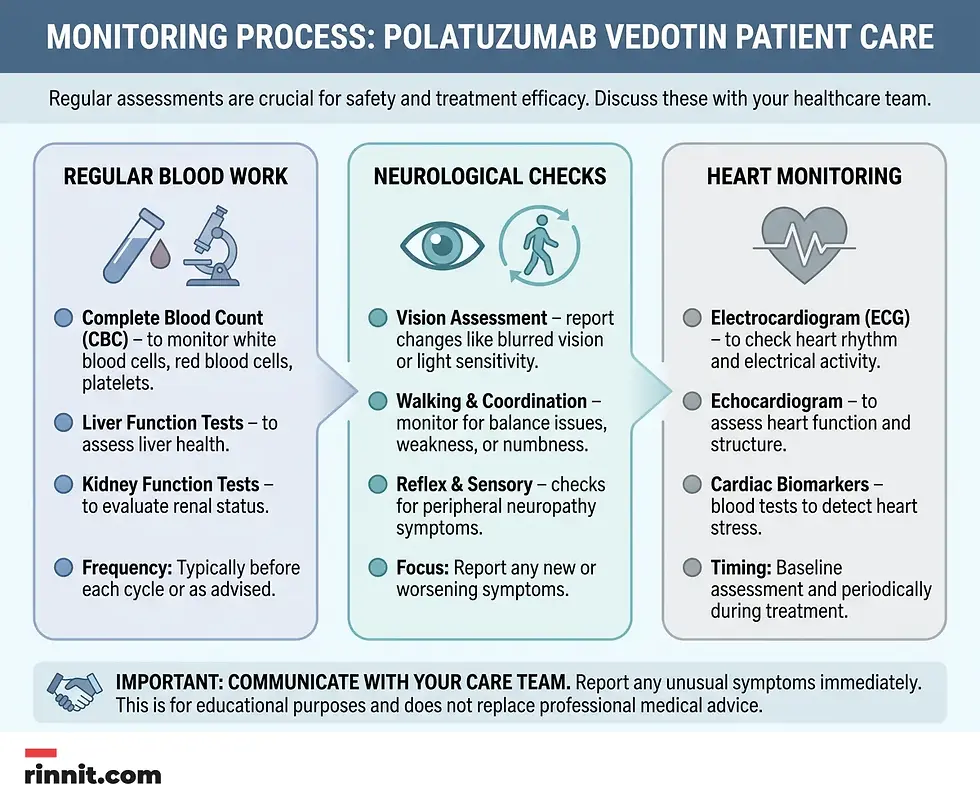
How are side effects of polatuzumab vedotin monitored and managed?
Healthcare providers monitor patients closely for both common and serious side effects. Some reactions require immediate medical attention to prevent long-term complications. [1]
Serious Symptoms to Report Immediately:
Signs of a serious brain infection, such as difficulty thinking, speaking, or walking.
Infusion-related reactions, including chest pain or shortness of breath.
Signs of Tumor Lysis Syndrome (TLS), such as irregular heartbeat or muscle cramps.
Liver injury indicators, like jaundice or dark yellow urine.
Severe neuropathy, characterized by persistent numbness in the hands or feet. [1]
How does polatuzumab vedotin affect reproductive health and contraception?
Polatuzumab vedotin can cause severe birth defects if taken during pregnancy. A negative pregnancy test is mandatory before the first dose is administered. [1]
Women should use reliable contraception during treatment and for three months after the last dose. Men are advised not to father a child during treatment and for five months following the final injection, using condoms during all sexual activity. Additionally, breastfeeding should be avoided for at least two months after the treatment course concludes. [1]
Reproductive safety timelines can differ between regional product labels, and some labels list longer periods. Always confirm the exact timelines for your situation with your care team before starting treatment.
Conclusion
Polatuzumab vedotin represents a significant advancement in the targeted treatment of lymphoma. While the therapy requires rigorous monitoring and strict adherence to safety protocols, it provides a vital option for slowing the progression of cancer. By working closely with their care team and reporting side effects promptly, patients can navigate the challenges of treatment while focusing on the goal of controlling their condition.
Frequently Asked Questions
What is polatuzumab vedotin used for?
Polatuzumab vedotin is used to treat lymphoma by blocking proteins that allow cancer cells to grow and spread.
How is this medication administered?
Polatuzumab vedotin is given as an intravenous infusion by a healthcare professional in a hospital or clinic.
Can I take this medication at home?
No, it is only administered in a clinical setting and is not stored at home.
What are the most common minor side effects?
Common side effects include diarrhea, dizziness, loss of appetite, vomiting, and weight loss.
Is it safe to get pregnant while on this drug?
No, it can cause serious birth defects. Reliable contraception is required during and for months after treatment.
What should I do if I miss a treatment appointment?
Call your care team immediately to reschedule, as maintaining the treatment timeline is critical.
Can this medication cause nerve damage?
Yes, it can cause peripheral neuropathy, which may feel like tingling or numbness in the hands and feet.
What is Tumor Lysis Syndrome (TLS)?
TLS is a serious condition where cancer cells release their contents into the blood too quickly; it requires urgent medical care.
How long must I wait to breastfeed after treatment?
You should not breastfeed during treatment and for at least two months after your last dose. Confirm the exact period with your care team, as some labels list longer.
Does polatuzumab vedotin interact with other drugs?
Yes, it can interact with certain antibiotics, antifungals, and seizure medications.
References
Cleveland Clinic. Polatuzumab Vedotin Injection. Cleveland Clinic Health Library. Accessed October 11, 2026. https://my.clevelandclinic.org/health/drugs/21229-polatuzumab-vedotin-injection
Tilly H, Morschhauser F, Sehn LH, et al. Polatuzumab vedotin in previously untreated diffuse large B-cell lymphoma. N Engl J Med. 2022;386(4):351-363. PMID: 34904799. https://doi.org/10.1056/NEJMoa2115304
Matasar M, Li Z, Vassilakopoulos TP, et al. Polatuzumab vedotin plus rituximab, gemcitabine, and oxaliplatin in relapsed or refractory diffuse large B-cell lymphoma: results from the phase III, randomized POLARGO trial. J Clin Oncol. 2026;44(25):2435-2446. PMID: 42407012. https://doi.org/10.1200/JCO-25-02849
Medical disclaimer
This article is for informational purposes only and is not a substitute for professional medical advice, diagnosis, or treatment. Always seek the advice of your physician or other qualified health provider with any questions you may have regarding a medical condition.


Comments