Understanding Poland Syndrome: Causes, Symptoms, and Treatment Options

Updated: 2 days ago
Medically reviewed by Dr. Baraa Alnahhal, MD · Last reviewed: September 2026
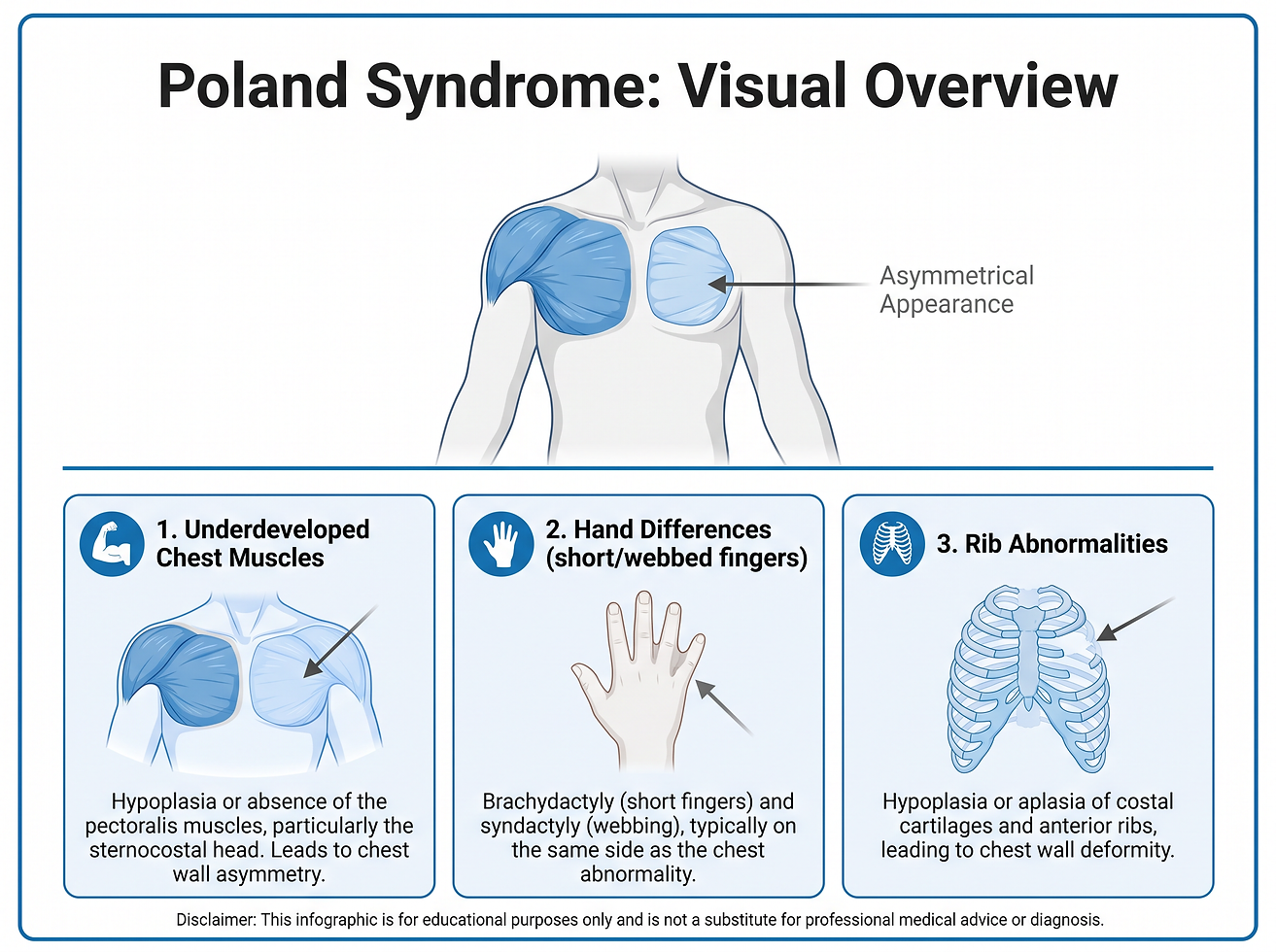
Quick answer: Poland syndrome is a rare birth defect where the chest muscles, typically the pectoralis major, fail to develop fully on one side. This often results in a sunken or lopsided chest appearance. The condition may also cause hand differences like webbed or short fingers and affect rib or breast development. Most cases are linked to disrupted fetal blood flow. Treatment is individualized, ranging from physical therapy to reconstructive surgery, depending on symptom severity and the patient's functional or aesthetic goals.
Poland syndrome, also known as Poland sequence or Poland anomaly, is a rare condition present at birth that primarily affects the musculoskeletal structure of the chest wall. The hallmark of the condition is the underdevelopment or total absence of the pectoralis muscles on one side of the body, which can create a visibly uneven or sunken appearance. While the physical differences can be striking, it is important to note that Poland syndrome does not impact a child's cognitive or intellectual development.
Signs and Symptoms
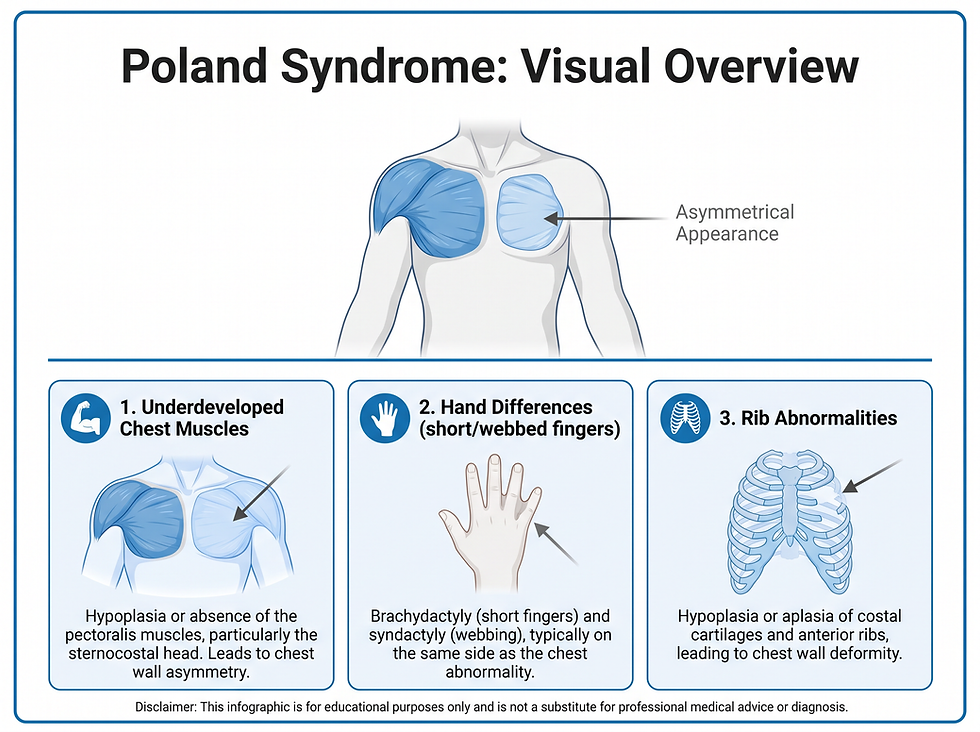
The signs of Poland syndrome are almost always limited to one side of the body, with the right side being affected approximately twice as often as the left. The most recognizable symptom is an asymmetrical chest, but the condition can manifest in several other ways depending on its severity.
Affected Area | Potential Physical Differences |
Chest Wall | Missing or underdeveloped pectoralis muscles; sunken appearance; underdeveloped ribs or rib cartilage. |
Breast/Skin | Underdeveloped or missing breast tissue and nipples; lack of fatty tissue under the skin; reduced armpit hair. |
Hand/Arm | Abnormally short fingers (brachydactyly); webbed fingers (syndactyly); shortened forearm. |
Internal Organs | Rare cases of underdeveloped lung or kidney; heart located on the right side (dextrocardia) in left-sided cases. |
Potential Causes and Risk Factors
While the exact cause of Poland syndrome remains a subject of ongoing research, the most widely accepted theory involves a disruption of blood flow during fetal development. Specifically, scientists believe a temporary blockage or reduction in blood flow through the subclavian artery occurs around the sixth week of pregnancy, just as the chest wall and limbs are forming.

Beyond blood flow issues, other theories suggest that exposure to certain substances, known as teratogens, may play a role. These include tobacco, alcohol, and specific medications like warfarin or nonprescription drugs such as cocaine. Although most cases occur randomly without a family history, the condition is notably more common in males than in females.
Diagnosis and Clinical Evaluation
In severe cases, Poland syndrome may be diagnosed immediately at birth, especially if significant hand or arm differences are present. However, many individuals with milder symptoms may not receive a diagnosis until puberty. During this stage of development, the physical differences, particularly breast asymmetry in females, often become more pronounced.
A healthcare provider typically begins the diagnostic process with a thorough physical examination and a review of the patient's medical history. To confirm the extent of muscle or bone involvement, imaging tests such as X-rays, CT scans, or MRI scans are often utilized to provide a detailed view of the chest wall and surrounding structures.
Management and Treatment Strategies
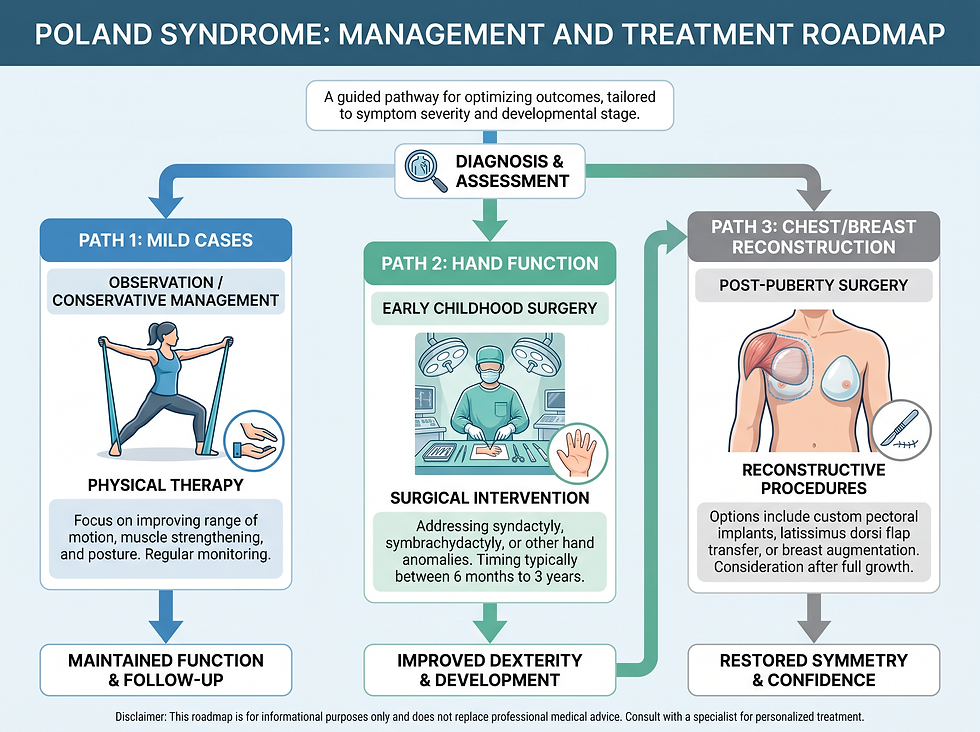
Treatment for Poland syndrome is highly individualized and depends on the specific symptoms and how they affect the patient's daily life. Many individuals have very mild symptoms that require no medical intervention at all. For those who do seek treatment, the primary goals are usually to improve physical function or enhance body symmetry.
Treatment Type | Description and Timing |
Reconstructive Surgery | Includes muscle or fat grafting and pectoral implants. Typically performed at age 13 or older for boys and after breast development for girls. |
Hand Surgery | Performed in early childhood to improve the function and appearance of short or webbed fingers. |
Breast Reconstruction | Options include implants, tissue expansion, or tattooing to improve symmetry between the breasts. |
Therapy and Support | Physical or occupational therapy to build strength; counseling to address body image concerns. |
Conclusion
Poland syndrome presents unique physical challenges, but the long-term outlook for affected individuals is overwhelmingly positive. Because the condition typically does not affect overall health or life expectancy, most children grow up to lead typical, active lives. Whether a family chooses surgical intervention or a non-surgical approach, the focus remains on providing personalized care that supports the child's physical and emotional well-being.
When to See a Doctor
If you notice signs of chest asymmetry or hand differences in your child, consult a pediatrician or a specialist in reconstructive surgery. Early evaluation can help determine the best path forward, whether that involves immediate intervention for hand function or planning for future reconstructive options.
Frequently Asked Questions
Is Poland syndrome a genetic condition?
Most cases occur randomly with no family history. While genetics may play a role in very rare instances, no specific gene has been identified.
Does Poland syndrome affect both sides of the body?
No, it almost always affects only one side. It is twice as common on the right side as it is on the left.
Can Poland syndrome affect internal organs?
Yes, but it is rare. It can lead to an underdeveloped lung or kidney, or dextrocardia (heart on the right side) in left-sided cases.
At what age is chest surgery usually performed?
For boys, it is often done around age 13. For girls, surgeons usually wait until breast development is complete to ensure symmetrical results.
Does the condition affect intelligence?
No, Poland syndrome does not impact cognitive or thinking abilities.
What is the most common cause of Poland syndrome?
The most accepted theory is a disruption of blood flow to the subclavian artery during the sixth week of fetal development.
Are there non-surgical treatments available?
Yes, physical and occupational therapy can help improve strength and movement, and counseling can provide emotional support.
Is Poland syndrome more common in males or females?
The condition is more common in males, though the reason for this is not yet understood.
Can Poland syndrome be detected during pregnancy?
It is difficult to detect via standard prenatal ultrasound unless there are severe limb differences, but it is typically diagnosed at birth or during puberty.
What are the common hand differences associated with the syndrome?
Common differences include short fingers (brachydactyly), webbed fingers (syndactyly), or a combination of both.
Is surgery always necessary?
No, many people with mild symptoms choose not to have surgery if the condition does not affect their comfort or confidence.
What kind of doctors treat Poland syndrome?
Care teams often include pediatricians, plastic and reconstructive surgeons, hand surgeons, and physical therapists.
Does Poland syndrome affect life expectancy?
No, individuals with Poland syndrome typically have a normal life expectancy.
What are teratogens?
Teratogens are substances like tobacco, alcohol, or certain drugs that can interfere with fetal development and potentially cause birth defects.
Can the condition be cured?
While the underlying physical differences are permanent, surgery and therapy can effectively manage the symptoms and improve appearance and function.
Related Reading
National Organization for Rare Disorders (NORD): Poland Syndrome Profile. CDC: Facts About Birth Defects. NIH Genetic and Rare Diseases Information Center: GARD.
Medically reviewed by Dr. Baraa Alnahhal, MD. This content is for informational purposes only and does not constitute medical advice. If you have concerns about Poland syndrome, seek evaluation from a qualified healthcare professional.
Comments