Understanding Melkersson-Rosenthal Syndrome (MRS): Symptoms, Causes, and Care

Updated: 2 days ago
Medically reviewed by Dr. Baraa Alnahhal, MD · Last reviewed: September 2026
In short: Melkersson-Rosenthal Syndrome (MRS) is a rare neurological disorder characterized by a triad of symptoms: recurring facial swelling, facial paralysis, and grooves on the tongue. While the exact cause is unknown, it is often associated with other inflammatory conditions. Management focuses on reducing inflammation and preventing permanent swelling through medications or, in some cases, surgery.
Quick Answer
Melkersson-Rosenthal Syndrome (MRS) is a rare neurological and granulomatous disorder that primarily affects the facial nerves. It is defined by three classic symptoms: recurring facial swelling (often in the lips), temporary or permanent facial paralysis, and deep grooves in the tongue. Affecting roughly 0.08% of the population, it typically begins in young adulthood. Diagnosis involves reviewing clinical history and sometimes a tissue biopsy, while treatment aims to manage flare-ups using anti-inflammatory medications.
Melkersson-Rosenthal Syndrome, also known as orofacial granulomatosis, is a complex neurological condition that causes chronic inflammation of the facial tissues. The disorder is characterized by intermittent flare-ups that can lead to permanent changes in appearance if left unmanaged. Although it can affect individuals at any age, symptoms most frequently emerge during young adulthood. Due to its rarity and symptom overlap with other conditions like Bell’s palsy or common allergies, MRS is frequently underdiagnosed or misidentified in its early stages.
The condition is classified as both a neurological and a granulomatous disorder. A neurological disorder involves the dysfunction of the brain or nervous system, while a granulomatous condition is marked by the formation of inflamed tissue masses. Unlike many other chronic inflammatory conditions, MRS is not currently classified as an autoimmune disease, where the immune system attacks healthy tissue. Instead, it is viewed as a specific dysfunction of the facial nerves and associated tissues.
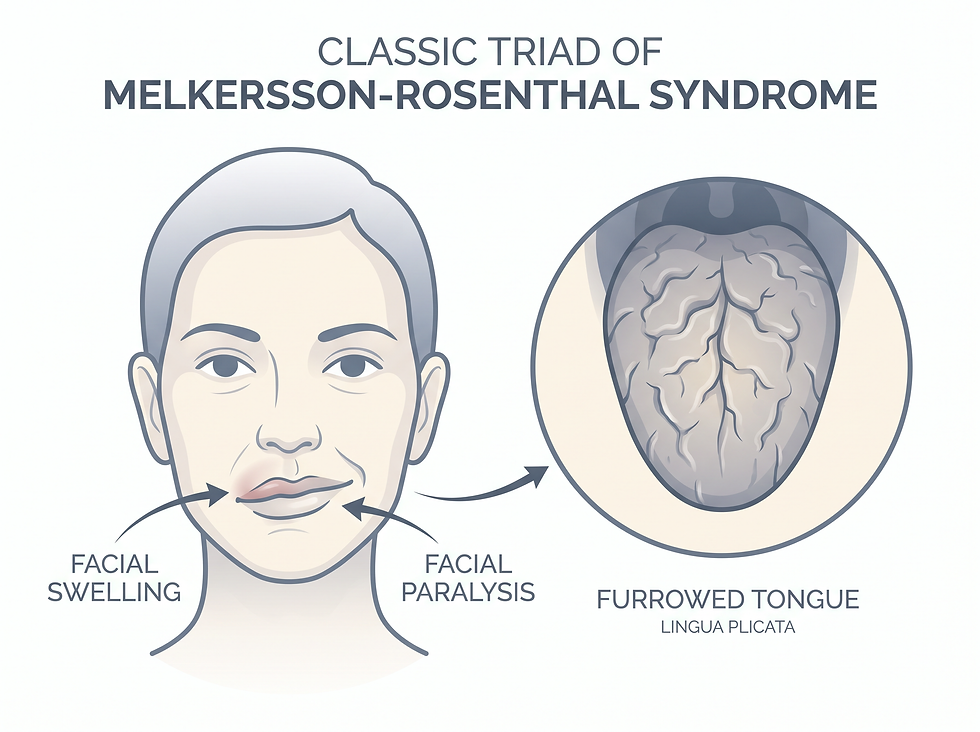
The Classic Symptom Triad
Melkersson-Rosenthal Syndrome is most famously identified by a specific triad of symptoms. While some individuals may only experience one or two of these signs, the presence of two or more is often the basis for a clinical diagnosis.
Facial swelling: Also known as orofacial edema, this typically affects the lips (cheilitis granulomatosis). The upper lip usually swells before the lower lip, becoming hard, cracked, and reddish-brown.
Facial palsy: Weakness or paralysis of the facial muscles, which may occur on one or both sides. These episodes tend to last longer and become more severe as the condition progresses.
Furrowed tongue: Known as lingua plicata or scrotal tongue, this involves deep grooves on the top of the tongue. It can cause itching, burning, or a loss of taste, and may lead to oral infections.
Beyond these primary signs, individuals with MRS may experience secondary symptoms that affect their quality of life. These can include dizziness, migraine headaches, and hearing-related issues such as tinnitus or partial hearing loss. Vision problems, including dry eyes, blurred vision, or eye inflammation (uveitis), are also reported. In severe cases, repeat flare-ups can lead to permanent scarring and difficulty swallowing.
Causes and Associated Conditions
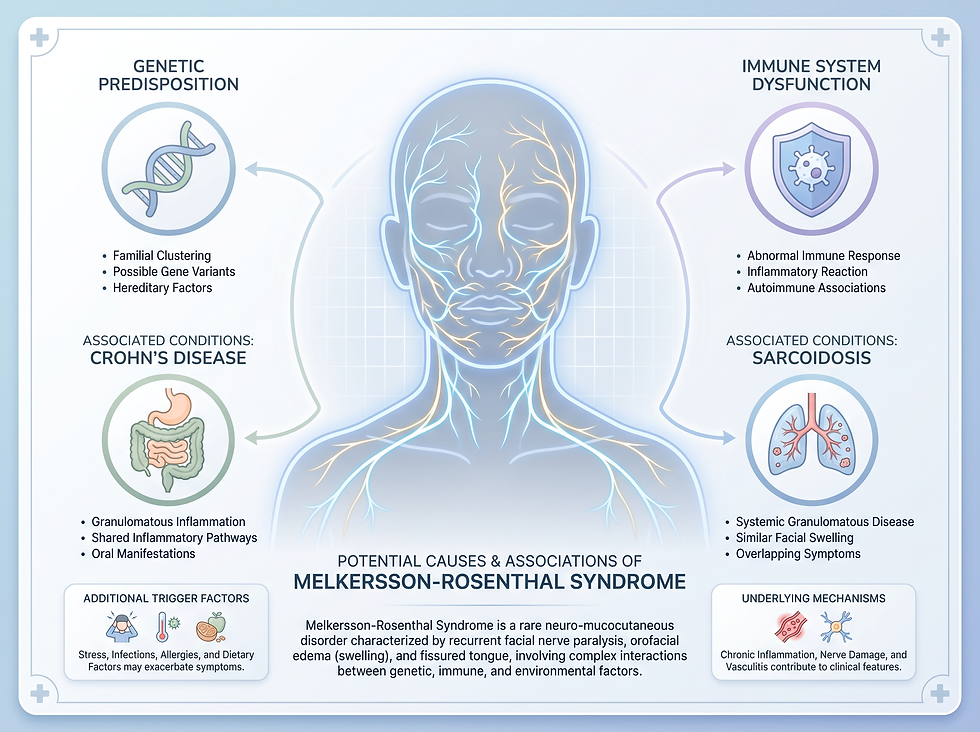
The precise cause of Melkersson-Rosenthal Syndrome remains unknown to medical science. However, researchers have identified several factors that are frequently associated with its development. Genetic inheritance is believed to play a role in some cases, while others may be triggered by hypersensitivity reactions, an exaggerated immune response to specific allergens or antigens. Viral or bacterial infections have also been proposed as potential drivers of the inflammatory episodes.
Melkersson-Rosenthal syndrome may be an early sign of other systemic inflammatory conditions, such as Crohn’s disease or sarcoidosis, necessitating thorough clinical evaluation.
Because of these links, healthcare providers often monitor patients with MRS for signs of digestive or systemic inflammation. Understanding the relationship between MRS and these conditions is crucial for long-term health management and early intervention.
Diagnosis and Clinical Evaluation
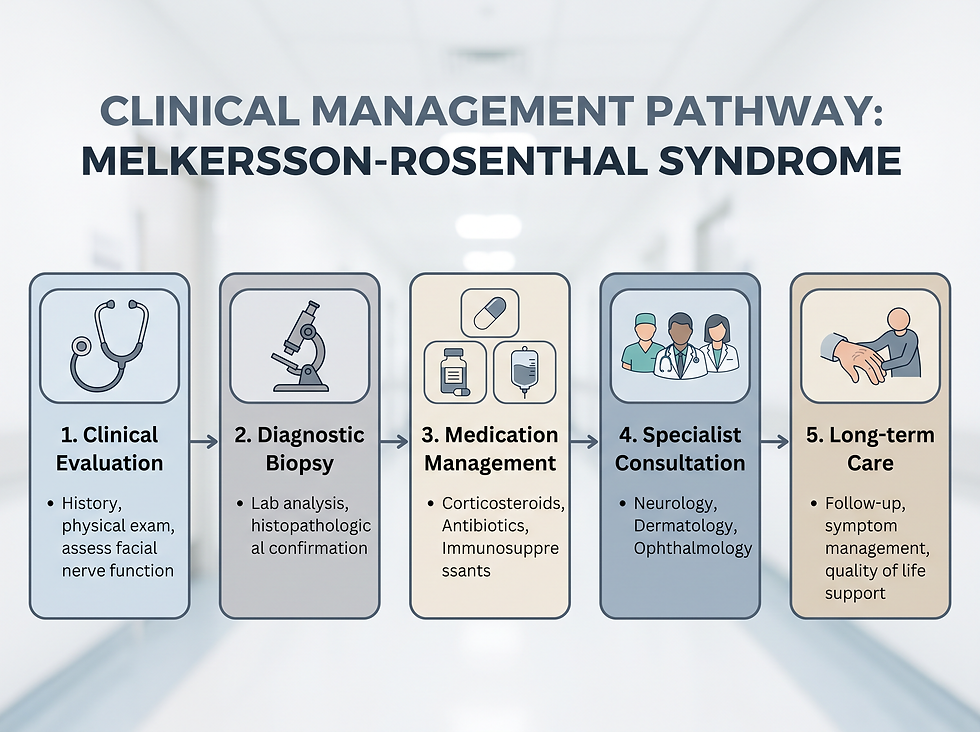
Diagnosing MRS is often a challenge due to its rarity and the way its symptoms mimic other disorders. For example, facial paralysis is often initially mistaken for Bell’s palsy, while lip swelling may be attributed to common allergic reactions. A definitive diagnosis is typically reached based on a patient's history of recurring classic symptoms.
To confirm the diagnosis or rule out other possibilities, a healthcare provider may perform a biopsy, taking a small tissue sample from the affected lip. Because the condition can involve multiple systems, patients are often referred to a team of specialists, including dermatologists, allergists, gastroenterologists, and ophthalmologists.
Treatment and Management Options
While there is no known cure for Melkersson-Rosenthal Syndrome, various treatments are available to manage flare-ups, reduce pain, and prevent permanent complications like scarring or chronic swelling. The choice of treatment depends on the severity and frequency of the episodes.
Anti-inflammatories: Corticosteroid injections, NSAIDs, and TNF-alpha inhibitors are used to reduce tissue swelling and pain.
Medications: Antibiotics and antihistamines may be prescribed to prevent infections and manage hypersensitivity.
Advanced therapy: Immunosuppressants, such as methotrexate, may be used for chronic or severe cases.
Surgical options: Surgery may be recommended to reduce permanent lip swelling or to relieve pressure on the facial nerves.
Conclusion
Melkersson-Rosenthal Syndrome is a rare but significant neurological condition that requires careful diagnosis and ongoing management. By recognizing the classic triad of facial swelling, paralysis, and tongue grooves, individuals can seek the necessary specialist care to manage flare-ups and protect their long-term health. While the condition can be chronic, modern treatments offer effective ways to minimize symptoms and maintain a high quality of life.
If you or a loved one are experiencing recurring facial swelling or unexplained facial weakness, it is essential to consult a healthcare professional for a comprehensive evaluation. Early intervention can help manage symptoms and prevent permanent complications.
Frequently Asked Questions
What is the most common symptom of Melkersson-Rosenthal Syndrome?
Facial swelling, particularly of the lips (cheilitis granulomatosis), is the most frequent symptom. The upper lip is typically affected first and may become hard or reddish-brown.
Is Melkersson-Rosenthal Syndrome contagious?
No, the condition is not contagious. It is a neurological and inflammatory disorder, not an infectious disease that can be spread from person to person.
Can children develop MRS?
Yes, MRS can affect people of any age, although the symptoms most commonly begin to appear during young adulthood.
How is MRS different from Bell’s palsy?
While both cause facial paralysis, MRS is characterized by the recurring nature of the paralysis and the presence of other symptoms like facial swelling and a furrowed tongue.
What causes the grooves on the tongue in MRS?
The grooves, known as lingua plicata, are a classic sign of the syndrome. While usually painless, they can sometimes lead to burning sensations or oral infections.
Is MRS an autoimmune disease?
No, it is classified as a neurological and granulomatous disorder rather than an autoimmune disease.
Can Melkersson-Rosenthal Syndrome be cured?
There is currently no cure for MRS, but the symptoms can be effectively managed with medications and, in some cases, surgery.
How rare is Melkersson-Rosenthal Syndrome?
It is extremely rare, affecting approximately 0.08% of the general population, though it may be underdiagnosed.
Does MRS affect life expectancy?
Scientists do not believe that the disorder has any impact on a person's life span.
What is a lip biopsy used for in diagnosis?
A biopsy helps confirm the presence of granulomatous inflammation and rules out other conditions like allergies or infections.
Can facial swelling in MRS become permanent?
Yes, if flare-ups are frequent and severe, the swelling in the lips or face can eventually become permanent.
Are there specific triggers for MRS flare-ups?
Triggers are not fully understood, but hypersensitivity reactions and infections are believed to play a role in some individuals.
What specialists treat Melkersson-Rosenthal Syndrome?
Patients often see a team including neurologists, dermatologists, allergists, and sometimes gastroenterologists.
Is there a link between MRS and Crohn’s disease?
Yes, MRS is sometimes an early indicator of Crohn’s disease or sarcoidosis, and patients may be screened for these conditions.
Can surgery help with MRS?
Surgery can be used to reduce the size of permanently swollen lips or to decompress facial nerves if they are under excessive pressure.
Medical Disclaimer: The information provided in this article is for educational purposes only and should not be used as a substitute for professional medical advice, diagnosis, or treatment. Always seek the advice of a qualified healthcare provider with any questions you may have regarding a medical condition.
Comments