Understanding MCL Tears: Symptoms, Recovery, and Knee Health

Updated: 2 hours ago
Medically reviewed by Dr. Baraa Alnahhal, MD · Last reviewed: September 2026
TL;DR
An MCL tear is a common knee injury involving damage to the medial collateral ligament on the inner side of the knee. Often resulting from sports-related twisting or direct impacts, these injuries range from mild stretches to complete tears. While most MCL injuries heal effectively with non-surgical treatments like rest, bracing, and physical therapy, understanding the grade of the tear is essential for a safe return to activity.
Quick Answer
An MCL tear is an injury to the ligament on the inner side of the knee that provides joint stability. Symptoms include a popping sound, inner knee pain, swelling, and a feeling of instability. Most tears are managed without surgery using the RICE method, knee braces, and physical therapy, with recovery taking anywhere from one week to several months depending on the severity (Grade 1 to 3).
What is an MCL Tear?
The medial collateral ligament (MCL) is a major band of tough tissue located on the inner side of the knee. Measuring approximately eight to 10 centimeters in length, it connects the femur (thigh bone) to the tibia (shin bone), providing critical strength and stability to the knee joint. An MCL tear occurs when this ligament is damaged, either through a partial tear of some fibers or a complete separation into two pieces.
As one of the four primary ligaments in the knee—alongside the ACL, LCL, and PCL—the MCL is particularly vulnerable to injury. In fact, it is the most common knee ligament injury, accounting for approximately 40% of all knee-related traumas. While athletes in sports like football, basketball, and skiing are at higher risk, anyone can experience an MCL tear due to sudden movements or external pressure.
Grades of MCL Injury
Healthcare providers categorize MCL tears into three distinct grades based on the severity of the damage and the resulting stability of the knee joint.
Grade | Severity | Characteristics |
Grade 1 | Mild | Less than 10% of fibers torn; knee remains stable; mild pain and tenderness. |
Grade 2 | Moderate | Partial tear (usually superficial); knee feels loose; intense pain along the inner knee. |
Grade 3 | Severe | Complete tear of both superficial and deep parts; very unstable knee; intense pain. |

Recognizing the Symptoms
The signs of an MCL tear often appear immediately following a traumatic event. The ability to walk can be a significant indicator of the injury's severity, though medical evaluation is always recommended.
Common Signs and Symptoms
Audible Pop: Hearing a popping sound at the moment of injury.
Inner Knee Pain: Significant tenderness and pain along the inner side of the joint.
Instability: A feeling that the knee is going to "give out" when putting weight on it.
Physical Changes: Stiffness, swelling, and the joint potentially locking or catching during movement.
While individuals with Grade 1 tears may still be able to walk despite the pain, those with Grade 2 or 3 injuries often find walking difficult or impossible due to joint instability and intense distress.
Causes and Risk Factors
MCL tears are typically the result of sudden, forceful movements that place excessive stress on the inner knee.
Primary Causes
"Cutting" Movements: Planting a foot firmly and forcefully shifting direction.
Direct Impact: A blow to the outer side of the knee, which forces the inner side to stretch beyond its limit (common in football tackles).
Awkward Landings: Landing poorly after a jump or fall.
Overextension: Hyperextending the knee, a common occurrence in skiing accidents.
Repeated Stress: Chronic pressure that causes the ligament to lose its natural elasticity over time.

Diagnostic Procedures
A healthcare provider can often diagnose an MCL tear through a physical examination. By bending the knee and applying controlled pressure to the inner side, they can assess the joint's looseness and the ligament's integrity.
Imaging and Testing
To confirm the severity and check for concurrent injuries—such as damage to the ACL—providers may utilize:
MRI: The preferred imaging test for detailed views of soft tissue and ligaments.
Ultrasound: A non-invasive method to visualize the extent of the tear.
X-ray: Used primarily to rule out broken bones or other skeletal issues in the knee.
Management and Treatment Options
Because the MCL has a robust blood supply, it possesses a natural capacity for healing that many other ligaments lack. Consequently, most people recover fully without the need for surgery.
Non-Surgical Care
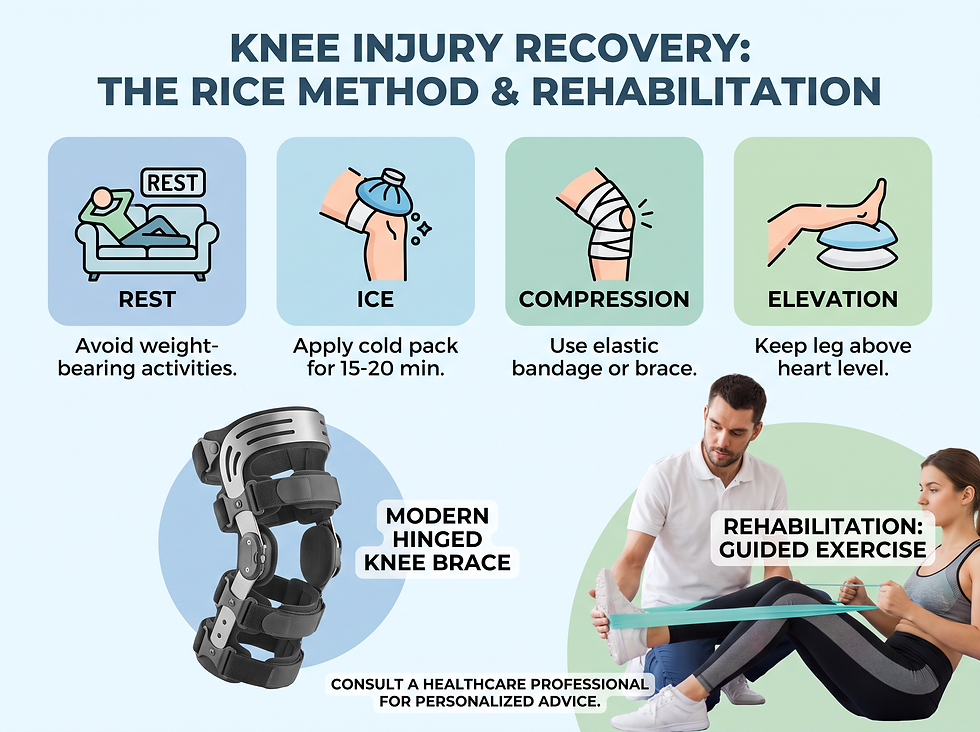
The RICE Method: Rest, Ice, Compression (elastic bandages), and Elevation to manage pain and swelling.
Supportive Devices: Using a knee brace to prevent side-to-side movement and crutches to limit weight-bearing during the initial healing phase.
Medication: Non-steroidal anti-inflammatory drugs (NSAIDs) to reduce inflammation and discomfort.
Physical Therapy: Specialized exercises to restore range of motion and strengthen the surrounding thigh muscles.
When is Surgery Necessary?
Surgery is typically reserved for professional athletes who face extreme physical demands, individuals with severe Grade 3 tears that do not respond to conservative care, or cases where multiple knee ligaments are injured simultaneously. Surgical procedures may involve reattaching the torn ligament or reconstructing it using a tissue graft.
Recovery Timeline
Recovery times vary based on the grade of the tear and the individual's overall health. A Grade 1 tear can often heal within one to three weeks with proper rest. More severe tears require a structured rehabilitation plan involving bracing and physical therapy, which may extend the recovery period to several weeks or months.
Frequently Asked Questions
Can an MCL tear heal on its own?
Minor Grade 1 tears often heal with rest and basic care within a few weeks. More severe tears require professional treatment like bracing and physical therapy.
How do I know if I tore my MCL or my ACL?
While both involve knee pain, MCL pain is localized to the inner side of the knee. An ACL injury often involves more generalized swelling and a different feeling of instability. A doctor uses an MRI to distinguish between them.
Do I need surgery for a complete MCL tear?
Not necessarily. Many complete (Grade 3) MCL tears heal with conservative treatment because the ligament has a good blood supply. Surgery is usually for complex or multi-ligament injuries.
What is the RICE method?
It stands for Rest, Ice, Compression, and Elevation. It is the standard initial treatment for reducing pain and swelling in knee injuries.
When can I return to sports?
This depends on the grade of the tear and your progress in physical therapy. A Grade 1 tear might allow a return in 3 weeks, while Grade 2 or 3 tears take much longer.
Why did I hear a pop in my knee?
A popping sound at the time of injury often indicates a ligament tearing or snapping under pressure.
Should I use a brace for an MCL tear?
Yes, a brace is often recommended for Grade 2 and 3 tears to stabilize the knee and prevent side-to-side movements that could hinder healing.
Are MCL tears common?
Yes, they are the most common knee ligament injury, making up about 40% of all knee traumas.
Can I walk with a torn MCL?
You can usually walk with a Grade 1 tear, though it is painful. Walking with a Grade 2 or 3 tear is difficult and risky due to instability.
What exercises help MCL recovery?
Physical therapy usually focuses on range-of-motion exercises and strengthening the quadriceps and hamstring muscles to support the knee.
Is an MRI necessary for diagnosis?
While a physical exam can often identify the injury, an MRI is the best way to confirm the grade of the tear and check for other internal damage.
Can lifting heavy weights cause an MCL tear?
Yes, squatting or lifting heavy objects can place sudden, excessive stress on the knee ligaments, leading to a tear.
What does "medial" mean in MCL?
"Medial" refers to the inner side of the knee, closer to the middle of the body.
Are NSAIDs safe for MCL pain?
Non-steroidal anti-inflammatory drugs are commonly used to manage pain and swelling, but you should always follow your healthcare provider's dosage recommendations.
Can skiing cause MCL injuries?
Yes, hyperextending or twisting the knee during a fall is a very common cause of MCL tears in skiers.
References
Medical Disclaimer
The information provided in this article is for educational purposes only and should not be used as a substitute for professional medical advice, diagnosis, or treatment. Always seek the advice of a qualified healthcare provider with any questions you may have regarding a medical condition.
Comments