Understanding Fibrin: The Body's Natural Healing Mesh

Updated: 2 days ago
Medically reviewed by Dr. Baraa Alnahhal, MD · Last reviewed: September 2026
TL;DR
Fibrin is a critical blood protein that acts as a biological "safety net" to repair damaged blood vessels and stop bleeding. By forming a sticky, elastic mesh, it allows platelets to cluster and create stable blood clots, facilitating wound healing and tissue regeneration. Issues with fibrin production or stability can lead to serious conditions, including bleeding disorders and thrombosis, highlighting its vital role in vascular health.
Quick Answer: What Is Fibrin?
Fibrin is a fibrous, non-globular protein involved in the clotting of blood. It is formed from fibrinogen by the action of the protease enzyme thrombin, which then polymerizes to form a "mesh" that forms a hemostatic plug or clot over a wound site. This protein is essential for stopping bleeding, aiding in wound repair, and serving as a foundation for new blood vessel growth and tissue regeneration.
The human body possesses an intricate system for self-repair, primarily centered around the blood's ability to coagulate and seal injuries. Fibrin stands at the heart of this process, serving as the structural framework for blood clots. This protein not only prevents excessive blood loss but also coordinates the body's inflammatory response and provides a scaffold for new tissue growth, making it one of the most versatile and essential components of the circulatory system.
Biological Function and Role
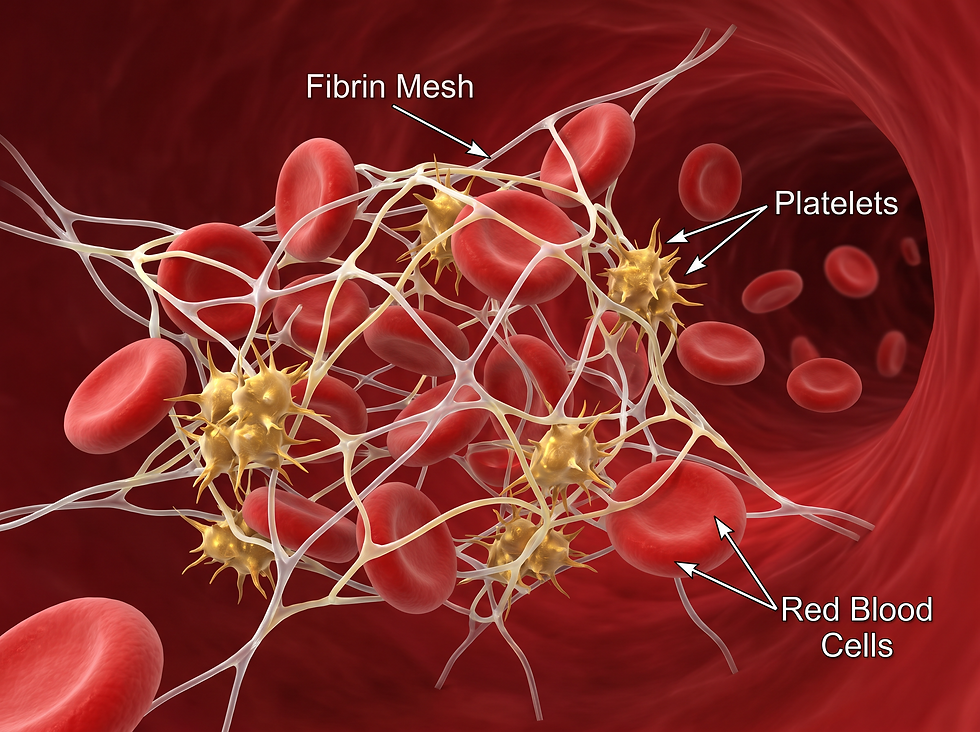
Fibrin's primary responsibility is hemostasis, the process of stopping bleeding. When a blood vessel is injured, fibrin forms a dense, sticky mesh that traps platelets and red blood cells, creating a stable plug. This seal prevents further blood loss and protects the underlying tissues while they undergo repair. Once the vessel is fully healed, the body naturally dissolves the fibrin mesh.
Beyond simple clotting, fibrin plays a significant role in wound healing and the immune response. It helps prevent infection by sealing off injuries from the external environment and acts as a signal to draw in specialized cells that facilitate the healing process. Furthermore, fibrin influences inflammation by engaging white blood cells and triggering the production of cytokines, which are essential for a healthy immune response.
Key functions of fibrin
Hemostasis: forms a stable mesh to seal blood vessel tears and stop bleeding.
Wound healing: protects injuries from infection and contributes to scab formation.
Inflammation: triggers the immune response by engaging white blood cells and cytokines.
Angiogenesis: provides the foundation for the growth of new blood vessels.
Anatomy and Production Process
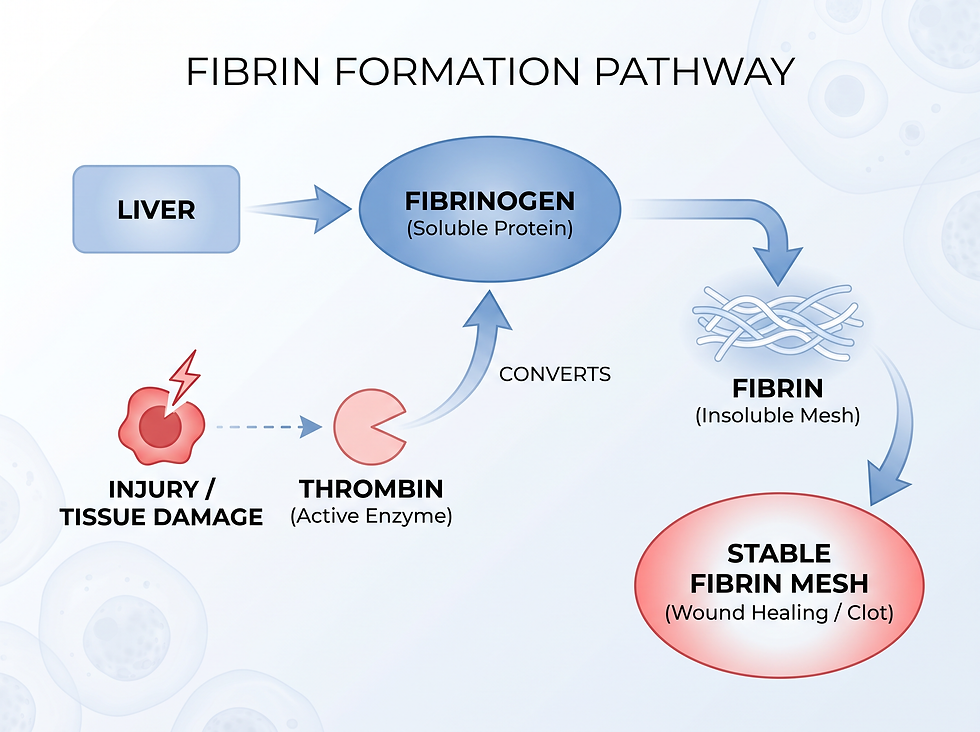
The creation of fibrin is a multi-step biochemical reaction that occurs rapidly in response to injury. It originates from a precursor protein called fibrinogen, which is produced by the liver and circulates freely in the blood plasma. When bleeding occurs, the enzyme thrombin is activated, which then triggers the conversion of fibrinogen into long protein chains known as fibrin.
Under a microscope, fibrin appears as a complex network of long, thread-like strings. Its unique physical properties—strength, stickiness, and elasticity—are what make it such an effective biological material. Fibrin is flexible enough to stretch under the pressure of blood flow without breaking, ensuring that the clot remains intact until the healing process is complete.
Physical properties of fibrin
Strength: provides a durable plug that can withstand physical stress.
Stickiness: effectively traps platelets and cells to form a cluster.
Elasticity: allows the clot to stretch and move without rupturing.
Clinical Conditions and Disorders
Disruptions in the production or stability of fibrin can lead to significant health complications. These issues typically stem from abnormal levels of fibrinogen or thrombin, often caused by genetic factors or certain medications. A deficiency in fibrinogen leads to a lack of fibrin, resulting in excessive or prolonged bleeding from even minor injuries (see also our guide to hemophilia, another bleeding disorder).
Conversely, excessive or dysfunctional fibrin can lead to blood clotting disorders, such as thrombosis, where harmful clots form within blood vessels and obstruct blood flow. Learn more in Blood Clots Explained and our guide to thrombophlebitis. Fibrin issues are also linked to chronic inflammatory conditions like rheumatoid arthritis. Medications such as heparin are commonly used to manage these risks by altering the body's ability to produce the enzymes necessary for fibrin formation.
Applications in Regenerative Medicine
Due to its natural ability to support tissue growth, healthcare providers frequently use fibrin as a biomaterial. In regenerative medicine, fibrin acts as a natural scaffold that supports or replaces damaged tissues. This versatility allows medical professionals to use fibrin-based materials to aid in the regeneration of diverse body parts, ranging from skin and nerves to bone and heart tissue.
Regenerative applications by tissue type
Skeletal: supports the growth and repair of bone and cartilage.
Neurological: acts as a guide for nerve regeneration and repair.
Soft tissue: facilitates the healing of tendons, ligaments, and skin.
Organ tissue: supports the recovery of damaged heart and liver tissues.

Conclusion
Fibrin is an indispensable protein that serves as the body's primary defense against blood loss and the foundation for its healing processes. From its origins in the liver to its role as a sophisticated biomaterial, fibrin demonstrates the remarkable complexity of human physiology. By understanding its function and maintaining overall vascular health, individuals can support the body's natural ability to heal and protect itself.
If you experience unusual bruising, frequent nosebleeds, or wounds that are slow to heal, consult a healthcare provider for a blood evaluation. Understanding your body's clotting health is a proactive step toward preventing serious bleeding or clotting complications.
Frequently Asked Questions
What is the difference between fibrin and fibrinogen? Fibrinogen is the inactive protein in the blood; fibrin is the active, mesh-like protein formed during clotting.
How does fibrin stop bleeding? It forms a sticky web that traps blood cells and platelets to create a solid plug over a wound.
Where is fibrin produced? The precursor, fibrinogen, is produced in the liver and then released into the blood.
What triggers the formation of fibrin? The enzyme thrombin triggers the conversion of fibrinogen into fibrin when an injury occurs.
Is fibrin permanent? No, the body naturally breaks down the fibrin mesh once the underlying injury has healed.
What are fibrin degradation products (FDPs)? These are the substances left in the blood after the body dissolves a fibrin clot.
Can you have too much fibrin? Yes, excessive fibrin can lead to dangerous blood clots, a condition known as thrombosis.
What happens if you have a fibrin deficiency? A lack of fibrin leads to bleeding disorders, where the blood cannot clot effectively.
How is fibrin used in surgery? It is used as a biological glue or scaffold to help tissues like skin, bone, and nerves regenerate.
Does fibrin help with infections? Yes, by sealing wounds, it creates a barrier that helps prevent bacteria from entering the body.
What is hemostasis? It is the medical term for the body's process of stopping bleeding.
Can medications affect fibrin levels? Yes, drugs like heparin can interfere with the clotting process and lower fibrin production.
Is fibrin related to rheumatoid arthritis? Research suggests that issues with fibrin and related proteins can contribute to joint inflammation.
What does fibrin look like under a microscope? It appears as long, interconnected strings or threads forming a dense network.
Why is fibrin elastic? Its elasticity allows blood clots to stretch and move with the body without breaking.
Medical disclaimer: This content is for informational purposes only and is not a substitute for professional medical advice, diagnosis, or treatment. Based on clinical information last updated August 27, 2025.
Comments