Systemic Mastocytosis: Symptoms, Causes, Diagnosis, and Treatment Explained

Updated: 2 days ago
Medically reviewed by Dr. Baraa Alnahhal, MD · Last reviewed: October 2026
TL;DR: Systemic mastocytosis is a rare condition in which too many mast cells build up in the skin and bone marrow, and sometimes the digestive tract or other organs. When triggered by alcohol, insect stings, stress, or certain medicines, they release histamine and other chemicals, causing allergy-like symptoms. [1] It is most often caused by a random KIT gene change. [1] Treatment centers on avoiding triggers, medicines, epinephrine for severe reactions, and regular monitoring. [2]
Medical emergency: Anaphylaxis (a severe allergic reaction with rapid heartbeat, trouble breathing, fainting, loss of consciousness, or shock) can lead to death if not treated right away. If you have these symptoms, use your epinephrine if you have been prescribed it and seek emergency care immediately.
Quick Answer: What is systemic mastocytosis?
Systemic mastocytosis is a rare condition in which too many mast cells build up, mainly in the skin and bone marrow. [1] Triggers such as alcohol, insect stings or stress make them release histamine, causing allergy-like flushing, hives, dizziness and belly pain. It is usually caused by a random KIT gene change. [1] Treatment includes trigger control, antihistamines and epinephrine. [2]
What the research says
Targeted drugs can help even in advanced disease. In an open-label study of 116 patients with advanced systemic mastocytosis (89 with organ damage in the primary analysis), a KIT-inhibiting drug produced an overall response rate of 60% (95% CI 49 to 70), with 45% having a major response. Median overall survival was 28.7 months, and 9.4 months in the 16 patients with mast cell leukemia (Gotlib et al., N Engl J Med, 2016) [3].
Skin symptoms respond to KIT-targeted treatment in indolent disease. In the randomized phase 2 PIONEER study of 212 people with moderate to severe indolent systemic mastocytosis (141 treated, 71 on placebo), the most affected skin area shrank by 36.6% with treatment versus 1.8% with placebo, and skin symptom scores improved more (-7.2 vs -2.8; P < .0001) (Siebenhaar et al., J Am Acad Dermatol, 2026) [4].
Anaphylaxis is a recognized risk. Anaphylaxis is described as a common feature of indolent systemic mastocytosis, seen in up to half of patients. In PIONEER, 13 of 212 participants (6.1%) had anaphylaxis during the 12-week screening or 24-week treatment period (Pongdee et al., World Allergy Organ J, 2026) [5].
What Is Systemic Mastocytosis?
Systemic mastocytosis (mas-to-sy-TOE-sis) is a rare condition that results in too many mast cells building up in the body. Mast cells are found in tissues throughout the body. They help the immune system work properly and help protect the body from disease. [1]
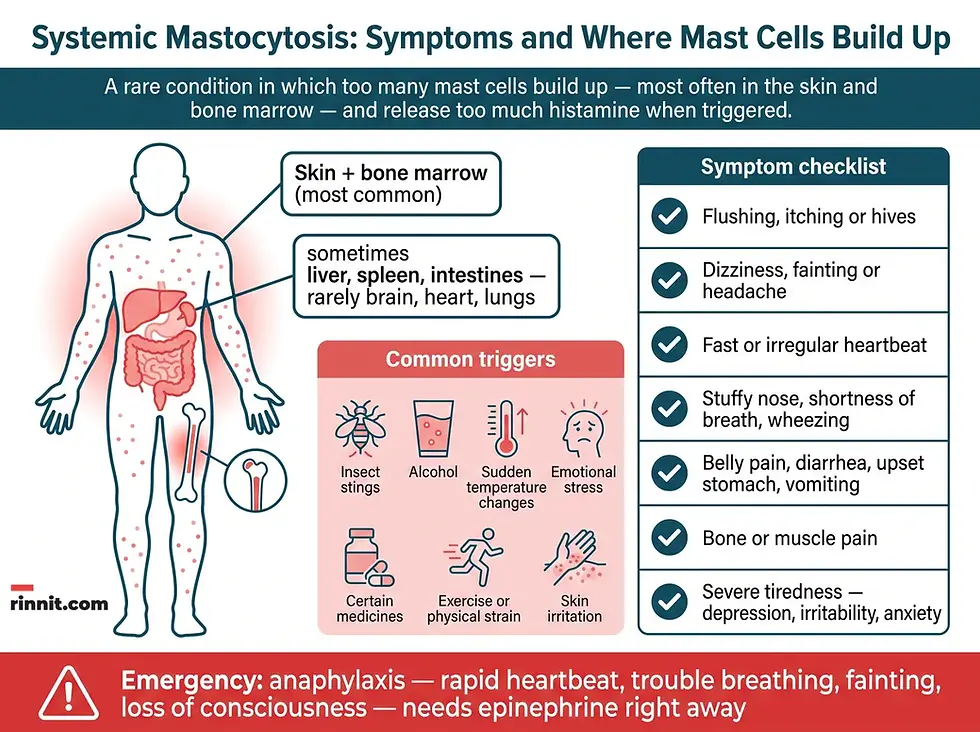
Systemic mastocytosis causes too many mast cells to build up in the skin and bone marrow. Less often, mast cells also build up in the digestive tract or other body organs. [1]
When triggered, these mast cells let out too much histamine and other chemicals into the body, which can cause symptoms like those of an allergic reaction. Sometimes, severe swelling and irritation, called inflammation, results in organ damage. Common triggers include alcohol, insect stings, physical and emotional stress, and certain medicines. [1]
What Are the Symptoms of Systemic Mastocytosis?
Symptoms of systemic mastocytosis depend on the part of the body affected. Too many mast cells can build up in the skin, bone marrow, liver, spleen, or intestines. Less commonly, other organs such as the brain, heart, or lungs may be affected.
Symptom Category | What It Involves |
|---|---|
Skin | Flushing, itching, raised bumps called hives |
Head and circulation | Dizziness, fainting, headache; fast heartbeat or irregular heartbeat |
Breathing | Stuffy nose, shortness of breath, wheezing |
Digestive | Belly pain, diarrhea, upset stomach, vomiting |
Musculoskeletal | Bone or muscle pain |
Overall | Severe tiredness; depression, irritability, anxiety, trouble thinking and paying attention |
Organs | Bigger than usual liver, spleen, or lymph nodes |
If flushing or hives are your main concern, our guide to chronic hives explains how hives are evaluated and treated.
What types of systemic mastocytosis exist?
Systemic mastocytosis most commonly occurs in adults. The condition usually includes skin symptoms and affects at least one other organ such as the bone marrow, liver, or digestive tract. The main types are indolent, smoldering, and bone marrow mastocytosis, and there are also rare advanced types. [1]
Type | How Serious | Key Features |
|---|---|---|
Indolent systemic mastocytosis | Most common type; least severe | Skin symptoms are common; other organs may be affected, but the condition usually doesn't affect how well organs work; may worsen slowly over time |
Smoldering systemic mastocytosis | More serious | Involves more-serious symptoms; may affect how organs work; worsens over time |
Bone marrow mastocytosis | Affects only the bone marrow | No skin symptoms; causes frequent and sometimes severe allergic-reaction symptoms; causes weakened and brittle bones (osteoporosis) |
Systemic mastocytosis with a myeloid or hematologic neoplasm (advanced) | Rare and severe | Occurs along with a blood or bone marrow condition such as cancer; develops rapidly; affects organ function; can cause organ damage |
Aggressive systemic mastocytosis (advanced) | Rare and severe | Severe symptoms; usually affects how well organs work and causes organ damage |
Mast cell leukemia (advanced) | Very rare and aggressive | A very rare and aggressive form of systemic mastocytosis |
Is this the same as skin-only mastocytosis in children?
No. Skin mastocytosis, also called cutaneous mastocytosis, typically occurs in children and usually affects only the skin. It generally doesn't lead to systemic mastocytosis. For children, skin symptoms often go away during the teen years. [1] This type can also occur in adults.
When should you see a doctor?
Talk to your healthcare professional if you have flushing or hives or if you have concerns about other symptoms that could be mastocytosis.
What Causes Systemic Mastocytosis?
Most often, systemic mastocytosis is caused by a random change in the KIT gene. Usually, this change in the KIT gene is not passed down in families. The gene change causes the body to make too many mast cells, and these cells build up in tissues and organs. [1]
When triggered, the mast cells let out chemicals into the body, such as histamine, leukotrienes, tryptase, and cytokines. These chemicals cause inflammation and symptoms like those of an allergic reaction. [1]
What Are the Risk Factors and Triggers?
A change in the KIT gene is a risk factor for mastocytosis, and exposure to triggers can raise the risk of symptoms in people who have it. For people with mastocytosis, being around triggers can raise the risk of symptoms. People have different triggers, but the most common ones include:
Trigger | Type |
|---|---|
Insect stings | Environmental |
Skin irritation | Environmental |
Sudden temperature changes | Environmental |
Emotional stress | Physical and emotional |
Exercise or physical strain | Physical |
Certain medicines | Avoidable (with medical guidance) |
Alcohol | Avoidable |
What Complications Can Occur?
Complications of systemic mastocytosis can include a severe allergic reaction called anaphylaxis, blood disorders, peptic ulcer disease, low bone density, and organ failure. [1]
Complication | What It Involves |
|---|---|
Anaphylaxis (severe allergic reaction) | Rapid heartbeat, trouble breathing, fainting, loss of consciousness, and shock; may lead to death if not treated right away; treatment may require a shot of epinephrine |
Blood disorders | Anemia (not having enough red blood cells); poor blood clotting that can result in bleeding |
Peptic ulcer disease | Ongoing stomach irritation leading to ulcers and bleeding in the digestive tract |
Low bone density | The condition can affect the bones and bone marrow, raising the risk of osteoporosis |
Organ failure | A buildup of mast cells in body organs can cause inflammation and damage to the organs |
Anaphylaxis is a medical emergency. It may lead to death if not treated right away, and if you have a severe allergic reaction you may need a shot of epinephrine. For more on recognizing and responding to it, see our guide to anaphylaxis.
How Is Systemic Mastocytosis Diagnosed?
To diagnose systemic mastocytosis, your healthcare professional talks with you about your symptoms and medical history, including any medicines you've taken. Tests look for high levels of mast cells or the chemicals they let out into the body. Any organs that may be affected by the condition can be checked. [2]
Diagnostic Test | How It Helps |
|---|---|
Blood or urine tests | Look for high levels of mast cells or the chemicals they release |
Bone marrow biopsy | A small sample of bone marrow tissue is removed and tested in the lab |
Skin biopsy | A small sample of skin tissue is tested in the lab |
Imaging tests | X-ray, ultrasound, bone density scan, and CT scan check the body and bones |
Organ checks | Affected organs, such as the liver, may be checked, possibly with a biopsy |
Genetic testing | Looks for the gene change that causes the condition |

How Is Systemic Mastocytosis Treated?
Treatment may vary, depending on the type of systemic mastocytosis and the body organs affected. Treatment generally includes controlling triggers to avoid symptoms, treating the condition with options such as medicines, chemotherapy, and stem cell transplant, and regular monitoring. [2]
Treatment Approach | How It Works |
|---|---|
Controlling triggers | Identifying and avoiding factors that trigger your mast cells, such as medicines or insect stings, helps manage symptoms |
Medicines: allergy symptoms | Antihistamines treat allergic reaction symptoms |
Medicines: digestive symptoms | Medicines lessen stomach acid and discomfort in the digestive system |
Medicines: chemical effects | Corticosteroids lessen the effects of the chemicals released by mast cells |
Medicines: gene control | Some medicines control the KIT gene to lessen the number of mast cells made |
Medicines: bones | Medicines lessen bone loss |
Medicines: mood | Antidepressants can lessen symptoms of depression or anxiety |
Epinephrine | A healthcare professional can teach you how to give yourself an epinephrine shot; it helps if you have a severe allergic response when your mast cells are triggered |
Chemotherapy | For aggressive systemic mastocytosis, or systemic mastocytosis with a blood or bone marrow condition, chemotherapy medicines lower the number of mast cells in your body |
Stem cell transplant | In leukemia-related systemic mastocytosis, a stem cell transplant may be an option |
Regular monitoring | Blood and urine tests are used regularly; a special home kit can collect blood and urine samples during symptoms; regular bone density measurements look for bone loss or signs of osteoporosis |

How Can You Manage It Day to Day?
Self-care is an essential part of living with systemic mastocytosis. The key practices are identifying and avoiding your triggers and always being prepared for a severe allergic reaction. If your healthcare professional recommends epinephrine, always carry one or two doses with you. [2]
Following your healthcare professional's recommended care and ongoing monitoring matters. Wearing a medical alert bracelet or necklace, or carrying a medical card identifying that you have systemic mastocytosis, helps in emergencies. Ask your healthcare professional for information about your condition that you can carry with you and give to healthcare professionals in case you need emergency care.
Coping tips for this lifelong condition include learning as much as you can about systemic mastocytosis so you can make the best choices and speak up for yourself, and helping family members and friends understand your condition, care needs, and safety precautions. Finding a team of trusted professionals at a medical center with specialty teams provides information, advice, and support.
Talking to people who also have systemic mastocytosis or other lifelong conditions can give information and emotional support. Ask your healthcare professional about resources and support groups in your community, or look for group or individual support online. Ask for or accept help from family and friends when needed, take time for your interests and activities, and consider counseling with a mental health professional for anxiety, depression, and coping strategies.
How Should You Prepare for Your Appointment?
You may start by talking with your family healthcare professional, or you may be referred to a specialist in allergy and immunology called an allergist, or a specialist in blood conditions called a hematologist. Ask a trusted family member or friend to go with you, since that person can offer emotional support and help you remember the details.
What you can do
Before your appointment, make a list of your symptoms, including when they began and what seems to make them worse or better. List medical conditions you've had and their treatments, and all medicines, vitamins, herbal supplements, and dietary supplements you take. Write down the questions you want to ask, such as:
What likely is causing my symptoms?
Are there other possible causes for these symptoms?
What kinds of tests do I need?
Should I see a specialist?
What to expect from your doctor
Your healthcare professional may ask what symptoms you have, when they started, whether you have allergies or have had allergic reactions, what triggers your allergy, what makes your symptoms worse or better, and whether you have been diagnosed or treated for any other medical conditions.
Conclusion and When to Seek Help
Systemic mastocytosis turns the body's own alarm cells against it. Mast cells that normally protect you from disease instead build up in excess, most often in the skin and bone marrow, and release too much histamine and other chemicals whenever triggered. The result can look and feel like an endless allergy: flushing, hives, dizziness, a racing heart, wheezing, and digestive trouble. Most often a random change in the KIT gene, usually not inherited, starts the process.
The most common type is indolent, in which organ function usually stays intact even if symptoms slowly worsen over time. Managing the condition is very much in your hands day to day: know your triggers (insect stings, alcohol, stress, certain medicines, temperature changes, exercise), carry epinephrine if prescribed, wear medical identification, and keep up with regular monitoring. More aggressive forms need stronger treatment, such as chemotherapy or, in leukemia-related cases, stem cell transplant, along with ongoing specialist care.
When to seek help: If you've had unexplained flushing or hives, dizziness, a fast or irregular heartbeat, wheezing, or recurring digestive symptoms that don't fit a simple allergy, talk to your healthcare professional. If systemic mastocytosis is suspected, expect blood and urine tests, possible bone marrow or skin biopsies, imaging, and genetic testing, and ask whether you should see an allergist or hematologist.
Frequently Asked Questions
What is systemic mastocytosis?
Systemic mastocytosis is a rare condition that results in too many mast cells building up in the body. Mast cells help the immune system work properly and help protect the body from disease. In this condition, too many mast cells build up in the skin and bone marrow, and less often in the digestive tract or other organs.
What do mast cells do?
Mast cells help the immune system work properly and help protect the body from disease. When triggered in systemic mastocytosis, they let out too much histamine and other chemicals.
What are the symptoms of systemic mastocytosis?
Symptoms depend on the part of the body affected and may include flushing, itching, or hives; dizziness, fainting, or headache; a fast or irregular heartbeat; a stuffy nose, shortness of breath, or wheezing; belly pain, diarrhea, upset stomach, or vomiting; bone or muscle pain; severe tiredness; depression, irritability, anxiety, or trouble thinking and paying attention; and a bigger than usual liver, spleen, or lymph nodes.
Why do symptoms feel like an allergic reaction?
When triggered, the excess mast cells let out chemicals into the body, such as histamine, leukotrienes, tryptase, and cytokines. These chemicals cause inflammation and symptoms like those of an allergic reaction.
Where do the extra mast cells build up?
Most often in the skin and bone marrow. Less often they build up in the digestive tract, liver, spleen, or intestines, and less commonly in organs such as the brain, heart, or lungs.
What triggers systemic mastocytosis symptoms?
Common triggers include insect stings, skin irritation, sudden temperature changes, emotional stress, exercise or physical strain, certain medicines, and alcohol. People have different triggers.
What causes systemic mastocytosis?
Most often it is caused by a random change in the KIT gene. Usually, this gene change is not passed down in families. The change causes the body to make too many mast cells, which build up in tissues and organs.
Is systemic mastocytosis inherited?
Usually not. The change in the KIT gene that most often causes the condition is random and usually not passed down in families.
Is systemic mastocytosis the same as skin mastocytosis in children?
No. Skin (cutaneous) mastocytosis typically occurs in children, usually affects only the skin, and generally doesn't lead to systemic mastocytosis. For children, skin symptoms often go away during the teen years. Skin mastocytosis can also occur in adults.
What types of systemic mastocytosis are there?
The main types are indolent (most common, skin symptoms common, organ function usually preserved), smoldering (more-serious symptoms, may affect organ function), and bone marrow mastocytosis (only the bone marrow, no skin symptoms, causes frequent allergic-reaction symptoms and osteoporosis). Rare advanced types include systemic mastocytosis with a myeloid or hematologic neoplasm, aggressive systemic mastocytosis, and mast cell leukemia.
What is mast cell leukemia?
Mast cell leukemia is a very rare and aggressive form of systemic mastocytosis.
What complications can happen?
Complications can include anaphylaxis, blood disorders such as anemia and poor clotting, peptic ulcer disease, low bone density and osteoporosis, and organ failure.
Is anaphylaxis dangerous?
Yes. Anaphylaxis may lead to death if not treated right away. If you have a severe allergic reaction, you may need a shot of epinephrine.
How is systemic mastocytosis diagnosed?
A healthcare professional reviews your symptoms and medical history, including medicines you've taken. Tests look for high levels of mast cells or the chemicals they release, and may include blood or urine tests, a bone marrow biopsy, a skin biopsy, imaging tests (X-ray, ultrasound, bone density scan, CT scan), checks of affected organs such as the liver, and genetic testing.
Who treats systemic mastocytosis?
Care may involve your family healthcare professional, an allergist (a specialist in allergy and immunology), or a hematologist (a specialist in blood conditions).
How is systemic mastocytosis treated?
Treatment depends on the type and the organs affected, and generally includes controlling triggers to avoid symptoms, treating the condition with medicines, chemotherapy, or stem cell transplant, and regular monitoring.
What medicines are used?
Medicines may treat allergic reaction symptoms (antihistamines), lessen stomach acid and digestive discomfort, lessen the effects of released chemicals (corticosteroids), control the KIT gene to lessen the number of mast cells made, lessen bone loss, and lessen symptoms of depression or anxiety (antidepressants).
Why would I need an epinephrine shot?
A healthcare professional can teach you to give yourself an epinephrine shot. It helps if you have a severe allergic response when your mast cells are triggered.
When are chemotherapy and stem cell transplant used?
Chemotherapy medicines may be used to lower the number of mast cells in aggressive systemic mastocytosis, or systemic mastocytosis with a blood or bone marrow condition. In leukemia-related systemic mastocytosis, a stem cell transplant may be an option.
How is the condition monitored over time?
Healthcare professionals regularly monitor the condition using blood and urine tests. A special home kit may be used to collect blood and urine samples during symptoms. Regular bone density measurements look for bone loss or signs of osteoporosis.
What self-care steps should I take?
Identify and avoid your triggers. If epinephrine is recommended, always carry one or two doses with you. Follow your recommended care and monitoring. Wear a medical alert bracelet or necklace, or carry a medical card identifying your condition, and carry written information about your condition for emergencies.
Is systemic mastocytosis lifelong?
It is described as a lifelong condition, so learning about it, finding a team of trusted professionals, joining support groups, and seeking counseling for anxiety, depression, and coping can all help.
When should I see a doctor about possible symptoms?
Talk to your healthcare professional if you have flushing or hives or if you have concerns about other symptoms that could be mastocytosis.
References
Mayo Clinic Staff. Systemic mastocytosis: symptoms and causes. Mayo Clinic. December 30, 2025. https://www.mayoclinic.org/diseases-conditions/systemic-mastocytosis/symptoms-causes/syc-20352859
Mayo Clinic Staff. Systemic mastocytosis: diagnosis and treatment. Mayo Clinic. December 30, 2025. https://www.mayoclinic.org/diseases-conditions/systemic-mastocytosis/diagnosis-treatment/drc-20450478
Gotlib J, Kluin-Nelemans HC, George TI, et al. Efficacy and safety of midostaurin in advanced systemic mastocytosis. N Engl J Med. 2016;374(26):2530–2541. PMID 27355533. https://doi.org/10.1056/NEJMoa1513098
Siebenhaar F, Broesby-Olsen S, Castells M, et al. Avapritinib improves cutaneous involvement in patients with indolent systemic mastocytosis: results from the randomized, phase 2, interventional PIONEER study. J Am Acad Dermatol. 2026;94(6):1705–1713. PMID 41690487. https://doi.org/10.1016/j.jaad.2026.02.025
Pongdee T, Castells M, Akin C, et al. Anaphylaxis events in the PIONEER study of avapritinib in indolent systemic mastocytosis. World Allergy Organ J. 2026;19(4):101352. PMID 41867266. https://doi.org/10.1016/j.waojou.2026.101352
Medical Disclaimer
This article is for informational purposes only and does not constitute medical advice. Anaphylaxis is a medical emergency: if you have a severe allergic reaction, seek emergency care right away. Ongoing symptoms should be evaluated by a qualified healthcare professional.



Comments