Retained Products of Conception (RPOC): Symptoms, Causes, and Treatment

Updated: 2 days ago
Medically reviewed by Dr. Baraa Alnahhal, MD · Last reviewed: September 2026
Quick Answer:
Retained products of conception (RPOC) occurs when fetal or placental tissue remains in the uterus after a vaginal delivery, C-section, miscarriage, or abortion. The most common symptom is heavy or irregular vaginal bleeding. If left untreated, RPOC can lead to serious complications such as infection, anemia, or sepsis. Treatment usually involves medication to contract the uterus or a surgical procedure to remove the tissue.
Medically reviewed: September 9, 2024
TL;DR: RPOC at a Glance
Retained products of conception (RPOC) refers to placental or fetal tissue that remains in the uterus after a pregnancy ends. While not common, it can occur after birth, miscarriage, or abortion, leading to symptoms like heavy bleeding and infection. Diagnosis often involves ultrasounds or blood tests, and treatment typically includes medication or a minor surgical procedure called a D&C.
MEDICAL EMERGENCY: SEEK IMMEDIATE CARE. Retained products of conception can lead to life-threatening complications if left untreated. Seek immediate medical attention or call emergency services if you experience: difficulty breathing; heavy vaginal bleeding (soaking through pads quickly); high fever or chills; severe pelvic pain or cramping; or persistent nausea and vomiting.
What are Retained Products of Conception?
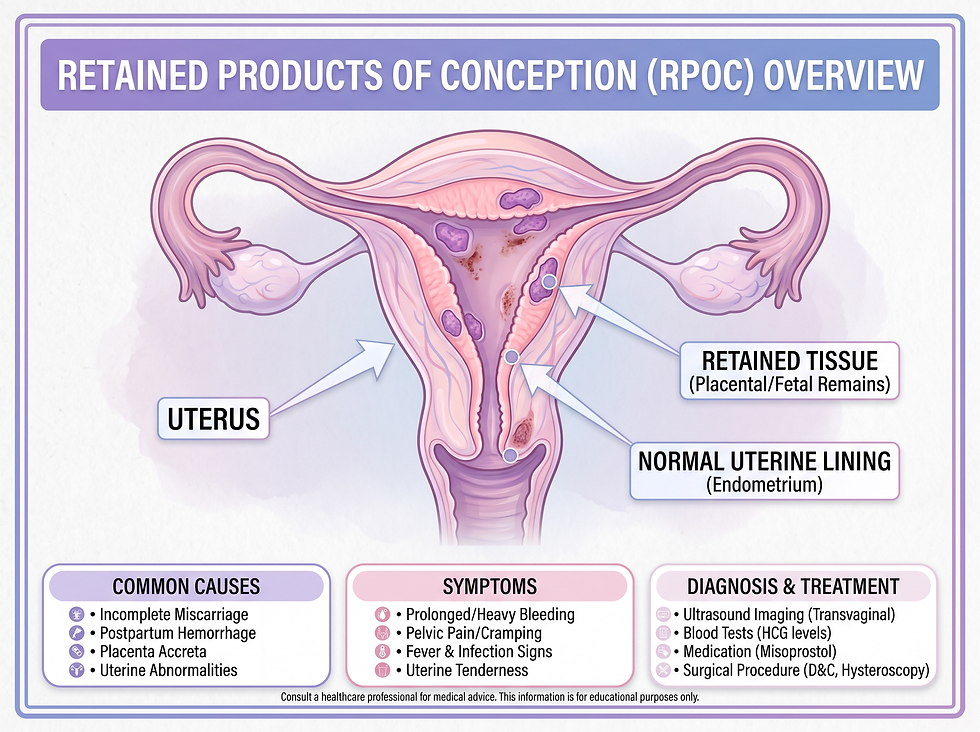
Retained products of conception (RPOC) is a medical term for tissue that stays inside the uterus after a pregnancy has ended. This tissue is most commonly placental, but it can also include fetal or embryonic tissue. While most pregnancies conclude with the complete expulsion of all related tissues, RPOC can occur regardless of whether the pregnancy ended in a live birth, miscarriage, or abortion.
It is important to distinguish RPOC from a "retained placenta." While a retained placenta is a type of RPOC, the term RPOC is broader and encompasses any fetal or placental material that remains in the uterine cavity.
Symptoms and Warning Signs
The body undergoes significant changes after a pregnancy ends, and some bleeding is normal. However, certain signs indicate that tissue may still be present in the uterus.
Bleeding: The most common sign is heavy or irregular vaginal bleeding, often involving large blood clots.
Physical Discomfort: Pelvic pain, cramping, and an enlarged or tender uterus are frequent symptoms.
Systemic Signs: Fever and chills may indicate a developing infection.
Menstrual Changes: If your period does not return as expected (and you are not breastfeeding), it could be a sign of RPOC.
Risk Factors for RPOC
While healthcare providers often cannot pinpoint a single cause for RPOC, several factors are known to increase the likelihood of tissue being retained.
Risk Factor | Description |
Previous RPOC | Having experienced retained tissue in a past pregnancy is the strongest risk factor. |
Maternal Age | Being older than 35 at the time of pregnancy increases the risk. |
Assisted Delivery | The use of instruments like forceps or vacuum extraction during birth. |
Second-Trimester Loss | Deliveries, miscarriages, or abortions occurring between weeks 13 and 26. |
Uterine Abnormalities | Having an irregularly shaped uterus or past scarring from C-sections or D&C. |
Placenta Accreta | A condition where the placenta grows too deeply into the uterine wall (see our guide to placenta accreta). |
Potential Complications
If RPOC is not diagnosed and removed, it can lead to serious health issues.
Infection and Sepsis: Retained tissue can become a breeding ground for bacteria, leading to pelvic inflammatory disease or life-threatening sepsis.
Anemia: Prolonged heavy bleeding can cause a significant drop in red blood cells, leading to extreme fatigue and weakness.
Chronic Pain: Long-term pelvic discomfort and inflammation.
Asherman's Syndrome: A rare condition where uterine scarring occurs, which may affect future fertility.
Diagnosis and Testing
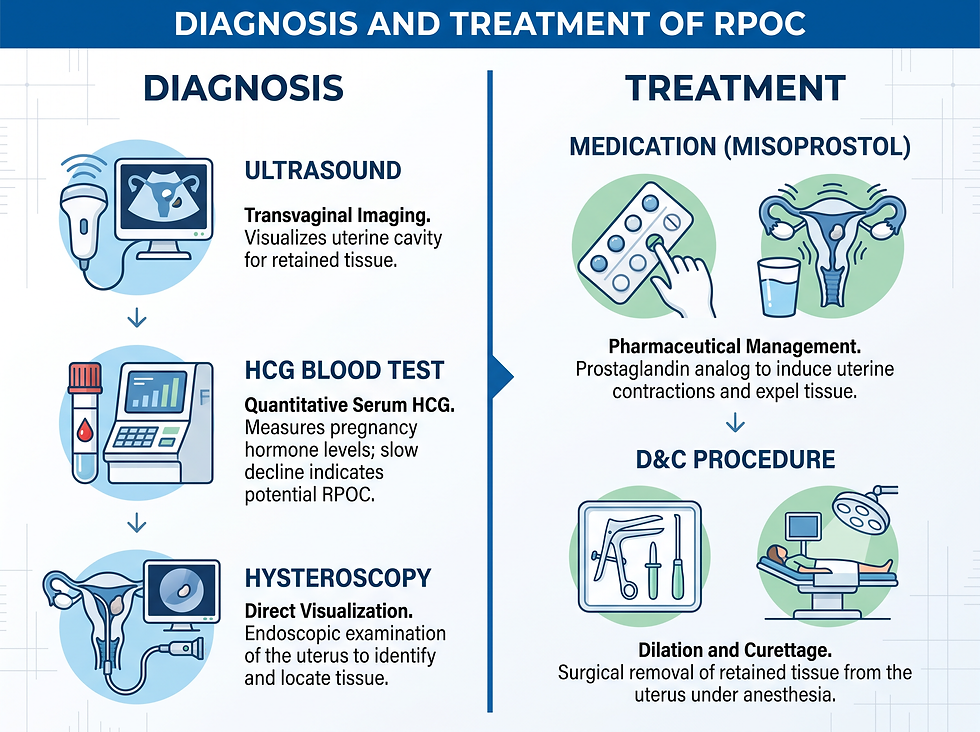
Because the symptoms of RPOC can mimic other postpartum conditions, doctors use several tools to confirm a diagnosis.
HCG Blood Test: Measuring levels of human chorionic gonadotropin. High levels after pregnancy can indicate placental tissue is still present.
Transvaginal Ultrasound: Using a probe to visualize the uterine lining and look for retained masses.
Color Doppler Ultrasound: A specialized scan that checks for blood flow to the tissue, indicating it is still attached to the uterine wall.
Hysteroscopy: Inserting a thin, lighted tube into the uterus to directly view the tissue.
Endometrial Biopsy: Taking a small tissue sample to check for placental cells under a microscope.
Treatment Options
The goal of treatment is to safely remove the retained tissue to prevent infection and stop bleeding.
Medical Management
Misoprostol: This medication can be taken orally or vaginally. It causes the uterus to contract, helping the body naturally expel the remaining tissue.
Surgical Intervention
Dilation and Curettage (D&C): A minor surgical procedure where the cervix is dilated and a small suction tool or curette is used to remove the uterine contents. This is often both a diagnostic and treatment tool. Learn more in our D&C guide.
Conclusion
Retained products of conception is a manageable condition, but it requires prompt medical attention to avoid serious complications. Most individuals who receive treatment for RPOC go on to have healthy future pregnancies without long-term reproductive issues. By recognizing the warning signs, particularly heavy bleeding and fever, you can ensure a safer recovery after pregnancy.
Next Steps
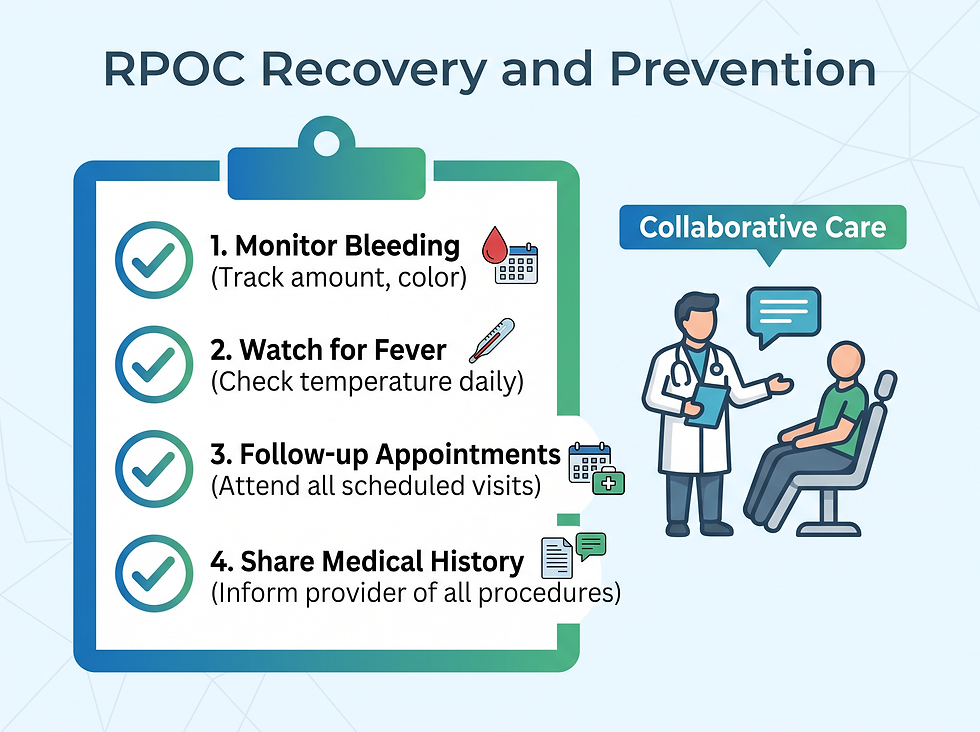
If you suspect you have RPOC, contact your healthcare provider immediately. Keep a record of your symptoms, including the frequency and severity of bleeding. Ensure your provider is aware of your full medical history, especially any previous uterine surgeries or pregnancy complications, to help them monitor your health effectively.
Frequently Asked Questions
1. Is RPOC common?
No, most pregnancies end without any retained tissue. However, it is more common when a pregnancy ends in the second trimester.
2. Can RPOC come out on its own?
It is possible for the body to expel small amounts of tissue naturally, but a healthcare provider must determine if it is safe to wait or if intervention is needed.
3. Does RPOC affect future fertility?
In most cases, no. Most people who are treated for RPOC can have healthy pregnancies in the future. Uterine scarring (Asherman's Syndrome) is a rare complication.
4. How soon after pregnancy do symptoms appear?
Symptoms usually appear within days or weeks after the pregnancy ends, but in some cases, it can take longer to recognize irregular bleeding.
5. What is the difference between RPOC and a retained placenta?
RPOC is a broad category that includes any tissue (placental or fetal). A retained placenta specifically refers to the placenta not being delivered after birth.
6. Is a D&C painful?
The procedure is typically performed under anesthesia or sedation, so you should not feel pain during the surgery. Some cramping is normal afterward. See our D&C guide for what to expect.
7. Can an ultrasound miss RPOC?
While ultrasounds are very effective, they can sometimes be difficult to interpret. A Doppler ultrasound or hysteroscopy may be used for more detail.
8. Why does maternal age increase the risk?
The exact reason isn't always known, but being over 35 is statistically linked to a higher incidence of various pregnancy complications, including RPOC.
9. What is sepsis?
Sepsis is a life-threatening emergency where the body's response to an infection damages its own tissues. It can occur if an infection from RPOC enters the bloodstream.
10. Can I prevent RPOC?
There is no way to prevent it, but sharing your medical history with your provider allows them to monitor you more closely if you are at higher risk.
11. What does "nulliparity" mean?
Nulliparity refers to a person who has never given birth to a child. This is considered a minor risk factor for RPOC.
12. How long does recovery take after a D&C?
Most people can return to normal activities within a day or two, though some spotting and mild cramping may persist for a short time.
13. Can RPOC cause a missed period?
Yes, if the tissue is still present and producing hormones or causing scarring, it can delay the return of your normal menstrual cycle.
14. What is placenta accreta?
It is a serious condition where the placenta attaches too deeply to the uterine wall, making it very difficult to detach completely during delivery. Read more in our placenta accreta guide.
15. Should I be worried if I have some bleeding after birth?
Some bleeding (lochia) is normal for several weeks. You should only be concerned if the bleeding is very heavy, contains large clots, or is accompanied by pain or fever.
Additional Resources
Related reading on Rinnit:
External resources:
American College of Obstetricians and Gynecologists (ACOG)
March of Dimes
Mayo Clinic
Medical Disclaimer
This article is for informational purposes only and does not constitute medical advice. Always seek the advice of your physician or other qualified health provider with any questions you may have regarding a medical condition. Never disregard professional medical advice or delay in seeking it because of something you have read in this article.
Comments