Refeeding Syndrome: Symptoms, Causes, Diagnosis, and Prevention

Updated: 2 days ago
Medically reviewed by Dr. Baraa Alnahhal, MD · Last reviewed: September 2026
Last updated: September 2026 | Source content date: June 6, 2022
TL;DR
Refeeding syndrome is a potentially life-threatening condition that occurs when a malnourished person begins eating again too quickly. During starvation, the body shifts its metabolism to conserve resources. When food, especially carbohydrates, is reintroduced, the body rapidly shifts back to normal metabolism, causing a sudden and dangerous drop in essential blood electrolytes like phosphorus, potassium, and magnesium. This chemical shift can lead to heart failure, lung issues, seizures, and even death. Prevention focuses on identifying high-risk individuals and reintroducing nutrients slowly while closely monitoring blood chemistry.
Quick Answer
What is refeeding syndrome? Refeeding syndrome is a series of metabolic disturbances that occur when someone who has been starved or severely malnourished starts to eat again.
Key facts include:
Primary Cause: A rapid shift in electrolytes (phosphorus, potassium, and magnesium) from the blood into the cells triggered by new food intake.
Who is at Risk: Individuals with significant weight loss, eating disorders, chronic alcoholism, or conditions causing malabsorption.
Common Symptoms: Muscle weakness, breathing difficulties, heart rhythm changes, seizures, and confusion.
Diagnosis: Confirmed through blood tests that monitor electrolyte levels and vital signs during the first five days of refeeding.
Prevention: Starting nutrition at a very low level and gradually increasing it while supplementing missing vitamins and minerals.
Symptoms and Clinical Indicators
The symptoms of refeeding syndrome are diverse because they stem from various electrolyte deficiencies that affect almost every organ system.
Symptoms by Nutrient Deficiency
Deficiency | Common Symptoms |
|---|---|
Phosphate (Hypophosphatemia) | Muscle weakness, breathing trouble, double vision, seizures, heart failure. |
Magnesium (Hypomagnesemia) | Nausea, vomiting, tremors, muscle spasms, abnormal heart rhythms. |
Potassium (Hypokalemia) | Fatigue, muscle cramps, severe constipation, respiratory failure, arrhythmia. |
Thiamine (Vitamin B1) | Delirium, coordination problems (ataxia), vision issues, memory loss. |
Fluid Imbalance | Swelling (edema), fluid in the lungs, heart strain, kidney dysfunction. |
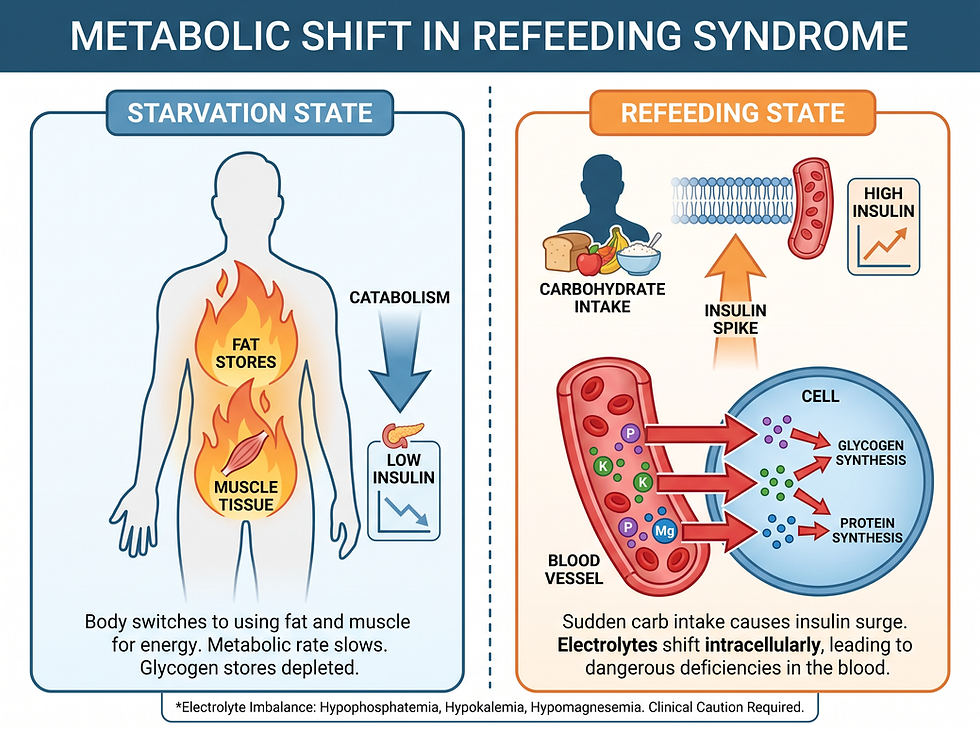
Infographic showing the transition from starvation metabolism to refeeding and the resulting electrolyte shift.
Causes and Risk Factors
Refeeding syndrome is triggered by the body's attempt to resume normal carbohydrate metabolism after a period of deprivation or malnutrition.
The Metabolic Trigger
When the body is starved, it slows down and burns its own fat and muscle for energy instead of carbohydrates. This state uses very few electrolytes. When food is reintroduced, the body suddenly needs large amounts of phosphorus, potassium, and magnesium to process the new energy. If the body's stores are already low due to malnutrition, these electrolytes are pulled out of the blood and into the cells, leaving the bloodstream dangerously depleted.
High-Risk Groups
Weight Loss: Recent loss of more than 10% of total body weight.
Food Deprivation: Going without food for more than seven days.
Eating Disorders: Conditions like anorexia nervosa or bulimia nervosa.
Chronic Conditions: Inflammatory bowel disease (IBD), chronic pancreatitis, or cancer.
Substance Use: Chronic alcohol use, which often leads to underlying malnutrition.
Medications: Long-term use of diuretics or antacids that affect mineral levels.
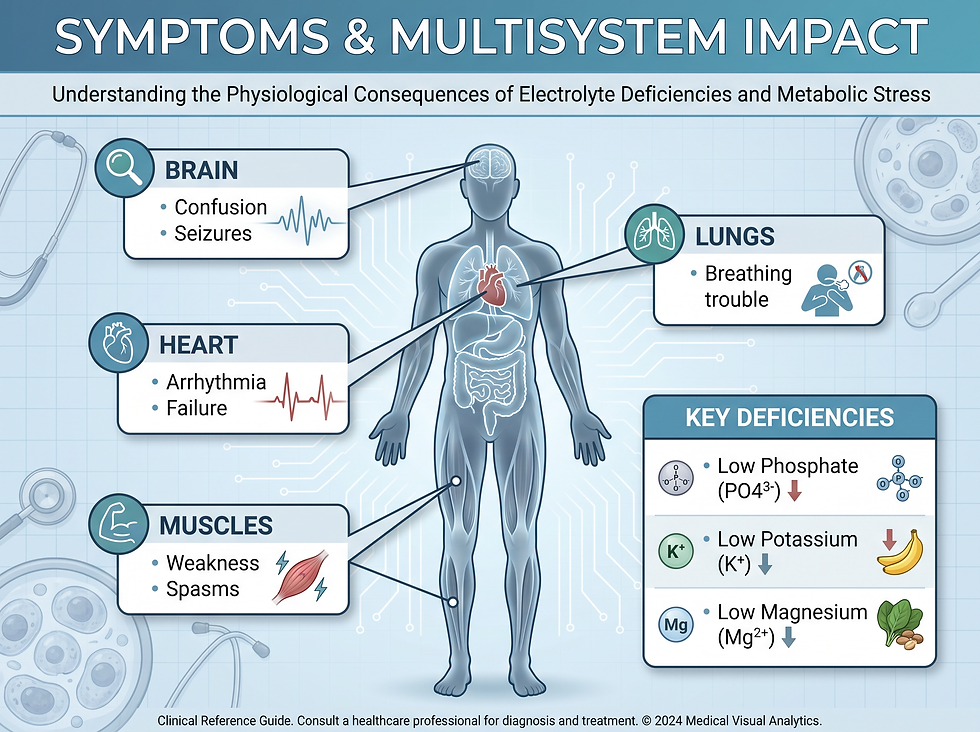
Clinical visual guide to the multisystem impact of refeeding syndrome and key red flags.
Diagnosis and Management
Safe recovery from malnutrition requires a highly controlled clinical environment to prevent and manage refeeding complications.
Diagnostic Process
Healthcare teams typically identify refeeding syndrome by monitoring vital signs and performing frequent blood tests. Because electrolyte shifts often don't happen until feeding starts, daily blood work is usually required during the first five days of the refeeding process.
Treatment and Prevention Strategies
Strategy | Description |
|---|---|
Pre-Screening | Testing electrolyte levels before any food is introduced. |
Micronutrient Replacement | Supplementing phosphorus, potassium, and magnesium before starting food. |
"Low and Slow" Feeding | Starting with a very small amount of calories and increasing them gradually. |
Thiamine Supplementation | Providing vitamin B1 to prevent neurological complications. |
Continuous Monitoring | Checking blood chemistry daily for at least the first week of recovery. |
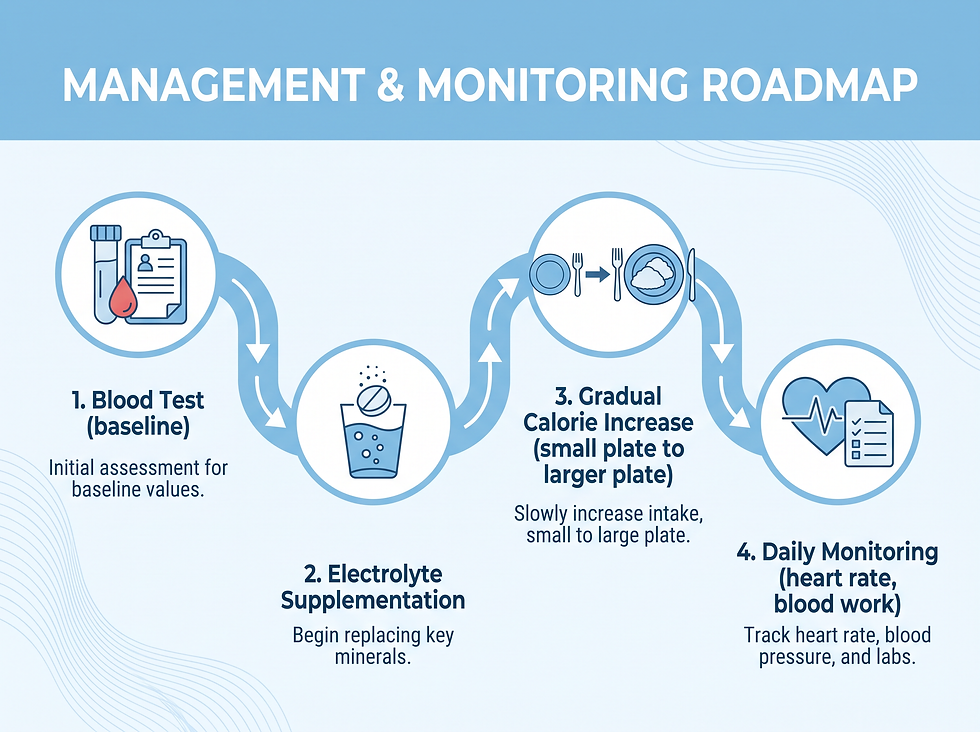
A clinical roadmap for safe nutritional recovery, emphasizing testing and gradual calorie increase.
Frequently Asked Questions
How soon does refeeding syndrome start?
It typically occurs within the first five days after a person begins to eat again.
Can refeeding syndrome be fatal?
Yes, severe electrolyte imbalances can lead to heart failure, respiratory failure, or organ failure if not managed correctly.
Is refeeding syndrome only a risk for people with anorexia?
No, it can affect anyone who is malnourished, including people with cancer, chronic alcoholism, or those recovering from major surgery.
What is the most common electrolyte deficiency in this syndrome?
Low phosphate (hypophosphatemia) is the most frequent and characteristic feature of refeeding syndrome.
Can you get refeeding syndrome from a short fast?
It generally requires at least seven days of significant food deprivation to be at high risk, though individuals with underlying health issues may be at risk sooner.
How is refeeding syndrome prevented?
It is prevented by starting nutritional intake at a very low level and increasing it slowly while supplementing electrolytes and vitamins.
Why are carbohydrates the main trigger?
Carbohydrate intake triggers insulin release, which causes cells to rapidly absorb glucose and electrolytes from the blood.
What are the neurological signs of refeeding syndrome?
Signs can include delirium, confusion, coordination problems (ataxia), and in severe cases, seizures or coma.
Can refeeding syndrome happen with IV feeding?
Yes, it can occur with both oral feeding and parenteral nutrition (IV feeding) if the nutrient load is too high.
What role does thiamine (vitamin B1) play?
Thiamine is essential for carbohydrate metabolism. A deficiency during refeeding can lead to severe brain-related complications.
How long does it take to recover?
While the immediate electrolyte shifts can be corrected quickly, the full refeeding and nutritional recovery process can take several weeks.
Does refeeding syndrome cause high blood sugar?
Yes, reintroducing glucose can lead to hyperglycemia, which may cause headaches, blurred vision, and fatigue.
Can fluid overload happen during refeeding?
Yes, metabolic changes can cause the body to retain too much water, potentially leading to heart failure or fluid in the lungs.
Are there any warning signs before feeding starts?
Not always. Standard blood tests may look normal before feeding begins because the dangerous shifts are only triggered by the intake of nutrients.
Who manages the treatment for refeeding syndrome?
Treatment is usually managed by a multidisciplinary team, including doctors, dietitians, and nurses, often in a hospital setting.
Related Reading
Further Reading
National Institutes of Health (NIH): research and clinical information on nutrition and metabolic health.
Academy of Nutrition and Dietetics: resources for safe refeeding practices.
Medical Disclaimer: The information provided in this article is for educational purposes only and is not intended as medical advice. Always seek the advice of your physician or other qualified health provider with any questions you may have regarding a medical condition. Never disregard professional medical advice or delay in seeking it because of something you have read here. If you think you may have a medical emergency, call your doctor or 911 immediately.
Comments