Rat Lungworm Explained: How to Prevent This Parasitic Brain Infection

Updated: 2 days ago
Medically reviewed by Dr. Baraa Alnahhal, MD · Last reviewed: September 2026
Rat lungworm (angiostrongyliasis) is a parasitic infection caused by the roundworm Angiostrongylus cantonensis. People usually get infected by eating raw or undercooked snails or slugs, or contaminated produce. Many infections are mild, but the parasite can reach the brain and cause eosinophilic meningitis, with severe headache, neck stiffness, and confusion. There is no specific cure, and supportive care is key. Prevention relies on washing produce and cooking food thoroughly.
Quick answer: Rat lungworm is a parasitic disease caused by a nematode that lives mainly in the pulmonary arteries of rats. Humans become accidental hosts when they swallow larvae carried by snails, slugs, or contaminated water and vegetables. It is most common in Southeast Asia and the Pacific Islands, including Hawaii, with rare cases in other U.S. states. If the parasite reaches the central nervous system, it can cause eosinophilic meningitis. Treatment is supportive care, such as pain relief and corticosteroids, because the parasite eventually dies in the human body. Seek emergency care for severe headache, neck stiffness, or confusion after possible exposure.
What Is Rat Lungworm?
Rat lungworm disease, medically known as angiostrongyliasis, is caused by the roundworm Angiostrongylus cantonensis. The adult worms live in the pulmonary arteries of rats, which is where the name comes from. People are not part of the parasite’s normal life cycle; they become infected by accident when they swallow larvae.
Most infections cause no symptoms or only mild ones. In some people, however, the larvae travel to the brain and its lining, triggering inflammation. Rat lungworm is one of many parasitic infections, and you can find a broader overview in our guide to parasites.
Symptoms and Emergency Red Flags
When the parasite affects the brain, it can lead to serious neurological symptoms. These usually reflect eosinophilic meningitis, an inflammation of the lining of the brain and spinal cord.
Symptom Type | Specific Signs |
Neurological | Severe headache, neck pain or stiffness, confusion, and vision changes. |
Physical | Nausea, vomiting, and sensitivity to light (photophobia). |
Sensory | Paresthesia, a tingling or “pins-and-needles” sensation. |

Seek emergency medical care immediately if you notice any of the following:
Sudden, severe neck stiffness, such as being unable to touch your chin to your chest.
New-onset seizures or sudden changes in mental state.
Intense confusion or sudden loss of vision.
Causes and Lifecycle
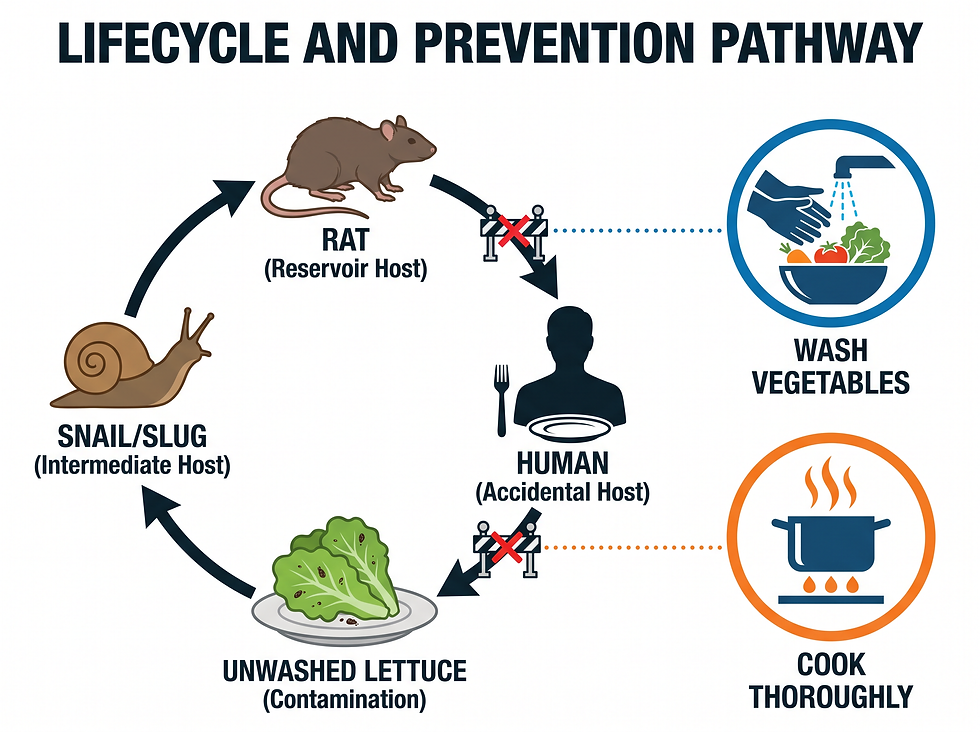
The parasite follows a complex lifecycle that involves rats and gastropods (snails and slugs). Adult worms reproduce in a rat’s lungs, and larvae are passed in the rat’s feces. Snails and slugs then eat the larvae, and people can be exposed when they eat the infected animals or food contaminated by them.
Stage | What Happens |
Rats | Adult worms reproduce in the rat’s lungs, and larvae are passed in the rat’s feces. |
Snails and slugs | Intermediate hosts that become infected by eating the larvae in rat feces. |
Humans | Accidental hosts who ingest larvae through raw or undercooked snails or slugs, vegetables contaminated with their slime, or (less commonly) undercooked freshwater shrimp, crabs, or frogs. |
Rat lungworm cannot be spread from person to person, so it is not contagious.
How Rat Lungworm Is Diagnosed
Healthcare providers focus on identifying a history of possible exposure and on understanding the body’s inflammatory response to the parasite. Diagnosis usually involves the following.
History: Reviewing symptoms and any potential exposure to contaminated food or water.
Lumbar puncture (spinal tap): Checking the cerebrospinal fluid for eosinophils, white blood cells that increase during parasitic infections.
Blood tests: Screening for elevated eosinophil levels in the blood.
Treatment and Recovery
There is no specific anti-parasitic treatment for rat lungworm, and the infection is typically self-limiting. Care focuses on keeping the person comfortable and controlling inflammation while the body clears the infection.
Supportive care: IV fluids, pain relievers, and anti-nausea medications.
Corticosteroids: Used to reduce inflammation in the brain as the parasites die.
Observation: Monitoring for possible long-term complications such as hearing loss or memory problems.

How to Prevent Rat Lungworm
Prevention centers on food safety, because there is no vaccine. Rinse all raw produce thoroughly under running water and check leafy vegetables for small slugs or snails before eating. Cook snails, freshwater shrimp, crabs, and frogs thoroughly, and avoid eating raw or undercooked gastropods.
Conclusion and Next Steps
Rat lungworm is uncommon, and most people who are exposed recover without lasting problems. The greatest risk is eosinophilic meningitis, which can be serious, so early medical attention matters when neurological symptoms appear.
If you develop a severe headache, neck stiffness, or confusion after eating raw or undercooked snails, slugs, or unwashed produce, seek emergency care right away. Careful washing and thorough cooking remain the best protection.
Frequently Asked Questions
How do you get rat lungworm?
You can get it by eating raw or undercooked snails or slugs, or by eating raw vegetables (such as lettuce) contaminated by the slime of an infected slug or snail.
Is rat lungworm found in the U.S.?
Yes. It is found in the U.S., primarily in Hawaii. Cases in other states are rare but have been reported.
Can I get rat lungworm from another person?
No. The infection is not contagious and cannot be spread through human-to-human contact.
What is eosinophilic meningitis?
It is a rare type of meningitis caused by a parasitic infection, in which the fluid around the brain contains an increased number of eosinophils (a type of white blood cell).
Can you die from rat lungworm?
Most people recover fully, but severe cases of meningitis can be life-threatening if they are not managed properly.
Do all snails and slugs carry the parasite?
No. Only those that have ingested larvae from the feces of infected rats carry the parasite.
How can I safely wash my vegetables?
Rinse all raw produce thoroughly under running water and inspect leaves carefully for small slugs or snails before eating.
What happens to the worms in the human body?
The human body is not a natural host for the parasite. The worms eventually die, but their presence and death can cause significant inflammation in the brain.
Can pets get rat lungworm?
Yes. Animals such as dogs and horses can also be infected if they eat infected snails or slugs.
How long do symptoms last?
Symptoms can last for weeks or even months as the body reacts to the parasites.
Is there a vaccine for rat lungworm?
No. There is currently no vaccine to prevent rat lungworm infection.
Can I get it from drinking water?
It is possible if the water is contaminated with larvae from infected snails or slugs, although this is less common than foodborne transmission.
What is the best way to cook snails to be safe?
Snails, shrimp, and crabs should be cooked thoroughly, to a temperature that kills the parasite larvae.
Does everyone who gets infected get sick?
No. Many people who ingest the parasite have very mild symptoms or none at all.
What are the long-term effects of the infection?
Rarely, survivors of severe meningitis may have permanent hearing loss, memory problems, or seizures.
Medical Disclaimer: The information provided in this article is for educational purposes only and is not intended as medical advice. Always seek the advice of your physician or other qualified health provider with any questions you may have regarding a medical condition. Never disregard professional medical advice or delay in seeking it because of something you have read here. If you think you may have a medical emergency, call your doctor or 911 immediately.
Comments