Rape Trauma Syndrome: Navigating the Emotional and Physical Impact of Assault

Updated: 2 days ago
Medically reviewed by Dr. Baraa Alnahhal, MD · Last reviewed: October 2026
Definition: Rape trauma syndrome (RTS) is a specific form of post-traumatic stress disorder (PTSD) that encompasses the emotional, physical, and behavioral responses to sexual assault.
Stages: Survivors typically navigate three non-linear stages: the acute phase, the underground phase, and the reorganization phase.
Symptoms: Range from intense anxiety and flashbacks to physical ailments like chronic pain.
Support: Professional mental health support is essential for moving from the immediate shock of trauma to long-term resolution and survival.
Quick Answer
Rape trauma syndrome is the mind and body's response to sexual assault or any nonconsensual sexual act, classified as a type of post-traumatic stress disorder. It involves emotional distress, behavioral changes and physical symptoms. Approximately 94% of women experience PTSD symptoms within two weeks of sexual trauma. Recovery often moves through stages from shock and denial to reorganization and resolution. [1]
What the research says
PTSD is very common in the first month after sexual assault, and about 4 in 10 survivors still meet criteria at 1 year. A meta-analysis of prospective studies (22 samples, 2,106 survivors) found that 74.58% (95% CI 67.21 to 81.29) met diagnostic criteria for PTSD at 1 month and 41.49% (95% CI 32.36 to 50.92) at 12 months. Most symptom recovery happened in the first 3 months, after which the rate of recovery slowed (Dworkin et al., Trauma Violence Abuse, 2023).
Depression and PTSD are especially common in survivors compared with people who were not assaulted. A meta-analysis of 39 studies with 88,539 participants (171 eligible effects) found that most psychiatric disorders were more prevalent in survivors of sexual assault, and that depressive disorders and PTSD were especially prevalent (Dworkin, Trauma Violence Abuse, 2020).
Early cognitive-behavioral care appears safe and helpful after a recent assault. A systematic review of 17 studies, with 10 included in the meta-analysis, found a small-to-moderate effect of secondary prevention in reducing PTSD and related symptoms among women who had experienced a recent sexual assault. The authors concluded that cognitive-behavioral approaches appear safe and effective, and noted that approximately half of women who experience sexual assault meet criteria for PTSD (Short et al., Depress Anxiety, 2020).
What is rape trauma syndrome?
Rape trauma syndrome is a profound psychological and physiological reaction to the trauma of sexual assault. It is important to understand that rape includes any sexual act—vaginal, anal, or oral—performed against a person's will. This can occur through physical force, threats, emotional manipulation, or any form of coercion. The syndrome represents the survivor's attempt to process an event that has fundamentally disrupted their sense of safety and autonomy. [1]
The prevalence of sexual assault is a significant public health concern. Annually, more than 433,000 Americans over the age of 12 experience sexual assault. Statistics indicate that 1 in 6 females and 1 in 33 males will experience an attempted or completed rape during their lifetime. These experiences impact all ages and sexes, requiring specialized clinical understanding for effective support.
Statistic Category | Lifetime Prevalence / Annual Incidence |
Females (Lifetime) | 1 in 6 will experience attempted or completed rape. |
Males (Lifetime) | 1 in 33 will experience attempted or completed rape. |
Children (Annual) | Approximately 60,000 experience sexual abuse. |
Annual U.S. Total | >433,000 individuals over age 12 are affected. |
What are the three stages of recovery in rape trauma syndrome?
Recovery from sexual trauma is rarely a linear process. Researchers have identified three primary phases that survivors often experience, though individuals may move back and forth between these stages as they process their experiences.
The Acute Phase
This immediate stage occurs during and shortly after the trauma. Survivors often feel as though they are in a "mental and physical fog." Common symptoms include intense anxiety, confusion, disorienting mood swings, and an inability to perform daily routines. The shock of the event can make it difficult to see a path forward. [1]
The Underground Phase
During this phase, the survivor attempts to return to their normal life and move on from the trauma. This is often characterized by blocking out memories, denial, or downplaying the severity of what occurred. This stage can persist for months or even years as the mind attempts to protect itself from the overwhelming nature of the event.
The Reorganization Phase
This is the resolution stage where the survivor begins to recognize the trauma and takes active steps to adapt. The transition from "victim" to "survivor" occurs here. It involves facing triggers and learning long-term coping mechanisms. While this phase can be overwhelming, it is the foundation for lasting resolution. [1]

What are the emotional and physical symptoms of rape trauma syndrome?
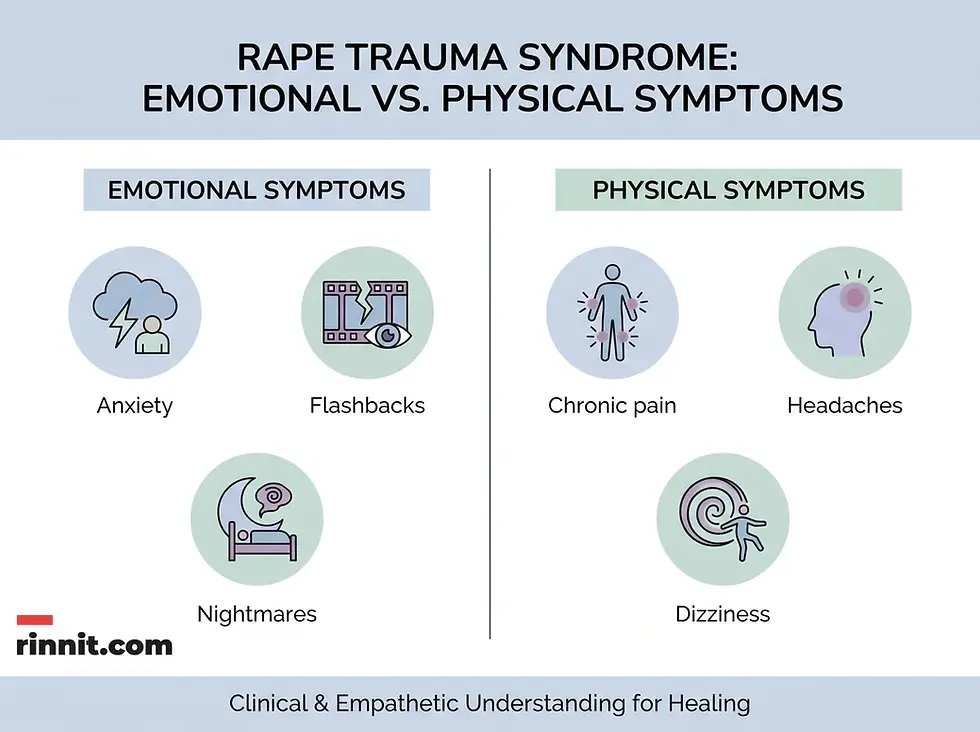
Rape trauma syndrome manifests through a wide array of symptoms that affect both the mind and the body. These responses are natural reactions to an unnatural event and are not the fault of the survivor.
Mental and Emotional Symptoms
Survivors frequently experience intense anxiety, depression, and difficulty concentrating. Flashbacks and nightmares are common, often leading to chronic insomnia. Emotional responses may include deep-seated feelings of guilt, shame, worthlessness, and humiliation, even though the survivor is never to blame for the assault. [1]
Physical Manifestations
Trauma often translates into physical ailments. Survivors may suffer from chronic pain, frequent dizziness, fainting spells, or gastrointestinal distress. Muscle stiffness and sexual dysfunction are also frequently reported as the body remains in a state of high alert following the trauma.
What complications can rape trauma syndrome cause, and where can you find crisis support?
The impact of sexual assault on emotional well-being is severe. Many individuals experiencing RTS may also struggle with substance use disorders as a way to cope with the pain. Most critically, the syndrome is associated with an increased risk of self-harm and suicidal ideation.
Crisis Resource: If you are having thoughts of self-harm or suicide, call or text 988 in the U.S. to reach the Suicide and Crisis Lifeline. Trained counselors are available 24/7 to provide support. You do not need to be in a crisis to seek help. [1]
How is rape trauma syndrome diagnosed, and what should you do immediately?
If a sexual assault has occurred, the first priority is finding a safe location. If safety is not immediate, contact local emergency services or the National Sexual Assault Hotline (1-800-656-4673). Seeking medical care at an emergency room is vital for treating physical injuries and documenting evidence. [1]
A formal diagnosis of rape trauma syndrome is typically made by a mental health professional, such as a psychologist or psychiatrist. They use specialized assessment tools to identify the severity of symptoms and track the survivor's progress through the stages of recovery. Being open and honest with providers is essential for creating a safe environment for healing.

Conclusion
Rape trauma syndrome is a complex but manageable response to profound trauma. By understanding the stages of recovery and recognizing both the emotional and physical symptoms, survivors and their support systems can better navigate the path to healing. The transition from the acute shock of the event to the reorganization of one's life is a testament to the resilience of the human spirit. Support is available, and no survivor has to face this journey alone.
Frequently Asked Questions
What is the difference between RTS and PTSD?
Rape trauma syndrome (RTS) is actually a specific type of post-traumatic stress disorder (PTSD). While PTSD can result from many types of trauma, RTS refers specifically to the emotional, physical, and behavioral responses following a nonconsensual sexual act. [1]
Is it normal to feel guilty after a sexual assault?
Yes, feelings of guilt and shame are very common symptoms of rape trauma syndrome. However, it is important to remember that the survivor is never to blame for the assault. These feelings are a byproduct of the trauma and are addressed during the recovery process. [1]
How long does the "underground phase" of RTS last?
The underground phase, where a survivor may try to deny or block out the trauma, can last anywhere from a few months to several years. The timeline for moving into the reorganization phase is different for every individual. [1]
Can RTS cause physical health problems?
Yes. RTS often manifests as physical symptoms including chronic pain, headaches, gastrointestinal issues, dizziness, and muscle stiffness. These are the body's physical responses to intense psychological trauma. [1]
What should I do immediately after a sexual assault?
The first step is to find a safe place. Once safe, you should contact emergency services (911) or the National Sexual Assault Hotline (1-800-656-4673). It is also highly recommended to go to an emergency room for medical care and evidence collection. [1]
Who can diagnose rape trauma syndrome?
A formal diagnosis is typically made by a healthcare provider specializing in mental health, such as a psychiatrist or psychologist. They will evaluate your symptoms and trauma history to determine the best course of treatment. [1]
Is the recovery process for RTS linear?
No. Recovery through the stages of RTS (Acute, Underground, and Reorganization) is often non-linear. Survivors may move back and forth between phases or repeat them as they encounter new triggers or process different aspects of the trauma. [1]
What is the 988 lifeline?
The 988 Suicide and Crisis Lifeline is a 24/7 resource in the U.S. for anyone experiencing suicidal thoughts, self-harm ideation, or intense emotional distress. You can call or text 988 at any time to speak with a trained counselor. [1]
How common is PTSD after sexual trauma?
PTSD after sexual trauma is extremely common. Research estimates that approximately 94% of women experience symptoms of PTSD in the two weeks immediately following a sexual assault. [1]
References
Cleveland Clinic. Rape Trauma Syndrome. Cleveland Clinic Health Library. Accessed October 11, 2026. https://my.clevelandclinic.org/health/diseases/rape-trauma-syndrome
Dworkin ER, Jaffe AE, Bedard-Gilligan M, et al. PTSD in the year following sexual assault: a meta-analysis of prospective studies. Trauma Violence Abuse. 2023;24(2):497-514. PMID: 34275368. DOI: https://doi.org/10.1177/15248380211032213
Dworkin ER. Risk for mental disorders associated with sexual assault: a meta-analysis. Trauma Violence Abuse. 2020;21(5):1011-1028. PMID: 30585128. DOI: https://doi.org/10.1177/1524838018813198
Short NA, Morabito DM, Gilmore AK. Secondary prevention for posttraumatic stress and related symptoms among women who have experienced a recent sexual assault: a systematic review and meta-analysis. Depress Anxiety. 2020;37(10):1047-1059. PMID: 32442345. DOI: https://doi.org/10.1002/da.23030
Medical disclaimer
This article is for informational purposes only and is not a substitute for professional medical advice, diagnosis, or treatment. Always seek the advice of your physician or other qualified health provider with any questions you may have about a medical condition.



Comments